

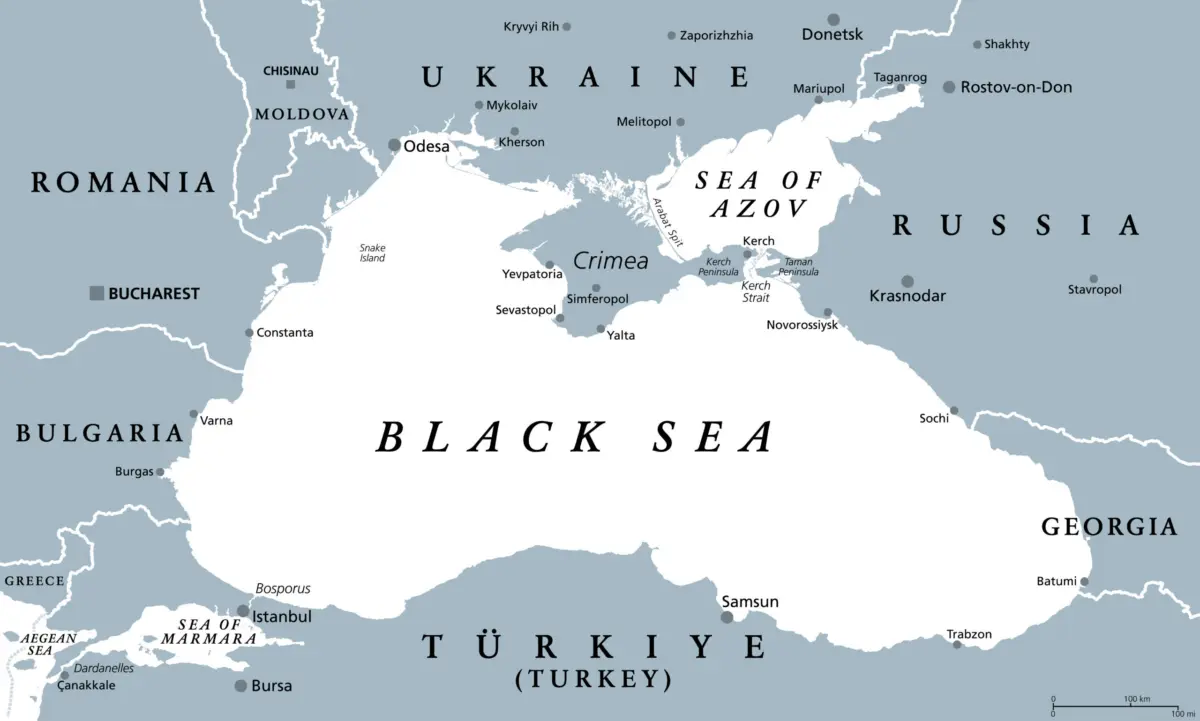
BUCHAREST/CHISINAU — Maritime safety in the Black Sea deteriorated sharply on Thursday evening following an explosion and subsequent sinking of a commercial cargo vessel within Romania’s exclusive economic zone (EEZ). Romanian President Nicusor Dan confirmed the vessel caught fire and sank, stating that preliminary indications point to the ship having been struck. The incident underscores the persistent and compounding dangers facing commercial navigation in the region, which has emerged as a crucial yet perilous theater of operations amid ongoing geopolitical conflict.
While all 12 crew members were successfully rescued in a coordinated operation involving Romanian border authorities and nearby vessels, the sinking highlights the vulnerability of civilian shipping lanes. The event marks another escalation in a series of maritime security challenges that have plagued the Black Sea since the onset of large-scale hostilities in Ukraine in 2022, compounding anxieties for international shipping companies, insurers, and regional governments alike.
Main Facts
The incident occurred late Thursday evening outside Romania’s territorial waters, but well within the nation’s exclusive economic zone (EEZ) in the Black Sea.
- The Incident: A merchant vessel caught fire following what authorities strongly suspect was an external strike, subsequently leading to the vessel sinking.
- Casualties and Rescue: All 12 members of the ship’s crew survived. The Romanian Border Police reported that 10 individuals were rescued directly by border guard units—with one crew member sustaining injuries requiring medical attention—while the remaining two sailors were rescued by a separate merchant vessel operating in the vicinity.
- Geopolitical Context: The event takes place against a backdrop of escalating maritime volatility in the Black Sea. Commercial shipping lanes and port infrastructure have experienced repeated disruptions, attacks, and navigational hazards since 2022, with a noticeable intensification of kinetic events observed into 2026.
- Official Stance: Romanian President Nicusor Dan confirmed the sinking during a press briefing in Chisinau, Moldova, emphasizing that formal investigations are underway to determine the precise cause and origin of the strike, while urging caution against premature speculation regarding attribution.
Chronology of Events
The unfolding of Thursday’s maritime emergency followed a rapid sequence of distress signals, rescue operations, and high-level official confirmations.
Thursday Evening: The Strike and Distress Call
As twilight gave way to night in the western sector of the Black Sea, the commercial merchant vessel—operating within Romania’s exclusive economic zone—suffered a catastrophic event. According to statements from regional authorities and Romanian leadership, the ship was reportedly hit, triggering an immediate and severe onboard fire. The blaze quickly compromised the structural and operational integrity of the vessel, forcing the crew to abandon ship as the situation deteriorated beyond containment.
Thursday Night: Coordinated Rescue Operations
Upon receiving distress communications, the Romanian Border Police mobilized maritime response units. Operating under adverse conditions in open waters outside territorial boundaries, border guard assets rushed to the coordinates of the burning vessel.
Through swift coordination, Romanian border personnel successfully pulled 10 crew members from the water or life rafts. Among those rescued by the state authorities, one individual was documented as injured. Simultaneously, the crew of another merchant ship navigating nearby managed to rescue the remaining two sailors, ensuring a 100% survival rate for the 12-person crew.
Friday Morning: Official Confirmations and Briefings
By Friday morning, the Romanian Border Police issued a formal statement verifying the maritime disaster. The agency confirmed the vessel fire within the country’s EEZ and detailed the successful multi-party rescue operation, though initial statements stopped short of confirming the definitive cause of the fire.
Concurrently, Romanian President Nicusor Dan addressed the incident publicly while on an official visit to Chisinau, Moldova. During a joint press conference, President Dan provided critical context, stating directly, "The ship was hit… it seems to have sunk." He acknowledged the gravity of the situation while setting boundaries for public disclosures pending a thorough technical and forensic inquiry.
Supporting Data and Regional Context
To fully understand the magnitude of Thursday’s sinking, analysts examine the broader ecosystem of Black Sea shipping, naval architecture vulnerabilities, and the historical frequency of incidents in the basin.
The Black Sea Corridor: Economic and Logistical Lifeline
The Black Sea remains one of the world’s most critical maritime corridors, facilitating the transit of millions of tons of agricultural products, industrial raw materials, and energy supplies between Eastern Europe, Asia, and global markets. Since the escalation of the Russia-Ukraine conflict in February 2022, the basin has transformed from a peaceful commercial trade route into a contested strategic zone.
Escalation Trends
Data compiled by maritime security monitors indicates a steady uptick in kinetic activity affecting civilian shipping. While the initial phase of the conflict primarily resulted in port blockades, maritime insurance cancellations, and drifting naval mines, subsequent years have seen direct and indirect threats to merchant tonnage. Industry reports note that the tempo and geographic spread of security incidents escalated notably heading into 2026, pushing risk premiums to historic highs and necessitating alternative routing corridors close to the western coastline of the Black Sea, including Romanian and Bulgarian waters.
Exclusive Economic Zones vs. Territorial Waters
The legal framework governing Thursday’s incident centers on the distinction between territorial waters and exclusive economic zones (EEZs). Under the United Nations Convention on the Law of the Sea (UNCLOS), a nation’s territorial waters extend up to 12 nautical miles from its baseline, where the coastal state exercises full sovereignty. An EEZ, by contrast, can extend up to 200 nautical miles, wherein the coastal state holds sovereign rights regarding the exploration and use of marine resources, but international vessels retain freedoms of navigation and overflight. The fact that the vessel was struck within Romania’s EEZ—rather than its territorial sea—places the event in international waters under regional security oversight, complicating immediate jurisdiction for tactical defense while demanding robust environmental and search-and-rescue responses from Bucharest.
Official Responses and Investigations
The reaction from national authorities and international observers has been measured, emphasizing due process, thorough investigation, and regional solidarity.
President Nicusor Dan’s Remarks
Speaking in the Moldovan capital of Chisinau, President Nicusor Dan addressed the media with a tone of cautious deliberation. When pressed by journalists regarding who might be responsible for the strike, Dan maintained that available data was insufficient to assign definitive blame.
"There will be an investigation, it will be established, but it is not good for us to start speculating," President Dan told reporters, reiterating that the event occurred outside Romania’s territorial waters.
His comments reflect a broader governmental strategy in Bucharest to avoid premature escalation while ensuring that transparent, evidence-based findings guide Romania’s diplomatic and security posture.
Romanian Border Police and Maritime Authorities
The General Inspectorate of the Romanian Border Police took the lead in coordinating the immediate humanitarian response. Their post-incident briefings focused primarily on the successful preservation of human life, praising the professionalism of the border guards and the solidarity shown by the crew of the secondary merchant vessel that assisted in the rescue.
Maritime investigators, alongside naval experts and environmental protection agencies, are now tasked with assembling the fragmented evidence. Because the ship sank, forensic teams face significant challenges in recovering physical wreckage, relying instead on electronic logs, radar tracks, satellite telemetry, and debriefings with the 12 rescued crew members to reconstruct the moments leading up to the explosion.
Implications for Regional Security and Global Trade
The sinking of the merchant ship off the coast of Romania carries profound implications for regional stability, international maritime law, and global supply chain economics.
1. Heightened Risk for Commercial Navigation
For shipowners, charterers, and maritime insurers, Thursday’s incident serves as a stark reminder that the western Black Sea—long considered a relatively safe corridor hugging NATO member states’ coastlines—remains susceptible to kinetic spillover. The sinking is expected to trigger immediate reassessments by marine underwriters, potentially leading to increased war-risk premiums for vessels transiting Romanian and neighboring waters. Such financial pressures can disrupt grain exports and industrial shipments, creating ripple effects across international commodity markets.
2. NATO and Romanian Defense Posture
As a frontline NATO member state bordering the Black Sea, Romania has continuously adapted its defense posture to monitor regional escalations. While the incident occurred outside territorial waters, the proximity of the blast to NATO maritime boundaries reinforces calls within the alliance to bolster intelligence, surveillance, and reconnaissance (ISR) capabilities in the basin. Allied naval patrols and coastal defense systems face mounting pressure to deter potential threats and ensure the sanctity of international shipping lanes.
3. Environmental and Ecological Concerns
The loss of a commercial vessel carrying fuel, lubricants, and potentially hazardous cargo within an exclusive economic zone raises immediate environmental concerns. Romanian environmental agencies are closely monitoring satellite imagery and ocean current data to detect any potential oil spills or toxic discharges resulting from the wreckage settling on the sea floor. Mitigating ecological damage in the ecologically sensitive Black Sea basin remains a top priority for regional environmental protection frameworks.
4. Diplomatic and Geopolitical Fallout
As investigators work to identify the origin of the strike, the findings will likely influence diplomatic engagements across Eastern Europe. Any definitive attribution pointing toward targeted hostile action against civilian shipping risks heightening diplomatic friction and prompting renewed calls at the United Nations and the International Maritime Organization (IMO) for enhanced protections for neutral merchant mariners.
Conclusion
The disaster off the Romanian coast underscores the persistent fragility of Black Sea security. While the successful rescue of all 12 crew members stands as a testament to the swift and effective response of Romanian border guards and fellow mariners, the loss of the vessel itself marks a troubling milestone in the ongoing maritime crisis. As official investigations unfold under the leadership of Bucharest, the international community watches closely, cognizant that the safety of civilian navigation in the Black Sea remains inextricably linked to broader geopolitical stability and the unwavering defense of international maritime law.
