

By Stevie Bonifield | Updated August 31, 2026, 10:32 PM UTC
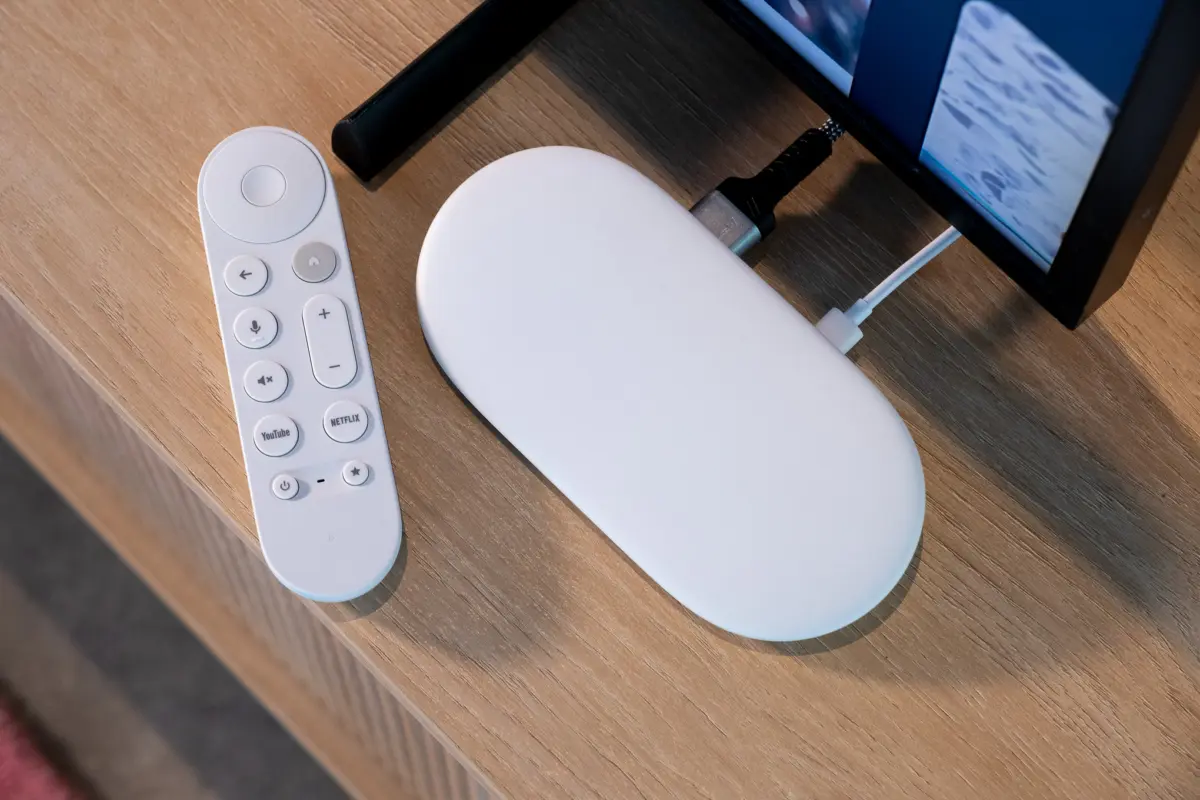
The cost of upgrading your living room entertainment setup just went up significantly. Google has quietly implemented a steep price increase for its flagship streaming hardware, raising the retail price of the Google TV Streamer 4K to $149. This represents a dramatic $50 jump—a 50 percent increase—from its original launch price of $99.
The adjustment makes Google the latest major consumer technology giant to succumb to mounting macroeconomic pressures, component shortages, and supply chain constraints, following closely behind similar, aggressive price hikes enacted by industry competitors Apple and Amazon over the last few months.
As of publication, the new $149 price tag is officially live across the Google Store and major third-party retailers like Best Buy. However, savvy shoppers looking to beat the price hike may still find brief windows of opportunity, as select outlets—including Amazon—have occasionally maintained the original $99 pricing before inventory clears out or is systematically updated.
Main Facts
The core of the announcement centers on the sudden and substantial repricing of Google’s premiere set-top box.
- The Price Jump: The Google TV Streamer 4K now costs $149, up from its introductory price of $99.
- Timing: The price hike arrives merely weeks after Google rolled out its high-profile Pixel 11 smartphone lineup, which also debuted with a $100 price increase over the previous generation Pixel 10 devices.
- Ecosystem Shift: The Google TV Streamer, which originally launched in 2024 to replace the aging Chromecast lineup, serves a dual purpose as both a robust 4K HDR streaming media player and an integrated smart home hub capable of managing Matter and Thread devices.
- Retail Availability: The updated pricing is currently active on the official Google Store and Best Buy, though legacy pricing can still be spotted sporadically across alternative platforms.
The sudden realignment of the Google TV Streamer’s pricing underscores a broader, unsettling trend across the consumer electronics market. Premium set-top boxes, streaming sticks, smart home devices, and computing hardware are steadily shedding their historically affordable price points, shifting the financial burden onto consumers who are already grappling with broader economic shifts.
Chronology of Events
To understand how the streaming market arrived at this juncture, it is helpful to look back at the steady escalation of hardware costs throughout late 2025 and 2026.
- September 2024: Google formally launches the Google TV Streamer 4K at a competitive $99 price point, positioning it as a premium alternative to traditional streaming sticks by blending advanced smart home integration with high-end media playback.
- June 2026: Apple initiates a sweeping wave of hardware price increases affecting everything from iPads and MacBooks to the Apple TV 4K. The baseline Apple TV 4K climbs to $199 for the 64GB configuration, while the 128GB version rises to $249.
- Early August 2026: Persistent component shortages and climbing memory (RAM) production costs begin heavily impacting the consumer tech sector. Amazon reacts by raising the price of its popular Fire TV Stick 4K Max by over 40 percent, pushing it to a steep $84.99.
- Mid-August 2026: Google reveals its Pixel 11 smartphone series, introducing a $100 hike across the board compared to the Pixel 10 family, signaling an internal corporate shift toward higher baseline pricing for consumer hardware.
- August 31, 2026: Google updates the Google Store and key retail partners, officially elevating the Google TV Streamer 4K to its new $149 price point.
Supporting Data and Market Trends
The decision by Google to increase the cost of the TV Streamer is not happening in a vacuum. Industry analysts point to a confluence of global supply chain challenges that have steadily squeezed profit margins for consumer hardware manufacturers.
Chief among these concerns is the unprecedented surge in component costs. Global shortages of high-density PC RAM, flash storage modules, and specialized silicon processors have created severe bottlenecks. In 2026, memory pricing spikes have single-handedly dragged up manufacturing costs across the board, affecting everything from entry-level laptops and next-generation gaming consoles to specialized media streaming boxes.
Because devices like the Google TV Streamer rely on robust internal processing power, adequate local storage (the device packs 32GB), and advanced networking hardware to handle seamless 4K HDR streaming and local smart home hub communications, they are especially vulnerable to fluctuating component expenditures.

Furthermore, competitor pricing benchmarks have provided cover for companies like Google, Amazon, and Apple to recalibrate their profit expectations. With Apple TV 4K models commanding between $199 and $249, and high-end streaming solutions crossing the $100 threshold universally, Google’s $149 price point—while painful for budget-conscious consumers—realigns the product closer to what the market currently dictates for a hybrid smart home hub and streaming box.
Official Responses and Industry Context
While Google has not published an exhaustive press release explicitly breaking down the manufacturing calculus behind the price increase for the TV Streamer, corporate messaging surrounding its recent hardware rollouts points consistently to rising production realities.
During recent product briefings, tech executives across the industry have repeatedly highlighted the unsustainable nature of legacy pricing models in an era of constrained supply chains. The decision to mirror price hikes across separate hardware divisions—from Pixel smartphones to Fire TV sticks and Apple TV units—demonstrates a unified industry response to mounting macroeconomic headwinds.
Industry analysts emphasize that tech companies are no longer willing to subsidize hardware costs to capture market share to the same degree they were a few years ago. Instead, margin protection has taken center stage. For Google, which has spent years attempting to unify its ecosystem under the Google TV and Google Home umbrellas, maintaining the quality and feature set of its flagship set-top box necessitated passing these increased costs down to the consumer.
Implications for Consumers and the Market
The normalization of $150 streaming devices carries significant implications for the average consumer and the broader smart home ecosystem.
1. The Death of Budget Streaming Set-Top Boxes
For years, consumers could reliably expect high-end, feature-rich set-top boxes to hover right around the psychological $100 ceiling. With the Google TV Streamer 4K now sitting at $149, and Apple’s ecosystem starting at $199, the traditional set-top box is increasingly transitioning from an impulse-buy accessory to a premium home theater investment.
2. A Boon for Budget Streaming Sticks
While premium set-top boxes like the Google TV Streamer and Apple TV 4K cater to power users, media enthusiasts, and smart home automation hobbyists, this price hike may drive casual consumers toward cheaper alternatives. Basic streaming sticks—assuming they escape severe price inflation—will likely capture a larger share of the market as buyers look for cost-effective ways to access Netflix, YouTube, and Disney+ without paying a premium for advanced Matter/Thread hub capabilities.
3. Smart Home Centralization Becomes Costlier
By building the Google TV Streamer as a dual-purpose device that controls lights, thermostats, and security cameras via Matter and Thread, Google pitched it as a cost-effective way to anchor a smart home. At $149, the value proposition shifts slightly, forcing buyers to weigh whether they genuinely need a dedicated streaming box to act as their smart home coordinator, or if a simple software integration on their phone or smart speaker will suffice.
As the tech sector navigates the remainder of 2026, consumers should prepare for a landscape where historical price points are largely a thing of the past. Whether shopping for a smartphone, a laptop, or a living room streaming box, hardware is officially entering a more expensive era.
