

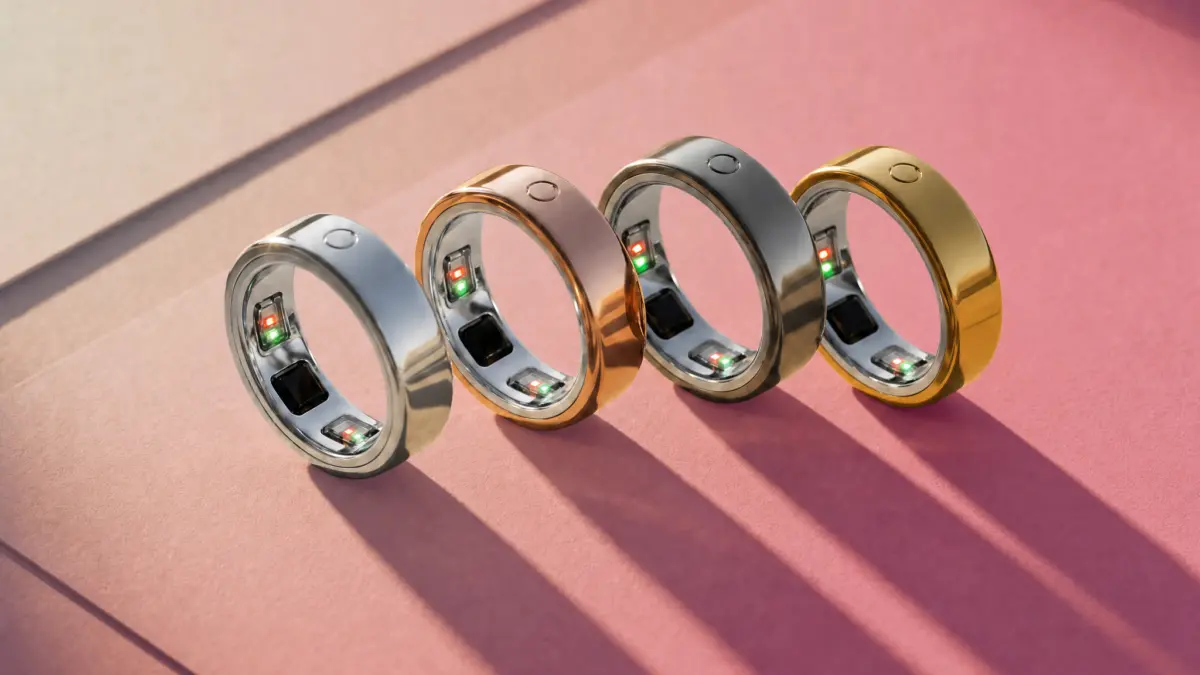
BERLIN — The landscape of wearable technology is undergoing a quiet, yet profound, revolution. For years, the smart ring category has thrived on minimalism—offering round-the-clock health tracking without the distracting screens and battery-draining interfaces of traditional smartwatches. Yet, this minimalist ethos has long come with a functional ceiling: without a screen, what a ring could actually do was largely restricted to passive data collection.
Paris-based health tech company Circular is seeking to shatter that ceiling. Unveiled at the IFA consumer technology show in Berlin, the new Circular Ring 3 series—comprising the Ring 3 Pro and the Ring 3 Slim—aims to redefine user expectations. By integrating mobile contactless payments, haptic feedback, and advanced clinical-grade sensors into a low-profile form factor, Circular is aggressively pushing smart rings out of the shadows of fitness trackers and directly into smartwatch territory.
Main Facts: What the Circular Ring 3 Series Offers
The core innovation of the Circular Ring 3 lineup lies in its fusion of active communication tools and passive health monitoring.
- Contactless Mobile Payments: For the first time, users can execute NFC-based payments straight from their finger, eliminating the need to pull out a smartphone or wrist-worn device.
- Haptic Feedback Returns: Circular has reintroduced its proprietary haptic vibration motor, allowing the ring to communicate silently through tactile buzzes. Users can receive physical cues for app notifications, medication reminders, and acute health alerts.
- Dual-Model Strategy: The lineup splits into two distinct hardware paths—the robust, feature-heavy Ring 3 Pro and the ultra-discreet Ring 3 Slim.
- Comprehensive Health Suite: Beyond standard biometric tracking, the series introduces blood pressure trends, glucose trend estimations, and advanced sleep analytics, building upon Circular’s existing FDA-cleared electrocardiogram (ECG) and atrial fibrillation (AFib) detection capabilities.
- Subscription-Free AI Integration: Unlike many industry competitors that lock AI health coaching behind paywalls, Circular continues to bundle its Kira AI health companion free of charge.
Chronology: The Evolution of Screenless Wearables and Circular’s Ascent
The journey of the smart ring from a niche wellness novelty to a mainstream powerhouse has accelerated rapidly over the last several years.
The Rise of Passive Tracking
When smart rings first entered the mainstream consciousness, pioneered heavily by brands like Oura, they were embraced for their lack of distractions. Free of notifications, glowing screens, and constant buzzes, consumers wore them primarily to track sleep architectures, resting heart rate, and body temperature trends. Competitors like Ultrahuman, Google (via Fitbit integrations), and Garmin eventually flooded the market with their own screenless and wrist-based variants. However, usability remained largely unidirectional: the ring gathered data, and the smartphone app interpreted it.

Circular’s Iterative Leap
Circular entered the market with a distinct philosophy: infuse rings with active capabilities.
- Gen 1 & Gen 2: The original Circular rings established the brand’s footprint by introducing haptic feedback—a feature largely absent in competing rings. Subsequent iterations refined biometric precision, leading to FDA clearances for specific cardiac features like ECG and AFib detection.
- The IFA 2024 Breakthrough: At the Berlin tech conference, Circular synthesized its past hardware experiments into the Ring 3 series. By solving the engineering challenges required to pack NFC payment antennas and haptic motors into a titanium-and-resin chassis, the company marked a pivotal shift in how smart rings are conceptualized. Pricing and exact release dates remain under wraps, with the company promising further details in the coming months.
Supporting Data: Ring 3 Slim vs. Ring 3 Pro Specifications
While both models share core health-tracking features, NFC capabilities, and haptic motors, Circular has tailored the hardware of the Slim and Pro models to appeal to different user preferences regarding ergonomics and battery life.
| Feature / Dimension | Circular Ring 3 Slim | Circular Ring 3 Pro | Oura Ring 5 (For Context) |
|---|---|---|---|
| Width | 5.9 mm | 6.8 mm | 6.09 mm |
| Thickness | 2.35 mm | 2.78 mm | 2.28 mm |
| Weight | 1.9g – 3g (varies by size) | 3g – 4g (varies by size) | From 2g (varies by size) |
| Primary Materials | Biocompatible resin with titanium coating | Solid Titanium | Titanium |
| Max Battery Life | Up to 10 days | Up to 12 days | Varies (~7 days) |
| Advanced Health | General wellness metrics | ECG & Blood Pressure Tracking | Standard biometric tracking |
Hardware and Material Breakdown
The Ring 3 Slim leans heavily into the minimalist aesthetic. Utilizing a biocompatible resin shell reinforced with a titanium coating, it slashes both height and width compared to its predecessor. Weighing as little as 1.9 grams depending on the ring size, it sits comfortably alongside industry-leading ultra-thin models like the Oura Ring 5.
Conversely, the Ring 3 Pro is built for durability and maximum feature density. Crafted from solid titanium, it is slightly thicker (2.78mm) and heavier (up to 4g) than the Slim. However, that extra physical footprint houses a more robust battery—capable of stretching up to 12 days on a single charge—as well as specialized clinical-adjacent hardware, including the dedicated ECG sensors and blood pressure tracking modules.
Official Responses and Platform Strategy
Circular’s market positioning relies heavily on its software ecosystem and pricing model. In an industry where heavy hitters like Oura and Whoop require recurring monthly subscriptions to unlock historical data, advanced trends, and personalized insights, Circular has maintained a fiercely subscription-free stance.

The Value Proposition of Kira AI
Users of the Circular ecosystem retain full access to their foundational health metrics and the Kira AI health companion at no extra cost. Kira acts as an on-device or cloud-assisted conversational guide, translating raw biometric data into actionable lifestyle adjustments.
Yet, as the company pushes further into clinical territory, questions remain regarding monetization. App interfaces observed during the IFA debut revealed that certain advanced medical features are currently marked as "limited time" trials within the application. This suggests that while core tracking and AI coaching will likely remain free, Circular may eventually experiment with tiered or pay-per-feature models for specialized diagnostic-adjacent capabilities.
The Regulatory Landscape
It is worth noting the distinction between consumer wellness and medical diagnostics. While Circular boasts FDA clearance for its ECG and AFib detection tools, newer metrics introduced in the Ring 3 lineup—such as blood pressure trends and estimated blood glucose tracking—lack official regulatory clearance. Consequently, Circular frames these features as long-term wellness trend indicators rather than diagnostic tools, positioning them primarily as conversational springboards for users to discuss with their primary care physicians.
Implications: What the Ring 3 Series Means for the Wearable Industry
The introduction of the Circular Ring 3 series carries significant implications for the future of ambient computing and personal health tech.
1. The Blurring Lines Between Smartwatches and Smart Rings
For years, consumers faced a rigid binary choice: wear a smartwatch if you want notifications, payments, and interactivity; or wear a smart ring if you prioritize aesthetics, comfort, and uninterrupted sleep tracking. By incorporating NFC payments and haptic alerts, Circular is effectively collapsing this dichotomy. Users can now leave their wallets and smartphones behind during a morning jog or a quick errand, relying entirely on a piece of jewelry to complete transactions and receive critical alerts.

2. Heightened Competition for Ecosystem Dominance
While Circular’s technical achievements are impressive, the company faces an uphill battle regarding ecosystem maturity. Competitors like Oura, Google (via Fitbit and Pixel ecosystems), and Whoop command massive user bases, highly refined companion apps, and deep integrations with third-party fitness platforms like Apple Health and Strava. Circular must prove that its hardware innovations are robust enough to draw users away from these entrenched giants—especially given that Circular has historically faced criticism regarding app stability and international shipping logistics in previous generations.
3. The Democratization of Advanced Health Metrics
By packing blood pressure trends, estimated glucose monitoring, and ECG capabilities into a form factor as small as a ring, Circular is signaling where preventive healthcare is heading. As sensors become smaller and more power-efficient, the burden of health monitoring shifts from episodic doctor visits to continuous, ambient tracking. Even without full FDA clearance for every biometric, the ability to spot subtle physiological shifts over months and years gives everyday consumers unprecedented agency over their personal well-being.
Outlook
As Circular prepares to announce firm pricing and release timelines in the coming months, the wearable tech community will be watching closely. If the Ring 3 Pro and Slim deliver on their ambitious spec sheets without sacrificing reliability, they could well establish a new baseline for what a smart ring is expected to achieve—forcing legacy competitors to rethink their own feature roadmaps.
