

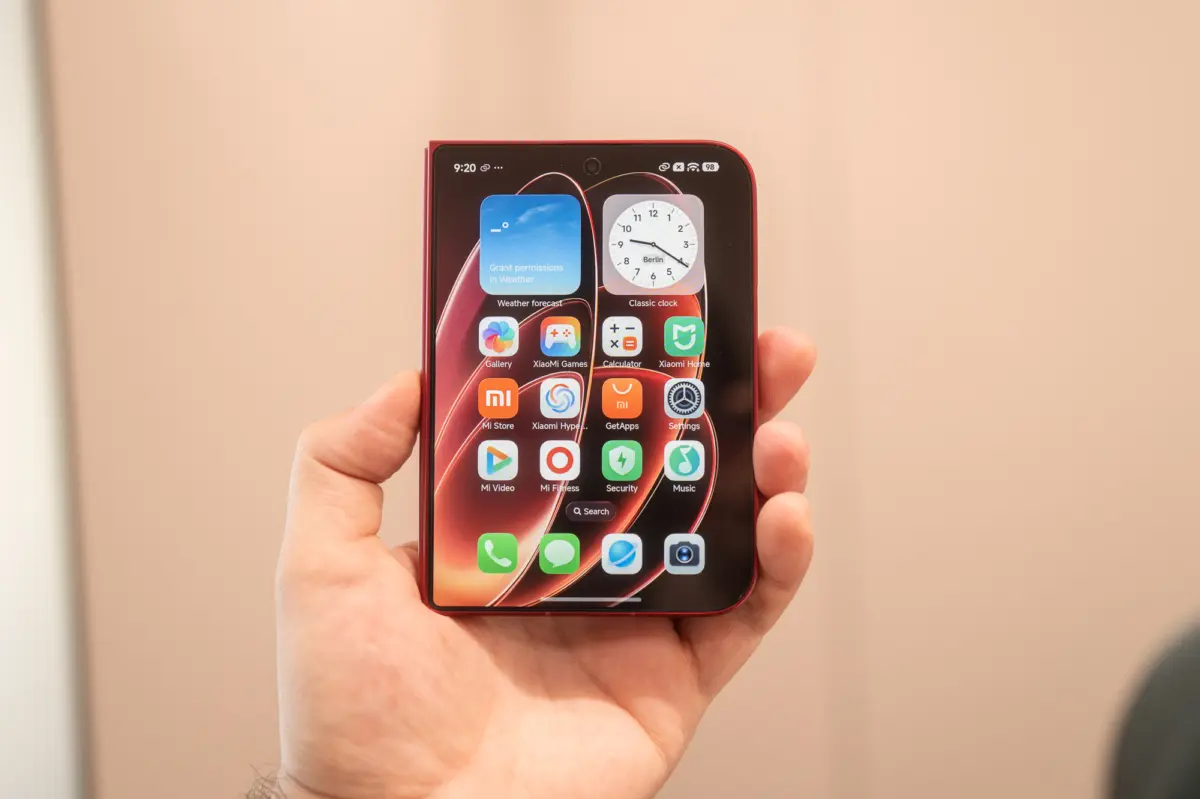
BERLIN — At this year’s IFA technology conference in Berlin, Xiaomi commanded the industry’s attention by officially pulling the curtain back on its latest flagship device: the Xiaomi 18 Fold. Representing a major evolution in the company’s mobile engineering, the new foldable trades the traditional, tall-and-narrow book style of previous generations for a broader, "passport-style" form factor.
While the device made its initial debut locked behind a protective glass display stand, a select group of journalists was later given hands-on access to test its hardware, software, and physical ergonomics. The consensus from the showroom floor is clear: Xiaomi has built a remarkably polished piece of hardware. However, it enters a fiercely contested market segment at a time when heavyweights like Samsung and, potentially, Apple are redefining what consumers expect from folding screens.
Main Facts: The Xiaomi 18 Fold at a Glance
The Xiaomi 18 Fold is the brand’s most ambitious folding smartphone to date, combining a distinct physical footprint with cutting-edge internal components.

- Display Specifications: The device features a squat, highly ergonomic 5.38-inch outer display. When unfolded, it expands into a bright, vibrant 7.58-inch inner screen designed with a notably minimal crease.
- Processor: In a bold strategic shift, the 18 Fold is powered by Xiaomi’s brand-new, in-house custom silicon: the XRing 03 processor. Xiaomi claims this proprietary chip matches the performance of current industry-leading flagship processors.
- Camera System: The device packs a heavy-duty imaging array led by a 200-megapixel main sensor, complemented by a 50-megapixel telephoto camera.
- Battery: Power is supplied by a high-capacity 6,000mAh silicon-carbon battery, aiming to solve the perennial battery-life anxiety associated with dual-screen folding devices.
- Hinge Mechanism: Utilizing a newly engineered "three-link" hinge system, the device supports flexible, half-open propping capabilities.
Chronology: From Rumors to the IFA Showfloor
The path to the Xiaomi 18 Fold’s unveiling reflects the rapid, high-stakes evolution of the foldable smartphone market over the past several years:
- Early Summer 2026: Samsung establishes the seasonal benchmark by releasing the Galaxy Z Fold 8, introducing consumers to the advantages of a wider, passport-style folding format. The device receives widespread critical acclaim, including a CNET Editors’ Choice award.
- Late August 2026: Supply chain leaks and industry reports intensify regarding Apple’s long-rumored entry into the foldable space—speculated to be branded as the "iPhone Ultra"—with an anticipated unveiling window in early September.
- Early September 2026 (IFA Berlin): Xiaomi takes the wraps off the 18 Fold. Initially displayed behind protective glass to manage early crowds, the device is subsequently handed over to media reviewers for physical testing.
- September 9, 2026 (Upcoming): Apple’s scheduled annual fall hardware event, where analysts expect the company to officially announce its first-ever folding iPhone, further intensifying competition for Xiaomi’s fresh release.
Supporting Data & Hardware Analysis
When evaluating the Xiaomi 18 Fold, industry analysts are focusing heavily on its ergonomic pivot, internal engineering choices, and raw component specifications.
The Passport Form Factor
For years, book-style foldables suffered from external displays that felt cramped and awkward—resembling remote controls rather than usable smartphones. Both Samsung, with its Galaxy Z Fold 8, and now Xiaomi have shifted toward a shorter, wider "passport" configuration.

When closed, the Xiaomi 18 Fold’s 5.38-inch outer screen feels natural and comfortable in one hand. Unfolded, the 7.58-inch internal display presents a sprawling, landscape-friendly aspect ratio. Under the dim overhead lights of the IFA demo rooms, reviewers noted that the display panel punched well above expectations, boasting rich colors and a nearly imperceptible central crease.
The XRing 03 Processor
Perhaps the most significant structural news surrounding the 18 Fold is the inclusion of Xiaomi’s proprietary XRing 03 processor. For years, Android manufacturers have relied almost exclusively on Qualcomm’s Snapdragon series or MediaTek silicon. By designing its own mobile platform—following the footsteps of Apple and Google—Xiaomi is signaling a transition toward vertical integration.
While official, independent benchmark scores have yet to be published, Xiaomi executives assert that the XRing 03 stands shoulder-to-shoulder with top-tier competitors like the Qualcomm Snapdragon 8 Gen 5 Elite found in Samsung’s latest flagship handsets.

Durability and Power Architecture
The mechanical backbone of any foldable phone is its hinge. Xiaomi’s implementation relies on a proprietary "three-link" design intended to distribute stress evenly across the folding chassis. Hands-on testing revealed a satisfying resistance profile: the hinge snaps securely into place and holds rigid angles reliably, allowing users to prop the phone open like a miniature tent for media consumption.
Complementing the hardware is a generous 6,000mAh silicon-carbon battery. Silicon-carbon anode technology allows manufacturers to pack higher energy densities into thinner physical footprints, a crucial requirement for keeping folding phones lightweight without sacrificing daily endurance. Photography enthusiasts will also be eyeing the 200-megapixel primary camera and 50-megapixel telephoto lens, though real-world photographic tests must wait for full review units.
Official Responses and Industry Context
Xiaomi’s leadership has framed the 18 Fold not merely as an iteration of past designs, but as a statement of intent regarding the company’s engineering maturity. Company spokespersons emphasized at IFA that the shift toward custom silicon and refined form factors represents a maturing hardware strategy aimed squarely at the premium tier.

However, the global landscape remains daunting. Samsung’s Galaxy Z Fold 8 has already carved out a dominant market share among enterprise and enthusiast users. Simultaneously, Apple’s imminent entry into the foldable arena threatens to redefine consumer expectations overnight.
Geographically, Xiaomi faces traditional distribution hurdles. The company has not announced international pricing or availability outside of mainland China. Crucially, Xiaomi does not officially sell its smartphone lineup in the United States, meaning North American consumers will likely be left watching from the sidelines as the device launches in select Asian and European territories.
Implications: What the 18 Fold Means for the Future of Mobile Tech
The arrival of the Xiaomi 18 Fold carries several profound implications for the consumer electronics landscape:

- The Death of the Narrow Foldable: The industry-wide pivot toward passport-style aspect ratios indicates that consumers and manufacturers alike have grown weary of tall, narrow external screens. Wider, more natural proportions are rapidly becoming the gold standard for book-style foldables.
- The Rise of In-House Silicon: Xiaomi joining Apple and Google in developing custom processors demonstrates that the upper echelons of the smartphone market require tight hardware-software integration to unlock peak efficiency, AI processing capabilities, and thermal management.
- Heightened Competition: With Samsung established, Xiaomi innovating rapidly, and Apple poised to enter the market with its rumored foldable iPhone, the coming years will likely trigger a rapid acceleration in durability improvements, price compression, and software optimization for folding devices.
As reviewers await comprehensive, long-term testing units, the Xiaomi 18 Fold has firmly established itself as a formidable contender. Whether it can withstand the impending tidal wave of competition from Apple and Samsung remains one of the most compelling tech storylines of the year.
