

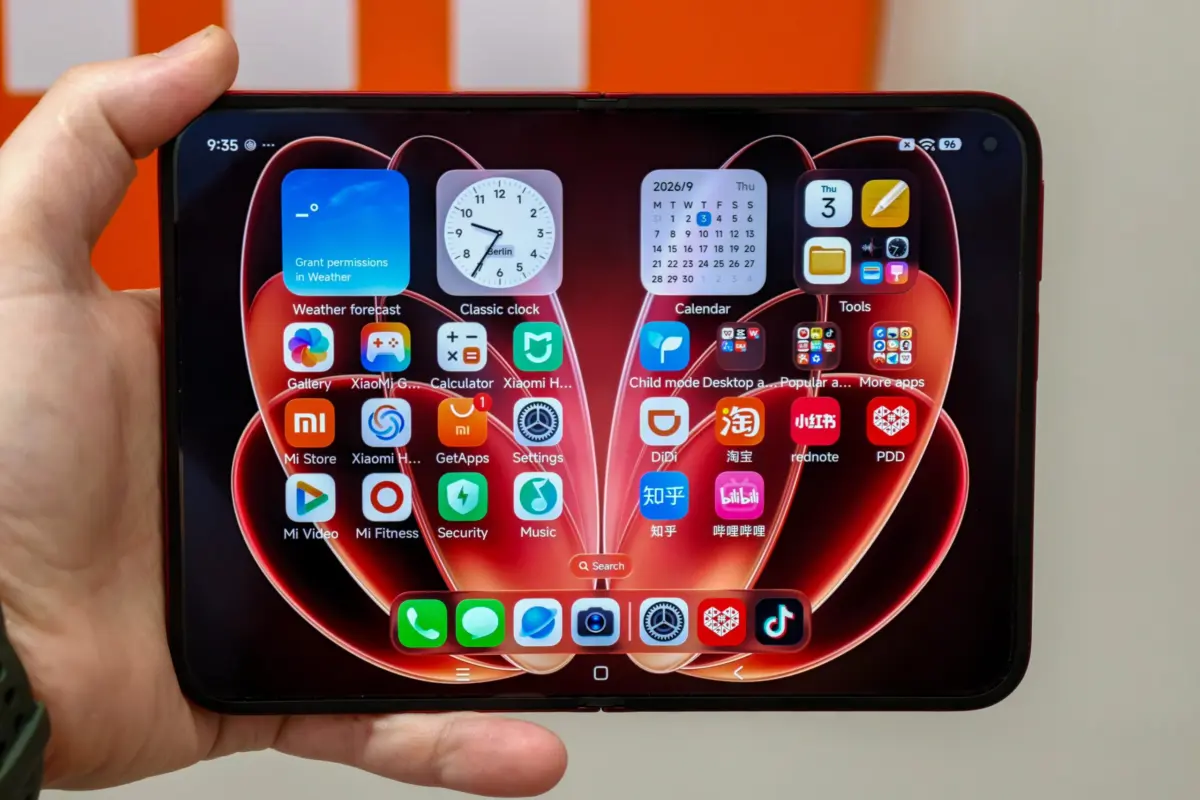
BERLIN — The global foldable smartphone market is bracing for a tectonic shift. As the tech industry turns its collective gaze toward Cupertino in anticipation of Apple’s long-rumored entry into the foldable space, Chinese manufacturer Xiaomi has moved aggressively to steal the spotlight.
Behind closed doors at the IFA trade show in Berlin, industry insiders were given an exclusive, hands-on preview of the newly unveiled Xiaomi 18 Fold. Marking Xiaomi’s return to the book-style foldable arena since the release of the Mix Fold 4 in 2024, the 18 Fold adopts a distinctly short, wide form factor that challenges established industry standards. While its silhouette echoes the design philosophy of the Samsung Galaxy Z Fold 8, the device packs an array of bleeding-edge specifications and design tweaks that position it as a formidable contender in the luxury smartphone segment.

Main Facts
The Xiaomi 18 Fold arrives as a statement piece in a maturing market, trading traditional narrow "slab-like" cover screens for a more ergonomic, squat profile.
- Display Architecture: The device features a 7.58-inch inner OLED display and a 5.38-inch outer screen, both boasting a unique 1.4:1 aspect ratio. This rare proportion mirrors international paper sizes and IMAX cinematic dimensions.
- Under-the-Hood Innovation: Powered by Xiaomi’s proprietary Xring O3 chipset—delivering performance comparable to the Snapdragon 8 Elite—the phone also debuts Arm’s Mali G2-Ultra NX GPU, introducing mobile-native DLSS-style graphics acceleration to the Android ecosystem.
- Power and Optics: It packs a massive 6,000mAh silicon-carbon battery with 67W wired and 50W wireless charging, alongside a Leica-engineered triple camera array housing a 200-megapixel main sensor, a 50-megapixel 3.5x periscope telephoto, and a 50-megapixel ultrawide lens.
- Pricing and Availability: Pre-orders in China opened at ¥10,999 (approximately $1,600), with official shipping commencing on September 10th. Global availability remains unconfirmed.
Chronology of Events
The trajectory leading to the debut of the Xiaomi 18 Fold reflects the rapid evolution and fierce competition defining the foldable smartphone sector over the past several years.

July 2024: The Predecessor Era
Xiaomi launched the Mix Fold 4, a well-received device that nonetheless adhered to traditional, taller book-style dimensions. While praised for its slim profile and water resistance, it failed to completely solve the ergonomic awkwardness of narrow cover screens.
Early September 2026: IFA Berlin Reveal
Xiaomi quietly rolled out invitations for private, behind-closed-doors demonstrations of the 18 Fold at IFA 2026. Tech journalists and industry analysts experienced the device firsthand, noting its stark contrast to traditional foldable proportions.

September 9–10, 2026: Market Launch and Global Anticipation
Pre-orders went live across China on September 9th, with physical retail sales slated for September 10th. The launch strategically coincided with the week of Apple’s anticipated foldable iPhone reveal event, setting up a high-stakes weekend for mobile technology enthusiasts worldwide.
Supporting Data and Technical Specifications
To fully understand why the Xiaomi 18 Fold has captured the attention of mobile critics, one must examine the hardware specifications that set it apart from contemporary flagships like the Samsung Galaxy Z Fold 8.

| Specification | Xiaomi 18 Fold | Samsung Galaxy Z Fold 8 |
|---|---|---|
| Inner Screen Size | 7.58 inches (1.4:1 aspect ratio) | Standard narrow aspect ratio |
| Cover Screen Size | 5.38 inches (Generously rounded corners) | Narrower, taller proportions |
| Battery Capacity | 6,000mAh (Silicon-Carbon) | 4,800mAh |
| Charging Speeds | 67W Wired / 50W Wireless | Standard fast charging |
| Processor | Proprietary Xring O3 | Snapdragon flagship |
| GPU | Arm Mali G2-Ultra NX (DLSS-style tech) | Standard Adreno GPU |
| Rear Cameras | 200MP Main (Leica) + 50MP Periscope + 50MP Ultrawide | Dual/Standard Triple configuration |
| Peak Brightness | 4,000 nits (Both OLED displays) | Comparable high brightness |
| Starting Price (CNY/USD) | ¥10,999 (~$1,600) | ~$1,800–$2,000 |
Ergonomics and Display Geometry
The 18 Fold’s 1.4:1 aspect ratio is arguably its most radical physical attribute. By making the phone both shorter and wider than Samsung’s flagship, Xiaomi has engineered a device that fits comfortably in the hand for single-handed cover-screen use while transforming the unfolded inner display into an optimal canvas for media consumption. Movie enthusiasts will note that standard IMAX frames and specific cinematic ratios—such as those utilized in Christopher Nolan’s The Odyssey—fill the screen without annoying letterboxing.
However, this design choice comes with trade-offs. While optimized for media and reading, multitasking workflows utilizing split-screen apps and floating windows can occasionally feel cramped on the squat canvas.

Build Quality, Cameras, and Compromises
In terms of aesthetics, Xiaomi offers the 18 Fold in classic black, white, a striking deep red, and an ultra-exclusive pink ceramic special edition limited to just 1,500 units globally.
Despite its premium hand-feel, the device is marginally thicker and heavier than the Z Fold 8. More critically, Xiaomi has not announced an official IP rating for water and dust resistance—a glaring omission for a device approaching the ultra-luxury price tier. Furthermore, while the Leica-branded triple camera array handily solves the optical shortcomings found on competing high-end foldables, the screen crease remains visibly prominent. Companies like Oppo have advanced further in virtually eliminating the crease with models like the Find N6, leaving room for improvement in future hardware iterations.

Official Responses and Industry Perspectives
Reaction from early testers and industry analysts has highlighted a mix of awe over the hardware and caution regarding software and regional availability.
Reviewers who spent time with the prototype at IFA noted that while the hardware package addresses major consumer pain points—most notably integrating a true, high-tier triple camera system into a foldable body—the lack of water-resistance ratings and prominent crease visibility temper overall enthusiasm.

Xiaomi representatives have remained tight-lipped regarding an international rollout. When pressed on whether Western markets will see the 18 Fold outside of China, company spokespersons declined to comment, emphasizing that current distribution remains focused on domestic luxury consumers. Meanwhile, competitors are closely monitoring how Xiaomi’s first-party silicon (Xring O3) performs in the wild, as hardware independence from Qualcomm and MediaTek marks a major strategic milestone for the Chinese tech giant.
Implications for the Mobile Industry
The arrival of the Xiaomi 18 Fold carries significant ramifications for the trajectory of the foldable smartphone market.

- The Death of the Narrow Cover Screen: By pushing the envelope toward an ultra-wide, squat aspect ratio, Xiaomi joins Huawei and Samsung in validating that consumers prefer a more traditional, usable cover display over awkward, remote-control-shaped outer screens. Other manufacturers will likely follow suit to remain competitive.
- First-Party Silicon Expansion: Xiaomi’s deployment of the Xring O3 chip and Arm’s Mali G2-Ultra NX GPU signals a broader industry trend away from total reliance on American and Taiwanese semiconductor suppliers. If successful, this move could grant Xiaomi greater profit margins and tighter software-hardware integration.
- The Apple Factor: Set against the backdrop of Apple’s anticipated entry into the foldable arena, the 18 Fold demonstrates how aggressively Android manufacturers are innovating to cement consumer loyalty. With hardware features like a 6,000mAh silicon-carbon battery and professional-grade Leica optics, Android foldables are raising the bar extraordinarily high for Cupertino’s maiden voyage into flexible displays.
Ultimately, the Xiaomi 18 Fold proves that foldable phones are moving past their experimental adolescence and maturing into serious productivity and media powerhouses. Whether consumers outside of China will ever get the chance to purchase one remains the final, unanswered question in an otherwise brilliant hardware showcase.
