

Published: September 8, 2026
Source: Adapted from CFO Dive / Construction Dive
Author: Reporting by Maura Webber Sadovi | Expanded & Enriched Coverage
Main Facts
Bally’s Corporation, a prominent name in the global gaming and entertainment sector, is currently navigating a severe financial liquidity crisis. In its second-quarter earnings report, the casino operator issued a formal "going concern" warning, signaling to investors and regulators that it faces substantial risks of non-compliance with debt covenants tied to its revolving credit facility over the next 12 months.
To shore up its balance sheet and restore financial stability, executive leadership—led by Chief Financial Officer—has initiated a comprehensive strategic review. The company is actively exploring a variety of aggressive maneuvers to inject fresh liquidity into the business, including prospective asset sales, secondary or primary equity offerings, and complex debt restructuring or new debt financings.
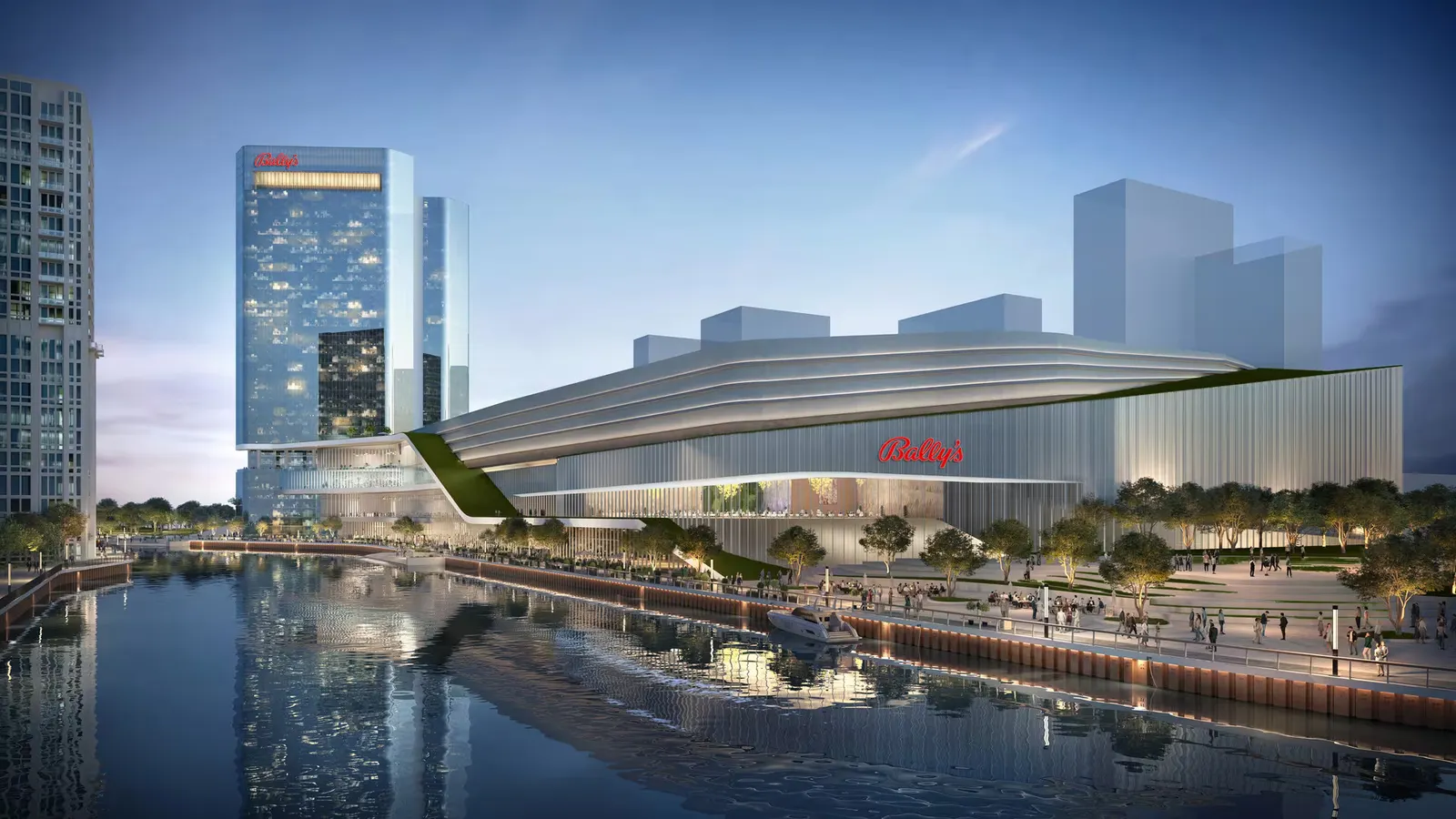
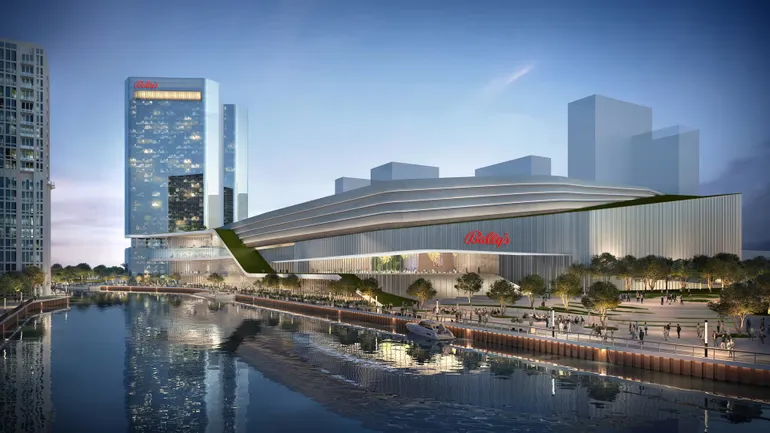
Simultaneously, Bally’s core operations and flagship development pipeline are hitting significant turbulence. Most notably, the company has scaled back construction on its flagship $1.7 billion permanent casino and hotel complex in Chicago. This deceleration is not merely a product of the company’s capital constraints; it is also fueled by a bitter legislative dispute. Bally’s has strongly objected to the state’s potential legalization of video gaming terminals (VGTs) as part of recent budget negotiations, arguing that the policy shift directly breaches the exclusivity terms of its municipal hosting agreement.
Compounding these pressures is a staggering corporate debt load. As of June 30, Bally’s reported long-term debt totaling approximately $4.5 billion, a heavy burden further complicated by post-merger integration costs following its high-profile acquisition by hedge fund Standard General.
Chronology of Events
The roots of Bally’s current financial distress and structural transformation can be traced through a timeline of pivotal corporate developments over recent years:
- 2003–2008: Future CFO Mircheva hones her financial acumen during a seven-year tenure at Goldman Sachs, eventually rising to the position of vice president.
- September 2015 – May 2025: Mircheva serves as a partner at Standard General, deepening her expertise in distressed asset management, hedge fund operations, and corporate turnaround strategies.
- September 2023 – May 2025: Mircheva takes on the role of Chief Financial Officer at The Queen Casino & Entertainment, guiding the regional gaming operator through localized market fluctuations.
- 2024: Bally’s enters into a definitive merger agreement with affiliates of Standard General, L.P., valuing the casino operator at approximately $4.6 billion in a cash-out transaction designed to take parts of the business private and consolidate gaming assets.
- February 2025: The multi-layered merger transaction between Bally’s Corporation, Standard General, and The Queen Casino & Entertainment is officially completed. The deal is heavily financed, including the issuance of $500 million in senior secured notes maturing in 2028. Shortly after the merger closes, Mircheva is formally named CFO of the newly expanded Bally’s Corporation.
- August 2026: Sensing mounting liquidity pressures and potential credit facility breaches, Bally’s leadership publicly announces that it is exploring multiple avenues to boost cash reserves, including asset divestitures, equity sales, and debt restructurings.
- August 9, 2026: Construction on the $1.7 billion Chicago casino complex is deliberately slowed down. The pause coincides with public friction between Bally’s and municipal officials over state-level proposals to legalize video gaming terminals, which management views as a threat to their exclusivity.
- August 14, 2026: Bally’s files its Form 10-Q with the Securities and Exchange Commission (SEC), officially including a going concern warning that highlights serious doubts regarding its ability to continue operations without immediate capital injections or credit waivers.
- September 8, 2026: Financial markets and industry analysts scrutinize the depth of Bally’s cash crunch, corporate debt obligations, and stalled urban development projects.
Supporting Data and Financial Metrics
A deeper examination of Bally’s regulatory filings reveals the precise quantitative pressures weighing on the organization. While the company has managed to trim some of its operating losses year-over-year, its fundamental capital structure remains precarious.
1. Balance Sheet and Debt Obligations
- Total Long-Term Debt: Approximately $4.5 billion as of the June 30 balance sheet cutoff.
- Revolving Credit Facility Risk: The company is at imminent risk of violating leverage and financial covenants attached to its revolving credit line within the next 12-month window.
- Merger-Related Financing: The early 2025 Standard General transaction relied heavily on leverage, notably featuring $500 million in senior secured notes due in 2028.
2. Earnings and Cash Burn
- Q2 Net Loss: Bally’s reported a net loss of $163.9 million for the second quarter.
- Year-Over-Year Comparison: Although the Q2 loss represents a slight narrowing compared to the $228.4 million net loss recorded in the corresponding period of the previous year, the absolute cash drain remains severe against the backdrop of high interest rates and capital-intensive construction commitments.
3. Capital Expenditures
- The Chicago Project: The multi-phase, highly anticipated Chicago complex represents a capital expenditure of roughly $1.7 billion. Slowing construction temporarily preserves cash flow but risks incurring delay penalties, contractual disputes, and deferred revenue streams.
Official Responses and Stakeholder Perspectives
As the liquidity crisis unfolds, responses from corporate leadership, municipal watchdogs, and labor representatives highlight the tension surrounding Bally’s future.

Bally’s Corporation and Executive Leadership
In its official SEC disclosures, Bally’s management has been transparent about the severity of the situation. In the Aug. 14 10-Q filing, the company noted:
“While actively engaged in discussions on several financing alternatives, the conditions and events raise substantial doubt about the company’s ability to continue as a going concern.”
Despite requests for immediate elaboration, representatives for Bally’s Corporation and CFO’s office did not immediately respond to media inquiries regarding specific timelines for asset sales or potential covenant waivers from lenders.
Regulatory and Legislative Friction
The political landscape in Illinois has added an extra layer of complexity to Bally’s corporate strategy. Municipal leaders and state lawmakers are currently grappling with budget shortfalls and alternative revenue sources. The inclusion of video gaming terminals (VGTs) into legislative budget discussions was intended to boost tax revenues across the state. However, Bally’s legal and executive teams have pushed back aggressively, maintaining that VGT expansion dilutes the commercial value of the exclusive downtown Chicago casino license they fought hard to secure, threatening the projected return on investment for the $1.7 billion buildout.

Implications for the Gaming Industry and Markets
The troubles facing Bally’s Corporation carry wide-ranging implications for the broader commercial gaming, hospitality, and municipal development sectors.
1. Investor Sentiment and Cost of Capital
Bally’s struggles underscore the unforgiving macroeconomic environment for capital-intensive entertainment companies. With elevated interest rates persisting, highly leveraged firms that relied on aggressive M&A strategies—such as the Standard General buyout—are finding it increasingly difficult to service debt without refinancing at significantly higher yields. A failure or distressed restructuring at Bally’s could chill investor appetite for mid-tier regional casino operators attempting large-scale urban developments.
2. The Future of Urban Casino Mega-Projects
The deceleration of the Chicago complex serves as a cautionary tale regarding public-private partnerships in the gaming industry. When municipal tax agendas shift—such as the unexpected push for widespread video gaming terminals—private investors caught in regulatory crossfires face compromised revenue models. If Bally’s is forced to scale back its project scope or seek external equity partners to complete the Chicago buildout, it could permanently alter the competitive landscape of the Midwest gaming market.
3. Executive Stewardship Under Pressure
For CFO and the broader financial team, the coming months will be a defining test of corporate turnaround execution. Successfully navigating the liquidity crisis will require balancing delicate negotiations with revolving credit lenders, securing viable asset divestitures in a lukewarm M&A market, and stabilizing equity investor confidence. Whether Bally’s can execute these maneuvers before covenant defaults trigger deeper operational restructuring remains one of the most closely watched storylines in corporate finance.
