

By Stevie Bonifield
Consumer Tech Desk
If you walked away from Apple’s latest hardware event with the sinking feeling that upgrading your smartphone is going to hurt your wallet more than ever, you aren’t imagining things. The era of predictable, incremental pricing for consumer mobile devices has officially drawn to a close.
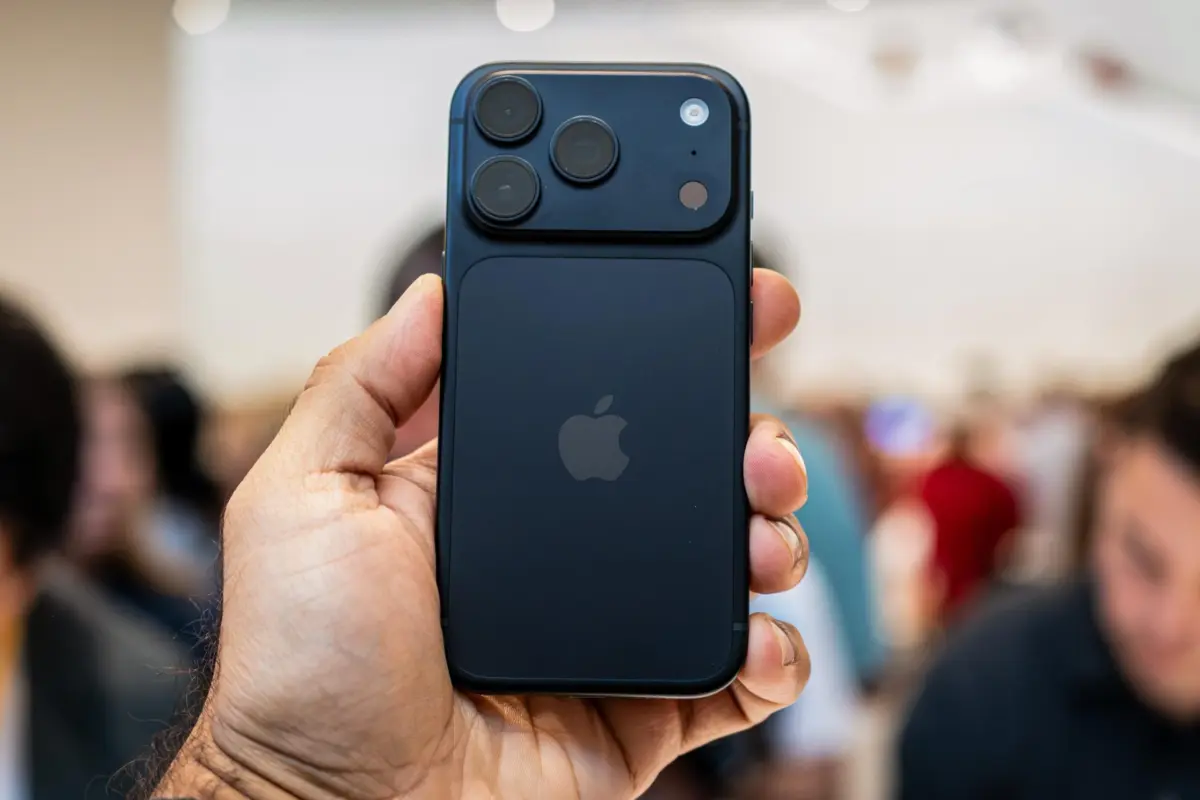
Following Apple’s reveal of the iPhone 18 Pro and Pro Max—which command starting prices of $1,199 and $1,299, respectively—consumers are confronting a harsh reality. These figures represent a stark $100 price hike over their predecessors. Worse still, budget-conscious buyers cannot simply sidestep the increase by turning to older models; Apple has raised prices across its legacy lineup by an identical $100 margin.
Crucially, this is not an isolated Cupertino anomaly. Across the entire consumer technology landscape, a uniform $100 baseline price increase has swept through the industry like a tidal wave. From Silicon Valley flagships to legacy Japanese manufacturers and foldable innovators, the cost of staying connected has fundamentally shifted.
Main Facts: The New Financial Reality of Mobile Tech
The market-wide price correction is sweeping across nearly every major brand, erasing the traditional value tiers that consumers have relied on for over a decade.
Google and Samsung have mirrored Apple’s playbook precisely. The Google Pixel 11 series debuted with a starting price of $899, marking a direct $100 jump from the $799 price point held by the Pixel 10. Meanwhile, Samsung’s ultra-premium foldable line has scaled new heights, with the Galaxy Z Fold 8 Ultra launching at a staggering $2,099—a $100 increase over the Galaxy Z Fold 7.
Escaping to alternative brands offers no sanctuary. Sony’s newly announced Xperia 10 VIII carries a significantly heavier price tag, inflated by roughly £150 compared to the previous generation. Motorola’s acclaimed Razr lineup has similarly added $100 to its entry barrier. Compounding these increases is a troubling industry trend: according to recent smartphone sales data, the once-thriving market for sub-$100 ultra-budget phones is rapidly contracting and on the verge of disappearing entirely.
Perhaps most frustrating for consumers is that these higher price tags rarely correlate with monumental leaps in hardware capability. Many of this year’s devices feature identical camera modules, recycled chassis designs, and iterative software updates, forcing buyers to pay more simply to maintain the status quo.
Chronology: How the 2026 Price Surge Unfolded
The widespread inflation of smartphone prices did not happen overnight. It is the culmination of a multi-year squeeze on global supply chains, manufacturing constraints, and macroeconomic pressures.
- Late 2024 – Early 2025: Early warnings emerged from component manufacturers and supply chain analysts regarding tightening silicon and memory supplies. Tech executives began quietly warning investors that component costs were starting to decouple from historical deflationary curves.
- Mid-2025: The explosion of generative AI infrastructure began placing immense demands on global fabrication plants. Hyperscale data center builders aggressively bought up available production lines for high-bandwidth memory (HBM) and advanced dynamic RAM (DRAM), squeezing consumer electronics suppliers out of the queue.
- Early 2026: Structural cracks appeared in product pricing strategies. Carl Pei, CEO of Nothing, revealed publicly that memory costs for the company’s hardware projects had literally doubled by the time production ramped up for the Nothing Phone 4A.
- Spring 2026: Major silicon designer Qualcomm announced sweeping price hikes on its mobile processors during its Q2 earnings reports, citing escalating wafer and packaging costs.
- Summer – Fall 2026: The dominoes finally fell. Major manufacturers—led by Samsung and Google, and capped off by Apple’s autumn hardware event—simultaneously adjusted their retail pricing structures upward by $100 across both flagship and mid-range tiers.
Supporting Data and Supply Chain Economics: The AI Data Center Bottleneck
To understand why a pocket-sized computer now demands a four-figure investment, one must look far beyond the assembly lines of Shenzhen or Cupertino. The root cause of the current crisis is a profound supply chain imbalance driven almost entirely by the insatiable global demand for artificial intelligence infrastructure.
The construction and expansion of massive AI data centers worldwide have triggered severe, systemic component shortages. Manufacturers like Micron, Samsung Semiconductor, and SK Hynix have aggressively pivoted their factories to prioritize high-margin enterprise memory and AI accelerators over the standard DRAM and NAND flash used in consumer smartphones.

RAM price hikes have been particularly punishing. Memory is a foundational building block of any modern computing device, and when its cost doubles within a matter of months, original equipment manufacturers (OEMs) are left with two choices: absorb the losses and watch profit margins evaporate, or pass the burden down to the consumer. Predictably, corporations have chosen the latter.
Furthermore, these component constraints are not temporary blips. Industry analysts and supply chain economists warn that the RAM and semiconductor shortages could persist for years. With billions of dollars continuing to pour into enterprise AI build-outs, consumer electronics will likely remain second in line for critical silicon components for the foreseeable future.
Official Responses and Corporate Strategy
The tech industry’s leadership has been remarkably candid—if defensive—about the macroeconomic forces compelling these pricing decisions.
During earnings calls and product briefings throughout the year, executives have openly pointed the finger at rising input costs. Qualcomm’s leadership defended their processor price adjustments by highlighting the escalating complexities of advanced node semiconductor manufacturing, noting that shrinking transistors down to microscopic scales is no longer yielding the cost reductions historical Moore’s Law models once promised.
Independent upstarts like Nothing have taken a more transparent approach. By openly discussing the doubling of memory component costs, executives have attempted to foster consumer empathy in an otherwise hostile pricing climate.
Apple’s late entry into this wave of price hikes is particularly telling. Historically, Apple has possessed the supply chain leverage and cash reserves to absorb inflationary shocks better than almost any competitor. The fact that even Apple has capitulated and raised prices across both new flagships and legacy models signals a profound structural shift. Market watchers note that Apple’s delayed price adjustment mirrors its historical hesitation to enter new product categories—such as its late arrival to the foldable market with the rumored iPhone Duo foldable. By finally raising prices, Apple is implicitly signaling what industry insiders have feared for months: these elevated price points are permanent, and the baseline cost of mobile technology has reset for good.
Implications: What This Means for Consumers and the Future of Mobile Tech
The permanent upward shift in smartphone pricing carries profound implications for the global consumer electronics market.
First, smartphone replacement cycles will lengthen significantly. Consumers who previously upgraded their devices every two years—enticed by carrier subsidies, trade-in deals, or minor aesthetic updates—will now be incentivized to hold onto their hardware for three, four, or even five years. When a phone costs $1,200 or more, it transitions from a disposable consumer good into a durable, long-term investment, much like a laptop or a home appliance.
Second, the death of the budget tier threatens digital inclusion. As the sub-$100 and low-end budget phone markets collapse due to component scarcity, lower-income consumers and developing markets will face steep barriers to entry. Access to modern mobile computing, high-speed connectivity, and digital financial services becomes increasingly expensive to maintain.
Finally, market consolidation will accelerate. Major giants like Apple, Samsung, and Google possess the financial muscle and brand loyalty to weather consumer pushback against higher prices. Smaller, independent manufacturers, however, will find it extraordinarily difficult to compete when component costs eat away at their razor-thin profit margins. We may soon witness a contraction in the number of smartphone brands available on store shelves, leaving consumers with fewer choices.
The era of cheap, ubiquitous mobile upgrades is over. As artificial intelligence continues to reshape the global technology landscape, the devices in our pockets are collateral damage in a much larger industrial transformation—leaving consumers to foot an increasingly heavy bill.
