

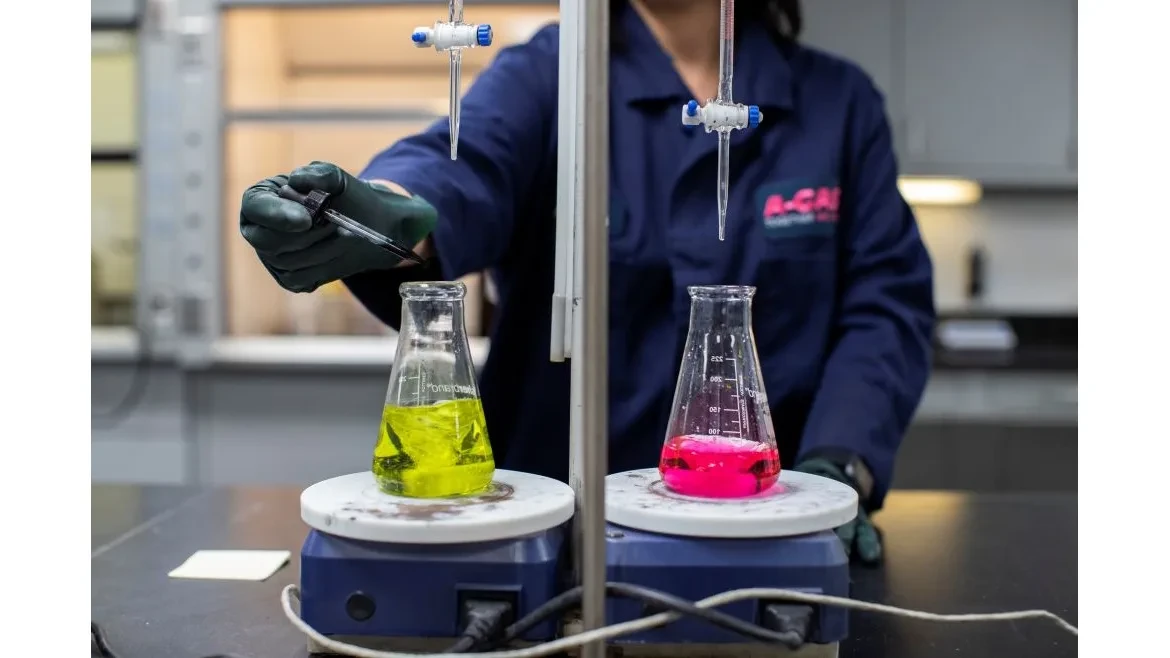
DARTMOUTH, Nova Scotia — In a milestone development for the North American HVACR sector, refrigerant management and reclamation leader A-Gas International has announced that its laboratory facility in Dartmouth, Nova Scotia, has officially earned certification from the Air-Conditioning, Heating, and Refrigeration Institute (AHRI).
The accreditation, achieved following rigorous evaluations of the facility’s testing methodologies and quality control systems, establishes the Dartmouth site as the single AHRI-certified refrigerant testing laboratory in all of Canada. The facility was integrated into the A-Gas network earlier this year through the company’s strategic acquisition of Refrigerant Services Inc. (RSI).
By bringing globally recognized testing benchmarks directly to Canadian soil, the certification eliminates longstanding logistical roadblocks, reduces cross-border friction, and dramatically accelerates turnaround times for local industry stakeholders navigating environmental compliance and refrigerant reclamation.
Main Facts
The newly certified Dartmouth laboratory operates at the vanguard of environmental compliance and chemical analysis for the heating, ventilation, air conditioning, and refrigeration (HVACR) industries.
- Exclusive Status: The Dartmouth facility is currently the only AHRI-certified refrigerant laboratory located within Canada.
- Network Integration: The lab is one of three AHRI-certified facilities operated by A-Gas in North America, joining sister sites in Rhome, Texas, and Bowling Green, Ohio. A-Gas also maintains a second Canadian facility in Stoney Creek, Ontario, which operates under the strict guidelines of AHRI Standard 700.
- Regulatory Benchmark: The certification confirms that the Dartmouth laboratory tests refrigerants in strict adherence to AHRI Standard 700: Specifications for Refrigerants. This globally recognized standard dictates purity levels, allowable contaminant limits, and testing protocols for fluorocarbons, hydrocarbons, and carbon dioxide ($textCO_2$) refrigerants.
- Logistical Transformation: Canadian HVACR contractors, wholesalers, and industrial operators no longer need to ship refrigerant samples across the international border to the United States for certified analysis, drastically reducing shipping costs, duties, customs paperwork delays, and total turnaround times.
Chronology of Expansion and Certification
The journey toward establishing Canada’s premier certified refrigerant laboratory spans strategic corporate growth, localized acquisitions, and rigorous technical validation.
March 2026: The Strategic Acquisition of RSI
The foundation of this milestone was laid in March 2026, when A-Gas International finalized its acquisition of Refrigerant Services Inc. (RSI), a well-established player in the Canadian refrigerant management and recovery space. Based in Dartmouth, Nova Scotia, RSI brought with it deep regional relationships, robust infrastructure, and a skilled technical workforce specializing in the recovery, reclamation, and lifecycle management of ozone-depleting substances and high-global-warming-potential (GWP) gases. Recognizing the strategic value of establishing a footprint in Atlantic Canada that could serve the broader national market, A-Gas immediately initiated plans to elevate the facility’s analytical capabilities to meet top-tier international standards.
Mid-2026: Laboratory Modernization and Quality Calibration
Following the acquisition, A-Gas invested heavily in upgrading the Dartmouth laboratory’s instrumentation, data management systems, and quality assurance protocols. Technicians and laboratory managers underwent intensive training to ensure that every facet of the facility’s operations could meet the stringent auditing requirements mandated by AHRI. This phase focused heavily on aligning local testing equipment—such as gas chromatographs and moisture analyzers—with the exacting precision required to detect trace contaminants down to parts-per-million (ppm) levels.
Late 2026: Official AHRI Certification Granted
Culminating months of calibration and third-party auditing, AHRI formally granted laboratory certification to the Dartmouth facility. The designation validates that the laboratory’s testing procedures, staff competencies, and physical infrastructure comply fully with the rigorous criteria of AHRI Standard 700. With this certification, the Dartmouth site joined an elite tier of testing facilities capable of providing legally defensible, universally accepted certificates of analysis for reclaimed and virgin refrigerants alike.
Supporting Data: Understanding AHRI Standard 700
To appreciate the significance of the Dartmouth laboratory’s new certification, one must examine the role of AHRI Standard 700 (Specifications for Refrigerants) within the modern chemical and HVACR landscape.
As global environmental regulations phase down hydrofluorocarbons (HFCs) under frameworks like the Kigali Amendment to the Montreal Protocol, the purity and verification of reclaimed refrigerants have become paramount. Contractors and equipment manufacturers cannot afford to use subpar or contaminated gases, which can severely damage commercial compressors, reduce energy efficiency, and void equipment warranties.
AHRI Standard 700 establishes the definitive benchmarks for refrigerant purity, regardless of whether the product is newly manufactured, reclaimed, or repackaged. Key parameters governed by Standard 700 include:
- Composition and Purity: The standard mandates the exact percentage of active chemical components required for a given refrigerant blend or pure compound, ensuring it matches virgin specifications.
- Contaminant Limits: Strict maximum thresholds are established for moisture, non-condensable gases (such as air), high-boiling residues, and other halogenated organic contaminants.
- Broad Applicability: Standard 700 protocols apply across a massive spectrum of chemical families, including chlorofluorocarbons (CFCs), hydrochlorofluorocarbons (HCFCs), HFCs, hydrofluoroolefins (HFOs), lower-flammability A2L refrigerants, and hydrocarbon variants.
Prior to the certification of the Dartmouth lab, Canadian companies wishing to verify that their reclaimed refrigerant batches met AHRI Standard 700 often had to contend with the friction of international logistics. By anchoring these capabilities in Nova Scotia—and matching them with parallel quality practices at the Stoney Creek, Ontario facility—A-Gas has provided the Canadian market with localized, verifiable assurance that reclaimed gases match the performance and safety of virgin alternatives.
Official Responses and Industry Perspective
Leadership at A-Gas has emphasized that the Dartmouth facility’s certification is not merely a corporate achievement, but a vital service enhancement designed to alleviate longstanding operational bottlenecks for Canadian businesses.
"A-Gas is incredibly proud to bring businesses a resource within Canada to meet their testing and analysis needs without the added burden of trans-border logistics," stated Andrew Stride, General Manager for A-Gas in Canada.
Stride noted that the historical necessity of shipping chemical samples across the Canada-U.S. border introduced numerous complications, including unpredictable customs delays, cross-border shipping fees, and brokerage paperwork. These hurdles frequently translated into extended equipment downtime for commercial facilities waiting on refrigerant analysis before recharging systems.
Industry analysts have echoed these sentiments, pointing out that supply chain resilience in the HVACR sector depends heavily on domestic infrastructure. With tightening environmental regulations compelling facilities to recover and reclaim refrigerants rather than vent or destroy them, the demand for rapid, certified laboratory analysis has skyrocketed. By establishing the Dartmouth site as a domestic hub for AHRI-compliant testing, A-Gas has positioned itself at the center of Canada’s circular economy for refrigerants.
Implications for the Canadian HVACR Industry
The AHRI certification of the Dartmouth laboratory carries profound implications for contractors, wholesalers, environmental regulators, and end-users across Canada.
1. Elimination of Cross-Border Friction
For years, Canadian HVACR operators sending refrigerant samples to U.S.-based labs faced the tedious realities of international shipping. Chemical samples are classified as hazardous materials or dangerous goods under various transport regulations, requiring specialized packaging, labeling, and documentation. Delays at customs could stall projects for days or weeks. The Dartmouth lab removes these barriers entirely for Canadian shipments, streamlining the workflow from field recovery to laboratory certification.
2. Drastically Reduced Turnaround Times
In commercial refrigeration—such as supermarket chains, cold-storage warehouses, and data centers—time is measured in revenue. When a refrigeration system experiences a leak or requires an oil and refrigerant audit, every hour of downtime carries significant financial losses. Localized testing means that turnaround times for lab analysis and refrigerant verification drop from weeks to mere days, allowing technicians to restore systems to operational status with unprecedented speed.
3. Cost Savings for Local Businesses
By removing international shipping fees, customs brokerage charges, and import duties associated with cross-border sample transit, the Dartmouth lab delivers direct cost savings to Canadian contractors and facility managers. These savings enhance the commercial viability of using reclaimed refrigerants, making sustainable practices more economically attractive than purchasing expensive virgin gases.
4. Supporting the Transition to Low-GWP Alternatives
As the HVACR industry transitions toward next-generation refrigerants—including mild-to-moderately flammable A2Ls, natural refrigerants like hydrocarbons, and $textCO_2$ systems—the complexity of chemical analysis increases. The Dartmouth laboratory, operating under the rigorous umbrella of AHRI Standard 700, is fully equipped to handle these evolving compounds. This ensures that the Canadian market has access to safe, compliant, and thoroughly tested gases, safeguarding public safety and equipment longevity as environmental standards continue to tighten globally.
Conclusion
The certification of the A-Gas refrigerant laboratory in Dartmouth, Nova Scotia, represents a watershed moment for Canada’s heating, ventilation, air conditioning, and refrigeration industries. By bridging the gap between rigorous international standards and domestic accessibility, A-Gas has reinforced its commitment to environmental stewardship, quality assurance, and operational efficiency.
As Canadian businesses face mounting pressures to adopt sustainable, circular-economy practices for refrigerant management, the Dartmouth facility stands ready to deliver faster, cheaper, and fully compliant testing solutions—ensuring that the Canadian HVACR sector remains resilient, competitive, and environmentally responsible for years to come.
