Main Facts: A New Contender Claims the Budget EV Throne
The Canadian electric vehicle landscape is experiencing a seismic shift in affordability. Just weeks after Kia captured the headlines—and the crown—for offering Canada’s lowest-priced electric vehicle with the launch of the 2027 EV3, Nissan has decisively struck back.
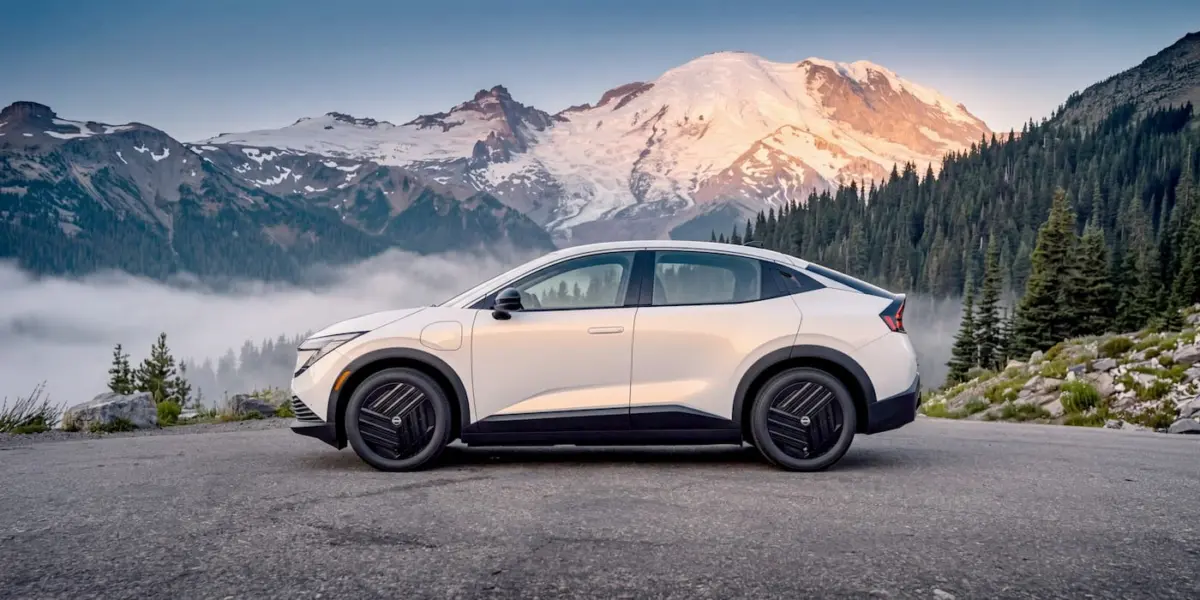
The Japanese automaker has announced the introduction of the 2027 Nissan Leaf S, a new entry-level trim that undercuts the competition with a starting Manufacturer’s Suggested Retail Price (MSRP) of just CA$34,998 (translating to a selling price of CA$37,966 once destination and dealer fees are applied).
This strategic pricing places the Leaf S roughly CA$2,000 below the entry-level Kia EV3 Light, which launched at CA$36,995 (CA$39,744 all-in). Furthermore, because the new Leaf S qualifies for Canada’s federal Electric Vehicle Affordability Program (EVAP) incentive, eligible buyers can bring the actual out-of-pocket starting price down to under CA$30,000.
For budget-conscious Canadian consumers looking to make the leap away from internal combustion engines without breaking the bank, this pricing war represents a watershed moment for mass-market EV adoption.
Chronology: The Rapid Escalation of Canada’s Affordable EV Market
To understand how quickly the Canadian EV market is moving, one only needs to look at the timeline of the past few months.
August 2026: Kia officially launches the 2027 EV3 in Canada. With a starting price of CA$36,995, the compact crossover captures the title of Canada’s most affordable new electric vehicle, setting a new benchmark for value, range, and technology in the entry-level segment.
September 2026: Nissan responds swiftly by announcing the expansion of its Leaf lineup. By introducing the stripped-down, highly accessible Leaf S trim featuring a 53 kWh battery, Nissan successfully recaptures the "most affordable EV" title it historically held for years.
Late 2026 and Beyond: Industry analysts anticipate further downward pressure on entry-level EV pricing. With a looming wave of highly competitive, low-cost electric vehicles from Chinese manufacturers expected to hit North American shores in the near future, legacy automakers are racing to establish brand loyalty at the lowest possible price points today.
Supporting Data: Specifications, Pricing, and Charging Face-Off
When comparing the two budget-friendly electric heavyweights, Canadian buyers are presented with distinct choices regarding battery capacity, range, performance, and everyday usability.
2027 Nissan Leaf Lineup & Pricing in Canada
The newly introduced Leaf S is tailored strictly for cost-conscious drivers, while higher trims cater to those requiring longer range and punchier performance.
2027 Nissan Leaf Grade
Battery Capacity
MSRP
Selling Price*
LEAF S
53 kWh
CA$34,998
CA$37,966
LEAF S+
75 kWh
CA$45,198
CA$48,139
LEAF SV+
75 kWh
CA$48,198
CA$51,139
LEAF PLATINUM+
75 kWh
CA$52,998
CA$55,966
Note: Selling prices include applicable freight and pre-delivery inspection fees.
Performance & Range:
Leaf S (Entry-Level): Equipped with a 53 kWh battery pack and a single front-mounted electric motor generating 174 horsepower. It delivers an estimated EPA range of up to 341 km.
Leaf S+ and Higher: Upgrades to a larger 75 kWh battery and a 214-horsepower motor, extending the maximum driving range up to 488 km.
2027 Kia EV3 Lineup & Pricing in Canada
Kia’s contender approaches the market with a broader spread of trims, offering more choices in battery size, drivetrain configurations (Front-Wheel Drive vs. All-Wheel Drive), and performance outputs.
2027 Kia EV3 Trim
MSRP
All-In Price*
Light FWD
CA$36,995
CA$39,744
Wind FWD
CA$40,995
CA$43,744
Wind AWD
CA$43,495
CA$46,244
Land FWD
CA$43,495
CA$46,244
Land AWD
CA$45,995
CA$48,744
GT-Line FWD
CA$45,995
CA$48,744
GT-Line AWD
CA$48,495
CA$51,244
GT-Line Limited FWD
CA$49,995
CA$52,745
GT-Line Limited AWD
CA$52,495
CA$55,245
GT AWD
CA$55,995
CA$58,746
*Includes CA$2,185 freight and up to CA$564 for other applicable fees.
Performance & Range:
EV3 Light: Utilizes a 58.3 kWh battery providing up to 356 km (221 miles) of range.
Higher Trims (Wind, Land, GT-Line, GT): Feature a larger 81.4 kWh battery pushing range up to 517 km (321 miles).
Drivetrains: FWD models feature a single 201-horsepower motor. AWD variants add a rear motor for a combined output of 261 horsepower, while the performance-focused EV3 GT peaks at 288 horsepower.
Charging and Technology Comparison
Both vehicles have modernized their hardware to align with North American infrastructure standards, featuring native NACS (North American Charging Standard) charge ports.
When plugged into a fast charger, the Nissan Leaf can replenish its battery from 10% to 80% in approximately 35 minutes.
The Kia EV3 (with its 58.3 kWh battery) is slightly quicker on the draw, managing the same 10%-to-80% top-up in roughly 29 minutes.
Inside the cabin, both automakers refuse to skimp on tech despite the low entry-level price points. Both models come equipped with dual 12.3-inch displays handling the digital instrument cluster and infotainment duties, complete with wireless Apple CarPlay and Android Auto integration as standard equipment. The Kia EV3 adds a distinct touch with an integrated 5-inch climate control display panel.
The US Market Contrast
It is worth noting how pricing and availability shift south of the border. In the United States, the 2027 Kia EV3 Light starts at an aggressive $29,890 utilizing the 58.3 kWh battery. Meanwhile, Nissan has chosen not to bring the smaller 53 kWh battery pack to the US market; instead, American buyers access the Leaf starting with the 75 kWh battery in the Leaf S+ grade, which starts at $29,990 and delivers up to 303 miles of range.
Official Responses: What Industry Leaders Are Saying
The announcement of the Leaf S has generated significant buzz within corporate boardrooms and automotive circles alike.
Nissan Canada’s President, Steve Rhind, emphasized the company’s ongoing commitment to democratizing electric mobility for everyday drivers. In an official statement regarding the new entry-level trim, Rhind noted:
"The new grade brings the lowest-priced entry point into EV ownership for Canadians."
Automotive analysts point out that this move demonstrates Nissan’s acute awareness of the financial pressures currently facing the average consumer. High interest rates and inflation have made vehicle affordability a primary concern for Canadian households. By undercutting Kia and leveraging federal incentive programs to drop the effective purchase price below the psychological CA$30,000 threshold, Nissan aims to recapture market share lost to newer, flashier crossovers.
Implications: The Future of the Budget EV Market in Canada
While Nissan’s aggressive pricing strategy secures the Leaf the crown as Canada’s most affordable electric vehicle today, industry observers agree that this victory may be short-lived.
Heightened Domestic Competition: Traditional rivals like Hyundai, Chevrolet, and Volkswagen are closely monitoring this price war. As manufacturing efficiencies scale, competitors will likely introduce their own sub-CA$35,000 offerings to capture entry-level buyers.
The Looming Import Wave: Perhaps the most significant pressure on legacy automakers comes from abroad. A flood of low-cost electric vehicles originating from Chinese manufacturers is widely expected to enter the Canadian market in the near future. These vehicles, often produced with dramatically lower supply chain costs, threaten to disrupt baseline pricing across the entire industry.
Consumer Wins: For now, the direct beneficiary of this corporate chess match is the Canadian consumer. Whether choosing the utility and tech-forward cabin of the Kia EV3 or the proven, budget-friendly pedigree of the Nissan Leaf S, buyers have never had access to more compelling, affordable electric choices.
As showrooms prepare to receive these 2027 models, the question shifts from whether Canadians are willing to adopt electric vehicles to which brand will deliver the best value proposition.
Which entry-level electric car would you drive home? Does the Nissan Leaf’s sub-CA$35,000 price tag win you over, or does the Kia EV3’s crossover styling and range sway your vote? Let us know your pick in the comments below.