

Main Facts
The consumer tech landscape is bracing for a paradigm shift in Google-branded hardware. Detailed leaks originating from MacObserver and subsequently corroborated by industry monitors have unveiled the full specifications of the upcoming Lenovo Googlebook 15 (identified internally by model number GB 151PH12). Gone are the days when a Google-powered laptop automatically signaled a budget-friendly, plastic-clad educational device meant primarily for web browsing.
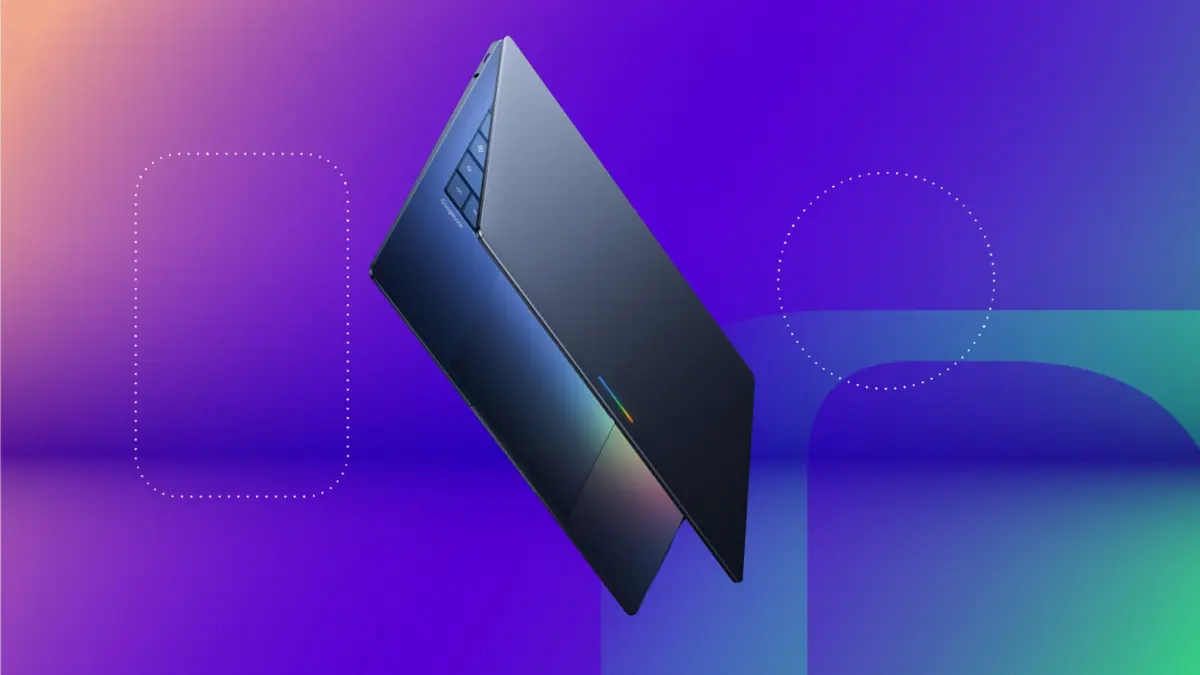
Instead, the Googlebook 15 positions itself squarely in the luxury productivity segment. Built with top-tier materials and cutting-edge internals, the device is slated to feature an Intel Core Ultra 5 325 processor paired with Intel integrated graphics (leveraging Intel’s Panther Lake-H platform architecture). It boasts an expansive 15.3-inch, 2,880-by-1,800-pixel OLED touchscreen display running at a 120Hz refresh rate, a 16:10 aspect ratio, and razor-thin bezels.
Weighing just 2.84 pounds and measuring 13.43 by 9.29 by 0.63 inches, the laptop combines featherlight portability with uncompromising performance specifications. Users will have configuration options ranging between 16GB and 32GB of LPDDR5x RAM, alongside 256GB or 512GB of high-speed solid-state storage. Powering the machine is a robust 70-watt-hour battery designed to deliver up to 11 hours of continuous use on a single charge.
Unlike traditional Chromebooks that relied on stripped-down operating systems, the Googlebook aims to bridge the gap between desktop workstations and mobile ecosystems. It fully integrates the entire universe of Android applications natively, introduces deep Gemini AI capabilities via a dedicated hardware "G" key, and debuts advanced security features like Google facial authentication—a clear challenge to Apple’s Face ID.

Chronology of Events
The road to the Googlebook 15 has been marked by strategic rollouts and inevitable supply-chain and regulatory breadcrumbs.
- May: Google formally acknowledges the concept of a new class of high-end productivity devices, signaling a strategic pivot away from the traditional, low-cost Chromebook identity and promising an autumn retail release.
- Late Summer / Early Fall: Whispers across developer channels and firmware updates point toward deep ecosystem integration, notably tying into advanced Android synchronization tools and AI-driven widget generators akin to Google’s "Project Toscana" mobile initiatives.
- Mid-September: The floodgates open via MacObserver, which publishes the most comprehensive leak to date. The exclusive report reveals full spec sheets, marketing renders, aesthetic layout schematics, and an unexpected bundle strategy featuring matching accessories.
- Present Day: Industry experts anticipate an official, imminent launch event given the typical fall product cycle window, leaving pricing and exact shelf dates as the final major pieces of the puzzle.
Supporting Data & Technical Specifications
A closer examination of the leaked specification sheet reveals a remarkably dense and capable hardware loadout. Every millimeter of the chassis appears meticulously engineered to compete directly with elite Windows ultrabooks and Apple’s MacBook Pro lineup.
Display and Visuals
- Panel Type: OLED Touchscreen
- Screen Size: 15.3 inches
- Resolution: 2880 x 1800 pixels (16:10 aspect ratio)
- Refresh Rate: 120Hz
- Color Accuracy: 100% DCI-P3 color gamut
- Brightness: 500 nits peak brightness with ultra-slim bezels
Performance and Internals
- Processor (CPU): Intel Core Ultra 5 325 (Panther Lake-H platform architecture)
- Graphics (GPU): Intel Integrated Graphics
- Memory (RAM): 16GB or 32GB LPDDR5x
- Storage: 256GB / 512GB NVMe SSD options
- Battery: 70-watt-hour capacity (rated for up to 11 hours of battery life)
Connectivity and Ports
- Wireless: Wi-Fi 7 and Bluetooth 5.4 support
- Left Side: 1x Thunderbolt 4 port, 1x USB 3.2 Type-A port, 3.5mm audio jack
- Right Side: 1x Thunderbolt 4 port, 1x HDMI 2.0 output
Ergonomics, Audio, and Security
- Webcam & Biometrics: 5MP RGB webcam equipped with dual microphones, a physical privacy shutter, a fingerprint sensor, and advanced Google facial authentication.
- Audio: Quad-speaker array featuring Dolby Atmos tuning, clearly visible flanking the keyboard in leaked renders.
- Input: Backlit keyboard featuring a dedicated Google "G" key positioned between the Function and Alt keys; a spacious haptic trackpad measuring 150 by 95 millimeters.
- Exterior Aesthetics: A signature "Glowbar" indicator strip on the lid to display battery charging status and system feedback visually.
Accompanying Ecosystem Accessories
The hardware ecosystem leak goes beyond just the laptop itself, revealing a hardware bundle strategy intended to match the Googlebook 15:
- Lenovo E310 True Wireless Earbuds
- Lenovo 540 Convertible Tote Backpack
- Lenovo "AI Mouse": A productivity mouse bearing a matching LED Glowbar indicator strip, likely housing cross-device sharing capabilities similar to Logitech’s popular MX Master line.
Official Responses
As is standard corporate procedure during major pre-announcement information leaks, official channels have remained tight-lipped. Representatives for Google did not immediately respond to media inquiries or requests for comment regarding the accuracy of the leaked documentation, manufacturing timelines, or software exclusivity terms. Lenovo has similarly declined to issue statements confirming the authenticity of the GB 151PH12 platform codes, though the leaked product identification nomenclature rigidly adheres to the company’s internal product categorization standards.

Implications and Market Impact
The transition from budget-friendly Chromebooks to a high-end "Googlebook" carrying premium hardware holds massive implications for the personal computing market.
Redefining the Chrome Ecosystem
For years, Chrome OS has been pigeonholed as an ideal operating system for education and light web browsing, but it struggled to capture the hearts of power users, creative professionals, and enterprise workers who relied on the complex local file management and heavy software suites of Windows and macOS.
As Josh Goldman, managing editor for CNET’s computing coverage, points out, the foundational philosophy of the Googlebook is simple: "Using a Googlebook shouldn’t be all too different from using a Chromebook or any other laptop; you’ll just get more Gemini AI-powered tools built in, along with access to the full universe of Android apps."
By granting laptop users instantaneous access to native Android applications, seamless cross-device synchronization (reminiscent of Microsoft Phone Link), and faster feature deployment cycles—such as getting cutting-edge mobile AI tools like custom widget generators simultaneously with phones—Google is effectively erasing the boundary lines between mobile and desktop computing environments.

Premium Pricing and Competitive Positioning
Because of these high-end specifications—including the gorgeous 120Hz OLED display, Wi-Fi 7, Thunderbolt 4 ports, and Panther Lake-H processors—industry analysts warn that consumers should throw away any expectations of budget pricing.
Early estimates from outlets like 9to5Google place the Googlebook 15 in a price bracket comparable to elite enterprise and consumer machines. For instance, it is widely expected to rival the pricing tiers of Lenovo’s ThinkPad X9 15 Aura Edition, which typically starts at around $1,519 for baseline configurations and can scale upward of $2,396 for fully maxed-out variants.
Target Audience and Availability Cautions
By aiming directly at the MacBook and high-end Windows laptop demographic, Google and Lenovo are targeting professionals, digital creators, and power users who demand premium build quality and advanced processing muscle. However, initial feature rollouts may carry caveats; specific AI capabilities, proactive help features, and ecosystem integrations are anticipated to be geographically restricted, language-dependent, and gated for users aged 18 and older.
If the leaks prove true, the Lenovo Googlebook 15 will not merely be an updated laptop; it represents Google’s most aggressive and refined attempt yet to unify its hardware, mobile OS, and artificial intelligence into a single, cohesive, premium desktop experience.
