

By The Verge Newsroom
Enriched and Expanded Edition
Main Facts
Apple’s latest product launch cycle has officially upended a decade of predictable smartphone iterations, delivering a slate of hardware and software updates that redefine the company’s trajectory. In what is already being heralded as a historic turning point for consumer technology, Apple used its keynote event not only to debut a completely reimagined iPhone lineup, but also to introduce a new chief executive officer and the company’s long-awaited entry into the foldable device market.
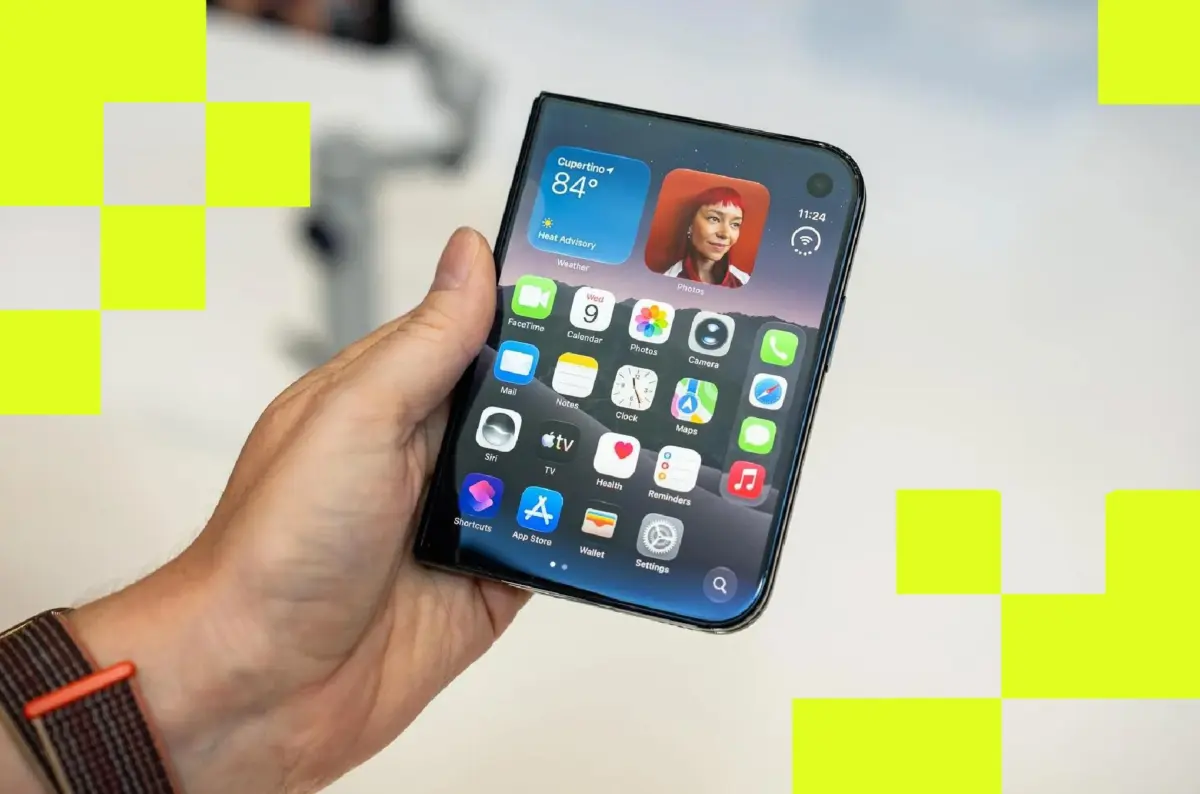
At the helm of the presentation was John Ternus, stepping onto the grand stage in Cupertino for his inaugural address as Apple’s CEO. Ternus’s baptism by fire involved the introduction of Apple’s first-ever foldable phone, the iPhone Duo, a device designed to synthesize the best engineering lessons learned from years of Android foldable development.
Alongside the foldable revelation, the hardware announcements included:
- The iPhone 18 Pro: Featuring a groundbreaking variable aperture camera system that has sparked intense debate among mobile photography experts.
- The Next-Generation Apple Watch Lineup: Equipped with an expanded sensor array and a controversial, always-on microphone capable of real-time conversational summarization.
- Mac-Powered Local LLMs: A deep dive into the state of running large language models natively on Apple silicon, featured via a special segment with AI researcher CJ Trowbridge, Nilay Patel, and David Imel.
- The Return of the Thunder Round: A rapid-fire breakdown of peripheral industry news, ranging from OpenAI’s internal academic and mathematical dramas to the surging niche of digital ocarinas.
Chronology: A Packed Day in Cupertino
The events surrounding Apple’s latest product rollout unfolded across a meticulously choreographed timeline, starting with on-site hands-on sessions in Cupertino and culminating in a comprehensive breakdown on The Vergecast.
Morning: The Hands-On Testing Phase
Hours before the keynote went live to the public, select members of Apple’s press pool—including senior reviewers Allison Johnson and Victoria Song—were given exclusive, closed-door access to the hardware on Apple’s Cupertino campus.
- Johnson took the newly minted iPhone 18 Pro and the iPhone Duo through their paces, evaluating everything from hinge mechanics to low-light photography performance.
- Song focused heavily on the health and biometric capabilities of the new Apple Watch lineup, putting the updated sensor arrays through early stress tests.
Midday: The Keynote and CEO Succession
John Ternus took the stage to global anticipation. Taking over the reins as CEO, Ternus faced the monumental task of delivering a first impression that could match or exceed the legacies of his predecessors. By launching straight into the company’s first foldable phone, Ternus signaled a departure from caution, indicating that Apple is willing to aggressively chase and refine emerging form factors pioneered by competitors.
Afternoon: Deep-Dive Analysis on The Vergecast
Immediately following the keynote embargo lifts, The Vergecast recorded an exhaustive, multi-segment breakdown of the announcements.

- Segment 1: Jacob Kastrenakes and Allison Johnson dissected the iPhone 18 Pro’s variable aperture and the Android-inspired design choices of the iPhone Duo.
- Segment 2: Victoria Song joined Kastrenakes to interrogate the validity of the Apple Watch’s new health metrics and grapple with the privacy implications of an always-on conversational summary microphone.
- Segment 3: Nilay Patel and David Imel welcomed AI researcher CJ Trowbridge to evaluate the viability of local large language models (LLMs) running natively on modern Mac hardware.
- Segment 4: The episode closed with the long-awaited return of the "Thunder Round," rushing through peripheral tech stories to get Allison Johnson to her flight on time.
Supporting Data and Technical Breakdown
The technological leaps introduced at the event invite rigorous scrutiny. Below is a detailed examination of the core products and the engineering queries surrounding them.
1. The iPhone 18 Pro and Variable Aperture Optics
For years, mobile photography has relied heavily on computational photography—software stacking and algorithmic sharpening—to make up for the physical limitations of small smartphone sensors and fixed apertures. With the iPhone 18 Pro, Apple has introduced a physical variable aperture camera system.
- The Debate: Reviewers like Allison Johnson have raised critical questions regarding the primary driver of the camera’s generational leap. Is the true upgrade the ability to mechanically stop down the aperture, or is it simply the broader maximum light-gathering capability of the wider aperture itself?
- The Engineering: Variable apertures allow photographers to physically control depth of field and light intake at the hardware level, potentially reducing reliance on portrait-mode edge-detection artifacts. However, incorporating mechanical blades into a slim smartphone chassis remains an engineering marvel fraught with durability and thermal challenges.
2. The iPhone Duo: Borrowing from Android
Apple has historically taken its time entering new product categories, often waiting for technologies to mature before applying its own design philosophy. The iPhone Duo represents this exact playbook, observing the trials and errors of Samsung, Google, and OnePlus in the foldable space before launching its own take.
- Form Factor Adaptation: The iPhone Duo adopts what Apple views as the optimal balance between outer cover-screen usability and inner tablet-class canvas space.
- Software Synergy: iOS has been redesigned with dynamic window management tailored specifically to the dual-screen paradigm, smoothing out the transition points that historically plagued early-generation Android foldables.
3. Apple Watches, New Sensors, and the Always-On Mic
The new Apple Watch models introduced an expanded sensor array designed to capture deeper biometric data. However, this hardware advancement was overshadowed by a sweeping software feature: an always-on microphone dedicated to summarizing all of your conversations.
- Biometric "Vibes": Victoria Song’s initial testing raised a persistent question: do the new sensors output genuinely actionable, clinically valid medical metrics, or are they providing "vibesy" wellness data designed to make users feel productive about their health without offering deep diagnostic utility?
- The Conversational Mic: The inclusion of an always-on microphone that continuously processes and summarizes spoken dialogue introduces a radical paradigm shift for personal privacy wearables.
4. Running Local LLMs on the Mac
In a special segment featuring Nilay Patel, David Imel, and AI researcher CJ Trowbridge, the discussion shifted from consumer gadgets to developer infrastructure. The panel evaluated the current state of running local Large Language Models (LLMs) on Apple Silicon.
- Unified Memory Advantages: Thanks to Apple’s high-bandwidth unified memory architecture, Macs have quietly become surprisingly capable machines for running open-source models (like Llama and Mistral) locally.
- Privacy and Latency: Running models locally eliminates cloud latency and data-privacy risks, though thermal throttling and memory constraints on base-tier configurations remain bottlenecks for heavier workflows.
Official Responses and Industry Perspectives
While Apple’s corporate communications team has framed these announcements as a bold leap into the future, reactions from independent developers, privacy advocates, and industry analysts have been mixed.
- On the CEO Transition: Industry analysts have generally praised John Ternus’s performance, noting that his engineering background grounds his presentation style in tangible product execution rather than abstract marketing buzzwords. His willingness to dive straight into a foldable device signals a more aggressive, risk-tolerant Apple under his leadership.
- On Privacy and the Always-On Apple Watch: Civil liberties and digital privacy groups have already expressed apprehension regarding the Apple Watch’s conversational summary feature. While Apple maintains that all conversational processing occurs entirely on-device (leveraging the Neural Engine rather than cloud servers), the psychological and legal implications of continuous audio sampling in professional and personal environments are expected to draw intense regulatory scrutiny.
- On Open AI Math Drama and Peripheral Tech: The return of The Vergecast’s Thunder Round touched upon ongoing academic disputes surrounding OpenAI’s latest model benchmarks, highlighting a growing tension between commercial AI claims and independent mathematical verification.
Implications: What This Means for the Tech Ecosystem
Apple’s latest product drop is more than just a seasonal refresh; it establishes new battlegrounds across mobile hardware, artificial intelligence, and personal privacy.
- The Normalization of Foldables: Apple’s entrance into the foldable market via the iPhone Duo acts as an industry stamp of approval. Competitors who struggled to mainstream the form factor may now see a resurgence in consumer interest as Apple legitimizes the dual-screen category for the mass market.
- The Camera Hardware Renaissance: By introducing variable aperture to the iPhone 18 Pro, Apple is pushing the smartphone industry back toward physical optics. If consumers respond positively, competitors will be forced to move beyond pure computational photography and invest heavily in mechanical lens innovations.
- The Ambient Computing Dilemma: The Apple Watch’s always-on conversational summarization tool pushes wearable tech deeper into ambient computing. As devices listen closer and remember more of our daily lives, the boundary between helpful assistance and intrusive surveillance will continue to shrink. Society will soon have to decide how much ambient data collection it is willing to trade for convenience.
For continuous coverage of Apple’s product ecosystem, executive changes, and deep-dive technical analyses, stay tuned to ongoing updates across our network.
