

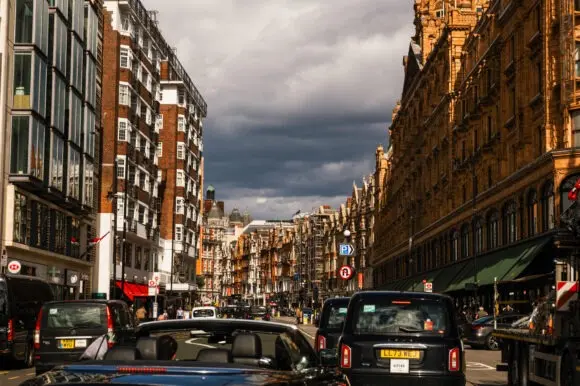
LONDON — More than two decades after billionaire Mohamed Al Fayed relinquished control of Harrods, the dark legacy of the late Egyptian tycoon continues to cast a long, expensive shadow over London’s most famous luxury department store. Nearly 300 women who allege they were sexually assaulted, harassed, or raped by Fayed during his tenure as chairman are now seeking up to £150 million ($203 million) in compensation.
This staggering valuation, formulated by legal representatives analyzing the profound economic and personal toll inflicted on the survivors, more than doubles the £62 million provision that Harrods set aside in 2024 to address the crisis. As the legal wrangling intensifies, the widening financial gap threatens to prolong a long-overdue reckoning for an institution whose name was once synonymous with unbridled luxury, but which is now inextricably linked to systemic institutional failure.
Main Facts: The Multi-Million-Pound Valuation Gap
The legal firm KP Law, which represents roughly 275 of the claimants—the vast majority of whom are former Harrods employees—revealed that the true cost of redressing the abuse will likely range between £100 million and £150 million. According to Lucy Traynor, a lawyer at KP Law, this expansive estimate is derived from a rigorous individual case analysis. Experts have meticulously evaluated lost earnings, pension shortfalls, the ongoing costs of medical and psychological treatment, and other professional setbacks.
By combing through historic tax records and consulting employment experts who specialize in tracing career trajectories across specific roles over time, the firm argues that standard compensation packages fall woefully short of reality.
For young women entering the workforce in the 1980s, 1990s, and 2000s—many of whom held positions as fashion buyers, personal assistants, or participants in Harrods’ elite management training programs—the abuse often derailed promising careers before they could truly begin. Trevor Gilbert, an employment expert witness specializing in career and earnings loss, noted that a £1 million loss per individual is not an unusually high sum for someone whose upward professional mobility was abruptly cut short.
"They do not have to have been a particularly high earner for losses to reach that level," Gilbert explained, noting that claimants naturally lean toward the higher end of the financial spectrum, while corporate defendants attempt to minimize exposure.
In contrast, Harrods maintains that its £62 million provision was never intended to act as an artificial cap. A Harrods spokesperson emphasized that the company’s redress program—which closed to new claims in March after being established last year—assesses each case strictly on its individual merits.
To date, more than 260 survivors have engaged with the store’s internal redress scheme, resulting in 113 settled claims. However, corporate accounts show that as of January, only £4 million had been distributed to claimants.
Chronology: From Decades of Silence to Public Reckoning
To understand the current impasse, one must trace the timeline of Fayed’s reign and the subsequent corporate fallout:
- 1985–2010: Mohamed Al Fayed owns and reigns over Harrods, cultivating a public persona of British institutional prestige while leveraging his absolute authority to allegedly prey upon young female staff members with impunity.
- 2010: Fayed sells Harrods to Qatar’s sovereign wealth fund, the Qatar Investment Authority (QIA), for an estimated £1.5 billion. Pre-acquisition due diligence by external advisers fails to flag allegations of widespread sexual misconduct.
- 2023: Mohamed Al Fayed dies at the age of 94, having consistently denied decades of public accusations.
- 2024: Following a landmark investigative documentary and mounting public pressure, Harrods issues a public statement expressing utter dismay at the allegations. The department store formally accepts "vicarious liability," taking legal responsibility for Fayed’s actions during his chairmanship, and establishes a dedicated £62 million redress fund.
- March 2025: Harrods’ internal compensation scheme closes to new applications. The provision leads the company to report a £34 million pre-tax loss for the financial year ending February 2025. Meanwhile, an internal investigation prompts at least one staff departure.
- Late 2025–2026: KP Law escalates demands to £150 million based on comprehensive financial loss assessments. A complex legal battle erupts between Harrods and Fayed’s estate, with the retailer seeking an independent administrator to share the financial burden.
Supporting Data: Financial Realities and Legal Complexities
The financial ramifications of the Fayed scandal have shaken Harrods’ corporate balance sheet, even as the broader business continues to demonstrate commercial resilience.
- £62 Million: The initial provision set aside by Harrods in 2024 for survivor compensation.
- £100M – £150M: The revised compensation estimate calculated by KP Law to cover lost earnings, pensions, and medical expenses for approximately 275 claimants.
- £4 Million: The total amount actually paid out to claimants as of corporate filings filed in January.
- £34 Million Loss vs. £85 Million Profit: The £62 million redress provision initially dragged Harrods into a £34 million loss for the fiscal year ending February 2025. However, the retailer bounced back robustly, swinging to an £85 million profit in its most recent financial reporting period.
Despite these strong commercial figures, procedural hurdles continue to frustrate victims. James Counsell, a barrister specializing in abuse litigation, notes that claimants face an uphill battle in English courts, which have historically awarded notoriously low damages for sexual abuse compared to other jurisdictions. This makes out-of-court settlements and bespoke compensation schemes vital, yet slow-moving.
Official Responses: A War of Words Between Store, Estate, and Survivors
The path to justice has grown increasingly fractious due to an ongoing legal battle between Harrods and the executors of Fayed’s estate. Harrods is actively seeking to install an independent administrator to replace family members on the estate, arguing that the estate must contribute to the immense redress costs. Consequently, Harrods has informed KP Law that it cannot fully negotiate or settle claims involving both the store and the estate until this legal dispute is resolved. A critical court hearing is scheduled for November.
This stalling strategy has drawn furious condemnation from survivors and advocates.
"Two years ago, the world finally saw the scale of what Mohamed Fayed had been allowed to do," said Jen Mills and Lindsay Mason, co-chairs of the Justice for Fayed and Harrods Survivors group, in a joint statement. "Two years later, hundreds of survivors are still waiting for truth, accountability, justice, and proper compensation."
Keaton Stone, whose wife Sophia was attacked by Fayed in the late 1980s and who spent years investigating the abuse, expressed similar outrage. "Harrods has spent that time telling the world it stands with survivors," Stone said. "What women have actually seen is delay. Some of these women have already waited thirty or forty years. Some are now in their seventies."
In response, Harrods has fiercely rejected allegations of intentional obstruction. A company spokesperson maintained that the push for independent executors is designed to benefit all survivors—not just those backed by a single high-profile law firm—and accused legal representatives of misrepresenting the facts.
"Any suggestion to survivors by their legal representatives that Harrods is preventing survivors from accessing compensation is a misrepresentation of the facts, and harmful to survivors’ trust in this process," the spokesperson stated.
Meanwhile, Justin Michaelson, a partner at Quinn Emanuel Urquhart & Sullivan LLP representing Fayed’s estate, stated that the executors take the allegations with the utmost seriousness but remain legally constrained from commenting further.
Implications: Institutional Accountability and Wider Ripple Effects
The unfolding crisis at Harrods carries profound implications that stretch far beyond the iconic Knightsbridge store front.
First, it highlights severe vulnerabilities in corporate mergers and acquisitions. The fact that the Qatar Investment Authority’s 2010 due diligence process—conducted with the aid of elite UK law firms—failed to unearth systemic, decades-long abuse under the chairman’s nose raises uncomfortable questions about corporate vetting practices. Questions remain over whether any internal managers or directors actively shielded Fayed or ignored red flags. While Harrods launched an internal probe that led to the departure of an employee in 2025, the company has yet to commit to publishing the full findings of its internal inquiry.
Second, the case is testing the limits of "vicarious liability" in British corporate law. By acknowledging that the corporate entity must bear responsibility for the depraved actions of its former owner, Harrods has set a rare and significant precedent. However, the dispute over whether an estate must co-fund such historical wrongs creates a dangerous precedent regarding corporate accountability after a perpetrator’s death.
Finally, criminal authorities are watching closely. The Metropolitan Police Service is actively investigating whether criminal charges can be brought against anyone connected to Fayed’s actions, having already interviewed seven individuals under caution and submitted a file to the Crown Prosecution Service regarding a suspect in his 80s.
For the women who walked through the revolving doors of Harrods decades ago expecting a glamorous career, the fight for financial and moral restitution is far from over. As winter approaches and the November court hearing looms, the pressure on Harrods to bridge the multi-million-pound chasm between its provisions and the real cost of its history has never been greater.
