

By Tyler Graham
Updated September 2026
Apple has spent the better part of the last two years convincing consumers that the next evolution of its product ecosystem hinges entirely on its revamped, deeply integrated artificial intelligence platform. During the tech giant’s recent "Surprise and Shine" keynote event, executives made it abundantly clear that the overhauled voice assistant—commonly referred to as Siri AI—would serve as the primary marketing anchor and crown jewel of the upcoming iPhone 18 Pro.
Yet, behind the polished marketing campaigns and carefully curated staged demos, a different narrative is taking shape in the software development underground. According to recent code leaks from prominent iOS and macOS security researchers, Apple’s rigid hardware ecosystem may not be as closed off as the company would like the public to believe.
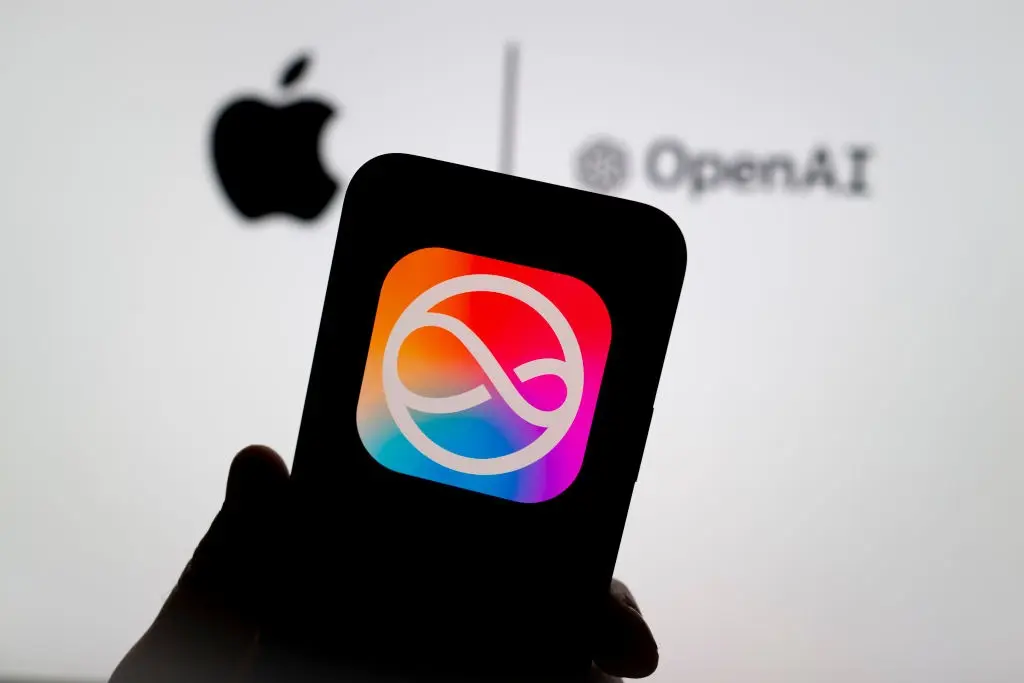
Newly surfaced private frameworks buried within early builds of iOS 27 and macOS Golden Gate reveal that Apple is quietly engineering deep, native integration for third-party artificial intelligence models. Far from merely coexisting with outside software, the upcoming operating systems appear to feature robust model delegation tools and system-level managers that allow users to bypass Apple’s native infrastructure entirely—enabling them to run frontier large language models (LLMs) like OpenAI’s GPT-5.6 and Anthropic’s Claude directly on-device, complete with Siri’s user interface and voice capabilities.
While the prospect of swapping out Siri for a preferred third-party assistant sounds like a consumer’s dream, industry insiders note that this monumental shift is less of a voluntary gesture of goodwill from Cupertino and more of a forced compliance with aggressive international antitrust regulations.
Main Facts: What the Leaks Reveal About iOS 27 and macOS Golden Gate
The leaks, which first surfaced via a series of technical breakdowns and video demonstrations posted to X (formerly Twitter) by well-known code sleuth pdfu, illuminate two distinct methods by which Apple plans to accommodate third-party AI frameworks within its next-generation operating systems: Model Delegation and Full Model Replacement.
1. Model Delegation (The Intermediary Approach)
In the first configuration discovered within the private iOS 27 frameworks, Siri AI acts as a smart switchboard or intermediary. Through a feature tentatively designated as "model delegation," a user can issue a native voice command to Siri, which then hands off the heavy lifting to a secondary agent, such as Anthropic’s Claude.
In a demonstration video shared by pdfu, a user asks Siri to create a custom reminder. Instead of executing the command through Apple’s native Reminders architecture alone, Siri delegates the request to Claude. In this environment, Claude acts as the functional on-device AI agent, processing the logic, while Siri functions strictly as the underlying administrative conduit. However, tasks requiring direct access to proprietary Apple system data—such as internal keychain information or low-level hardware diagnostics—remain strictly within the purview of Siri AI.
2. Full Model Replacement (The Nuclear Option)
Far more radical than simple task delegation is the discovery of a dedicated model manager service within the private framework. This tool permits a user to completely disengage Apple’s proprietary Siri AI model and swap it out for a completely different LLM of their choosing.
Utilizing this system service, pdfu successfully demonstrated running OpenAI’s GPT-5.6 directly within the iOS interface. Crucially, the external model was granted access to Siri’s logged device information, allowing it to execute complex, multi-step requests using standard Siri UI elements and voice prompts.
In the demonstration, GPT-5.6 autonomously scanned the device’s inbox, extracted specific tracking numbers and logistical details from incoming emails, and drafted contextual follow-up messages inside the native iMessages app. Furthermore, the architecture allows this operational data—which is traditionally siloed and filtered through Apple’s privacy-first servers—to be logged directly into OpenAI’s web interface for cross-platform accessibility.
Representatives for Apple, OpenAI, and Anthropic were contacted for comment regarding the leaks but did not immediately respond.

Chronology: The Road to Open AI Integration
To understand how Apple arrived at a point where running OpenAI’s latest models natively on an iPhone interface is even technically feasible, it is necessary to examine the timeline of regulatory pressure and engineering pivots that defined the mid-2020s.
- Early 2024: Apple announces "Apple Intelligence" at WWDC, signaling its formal entry into the generative AI race. At this stage, the company emphasizes a strict privacy-first architecture, relying heavily on on-device processing paired with private cloud compute servers, while announcing an initial, superficial partnership with OpenAI to handle complex cloud-based queries.
- Late 2024 to 2025: Regulatory scrutiny intensifies globally. The European Union formally designates Apple as a "gatekeeper" under the Digital Markets Act (DMA), turning its sights toward the burgeoning AI sector. Regulators warn that bundling proprietary voice assistants deeply into mobile operating systems without offering open APIs to competitors violates fair competition laws.
- Mid-2025: Rumors swirl within developer communities that Apple is quietly building modular framework hooks to comply with looming EU mandates. Meanwhile, OpenAI and Anthropic race to release increasingly sophisticated models (culminating in the GPT-5 generation and advanced Claude iterations), establishing dominance in the consumer landscape.
- August 2026: Public sentiment regarding AI shifts. Studies, including a prominent Pew Research survey, highlight growing consumer wariness surrounding privacy and job displacement, even as tech companies push forward into largely unregulated markets.
- September 2026 (Surprise and Shine Event): Apple formally debuts the hardware framework for the iPhone 18 Pro, doubling down on Siri AI as its primary marketing pillar. Simultaneously, international rollouts face complications; Apple announces that due to DMA compliance interpretations, access to certain native Siri AI features will be delayed or restricted in European markets upon the initial release of iOS 27 and iPadOS 27.
- Mid-September 2026: Leaks from private iOS 27 and macOS Golden Gate frameworks emerge online, demonstrating that Apple has engineered deep delegation and total replacement capabilities for third-party models like Claude and ChatGPT, proving that the infrastructure for an open AI marketplace is already written into the code.
Supporting Data and Market Dynamics
The integration of third-party models into the iOS ecosystem does not happen in a vacuum. It is driven by a volatile mix of demographic trends, staggering financial valuations, and aggressive legislative frameworks.
The European Union’s Digital Markets Act (DMA)
Without the heavy hand of international regulators, it is exceedingly unlikely that Apple would voluntarily cede control of its voice assistant interface to competitors like OpenAI or Anthropic. The EU’s Digital Markets Act was explicitly designed to tear down the "walled gardens" constructed by big tech conglomerates.
By targeting platform gatekeepers, the DMA mandates that dominant hardware manufacturers—such as Apple and Google—must provide third-party developers equal, unabridged access to core hardware and software features. While Google faced early scrutiny regarding Android’s integration with Gemini, Apple’s tight coupling of Siri AI drew immediate regulatory fire.
The impact of these laws has already altered product rollouts. Apple noted last month that because of ongoing regulatory disputes and compliance interpretations stemming from DMA rulings, its complete suite of new Siri AI features would face delayed or restricted rollouts for users within the European Union when iOS 27 and iPadOS 27 officially launch later this year.
The Financial Stakes: IPOs and the AI Gold Rush
For OpenAI and Anthropic, securing a native foothold inside the iOS operating system represents a massive commercial victory. Both companies are currently navigating a highly competitive landscape marked by immense capital expenditure, rising infrastructure costs, and a largely unregulated global market.
Wall Street analysts are currently tracking the horizon for historic initial public offerings (IPOs) from both generative AI pioneers. Securing a pathway to tap directly into the outsized, affluent demographic of American and global iPhone users provides an undeniable advantage in demonstrating sustained monetization, user retention, and enterprise value. As the race for market dominance intensifies, the ability to act as the default or selectable intelligence layer on hundreds of millions of premium mobile devices transforms a software developer into an indispensable utility.
Official Responses and Industry Reactions
As of press time, corporate communication channels across Cupertino, San Francisco, and London remain officially silent.
- Apple has declined to officially acknowledge the leaked private frameworks, maintaining its standard corporate policy of not commenting on unannounced features, internal software builds, or code-level rumors discovered by third-party researchers. Company executives have previously emphasized that user privacy remains paramount, asserting that any third-party integrations must adhere strictly to Apple’s on-device security guarantees.
- OpenAI has not issued a statement regarding the demonstration of GPT-5.6 running natively through Siri’s UI and accessing local user mailboxes. However, industry watchers note that such functionality aligns closely with OpenAI’s broader strategic goals of embedding its models deeply into consumer workflows across multiple hardware ecosystems.
- Anthropic likewise declined to comment on the inclusion of Claude models within the newly discovered iOS 27 model delegation framework.
Independent developers and cybersecurity experts, however, have been vocal. Many have praised the technical sophistication of the implementation, noting that building a generalized model manager service capable of piping arbitrary LLM output into proprietary UI frameworks requires an immense engineering effort—one that Apple clearly undertook to satisfy regulatory bodies without entirely destabilizing its user experience.
Implications: What This Means for the Future of Personal Computing
The revelation that users may soon be able to swap Siri out for ChatGPT or Claude marks a watershed moment in the history of consumer technology. For over a decade, Apple’s walled garden has served as the gold standard for vertical integration—a seamless, albeit restrictive, ecosystem where hardware, software, and services lock arms to keep users firmly within the brand’s orbit.
If these leaked frameworks make their way into the public release of iOS 27, the paradigm shifts fundamentally:
- The Commoditization of the Voice Assistant: Siri transitions from being a proprietary, exclusive ecosystem feature to a mere utility layer—a vehicle or delivery mechanism for whichever artificial intelligence model the consumer prefers. If GPT-5.6 or future Claude iterations can check emails, draft messages, and manage reminders better than Apple’s native models, consumer loyalty shifts away from Apple’s software engineers and toward the third-party AI provider.
- A Fragmented Regulatory Reality: The geographical divide between the United States and the European Union is set to widen. While American iPhone users may enjoy the freedom to choose their preferred on-device AI agent (thanks in part to global pressure and underlying framework parity), European users face a fragmented rollout dictated strictly by the nuances of the Digital Markets Act.
- A New Frontier for Data Privacy: Allowing third-party LLMs deep access to local inbox data, personal communications, and system logs raises significant security questions. While power users will undoubtedly celebrate the flexibility of piping local device context directly into OpenAI or Anthropic web interfaces, privacy advocates will scrutinize how Apple plans to safeguard user data once it leaves the secure confines of Apple’s proprietary neural engine.
As the official release of iOS 27 and the iPhone 18 Pro draws closer, all eyes will remain on Cupertino. Whether Apple embraces these third-party integrations as a proud new pillar of user choice or frames them strictly as a necessary concession to regulators, one thing is certain: the era of the impenetrable walled garden is drawing to a close.
