

DENVER — In an economic environment marked by escalating labor costs, increasingly stringent reporting demands, and the rapid integration of artificial intelligence into day-to-day corporate workflows, the margin for error in the heating, ventilation, air conditioning, and refrigeration (HVAC) sector has narrowed dramatically. For modern mechanical contractors, robust financial planning and sophisticated accounting strategies are no longer optional operational cushions; they are critical lifelines for sustained survival and profitability.
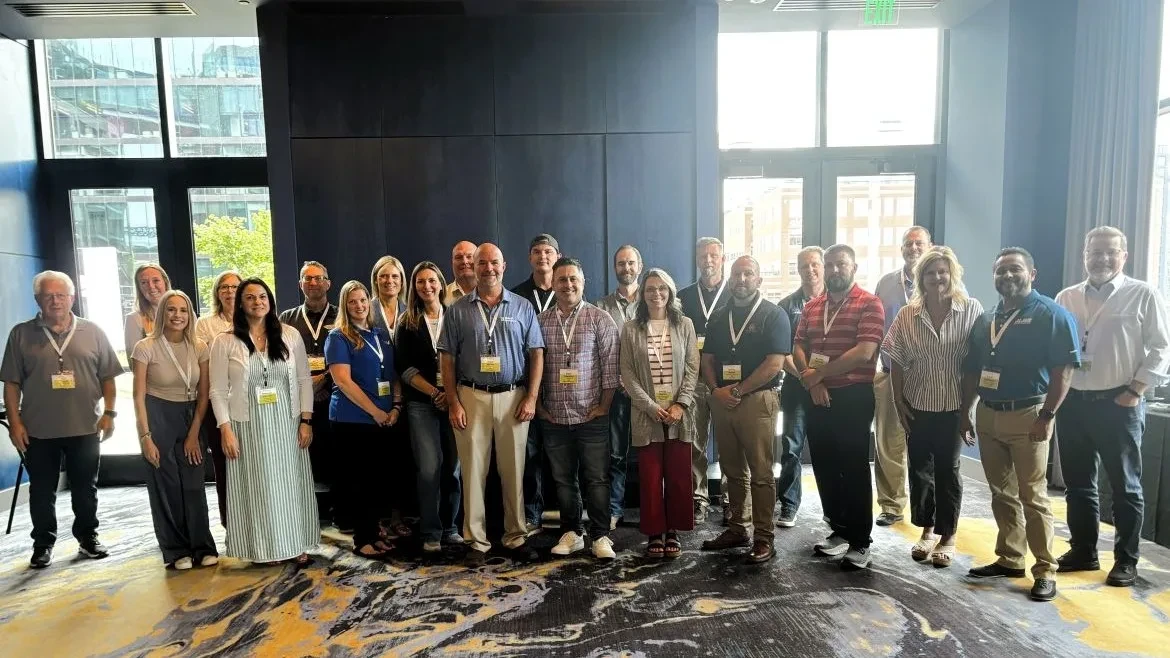
Addressing these mounting pressures head-on, more than 20 financial professionals and operational leaders from Unified Group member companies nationwide converged in Denver, Colorado, in August for the organization’s high-stakes 2026 Financial Forum.
Led by Stacy Shiflet, Chief Financial Officer of Blauch Brothers Inc. Mechanical Contractors, the multi-day event served as a collaborative crucible. It brought together elite industry minds to dissect complex financial challenges, share proprietary operational data, and explore scalable, peer-tested solutions designed to fortify mechanical contracting businesses against an uncertain macroeconomic future.
Main Facts: The 2026 Unified Group Financial Forum
The 2026 Financial Forum was structured to address the intricate intersection of macro-level economic headwinds and micro-level corporate accounting practices unique to the commercial and residential HVAC contracting space.
- The Event: The Unified Group’s 2026 Financial Forum.
- Location: Denver, Colorado.
- Timing: August.
- Attendance: Over 20 financial professionals, chief financial officers (CFOs), operations managers, and service executives representing Unified Group member companies from across the United States.
- Leadership: Guided by Stacy Shiflet, CFO of Blauch Brothers Inc. Mechanical Contractors.
- Core Themes: Labor cost mitigation, Key Performance Indicators (KPIs) standardization, Work-In-Progress (WIP) reporting, intercompany billing, overhead allocation, the implementation of artificial intelligence (AI), and alternative risk-financing strategies such as captive insurance.
The collective footprint of the companies represented at the forum encompasses thousands of field technicians, project managers, and administrative personnel. Consequently, the strategies discussed in Denver carry significant weight, acting as a bellwether for financial management trends across the broader North American HVAC and mechanical services landscape.
Chronology: A Two-Day Deep Dive into Financial Strategy
The forum’s itinerary was meticulously engineered to balance high-level strategic consulting with tactical, practitioner-to-practitioner knowledge sharing.
Day One: Foundations, KPIs, and Departmental Structures
The opening day kicked off with an intensive session led by guest speaker Brigid Huber, President of Contractor Strategy Consultants. Huber zeroed in on the structural pillars of project management success, guiding attendees through what she termed the Four P’s: Planning, Process, Performance, and Post-Performance Review.
Huber transitioned from project execution to measurement, leading a detailed seminar on Key Performance Indicators (KPIs). She mapped out management’s ideal metrics versus the lagging and leading indicators that truly dictate overall company health. Forum attendees broke into collaborative groups to tackle a persistent challenge in the contracting world: establishing uniformity in KPI calculations. Participants worked to clear common barriers, evaluating which metrics serve best as internal operational gauges versus external benchmarks for industry-wide comparisons. Conversations centered on determining which metrics warrant daily, weekly, or monthly tracking, and how best to automate reporting for executive teams.
As the afternoon unfolded, the focus shifted inward to organizational design and internal accounting mechanics. Nate Cole, Operations Manager at Peterson Sheet Metal Inc., and Phil McCully, CFO at Westbrook Service Company, delivered a joint presentation providing an inside look at their respective financial department structures. They shared transparent models on how their organizations measure productivity and accountability when team members must balance shared administrative responsibilities.
The concluding sessions of Day one tackled some of the most technically demanding aspects of multi-entity mechanical contracting: intercompany billing and overhead allocation methods. Cole joined Shannon Schmidt, CFO at Air Controls, to dissect the specific allocation bases their firms rely upon. They detailed why certain cost-distribution models successfully capture the true operational footprint of HVAC construction and service divisions while minimizing tax exposure and administrative friction.
Day Two: AI Integration, Burden Rates, and Risk Mitigation
The second day of the forum opened with a packed schedule of member-led presentations, interactive panels, and unscripted peer-to-peer breakouts.
A central highlight of the morning was a dedicated panel exploring the accelerating role of artificial intelligence in HVAC businesses. As AI tools transition from speculative novelties to practical enterprise software, contractors are increasingly relying on machine learning for predictive maintenance scheduling, automated dispatching, customer service chatbots, and even preliminary contract review. The panel allowed financial leaders to weigh the upfront software investments against projected labor savings and efficiency gains.
Following the AI discussion, Stacy Shiflet took the stage to lead a masterclass on preparing and reviewing Work-In-Progress (WIP) reports. For construction-oriented mechanical contractors, accurate WIP schedules are the bedrock of financial integrity, preventing nasty year-end surprises on long-term projects. Shiflet walked participants through nuanced accounting treatments for under-billings and over-billings, offering strategies to streamline reporting for sureties, banks, and internal stakeholders.
The afternoon featured a deep dive into labor burden calculations—a perennial point of anxiety for contractors operating in tight-margin markets. Panelists compared methodologies for calculating true labor burden, debating which fringe benefits, payroll taxes, workers’ compensation premiums, and vehicle costs should be bundled directly into hourly billing rates versus general overhead.
Rounding out the formal educational sessions, Brantley Somma, Assistant Vice President at insurance brokerage McGriff, delivered a presentation on captive insurance. Somma demystified how this alternative risk-financing mechanism—essentially a closely held insurance company established by parent organizations to insure their own risks—operates. He outlined the potential tax advantages, cash flow benefits, and long-term risk-mitigation properties of captives, while candidly addressing the rigorous capitalization requirements and regulatory compliance hurdles that companies must clear before establishing one.
Supporting Data & Industry Context: The Mechanics of Modern HVAC Finance
The discussions in Denver did not occur in a vacuum; they reflect the harsh economic realities currently shaping the North American construction and service sectors.
According to labor statistics and macroeconomic tracking within the construction industry, hourly labor rates for skilled HVAC technicians, pipefitters, and sheet metal workers have experienced sustained upward pressure over the past several years. Driven by a widening technical skills gap, an aging demographic of master tradespeople, and intense competition from non-traditional employers, labor costs now routinely consume 40% to 50% of a mechanical contractor’s total revenue.
Simultaneously, material costs—ranging from copper tubing and refrigerants to specialized electronic controls and structural steel—have remained volatile, complicating long-term project bidding.
Against this backdrop, the financial tools discussed at the Unified Group forum—such as precise overhead allocation and rigorous KPI tracking—are essential tools for margin preservation:
- Overhead Allocation Accuracy: In multi-division contractors that handle both project-based construction and recurring service agreements, misallocating overhead can make unprofitable construction jobs look lucrative while penalizing efficient service departments. The methods shared by Cole and Schmidt help firms accurately price bids without leaving money on the table.
- Labor Burden Precision: A common pitfall for emerging mechanical contractors is underestimating labor burden. When calculating an hourly billable rate, failing to account for rising healthcare premiums, training costs, and safety equipment can quietly erode gross margins across hundreds of field hours.
- WIP Report Integrity: Surety companies increasingly scrutinize WIP reports before issuing bonding capacity for large commercial HVAC projects. Shiflet’s session on WIP review directly addresses the financial transparency required to secure larger project bonding, enabling member companies to scale operations safely.
Official Responses and Participant Perspectives
The true value of the Unified Group’s forum lies not merely in its formal agenda, but in the psychological safety and collaborative spirit fostered among non-competing peers. For many attendees, the event served as both a professional development milestone and a wellspring of renewed motivation.
Michaela O’Brien, Construction Operations Manager at VHV Company, an HVAC construction firm based in Winooski, Vermont, attended the forum for the first time. She emphasized how quickly her initial impressions were validated by the depth of peer engagement.
"Since this was my first meeting, it was great to see in person all of the positive things I had heard about the group," O’Brien noted. "Everyone genuinely seemed interested in helping each other, asking engaging questions, sharing experiences, and having healthy debate around the best way to do things. Overall, I really enjoyed the session and came away with several new ideas and perspectives."
Her colleague at VHV Company, CFO Cheri DeForge, echoed this sentiment, highlighting the unique cooperative culture cultivated within the Unified Group network.
"I really appreciate the open sharing of the members in this group," DeForge said. "We are in the same field, share the same issues and experiences, but we don’t compete with each other. Instead, we lift each other."
For financial leaders navigating complex corporate structures, the forum provided vital external benchmarks. Shannon Schmidt, CFO at Air Controls in Billings, Montana, pointed out how exposure to alternative viewpoints recalibrated her strategic thinking.
"I enjoyed hearing from so many other people and their perspectives," Schmidt remarked. "It challenges me to think about things in a different way and makes me feel energized to get back and try some new things."
This sentiment of professional rejuvenation resonated with operational staff as well as finance executives. Frank Quintanar, Service Manager at J&J Air Conditioning Inc. in San Jose, California, reflected on his takeaways as a first-time participant.
"As a first-time attendee at a financial forum, my biggest highlight was the opportunity to listen, learn, and engage with such great minds," Quintanar stated. "It was inspiring to be surrounded by people who are passionate about what they do and committed to making a positive impact."
Implications: The Future Outlook for Mechanical Contractors
The insights gleaned from the 2026 Unified Group Financial Forum carry profound implications for the trajectory of the HVAC contracting industry over the remainder of the decade.
- Adoption of Advanced Analytics and AI: As demonstrated by the member panels in Denver, financial and operational leaders are no longer passive observers of the technological revolution; they are actively seeking ways to integrate AI and automated data pipelines into their back-office operations. Contractors who fail to modernize their accounting and dispatching software risk losing competitive ground in speed and accuracy.
- Heightened Sc风险 Management: Sessions on captive insurance and burden calculations signal that top-tier contractors are taking a more aggressive, sophisticated stance toward risk management. By self-insuring predictable layers of risk and refining how overhead is absorbed, these companies are positioning themselves to weather potential economic downturns or commercial real estate fluctuations.
- The Power of Non-Competitive Collaboration: Perhaps the most enduring takeaway from the Denver forum is the validation of peer-to-peer cooperative networks. In an industry historically characterized by fragmented, cutthroat competition, groups like the Unified Group prove that collective intelligence accelerates individual business growth. By sharing failure modes, operational data, and accounting best practices, member companies are collectively raising the professional standard of the entire mechanical contracting trade.
As these financial professionals return to their respective offices from Denver—armed with refined WIP reporting techniques, standardized KPI frameworks, and fresh strategies for labor and overhead management—their organizations are undeniably better equipped to navigate the financial complexities of tomorrow’s mechanical contracting landscape.
