

ARLINGTON, Va. — The U.S. heating, ventilation, air conditioning, and refrigeration (HVACR) sector is experiencing a robust and sustained recovery, according to the latest Equipment Shipment Data report released by the Air-Conditioning, Heating, and Refrigeration Institute (AHRI). Following a sluggish start to the year during the first quarter of 2026, nearly every major equipment category tracked by the association saw positive momentum in July, led heavily by a soaring demand for cooling systems and a historic, long-term surge in heat pump adoption.
The July 2026 figures highlight an industry that has successfully rebounded from early-year deficits. Multiple product categories posted year-over-year shipment increases ranging from 2% to 36%. While heating equipment traditionally takes a back seat during the peak heat of the summer months, cooling solutions—particularly heat pumps—have propelled the overall market into full recovery mode.
Chronology of the 2026 Recovery: From Q1 Sluggishness to Summer Surge
To understand the current health of the HVACR manufacturing and distribution sector, industry analysts are looking closely at the narrative arc of 2026. The year began on unstable footing, marked by weak shipment numbers across the board throughout January and February. In March, the market remained largely stagnant, causing widespread concern among manufacturers and distributors.
However, the narrative completely shifted as the industry entered the second quarter. Q2 earnings and shipment volumes aggressively erased the first-quarter deficit. By the time summer arrived, year-over-year gains became the norm.
Cooling equipment shipments have now risen year-over-year for six consecutive months, spanning February through July. While traditional air conditioning units managed a solid four-month consecutive growth streak, heat pumps matched the cooling equipment sector stride-for-stride with six straight months of year-over-year gains. This consistent upward trajectory ultimately culminated in July’s stellar performance, proving that the mid-year market rebound is both stable and deep-seated.
Supporting Data: July 2026 Shipments and Long-Term Trends
The latest AHRI figures provide a granular look at how specific product segments performed in July 2026 compared to historical benchmarks.
Air Conditioners and Heat Pumps
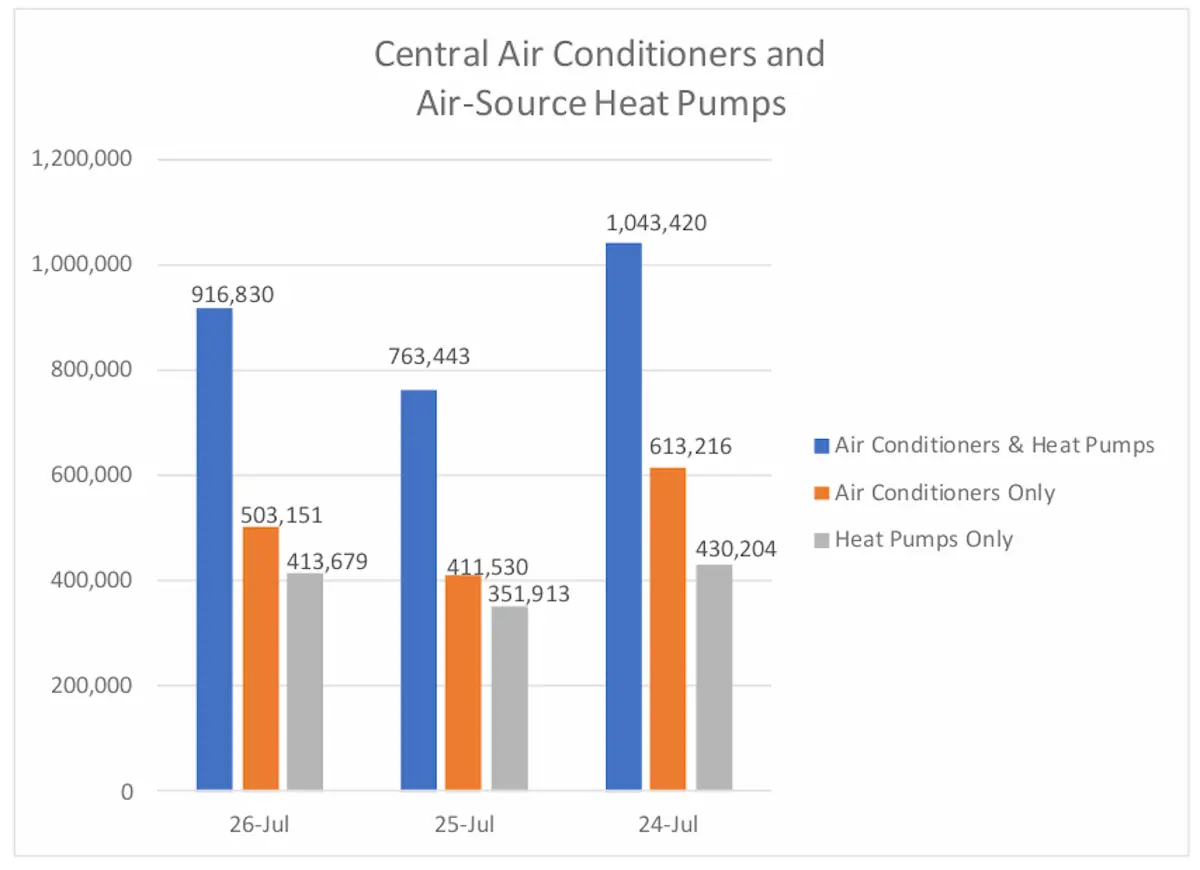
Cooling equipment remains the indisputable engine driving the market’s recovery. In July 2026, heat pump shipments rose by 17.6%, reaching 413,679 units. This represents the second-highest July heat pump shipment total in the history of the AHRI report, which dates back to 2010. The all-time record for a single July occurred in 2024, when shipments hit 430,204 units.

Air-conditioner-only shipments also enjoyed positive momentum, securing four consecutive months of year-over-year gains following early-year dips in January and February and stagnation in March.
Despite the strong performance of traditional air conditioners, heat pumps continue to capture a larger share of the market. In July 2026, heat pumps accounted for 45.1% of all combined central air conditioner and heat pump shipments. This is the second-highest proportional July market share in the report’s history, trailing only the 46.1% record set in July 2025.
Warm-Air Furnaces
Because July is characterized by intense summer heat, heating equipment naturally sees lower immediate demand compared to cooling systems. Consequently, warm-air furnaces played a secondary role in the summer market recovery.
Nevertheless, notable bright spots emerged within niche heating categories. Oil-based equipment saw a substantial surge in July compared to the same period in 2025. This performance marks the third-highest July oil furnace shipment total in the report’s history, sitting behind only 2010 and 2021. Meanwhile, gas furnaces continue to demonstrate remarkable historical resilience. July 2026 recorded the fourth-highest gas-unit shipment total in the report’s 17-year history, proving that despite the pivot toward electrification, gas-powered heating remains a steadfast choice for consumers.
Residential Storage Water Heaters
The residential storage water heater market presented a mixed picture in July 2026. Shipments for both gas and electric water heaters experienced slight declines year-over-year. However, the drop was minor, and the data reveals underlying trends of resilience.
Gas water heaters managed to increase year-over-year for the second consecutive month in July, finally breaking a protracted slump that lasted from January through May. On the volume side, electric water heaters outsold gas units by approximately 52,000 units during the month, maintaining a consistent long-term sales advantage.
Official Industry Perspectives and Market Implications
The broader implications of the July 2026 data point to a structural transformation within the North American HVACR landscape. Industry observers and trade associations view the numbers not merely as a seasonal bounce-back, but as validation of a decade-long shift toward electrification and high-efficiency systems.

The Decadal Shift Toward Electrification
A retrospective analysis of AHRI data from 2010 to 2026 reveals a profound evolution in consumer preferences and regulatory pressures. A decade ago, heat pumps represented roughly three out of every ten units in the combined a/c and heat pump category. Today, that ratio has shifted dramatically, with heat pumps accounting for nearly 4.5 out of every 10 units.
Comparing July 2010 to July 2026, heat pump shipments have skyrocketed by 172.7%, leaping from 151,696 units to 413,679 units. Over the past ten years alone (comparing July 2016 to July 2026), the broader cooling market expanded by 16.8%. Notably, shipments of traditional central air conditioners declined over that decade-long window, meaning that heat pumps single-handedly supplied the net growth of the cooling sector. From 2022 onward, heat pumps have consistently accounted for more than 40% of total July combined shipments.
Water heater trends reinforce this electrification narrative. Over the last ten years, electric water heater shipments climbed by 23.1%, whereas gas water heater shipments fell by 1.8%.
Coexistence of Traditional and Modern Technologies
Despite the clear momentum behind heat pumps and electric appliances, the AHRI data indicates that traditional fossil-fuel heating equipment is far from obsolete.
Gas furnaces have grown significantly over the long term, boasting a 59.1% increase in shipments compared to July 2010, and a 15.3% increase since July 2016. Similarly, while oil furnaces experienced a notable one-month rebound in July 2026, long-term tracking shows they occupy a specialized niche. July 2026 oil furnace shipments (2,681 units) were down 18.4% compared to July 2010 (3,286 units), demonstrating that while year-to-date spikes occur, oil heating is not regaining its historical market share.
Looking Ahead
As manufacturers, distributors, and contractors evaluate the second half of 2026, the sentiment is overwhelmingly optimistic. The Q1 deficit has been entirely neutralized, and the massive popularity of heat pumps has established a new baseline for summer cooling demand.
With ongoing investments in energy-efficient technologies, smart-home integration, and consumer rebate programs, the HVACR industry enters the late-summer and autumn planning cycles on remarkably solid ground. The data confirms that the American market is adapting rapidly to changing energy landscapes, balancing legacy reliability with cutting-edge, electrified climate control solutions.
