

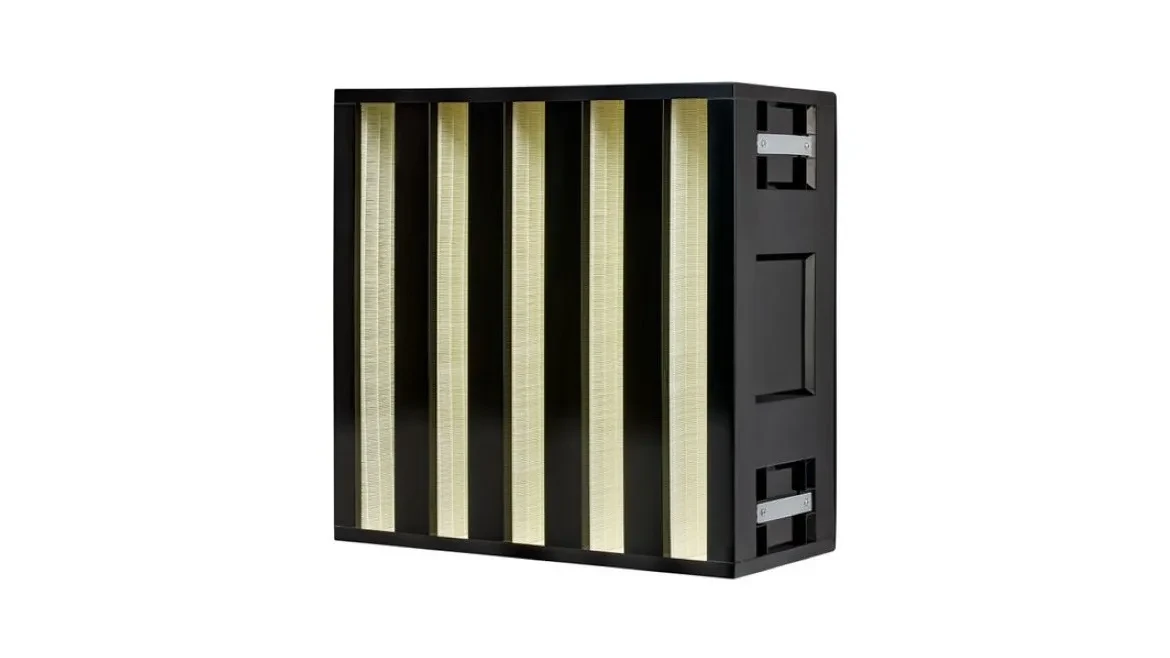
LOUISVILLE, Ky. — In an industry where facility managers and HVAC engineers have long been forced to compromise between structural rigidity, high filtration performance, and operational economy, AAF International has introduced a disruptive solution. The company officially launched the AstroCel III Aero, a lightweight, high-efficiency V-bank HEPA filter engineered specifically to replace traditional metal-framed alternatives in mission-critical environments.
Combining the time-tested particulate control of AAF International’s flagship AstroCel filtration technology with a modern, high-performance polymer frame, the new product aims to alleviate chronic operational friction points. These include excessive shipping costs, logistical hurdles, and the heavy physical strain placed on maintenance technicians during routine changeouts.
Manufactured entirely in the United States and optimized for the North American market, the AstroCel III Aero arrives at a critical juncture for facility operations. As indoor air quality (IAQ) standards tighten across healthcare, semiconductor manufacturing, and data center sectors, engineering teams are constantly searching for ways to optimize system efficiency without compromising safety or regulatory compliance.
Main Facts: Engineering the Next Generation of HEPA Filtration
The AstroCel III Aero is not merely a cosmetic redesign of an existing product; it is a fundamental re-engineering of how V-bank HEPA filters are housed, transported, and deployed.
At its core, the filter delivers 99.99% efficiency at 0.3 microns, making it fully capable of mitigating submicron airborne particulate matter in the most stringent cleanrooms and controlled environments. However, its standout physical characteristic is its composition: a high-impact, injection-molded polymer frame that replaces the heavy galvanized or stainless-steel frames traditionally used in high-efficiency systems.
Key Specifications and Features:
- Weight Reduction: Weighs up to 40% less than traditional metal-framed, V-bank HEPA filters.
- Filtration Efficiency: 99.99% efficiency at 0.3-micron particle size.
- Frame Material: High-impact, injection-molded polymer that is both fully incinerable and chemically resistant.
- Fire Safety Compliance: Meets UL 900 classification standards, supporting compliance with National Fire Protection Association (NFPA) 90A requirements for HVAC system fire safety.
- Aerodynamic Design: Utilizes a V-bank configuration to maximize available media area, ensuring high airflow capacity coupled with lower initial and operating resistance.
- Compatibility: Engineered as a direct replacement for existing V-bank HEPA installations, eliminating the need for costly system retrofits or modifications.
Chronology: Closing the Industry Gap
For decades, facility managers dealing with high-purity air filtration faced a persistent trilemma: they could choose performance, affordability, or lightweight handling, but rarely all three at once.
The Evolution of the HEPA Dilemma
- The Metal Era: Traditionally, high-efficiency particulate air (HEPA) filters relied on heavy metal frames—typically galvanized steel, aluminum, or stainless steel. While these frames offered robust structural integrity and met strict fire codes, they came with significant drawbacks. They were heavy, cumbersome to ship, expensive to purchase, and presented ergonomic hazards to maintenance crews working in tight spaces or high-ceiling plenums.
- The Plastic Compromise: Recognizing the weight and cost issues, manufacturers eventually introduced alternative filters utilizing basic plastic or composite frames. While these products were lighter and less expensive, they frequently suffered from structural flimsiness, lower durability, and difficulties complying with rigorous commercial fire codes such as UL 900 and NFPA 90A standards.
- The Introduction of the Aero Platform: To bridge this long-standing gap, AAF International leveraged its decades of engineering expertise behind the AstroCel brand. By combining advanced polymer science with high-capacity V-bank media geometry, the company developed the AstroCel III Aero. The product synthesizes the durability and fire resistance of metal frames with the lightweight, corrosion-proof, and cost-effective advantages of modern polymers.
Supporting Data and Technical Analysis
To fully appreciate the impact of the AstroCel III Aero, one must examine the logistics and operational dynamics of commercial and industrial HVAC systems. Large-scale facilities—such as pharmaceutical plants, microelectronics labs, and sprawling data centers—often house dozens, if not hundreds, of HEPA filter positions.
Weight Reduction and Ergonomic Relief
The filter’s headline achievement is its up to 40% reduction in overall weight compared to traditional metal-framed units. In facilities management, dead weight compounds rapidly across large installations.
For maintenance technicians, handling heavy metal-framed filters during scheduled changeouts is physically demanding work, often performed on ladders, inside awkward ceiling plenums, or within strict containment zones (such as pharmaceutical cleanroom suites). Reducing the weight of each unit by nearly half drastically lowers the risk of musculoskeletal strain, drops, and workplace injuries. Furthermore, lighter filters require less physical effort to maneuver into place, shortening total maintenance windows and reducing labor overhead.
Freight and Logistical Efficiency
Weight does not merely affect installation; it dictates shipping economics. Heavy metal frames increase total freight weight, driving up transportation fuel consumption, shipping fees, and carbon footprints associated with supply chain logistics. By shedding up to 40% of its weight, the AstroCel III Aero allows for more efficient pallet loading, lower freight costs, and a reduced environmental footprint from distribution centers to end-user facilities.
Energy Efficiency and Aerodynamics
Airflow resistance (pressure drop) is one of the primary drivers of HVAC energy consumption. High resistance forces supply fans to work harder, pulling more amperage and driving up utility bills.
The AstroCel III Aero’s optimized V-bank configuration maximizes the surface area of the filter media packed inside the frame. This expanded media area allows large volumes of air to pass through the filter with minimal resistance. Lower resistance translates directly to reduced fan energy consumption over the operational lifecycle of the filter. Moreover, greater media surface area means greater particulate-holding capacity, extending filter service life, reducing the frequency of changeouts, and ultimately lowering total cost of ownership (TCO).
Material Resilience and Fire Safety
A common criticism of early polymer-framed filters was their vulnerability to harsh chemical cleaning agents (common in pharmaceutical and healthcare settings) and their failure to meet stringent fire codes.
The AstroCel III Aero addresses these concerns directly:
- Chemical Resistance: The injection-molded polymer frame is inert to many common cleaning chemicals and sterilizing agents, preventing degradation in sterile environments.
- Incinerability: Unlike metal frames, which require complex separation processes or hazardous waste disposal protocols, the polymer frame is fully incinerable, simplifying end-of-life disposal for facilities with strict sustainability mandates.
- UL 900 Classification: Meeting UL 900 standards ensures that the filter will not propagate flames or generate heavy smoke in the event of an HVAC fire, thereby satisfying NFPA 90A safety mandates.
Official Responses and Industry Perspectives
Leadership at AAF International emphasizes that the development of the AstroCel III Aero was driven by direct feedback from the field. Facility managers have consistently demanded products that do not force a compromise between safety, compliance, and ease of use.
"Facility teams consistently ask us for filtration solutions that perform at a high level and are easy to install and maintain," said Don Largent, director of high purity product management at AAF International. "The AstroCel III Aero brings the perfect trifecta of performance, handling, and durability."
Largent expanded on how physical attributes ripple through an organization’s bottom line and operational readiness, pointing out that engineering decisions often have unintended downstream consequences.
"Weight is not something people usually associate with filtration performance, but it shapes almost everything downstream of the purchase decision," Largent explained. "It affects how fast a crew can complete a changeout, what it costs to ship a filter, and how much strain a system puts on maintenance staff. We built the AstroCel III Aero to change that equation without sacrificing performance."
Implications for Mission-Critical Markets
The introduction of the AstroCel III Aero carries significant implications across a wide array of specialized industries where air purity is non-negotiable.
1. Healthcare Facilities
In hospitals and surgical centers, HEPA filtration is the last line of defense against airborne pathogens, protecting immunocompromised patients and surgical suites. The combination of 99.99% efficiency at 0.3 microns and UL 900 compliance ensures hospitals remain fully compliant with strict health and safety codes while simplifying the arduous task of changing out large bank filtration systems during routine maintenance windows.
2. Pharmaceutical and Microelectronics Manufacturing
Cleanrooms dedicated to drug manufacturing or semiconductor fabrication operate under microscopic tolerances. Even trace contamination can ruin multi-million-dollar batches of microchips or pharmaceuticals. The chemical resistance and structural integrity of the AstroCel III Aero prevent outgassing and frame degradation, ensuring sterile integrity over extended operational cycles.
3. Data Centers and Telecommunications
Modern hyperscale data centers move immense volumes of air to cool high-density server racks. Protecting these sensitive electronics from ambient dust, particulate matter, and corrosive atmospheric elements is vital. The low airflow resistance of the V-bank design helps data center operators optimize Power Usage Effectiveness (PUE) by reducing unnecessary fan energy draw.
4. Commercial and Industrial HVAC Systems
For large commercial office towers, educational institutions, and industrial plants, maintenance labor shortages are a pressing reality. By streamlining the installation process and reducing physical fatigue for maintenance crews, products like the AstroCel III Aero help facility directors optimize labor deployment and reduce facility overhead.
Conclusion
AAF International’s launch of the AstroCel III Aero marks a meaningful step forward in commercial and industrial air filtration. By addressing the historical shortcomings of both metal and early plastic HEPA designs, the company has delivered a product that respects the physical realities of maintenance staff while upholding the rigorous performance demands of modern clean environments.
As facilities nationwide continue to prioritize energy efficiency, safety compliance, and operational cost containment, the AstroCel III Aero is poised to become a staple in mission-critical air handling design for years to come.
