

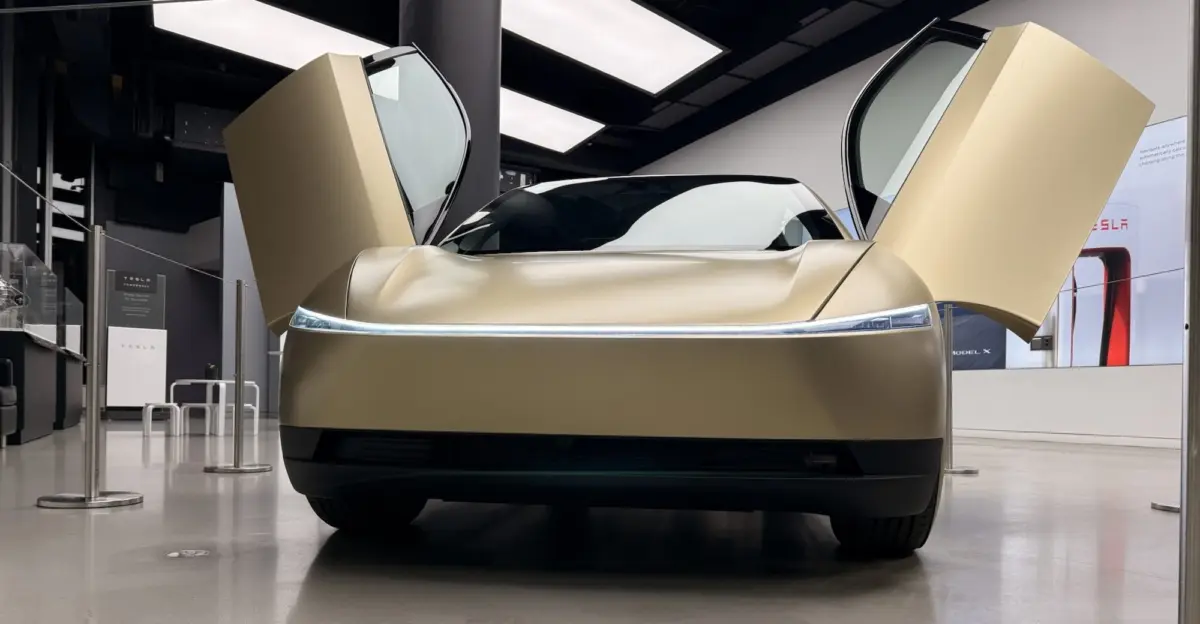
BEIJING/SHANGHAI — Tesla is officially bringing its futuristic, steering-wheel-free Cybercab to China for its maiden public tour. However, the American electric vehicle pioneer is preemptively tamping down speculation, issuing clear and repeated disclaimers that the vehicle is not headed for the Chinese consumer market, nor is it slated for commercial deployment as a robotaxi anytime soon.
Beginning September 17, the sleek, two-seater vehicle will sit on static display at Tesla’s Huamao experience store in Beijing through September 27. Following that, it will move to the LG1 north hall of HKRI Taikoo Hui in Shanghai, where it will remain on view through September 21.
While the physical appearance marks a milestone for the vehicle’s international exposure, Tesla China has been unambiguous about the limits of the exhibition. In an official statement released this week, the company emphasized that the tour is strictly designed to "showcase its product design and technological concepts" and "does not involve the sale of the Cybercab in the Chinese market or any arrangement for driverless ride-hailing commercial operations."
Main Facts: The Anatomy of the Tour and the Vehicle
The arrival of the Cybercab in China represents a fascinating exercise in marketing versus market reality.
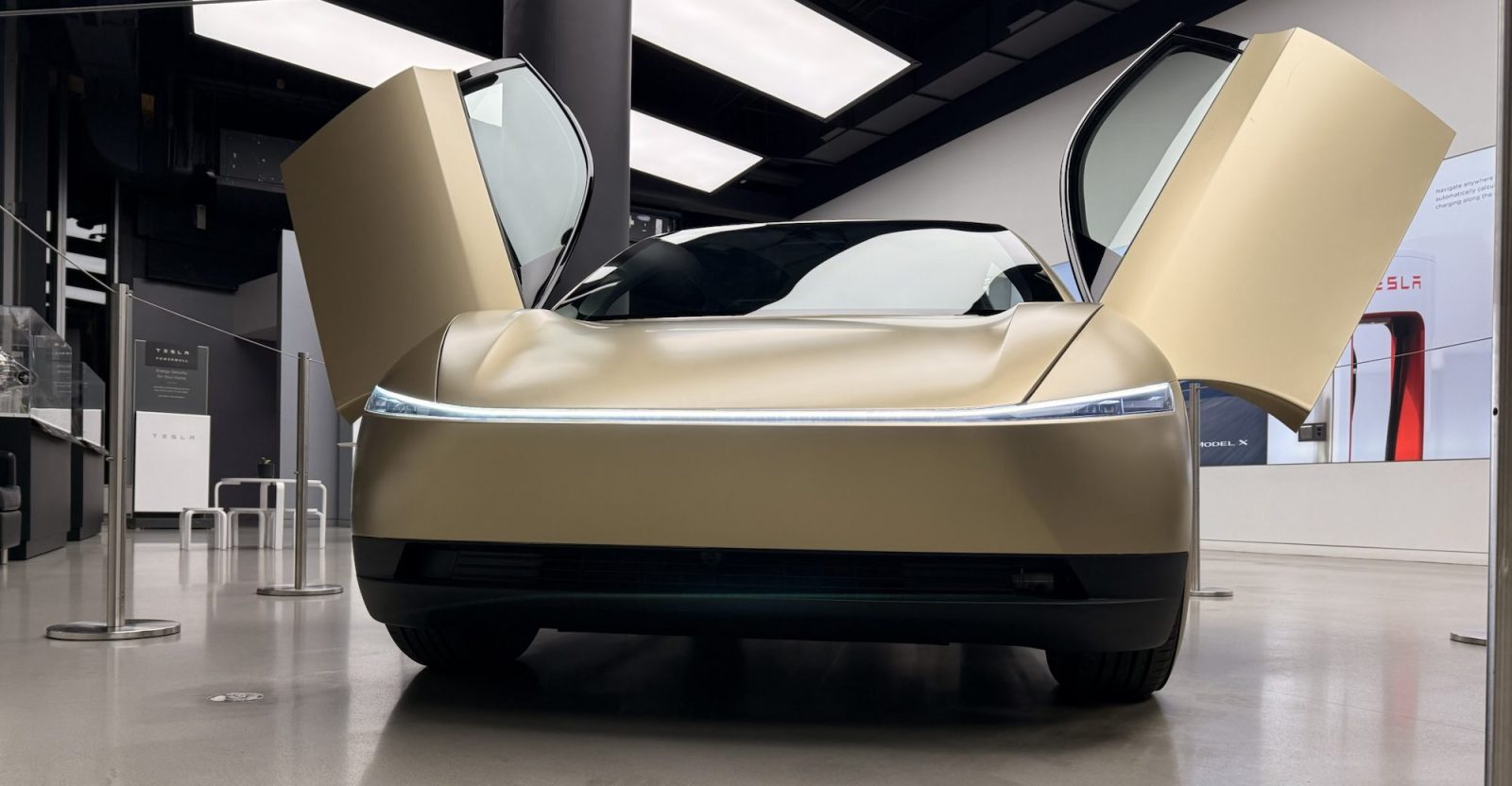
- The Exhibition Schedule: The vehicle made its debut on September 17. Beijing residents can view it at the Huamao experience store until September 27, while Shanghai audiences have a tighter window until September 21 at the HKRI Taikoo Hui shopping center.
- The Design Hurdles: The Cybercab features a radical layout completely devoid of a steering wheel and pedals. Accommodating only two passengers, its minimalist architecture is optimized entirely for autonomous point-to-point transit.
- Regulatory Roadblocks: Because it lacks manual driving controls, the Cybercab cannot legally be registered or sold to everyday consumers under current vehicle regulations in either the United States or China.
- Software Limitations: Tesla introduced a limited, supervised version of its Full Self-Driving (FSD) software to the Chinese market in early 2025 to mixed reviews. However, the company has yet to secure the requisite government approvals to operate unsupervised, fully driverless commercial fleets in the country.
Chronology: From Concept to Chinese Showroom
To understand the context of Tesla’s current promotional tour, it is essential to trace the timeline of the Cybercab’s development and its intersection with the Chinese automotive ecosystem.
The Buildup to the Cybercab
- Late 2023 to 2024: Anticipation builds globally as CEO Elon Musk hints at a dedicated "robotaxi" platform. Tesla shifts significant engineering focus toward autonomous architectures, bypassing traditional vehicle design paradigms.
- Late 2024: Tesla formally pulls the covers off the Cybercab, stunning the industry with its pedal-free and wheel-free cabin design. Early close-up looks highlight the stark, software-dependent interior.
- Early 2025: Tesla introduces a limited, highly supervised iteration of FSD to Chinese consumers. While viewed as a step forward, the rollout receives mixed reviews due to localized regulatory constraints and intense competition.
- September 2025: Tesla announces its first-ever public exhibition of the Cybercab in China, setting up high-profile static displays in Beijing and Shanghai to offer consumers a glimpse into the future of transport design—with strict caveats attached.
Supporting Data: China’s Dominant Robotaxi Landscape
Tesla’s exhibition lands in a market that is arguably the most advanced and fiercely competitive autonomous vehicle ecosystem on the planet. While Tesla is restricted to static displays, domestic Chinese operators are scaling commercial robotaxi networks at an unprecedented pace.
Market Realities in China
- Commercial Scale: Chinese tech and automotive giants have moved past the testing phase. Companies like Baidu’s Apollo Go, Pony.ai, and WeRide are actively operating paid, fully driverless robotaxi services—completely free of safety drivers—across multiple major tier-one and tier-two cities.
- Years of Operation: These domestic platforms have been refining their algorithms, mapping out complex urban grids, and accumulating real-world operational data for years, giving them a massive head start over foreign entrants.
- Regulatory Alignment: Unlike the United States, where autonomous deployment often relies heavily on state-by-state patchwork legislation (with Tesla notably leaning on deregulated markets in Texas and Florida), China’s regulatory framework for autonomous transit is centrally coordinated yet highly permissive in designated smart-city zones, provided companies clear rigorous safety trials.
Official Responses and Corporate Framing
Tesla China’s public relations strategy regarding the Cybercab tour has been defined by extreme caution. By framing the event strictly around "product design and technological concepts," the company is attempting to manage consumer expectations in a market notorious for high-tech fatigue and rapid innovation cycles.
Industry analysts note that the phrasing used in Tesla’s official releases—emphasizing that the display "does not involve the sale" or "commercial operations"—is a legal and regulatory shield. In a market where domestic competitors routinely boast about real-world commercial metrics, Tesla is deliberately sidelining commercial ambitions for the Cybercab in China.

Instead, retail observers suggest that the exhibition serves a dual purpose: burnishing Tesla’s cutting-edge brand image and drawing curious foot traffic into showrooms. By pulling crowds into the Huamao and Taikoo Hui experience centers to marvel at the wheel-less cabin, Tesla creates prime opportunities for sales associates to engage potential buyers regarding existing, road-legal inventory, such as the wildly popular Model Y.
Implications: What the Cybercab Showcase Means for Tesla’s Global Strategy
The decision to exhibit a vehicle it can neither sell nor operate in China highlights the complex geopolitical and regulatory tightrope Tesla must walk.
1. The Domestic Disconnect
Tesla is facing an uphill battle in China. While it remains a dominant volume player with its locally manufactured Model 3 and Model Y vehicles, its technological narrative is being aggressively challenged by domestic rivals like BYD, NIO, XPeng, and autonomous specialists like Baidu. By showing off the Cybercab, Tesla is attempting to prove it still holds the global crown for visionary design, even if local competitors are out-executing them on actual autonomous deployment.
2. Regulatory Divergence
The stark contrast between Tesla’s strategy in the US and China underscores the global fragmentation of autonomous vehicle regulation. In the United States, Tesla is attempting to fast-track its autonomous ambitions by focusing heavily on permissive regulatory environments in states like Texas and Florida. In contrast, China’s strict safety mandates, paired with a mature domestic robotaxi market, mean that a foreign entity cannot simply drop a steering-wheel-less vehicle into the market without years of localized testing and deep government partnership.

3. Showroom Traffic as a Tactical Win
Ultimately, the Cybercab’s Chinese tour is a masterclass in experiential marketing. Even without a steering wheel, pedals, or a path to immediate commercialization, the vehicle remains an undeniable crowd-puller. For Tesla, getting bodies through the door of its Beijing and Shanghai experience stores is a tangible win—one that keeps the brand at the forefront of the cultural conversation while the heavy lifting of autonomous software approval continues behind closed doors.
