

Introduction: The Threshold of Spatial Computing
For over half a decade, Snap has quietly and methodically plotted its escape from the restrictive confines of being merely an application inside someone else’s digital ecosystem. By developing, iterating, and heavily investing in augmented reality (AR) hardware, the company has sought to pioneer the next major evolution in computing platforms.
That multi-year journey has culminated in a bold, high-stakes milestone: "Specs," Snap’s first true pair of consumer-facing augmented reality glasses, slated for release this fall at a hefty price tag of $2,195.
Unlike the subtle, camera-and-audio-only smart glasses currently dominating the market—such as Meta’s popular Ray-Ban collaborations—Snap’s Specs are standalone spatial computers housing all necessary processing hardware right on the frame. Following an extended hands-on testing session at Snap’s offices, early impressions reveal a fascinating dichotomy. While the hardware delivers glimpses of a genuinely shared digital future, it also raises glaring questions about practicality, social etiquette, and whether the technology is truly ready for primetime.
Main Facts
- The Device: Snap’s new augmented reality glasses, officially named "Specs," represent the company’s first consumer-ready AR hardware.
- Pricing and Availability: Scheduled for a consumer rollout this fall, the standalone glasses carry a steep price tag of $2,195.
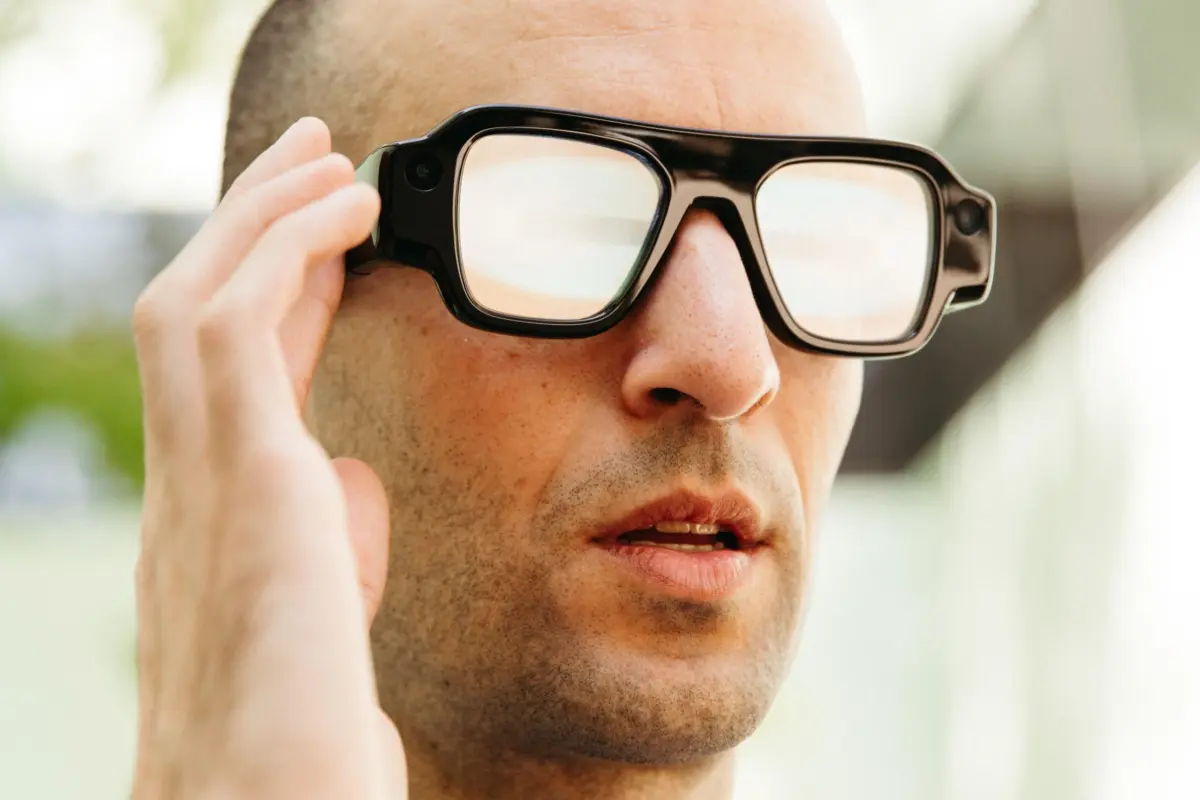
- Design and Build: The glasses are intentionally chunky and bold, available in two lens sizes (47mm and 52mm). They operate as standalone computers without requiring a tether to a smartphone, compute puck, or external battery.
- Display Technology: Specs utilize dual waveguide displays in both lenses—a feat beating several major competitors—capable of outputting 16 million colors with high-resolution visual fidelity across a 51-degree field of view.
- Control Mechanics: Navigation is driven by hand-tracking gestures (such as pinching, dragging, and finger-snapping for photos) and palm-up gestures reminiscent of the Humane Pin to access system menus.
- AI and Connectivity: Equipped with a dedicated AI assistant triggered via a "Hey Specs" voice command, alongside onboard speakers and a central privacy indicator light.
Chronology of Development: From Developer Prototypes to Consumer Launch
To understand how Snap reached this juncture, one must look at the long, deliberate evolution of its hardware ambitions:
- Phase 1: The Iterative Years (2018–2023): Snap spent more than five years refining its optical and spatial computing technology. During this era, the company produced two distinct generations of Spectacles. However, these iterations were strictly limited to small batches distributed exclusively to select developers, serving as functional testbeds rather than mass-market products.
- Phase 2: The Vision for Human Computing (2024): In late 2024, Snap CEO Evan Spiegel articulated a shifting philosophy during interviews, emphasizing that computers needed to evolve to support natural human interactions—specifically, looking each other in the eye rather than staring down at glowing rectangular screens.
- Phase 3: The Consumer Reveal and Demo Phase (Late 2026): Snap transitioned from developer-only loops to hands-on media previews at its corporate offices. Reviewers were given controlled environments to test core features, including multi-user AR applications and web browsing inside moving vehicles.
- Phase 4: The Upcoming Fall Launch: Snap prepares to open its ecosystem to regular consumers, crossing the threshold from software developer toolkit (SDK) experimentation to commercial retail.
Supporting Data and Hardware Analysis
Ergonomics and Portability
The physical footprint of the Specs is unmissable. Built as thick, black, statement-making frames available in 47mm and 52mm sizes, they are designed to stand out. This heft is a functional necessity: unlike lighter smart glasses that outsource computing power to connected smartphones, the Specs pack an entire standalone computer onto the wearer’s face.

Despite their chunky appearance, the glasses manage weight distribution reasonably well. While noticeably heavier than standard prescription frames (such as titanium or acetate Warby Parker glasses meant for all-day wear), they do not exert the forward-pulling gravity drag of a full-scale virtual reality headset. Testers noted that the frames remained secure during sudden head movements, though they did cause slight ear sag over time, leaving questions open regarding comfort across the device’s advertised four-hour battery cycle.
Visuals, Field of View, and Controls
The standout engineering achievement of the Specs is the inclusion of waveguide displays in both lenses. This allows Snap to deliver true stereoscopic augmented reality rather than merely projecting information onto a single flat screen. Snap reports the displays can produce "16 million colors" with sharp resolution.
However, hardware trade-offs immediately emerge. The glasses feature a 51-degree field of view, positioned dead center in the user’s vision. This narrow window creates a major operational limitation:
- Clipping and Loss: During dynamic demonstrations—such as watching a streaming video browser window inside a moving car or playing a virtual game of dominoes—digital UI elements frequently slipped out of the active field of view.
- Physical Compensation: Users must continually turn their heads and physically redirect their gaze to keep virtual objects anchored on a table or within sight, breaking the illusion that digital assets genuinely coexist with the physical world.
Control inputs rely heavily on advanced hand-tracking software. Pinching and dragging manipulate windows or move virtual game pieces, while snapping fingers triggers photo capture via Snapchat. A system menu is summoned by holding out one’s palm—a gesture-based paradigm that critics note feels finicky, often requiring precise hand positioning to register correctly.
Official Responses and Corporate Vision
Snap’s overarching corporate messaging centers on humanizing technology. In official statements accompanying the hardware rollout, the company emphasizes that its vision for Specs is to "make computing more human."

This sentiment echoes CEO Evan Spiegel’s prior assertions that next-generation computing should liberate users from the anti-social postures enforced by smartphones. By putting digital interfaces directly into the wearer’s line of sight while preserving open facial visibility, Snap aims to foster a future where technology bridges human connection rather than interrupting it.
Yet, corporate aspirations clash with the messy reality of early-adopter usage. During demonstrations, the onboard AI assistant—activated via a "Hey Specs" prompt—proved sluggish and inconsistent. When asked to pull up media via voice commands, requests routinely required multiple attempts, followed by a frustrating 15-second lag to populate search results.
Implications: Social Friction, Privacy, and the Industry Horizon
The Paradox of Presence
Perhaps the most profound takeaway from early testing is the emergence of a bizarre and unsettling social paradox. During a demo where a reviewer watched a YouTube video via the Specs’ built-in spatial audio speakers, a Snap representative standing inches away could hear nothing.
This creates a deeply alienating dynamic: a user can consume private media, listen to audio, and interact with hidden interfaces while staring another person directly in the eye. Rather than making technology "more human," the glasses often produce the opposite effect. Reviewers reported feeling profoundly distracted, caught in a tug-of-war between physical conversational partners and an invisible, private digital layer accessible only to their hands and eyes.
The Privacy Conundrum
As wearable cameras become ubiquitous, the shadow of privacy backlash looms large. Like Meta’s smart glasses—which have recently battled a damaging reputation as "pervert glasses" due to discreet recording capabilities—Snap’s Specs feature integrated photo and video capture functionality.

Snap has attempted to address this proactively by incorporating a prominent privacy indicator light positioned directly in the center of the frame. Yet, industry analysts remain skeptical as to whether a blinking or glowing LED bar will be sufficient to quell rising public anxiety over non-consensual recording in public spaces.
The Broader Industry Race
Snap is far from alone in charting this course. The race to dominate spatial computing and smart eyewear is heating up across Silicon Valley:
- Meta continues to iterate on advanced AR concepts like its prototype Orion glasses.
- Google is actively developing new software initiatives under Android XR for future glasses.
- OpenAI has reportedly explored hardware form factors including smart speakers and camera-equipped glasses.
- Apple is widely rumored to announce a pair of lightweight, Meta-style smart glasses in the near future, building upon former CEO Tim Cook’s long-standing advocacy for augmented reality.
Conclusion
Snap’s Specs represent a fearless, highly ambitious step into the uncharted territory of consumer augmented reality. By delivering standalone hardware with dual-lens waveguide displays and shared spatial experiences—such as playing digital dominoes across a real table with another user—Snap has proven that the underlying concept holds genuine magic.
At $2,195, however, the device is entering dangerous territory. Plagued by a narrow field of view, finicky gesture controls, sluggish AI assistants, and deep-seated social friction regarding presence and privacy, the Specs risk arriving before the market—and the technology itself—is truly ready. They stand as a fascinating preview of tomorrow, but one that highlights just how far the industry still has to go before spatial computing feels genuinely human.
