

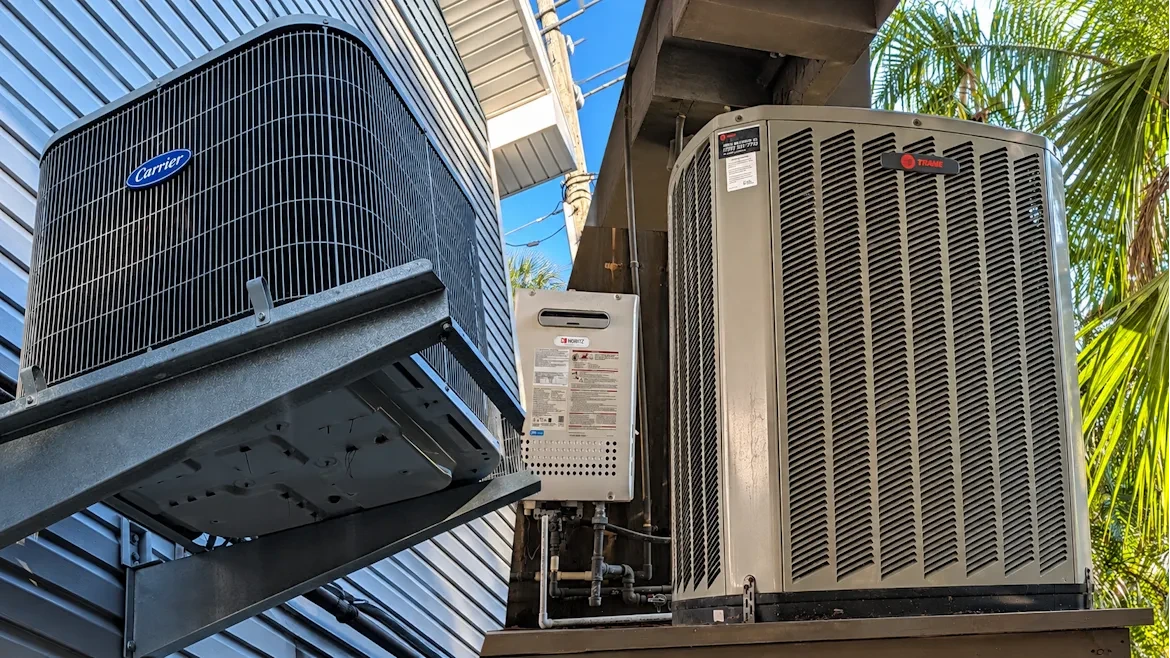
NEW YORK — The sentiment surrounding the residential and commercial heating, ventilation, and air conditioning (HVAC) sector has undergone a dramatic transformation over the past twelve months. At last year’s annual Morgan Stanley Laguna Conference, industry leaders painted a bleak picture, citing high interest rates, cautious consumers, persistent inventory bottlenecks, and a stubborn "repair-over-replace" consumer mentality that many feared would depress market activity well into 2026.
Fast forward to this year’s conference, and the narrative has completely flipped. Top executives from major manufacturing powerhouses Carrier and Trane Technologies delivered upbeat assessments, noting that residential demand is currently meeting or even exceeding internal projections. Furthermore, booming commercial sectors—spearheaded by the relentless expansion of data centers—have driven order books to record highs.
However, this renewed market momentum does not mean manufacturers are entirely out of the woods. Both Carrier and Trane executives stressed that ongoing economic headwinds, including tightening supply chains, fluctuating raw material costs, and aggressive tariffs, necessitate a continued reliance on strategic price increases to protect profit margins.
1. Main Facts: A Resurgent Market Amid Persistent Cost Pressures
The primary takeaway from the Morgan Stanley conference is that macroeconomic fears have failed to stall the HVAC sector’s underlying strength. Key developments include:
- Residential Recovery: The consumer trend of opting for expensive equipment repairs over full unit replacements—which weighed heavily on sales throughout last year—has largely subsided.
- Unit Volume Rebound: Carrier reports that the broader U.S. residential market is tracking toward roughly 7.5 million units this year, outperforming earlier internal forecasts of 6.5 million to 7 million units.
- Data Center Boom: Commercial HVAC orders have surged, fueled heavily by unprecedented demand from artificial intelligence and cloud computing data centers. Both Carrier and Trane reported massive year-over-year order spikes of over 50% in their commercial Americas divisions during the first half of the year.
- Pricing Action: To counter escalating input costs—such as tariffs, fuel, copper, steel, and aluminum—both companies have implemented or are planning further price adjustments to maintain financial health.
2. Chronology of Market Shifts: From 2024 Gloom to Late-2025 Optimism
Understanding the industry’s current trajectory requires looking at the sequence of events that brought manufacturers from last year’s pessimism to today’s bullish outlook:
- Late 2023 to Early 2024: The industry faced a severe inventory overhang. Manufacturers like Trane and Carrier were forced to grapple with destocking phases across distributor channels as high interest rates froze new housing construction and cooled consumer spending.
- Mid-2024: The "repair-over-replace" mindset peaked. Homeowners squeezed by inflation chose to fix aging AC units rather than invest in new systems, causing residential sales volumes to tumble from the historical highs seen in 2024 (when U.S. sales reached approximately 9.2 million units).
- Late 2024: Recognizing inventory imbalances, companies like Trane proactively scaled back production during the back half of the year to normalize supply chains entering 2025.
- Early to Mid-2025: Destocking pressures finally eased. Pent-up housing demand began to break through economic barriers, and extreme summer weather patterns created an urgent need for cooling solutions. Concurrently, data center construction accelerated exponentially.
- Present Day (Morgan Stanley Conference): Both Carrier and Trane report robust pipelines, normalized inventories, balanced residential demand, and record-high company backlogs.
3. Supporting Data and Financial Metrics
The resurgence of the HVAC sector is firmly backed by hard financial metrics and operational volume data shared by corporate leadership:
Carrier Metrics
- Residential & Light Commercial Growth: Carrier expects both business segments to post high-single-digit growth for the year.
- Market Share Gains: Despite initiating aggressive pricing strategies, Carrier estimates it has captured roughly 30 basis points of additional residential market share by leveraging strong distributor relationships, superior delivery times, and product quality.
- Backlog and Data Centers: Carrier’s total company backlog has reached a record $8 billion. Global commercial HVAC orders surged over 50% in the first half of the year. Data center revenue is projected to hit $2 billion for the full year, with $1.5 billion concentrated in the second half. Looking ahead, Carrier has set a baseline target of $3 billion in data center revenue for 2027.
Trane Technologies Metrics
- Commercial Momentum: Trane reported that second-quarter commercial HVAC orders in the Americas jumped 50%, driven by growth across all 14 of its tracked commercial verticals (notably higher education and improving office markets).
- Residential Expectations: Residential sales, which comprise about 15% of Trane’s total portfolio, are expected to achieve mid-single-digit growth this year, supported by normalized channel inventories.
- Pricing Yields: Trane executed two separate residential price increases of up to 5% this year (effective April 1 and July 1). Through July, the company achieved its projected pricing yield targets despite lingering inflationary headwinds.
4. Official Responses and Executive Insights
Leadership commentary at the conference highlighted the tactical adjustments companies are making to capitalize on demand while shielding themselves from macroeconomic volatility.
Dave Gitlin, CEO of Carrier
Dave Gitlin expressed pleasant surprise regarding Carrier’s performance across multiple sectors. Regarding the residential space, he noted that operations are running "far better" than internal models predicted.
Addressing pricing strategy, Gitlin acknowledged the challenges of rising input costs—including tariffs, fuel, copper, steel, and aluminum. While Carrier is aggressive with price adjustments, he clarified that the company will not replicate the aggressive cadence of 2022, when prices were hiked by roughly 8% multiple times over a two-year span.
"We can’t raise price 8% every four months, but we can and will continue to raise price," Gitlin stated.
On the commercial front, Gitlin emphasized Carrier’s readiness to service the booming tech sector, noting that the company has passed rigorous customer-witnessed technical tests, diversified component sourcing, and trained technicians for round-the-clock production shifts. To support future demand, Carrier is planning a new U.S. manufacturing site in either Texas or Alabama that will double its capacity for both data center and non-data-center equipment.
Dave Regnery and Chris Kuehn, Trane Technologies
Trane CEO Dave Regnery described the company’s commercial pipeline as "probably the most I’ve seen in my career in this industry." Rather than marketing standalone units, Trane is heavily leaning into holistic system integration for data centers, combining chillers, coolant distribution units (CDUs), cold plates, and electrical infrastructure.
"We’re not selling a product. We’re selling a solution. We’re selling a system," Regnery emphasized.
CFO Chris Kuehn addressed the complexities of localized pricing dynamics, explaining that residential pricing decisions are made on a "zip code by zip code space." Kuehn noted that while price-versus-inflation dynamics acted as a margin headwind during the first half of the year, Trane’s strategic price actions are successfully aligning costs with macroeconomic realities.
Regarding residential demand heading into late summer, Regnery wryly noted the impact of intense seasonal weather: "It’s been pretty hot out this summer. In North Carolina, I was out walking yesterday, and it was 100°F. I was like, ‘This is crazy.’ So we’ll see."
5. Broader Implications for the HVAC Industry
The optimistic notes sounded at the Morgan Stanley conference carry significant implications for contractors, distributors, and end-users alike:
- Evolving Product Solutions: The rapid rise of high-density computing and data centers is permanently shifting major HVAC manufacturers toward applied, customized thermal management solutions. Technologies originally designed for hyperscale data centers—such as "smart" chillers capable of balancing free cooling and compressor utilization—are now filtering down into commercial spaces like schools and hospitals.
- Persistent Price Adjustments: Contractors and consumers should expect equipment pricing to remain firm. Because commodity costs, labor inflation, and tariffs continue to squeeze supply chains, manufacturers have made it clear that regular price adjustments are a permanent fixture of doing business.
- Capacity Expansion and Regionalization: To mitigate future supply chain shocks, major players are actively investing in domestic manufacturing infrastructure. Carrier’s upcoming Gulf Coast or Southern facility and Trane’s fourfold expansion of applied-system capacity over the past three years signal a broader industry trend toward localized, highly scalable production.
- A Healthier Replacement Market: With consumer hesitation waning and channel inventories stabilized, the long-term outlook for residential contractors has normalized. As aging systems installed during past construction booms reach the end of their operational lifespans, the industry is well-positioned for steady, sustainable replacement activity through the remainder of the decade.
