

By John Davis
While supply chain disruptions and material shortages have occasionally hampered single-ply roofing installations over the past few years, the sector remains far and away the largest and most dominant segment of the commercial roofing industry. The rapid adoption of thermoplastic polyolefin (TPO) and polyvinyl chloride (PVC) membranes has transformed the architectural landscape, offering energy efficiency, ease of installation, and long-term durability.
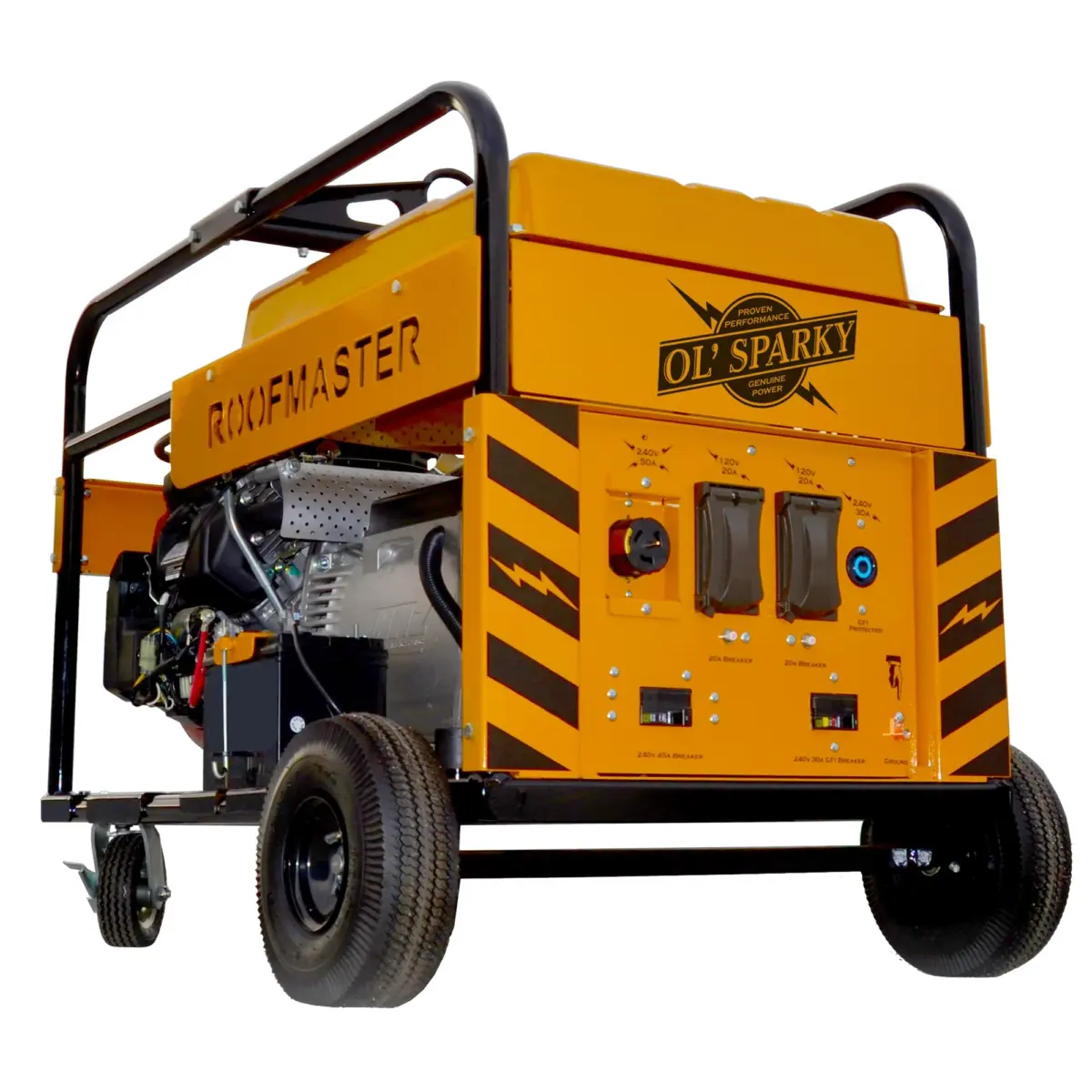
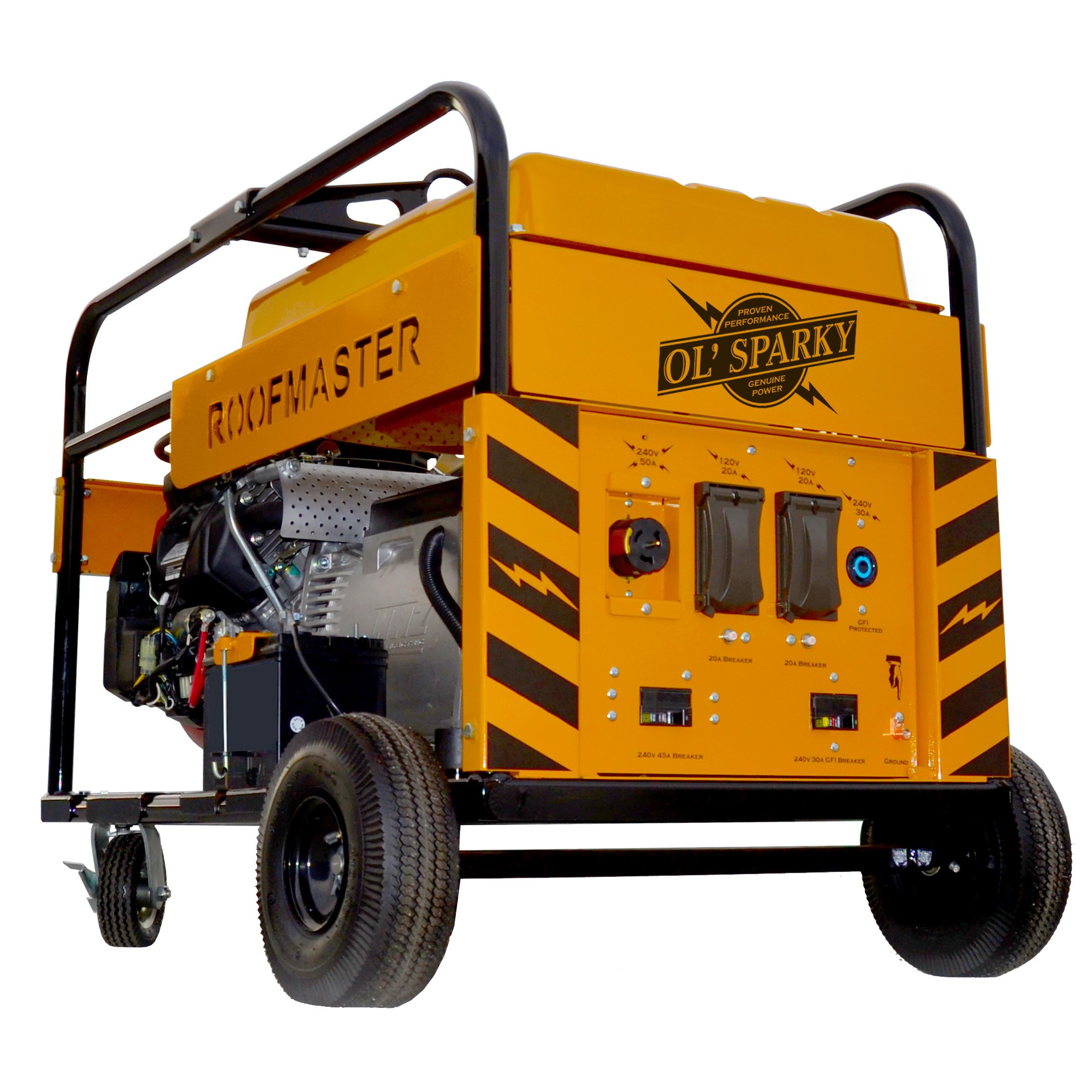
However, the success of these single-ply systems depends entirely on the integrity of their seams. This makes hot-air welding equipment—such as industry-standard Leister welders—critical to daily operations. Yet, even the most sophisticated automatic hot-air welder is only as reliable as the power source feeding it. On most commercial job sites, that power source is a portable generator.
While contractors frequently focus on servicing their welding tools, generator maintenance is often neglected. This oversight can lead to catastrophic equipment failure, costly project delays, and compromised roof integrity. Managing this critical asset requires a clear understanding of the mechanical "dos and don’ts" of generator maintenance, alongside access to certified service networks like those operated by Roofmaster® Products Company in Los Angeles, California, and Dallas-Fort Worth, Texas.
Main Facts: The Critical Link Between Power and Membrane Integrity
Single-ply roofing systems rely on thermal fusion. Hot-air welders use a combination of precise heat, speed, and pressure to melt two overlapping sheets of membrane into a single, monolithic barrier. For this fusion to occur correctly, the heating elements and drive motors inside the welder must operate under highly stable electrical parameters.
+-------------------------------------------------------------+
|                     PORTABLE GENERATOR                      |
|            (Must provide clean, stable voltage)             |
+------------------------------+------------------------------+
                               |
                               | (10-Gauge Extension Cord)
                               v
+-------------------------------------------------------------+
|                     HOT-AIR WELDER                          |
|         (e.g., Leister Varimat / Hand Welders)              |
+------------------------------+------------------------------+
                               |
                               | (Thermal Fusion Process)
                               v
+-------------------------------------------------------------+
|                     COMPLETED SEAM                          |
|         (Watertight, monolithic single-ply roof)            |
+-------------------------------------------------------------+
Portable generators are the unsung heroes of this process, converting mechanical energy from an internal combustion engine into the electrical energy that powers these tools on high-rise decks and sprawling industrial roofs.
If a generator experiences voltage drops, frequency fluctuations, or harmonic distortion, the sensitive microprocessors and heating elements in a welder can easily burn out. In commercial roofing, a generator is not merely a utility; it is a direct contributor to the structural integrity of the building envelope.
Chronology: The Lifecycle of Power Failure on the Roof
To understand the importance of preventative generator maintenance, it is helpful to look at how minor neglect escalates into an active crisis on a job site.
[Phase 1: Site Mobilization] -> [Phase 2: Micro-Fluctuations] -> [Phase 3: Welder Shutdown] -> [Phase 4: Project Downtime] -> [Phase 5: Technical Intervention]Phase 1: Mobilization and Setup
A commercial roofing crew arrives on-site to install a 100,000-square-foot TPO roof. The generator is hauled onto the roof deck or positioned on a ground-level trailer. The crew connects long extension cords to power their automatic welders. At this stage, the generator starts up without issue, masking any underlying maintenance deficiencies.
Phase 2: The Onset of Micro-Fluctuations
As the generator runs continuously for several hours under heavy loads, internal components begin to heat up. If the engine oil is old or degraded, friction increases, causing the engine’s RPMs to fluctuate. If the fuel filter is partially clogged, the engine struggles to draw gas during sudden load increases—such as when an automatic welder engages its drive motor and heating element simultaneously.
Phase 3: Equipment Malfunction
The hot-air welder’s digital control board detects a drop in voltage (e.g., falling from 230V to 195V) caused by the struggling generator. To protect its sensitive circuitry, the welder automatically shuts down, or worse, the heating element overheats due to low airflow from a struggling blower motor. The operator is forced to stop welding mid-seam, leaving an unsealed gap in the membrane.
Phase 4: The Downtime Crisis
With the welder out of commission and the generator surging erratically, the installation crew stands idle. In addition to lost labor hours, the open roof is now vulnerable to sudden weather events. The contractor faces potential liquid damages or penalty clauses for missing key project milestones.
Phase 5: Technical Intervention
The contractor realizes the issue cannot be resolved with basic on-site troubleshooting. The generator and damaged welding equipment must be transported to a specialized repair facility, such as a Roofmaster service center, where certified mechanics can diagnose the electrical output, clean the fuel systems, and rebuild damaged components.
Supporting Data: The High Stakes of Power Management
The commercial roofing industry’s heavy reliance on single-ply membranes makes equipment reliability highly consequential.
- Market Dominance: According to industry data from the Single-Ply Roofing Industry (SPRI) association and the National Roofing Contractors Association (NRCA), single-ply membranes (TPO, PVC, and EPDM) command over 65% of the entire commercial roofing market. Of this share, thermoplastic systems (TPO and PVC) require hot-air welding for all lap seams.
- Electrical Demands: A standard automatic hot-air welder, such as the Leister Varimat V2, requires approximately 4,600 watts (4.6 kW) of continuous power at 230 volts. Hand-held welders require an additional 1,600 watts each. A crew running one automatic welder and two hand welders needs a minimum of 8,000 watts of continuous, clean power, with sufficient surge capacity to handle motor startups.
- The Cost of Downtime: For a standard commercial roofing crew of six to eight installers, idle time can cost a contractor between $500 and $1,200 per hour in direct labor costs, wasted overhead, and delayed project schedules. This does not account for the potential cost of water damage if an unexpected storm hits an unsealed roof.
Official Responses: The Dos and Don’ts of Generator Maintenance
To help contractors avoid these costly failures, certified technicians and equipment manufacturers have compiled a definitive list of operational guidelines. Following these rules ensures that generators deliver the clean, stable power required by sensitive welding equipment.
The "Dos" of Generator Maintenance
- DO Use an Automatic Voltage Regulator (AVR) or Inverter Generator: Standard utility generators can produce "dirty" electricity with high total harmonic distortion (THD). For digital hot-air welders, contractors should use generators equipped with an AVR or opt for high-capacity inverter generators that produce a clean, stable sine wave.
- DO Check and Change Engine Oil Daily: Rooftop environments are highly abrasive, filled with dust, asphalt fumes, and adhesive overspray. Checking oil levels daily and changing the oil every 50 to 100 hours of operation prevents engine wear and maintains consistent RPMs.
- DO Monitor Extension Cord Gauge and Length: Voltage drop is a major contributor to generator and welder failure. Contractors must use heavy-duty, properly rated cords (typically 10-gauge or thicker for runs over 50 feet) to prevent power loss between the generator and the tool.
- DO Run the Generator Under Load Before Welding: Allow the generator to warm up for 5 to 10 minutes and stabilize its idle speed before plugging in and starting any heavy-duty welding equipment.
The "Don’ts" of Generator Maintenance
- DON’T Shut Down the Generator While Tools Are Connected: This is a common cause of electrical surges. Always turn off and unplug all welding equipment before shutting down the generator’s engine. Failing to do so can cause a reverse voltage spike that damages the welder’s motherboard.
- DON’T Use Stale or High-Ethanol Fuel: Ethanol-blended fuels attract moisture from the air, leading to phase separation and clogged carburetor jets. Always use fresh, high-octane fuel and add a stabilizer if the generator will sit idle for more than two weeks.
- DON’T Overload the Generator: Running a generator at or near its maximum capacity for extended periods causes overheating and voltage sags. A good rule of thumb is to size the generator so that the continuous load of all connected tools does not exceed 75% of the generator’s rated continuous wattage.
- DON’T Attempt DIY Electrical Repairs on the Roof: Attempting to adjust governor speeds or rewire voltage selectors on-site without proper diagnostic equipment can ruin connected tools. If a generator is surging or dropping voltage, it should be sent to a certified service center immediately.
Implications: The Strategic Value of Professional Maintenance Networks
For commercial roofing contractors, maintaining a fleet of generators is a logistical challenge. The harsh environment of a construction site—characterized by extreme temperatures, dust, vibration, and frequent transport—means that even the best-maintained equipment will eventually require professional service.
                  +-----------------------------------------+
                  |       COMMERCIAL ROOFING CONTRACTOR     |
                  +--------------------+--------------------+
                                       |
                   +-------------------+-------------------+
                   |                                       |
                   v                                       v
+------------------------------------+   +------------------------------------+
|       LOS ANGELES SERVICE HUB      |   |       DALLAS-FORT WORTH HUB        |
|  - Serving West Coast Projects     |   |  - Serving Southwest & Plains      |
|  - Certified Mechanics             |   |  - Rapid Turnaround Times          |
|  - Specialized Diagnostic Gear     |   |  - Fleet Maintenance Contracts     |
+------------------------------------+   +------------------------------------+
This reality highlights the importance of strategic regional service networks. Roofmaster® Products Company addresses this need through dedicated service centers staffed by certified mechanics in major construction hubs, including Los Angeles, California, and Dallas-Fort Worth, Texas.
Having access to certified mechanics in these key regions has several major benefits:
- Minimizing Downtime: By positioning service centers in the high-density construction markets of Southern California and North Texas, Roofmaster provides contractors with rapid turnaround times. This keeps critical equipment on the job site rather than waiting in transit.
- Preserving Equipment Lifespans: Certified mechanics do not just patch over symptoms; they perform comprehensive diagnostics. They use load banks to test generator outputs under simulated job site conditions, ensuring that repaired units can handle the cyclic demands of heavy hot-air welders.
- Protecting Warranties: Many high-end hot-air welders and industrial generators require certified service to keep their manufacturer warranties valid. Utilizing unauthorized repair services can void these protections, leaving contractors liable for full replacement costs.
Ultimately, while single-ply roofing remains the preferred choice for commercial buildings, its installation relies on a delicate balance of heat, speed, and power. By treating the generator with the same care and attention as the welder itself, and by partnering with professional service centers, contractors can protect their equipment investments, keep their crews productive, and deliver high-quality, watertight roofs.
