

By Patrick Holland
Director of Content, Hardware
Main Facts: What’s New Beneath the Familiar Exterior
At first glance, the Apple iPhone 18 Pro and iPhone 18 Pro Max look indistinguishable from their predecessors. Sharing the exact dimensions and physical footprint of last year’s iPhone 17 Pro line, they maintain Apple’s tried-and-true exterior design language.
However, beneath the familiar glass-and-titanium chassis lies a sweeping internal overhaul. The 18 Pro and 18 Pro Max introduce several major hardware milestones:
- The A20 Pro Chip: A next-generation processor engineered for heightened efficiency and machine learning demands.
- Expanded Vapor Cooling: A significantly larger vapor chamber cooling system designed to manage thermal throttling during sustained high-performance tasks.
- Upgraded Power Cells: Substantially larger battery capacities across both standard and Max tiers.
- Mechanical Aperture Blades: A groundbreaking camera innovation featuring tiny, paper-thin mechanical aperture blades embedded within the main camera lens module.
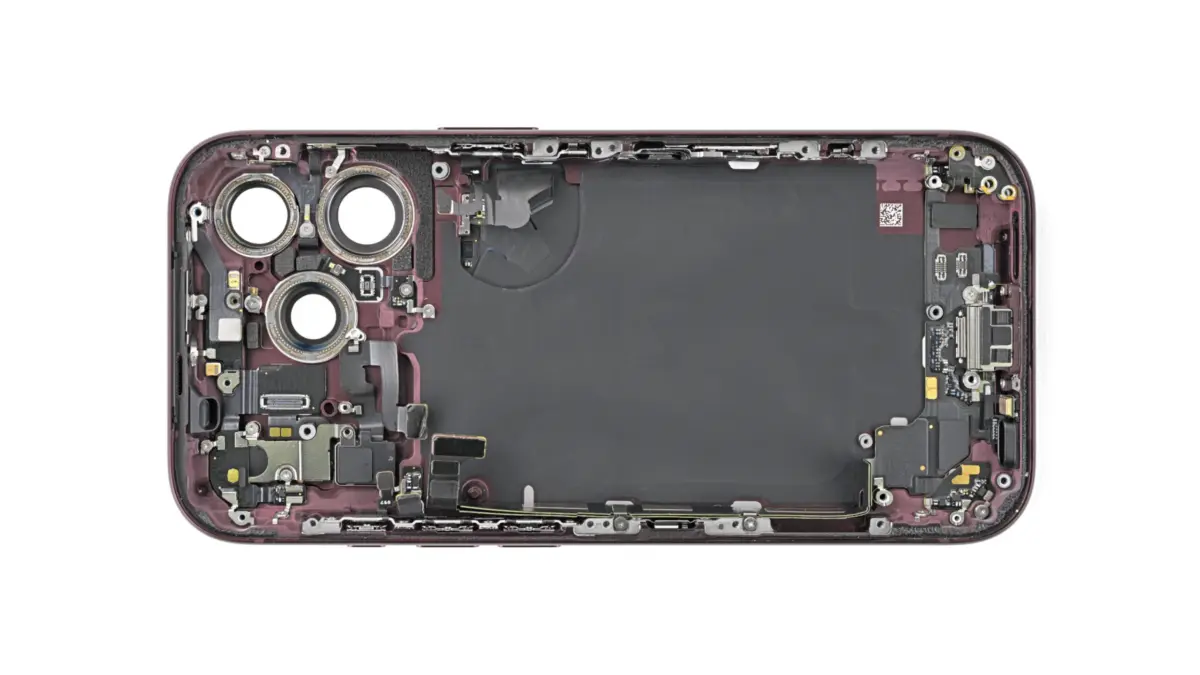
As these flagship devices find their way into consumer pockets worldwide, tech enthusiasts, durability experts, and repairability advocates have rushed to dismantle them. YouTube creators like Zach Nelson (JerryRigEverything) and repairability authority iFixIt have stripped the devices down to their foundational components, offering a rare glimpse into the engineering triumphs—and potential repair pitfalls—of Apple’s newest hardware.
Chronology: The Teardowns and Testing Timeline
The lifecycle of the iPhone 18 Pro’s public scrutiny unfolded rapidly following its retail debut:
- Launch Week: The iPhone 18 Pro and Pro Max land in consumer hands, immediately triggering a wave of early unboxings and initial performance reviews.
- Mid-Week (JerryRigEverything): Tech reviewer Zach Nelson publishes two back-to-back videos. The first documents a rigorous scratch, bend, and durability test, while the second provides a meticulous teardown of the handset. Notably, Nelson successfully removes the display without damaging underlying components, awarding Apple a cautious "thumbs up for repairability."
- The Sunday Assessment (iFixIt): Repairability and advocacy platform iFixIt publishes its comprehensive teardown of four distinct iPhone 18 Pro units. Unlike Nelson’s clean extraction, iFixIt encounters structural complications involving the plastic frame directly behind the display.
- Post-Teardown Analysis: Subsequent breakdowns of regional variants (via Apple’s Irish regulatory disclosures and global teardowns) establish a definitive map of global battery capacities, highlighting the distinct differences between eSIM-only models and versions featuring physical SIM card trays.
Supporting Data: Battery Capacities and Hardware Variations
One of the most revealing aspects of the recent teardowns is the mapping of Apple’s power supply architecture. Global variants of the iPhone 18 Pro series feature differing battery capacities depending on whether the device includes a physical SIM card tray or relies entirely on eSIM technology.

Because physical SIM card readers occupy internal volume, eSIM-only models—predominantly sold in the United States—afford Apple additional space to pack larger power cells.
iPhone 18 Pro Series Battery Capacities
| Phone Model | Regional Variant (SIM Configuration) | Battery Capacity |
|---|---|---|
| iPhone 18 Pro | SIM Card + eSIM | 4,056 mAh |
| iPhone 18 Pro | eSIM Only | 4,288 mAh |
| iPhone 18 Pro Max | SIM Card + eSIM | 5,391 mAh |
| iPhone 18 Pro Max | eSIM Only | 5,567 mAh |
While the battery increases are a welcome upgrade for power users, the physical layout inside the phone leaves little room for modular fixes.
Official Responses and Insights from Repair Experts
While Apple’s official stance continues to lean toward streamlined modular replacements through its Self Service Repair program, independent evaluators have raised red flags regarding specific assembly vulnerabilities.
In their published blog post detailing the teardown, Liz Chamberlain (iFixIt’s Director of Sustainability) and Carsten Frauenheim (Repairability Engineer) highlighted an unexpected hurdle involving the display assembly:
"Four phones are too few to establish a failure rate. Adhesive strength, heating, technique or a difference in the plastic could all matter. That plastic frame has been present since the 15 Pro. But it hasn’t given us nearly as much trouble in previous years," Chamberlain and Frauenheim wrote. "Using isopropyl alcohol might make display removal more consistent, but we’ll have to do more testing to be sure."
According to iFixIt’s findings, the thin plastic frame positioned directly behind the display broke on three out of the four units they dismantled. Because Apple does not sell this plastic backing frame as an individual replacement part, any structural damage to the frame necessitates purchasing an entirely new display module. While a technician can theoretically remount a broken display without the plastic backing, the screen will no longer sit flush against the phone’s chassis, compromising dust and water resistance.

Furthermore, the introduction of the multi-blade mechanical aperture introduces a new bottleneck for camera repairs. The main camera module features a six-blade physical aperture system—captured dynamically in CNET’s review footage by cinematographer Celso Bulgatti—which physically expands and contracts to control light intake.
However, iFixIt confirmed that micro-repairing this intricate mechanism is virtually impossible.
"We dismantled the main camera and concluded that an aperture-only repair isn’t going to be feasible: If your aperture gets stuck, you’ll be looking at replacing the entire main camera assembly," Chamberlain and Frauenheim noted.
Despite these hurdles, iFixIt ultimately awarded the iPhone 18 Pro and Pro Max a provisional repairability score of 7 out of 10—matching the scores of the iPhone 17 Pro, 16 Pro, and preceding generations.
Implications: What the iPhone 18 Pro Teardowns Mean for Consumers
The discoveries inside the iPhone 18 Pro and Pro Max carry significant weight for consumers, independent repair shops, and Apple’s long-term sustainability initiatives.
1. The Engineering Trade-Off of Advanced Optics
The inclusion of a physical, multi-blade mechanical aperture represents a massive leap forward for smartphone photography, bringing DSLR-like optical depth control and diffraction management to a mobile form factor. However, mechanical parts inherently introduce mechanical failure points. Unlike pure software processing, physical blades can jam, wear out, or suffer structural damage from drops. Consumers must recognize that advanced optical hardware comes with higher stakes: a single mechanical failure in the aperture forces a total replacement of the primary camera array rather than a quick component-level fix.

2. The Nuance of Repairability Scores
A score of 7 out of 10 suggests that Apple is maintaining a steady baseline in modular design, but the fragility of the display’s plastic backing frame highlights the delicate balance between structural integrity and serviceability. For independent repair technicians and DIY enthusiasts, opening an iPhone 18 Pro requires extreme precision. Minor variations in heat application, adhesive solvent usage, or component batching can lead to costly structural fractures.
3. Battery Life Wins via eSIM Transition
The data confirming larger batteries in eSIM-only models reinforces Apple’s aggressive push toward a totally wireless, software-defined cellular future. Consumers in regions reliant on eSIM benefit directly from extra milliamp-hours, yielding tangible battery life improvements over dual-SIM or physical SIM regional variants.
Final Verdict
The iPhone 18 Pro and Pro Max succeed in pushing the boundaries of what is possible inside a mobile chassis. By successfully integrating massive vapor cooling systems, larger batteries, the A20 Pro architecture, and complex mechanical camera apertures into the exact same physical dimensions as last year’s models, Apple has executed an impressive engineering feat. Yet, as the teardowns demonstrate, packing more technology into the same space inevitably pushes repair physics to their absolute limits.
