

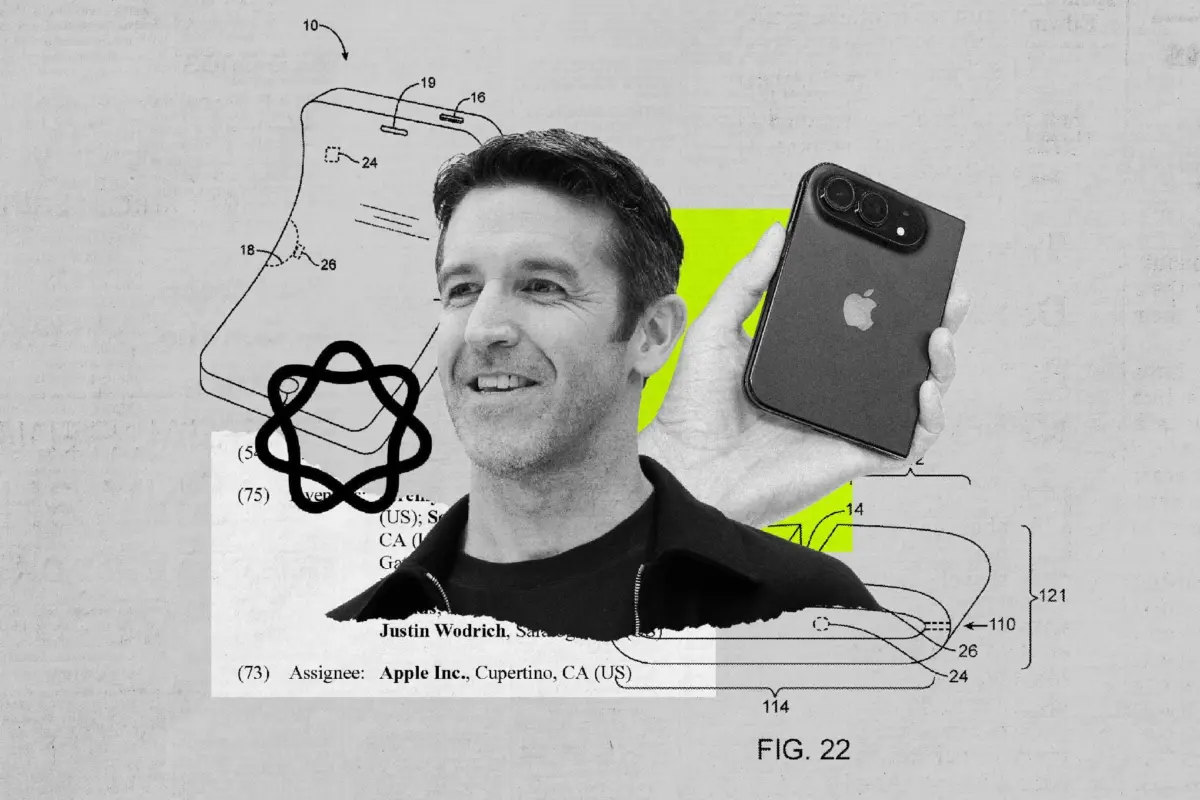
The technological landscape is experiencing a seismic shift, and at the epicentre of this transformation is Apple Inc. Following the annual September hardware showcase, the company finds itself at a historical crossroads. This year’s event was not merely another iteration of predictable smartphone upgrades; it marked a profound psychological and structural turning point.
For the first time in over a decade, the grand stage was not helmed by Tim Cook. Instead, the spotlight fell upon John Ternus, Apple’s newly minted Chief Executive Officer. Alongside a dramatic executive reshuffling and the debut of the long-awaited "iPhone Duo"—Apple’s first foray into foldable smartphones—the company is attempting a high-stakes pivot from the traditional "iPhone era" into an aggressive, albeit late-arriving, "AI era."
To dissect these monumental developments, Decoder recently sat down with Mark Gurman, Bloomberg’s chief Apple correspondent and host of the upcoming podcast Power On. Gurman, widely regarded as the industry’s best-sourced reporter on all things Cupertino, offered an inside look at the corporate maneuvers, cultural transformations, and strategic gambles defining Apple’s next chapter.
Main Facts: A New CEO, a Foldable Future, and a Radical C-Suite Overhaul
The September product launch carried monumental weight for several interconnected reasons:
- The Ternus Succession: John Ternus officially took over the reins as CEO less than two weeks before the event, succeeding Tim Cook, who stepped down to an executive chairman role.
- The iPhone Duo Debut: Apple officially entered the foldable market with the iPhone Duo, a device that industry analysts believe could redefine the smartphone category much like the original iPhone did in 2007.
- Massive C-Suite Turnover: Alongside Cook, a generational wave of Apple’s old guard—including former COO Jeff Williams, former CFO Luca Maestri, and former General Counsel Kate Adams—has transitioned out or retired. Even longtime design and marketing stalwart Phil Schiller has stepped back from his remaining responsibilities running the App Store and product events.
- The AI Pivot: Ternus used his inaugural keynote to frame Apple’s ecosystem around the concept of an "intelligent personal hub," leaning heavily into artificial intelligence despite years of criticism regarding Apple’s reliance on third-party models like Google’s Gemini.
Chronology of Change: How Apple Engineered a Decade of Succession
The sweeping changes seen on stage did not happen overnight. According to Gurman’s reporting, the architecture for this massive generational shift was meticulously laid out years in advance.
2023–2024: Recognizing the Aging Guard
The process began in earnest during executive meetings in 2023, when Tim Cook initiated serious internal discussions about succession. With top-tier executives sitting on vast fortunes of hundreds of millions—or billions—of dollars, Apple faced the reality that its veteran leadership cadre was aging out.
Rather than executing a sudden, chaotic transition, Apple orchestrated a deliberate, multi-year relay race:
- Late 2024: CFO Luca Maestri retired, passing the baton to Kevan Parekh (though Maestri retained minor IT and real estate oversight before eventually moving to a teaching role at Apple University).
- 2025: COO Jeff Williams stepped down, succeeded by his deputy, Sabih Khan.
- 2026: General Counsel Kate Adams retired, replaced by former Meta executive Jennifer Newstead.
- Late Summer 2026: The climax of the transition occurred when Tim Cook officially stepped aside, handing the CEO title to John Ternus. Simultaneously, hardware chief Johny Srouji was elevated to the newly created position of "Chief Hardware Officer" to stave off potential departure threats, cementing his status as the second most important executive at the company.
Supporting Data: Navigating the AI Deficit and Regulatory Crosshairs
Despite the polished presentation of the "intelligent personal hub" narrative, Apple’s transition into artificial intelligence remains fraught with friction.
The In-House AI Conundrum
Apple’s traditional corporate doctrine—famously championed by Cook—dictates that the company must own and control every foundational technology embedded in its hardware. Apple spent billions acquiring and restructuring Intel’s modem business to secure its cellular hardware supply chain. Yet, when it came to generative AI, Apple hit a brick wall, forcing a heavy reliance on a stopgap partnership with Google.
Gurman notes that despite rumors of an eventual return to in-house foundational models, there is currently zero concrete evidence that Apple is actively building a competing frontier model from scratch or executing massive AI-focused acquisitions.
The App Store and Regulatory Pressures
Phil Schiller’s transition away from running the App Store highlights internal philosophical divisions regarding developer relations and monetization. While Ternus and Services Chief Eddy Cue are reportedly exploring new avenues to extract revenue through the App Store—including expanded advertising slots and AI-driven matchmaking—Schiller long held concerns that Apple was squeezing developers too aggressively.
This internal tension unfolds against the backdrop of persistent regulatory scrutiny. Despite Cook’s cultivation of political alliances, the Department of Justice’s antitrust lawsuit against Apple regarding App Store policies and CarPlay remains a formidable, unresolved threat.
Official Responses and Strategic Contrasts: Cook vs. Ternus
The cultural shift from Tim Cook to John Ternus is already manifesting in management styles. While Cook was known for fostering a collaborative, communal decision-making environment where executives often circled issues through endless consensus-building, Ternus is characterized as far more decisive.
"You’ll come to Tim with an idea, and he’ll just pepper you with more questions… John Ternus, if you want him to make a decision, he’ll make a decision. Now, you may hate his opinion, but he has a viewpoint," Gurman explained.
This newfound decisiveness was evident in Ternus’s keynote delivery. By immediately staking out a distinct philosophical flag on AI—framing the ecosystem around proactive, on-device and cloud intelligence—Ternus provided a clear narrative framework, even if skeptics argue the technology itself is still playing catch-up to competitors like Meta and OpenAI.
Implications: The Road Ahead for Apple
As Apple marches further into the Ternus era, the company faces profound opportunities and existential threats.
1. The Next Generation of AI-Native Devices
Apple’s product pipeline is reportedly brimming with half a dozen AI-native hardware categories slated for release over the next 18 months. These include:
- Smart Home Hubs: Echo Show-style devices featuring entirely new, Siri-driven operating systems and AI-based Face ID recognition.
- Robotic Home Devices: A smart home hub mounted on a mechanized, moving desk arm.
- Advanced Wearables: Smart glasses expected by 2027, alongside AirPods equipped with low-frame-rate visual intelligence cameras capable of contextual real-world interactions.
2. The Privacy Paradox
These ambient-capture devices create a monumental branding hurdle for Apple. Features like the Apple Watch’s continuous audio-transcription capabilities—and upcoming visual intelligence tools—threaten to collide with public sensitivities regarding ambient surveillance. While Apple maintains robust technical safeguards via its Private Cloud Compute infrastructure, the social stigma surrounding always-on recording devices (exacerbated by early market movers like Meta) presents a major reputational test.
3. The Ultimate Test: Beyond the iPhone
Ultimately, Gurman suggests that Ternus’s legacy will not be defined by the iPhone Duo or iterative smart home accessories, but by his ability to discover Apple’s next great centerpiece. With the ambitious Apple Car project shelved after burning billions, and the Vision Pro currently struggling to capture mainstream cultural dominance, the pressure is on.
When asked about the defining challenge of the next decade, Gurman summarized the stakes cleanly:
"In five years from now, they are going to need to start thinking of what actually replaces the iPhone as the next thing… Ternus’s tenure as CEO, I think, will go down as a success if he’s able to find that next new centerpiece."
For a company built on redefining paradigms, the coming years will test whether Apple’s new generation of leadership can out-innovate the legacy they inherited.
