By Austin Keating Special Section Editor, SNIPS NEWS
Main Facts: A New Paradigm for Construction Safety
The construction industry is no stranger to regulatory oversight, mandatory compliance training, and complex corporate safety manuals. Yet, despite decades of institutional investment and legislative mandates, more than 1,000 construction workers still tragically lose their lives on the job annually across the United States.
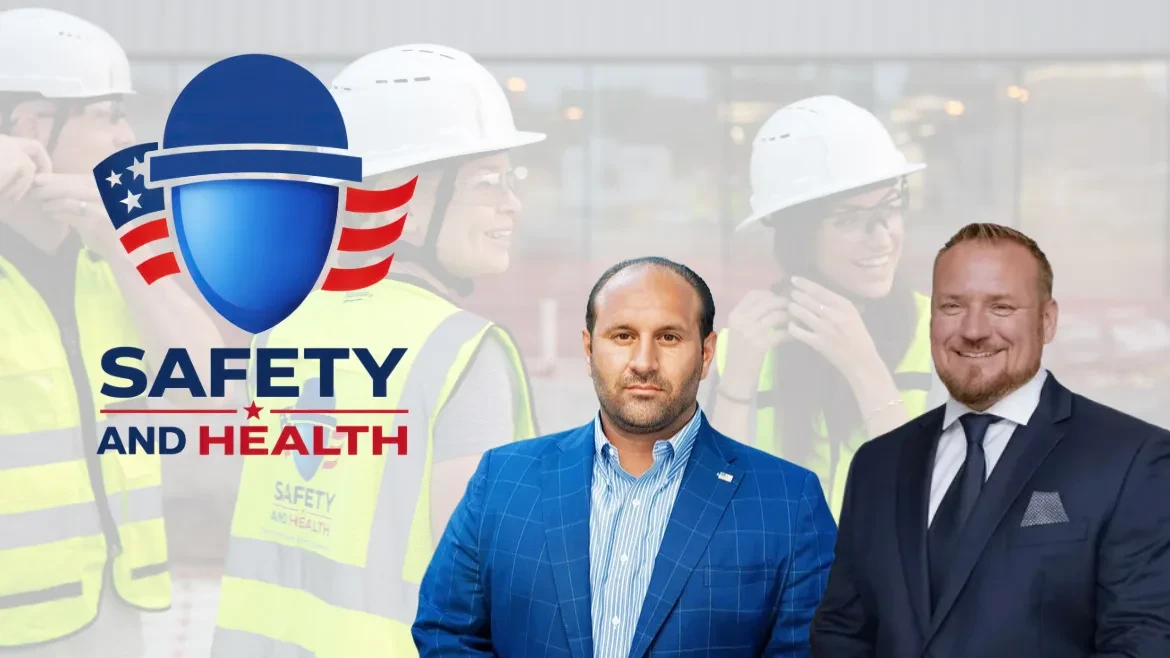
Against this sobering backdrop, a coalition of industry veterans, former federal regulators, and experienced contractors has banded together to establish a radically different kind of trade organization. Officially launching on September 21, Safety and Health, The Construction Safety Organization, enters the national arena with an exclusive focus on construction safety and health.
Led by President Raffi Elchemmas and consultant Brandon Anderson, the organization aims to disrupt traditional compliance models. Instead of viewing safety merely as a bureaucratic hurdle to clear for regulatory bodies like the Occupational Safety and Health Administration (OSHA), the organization champions a transformative "Workers First" philosophy. This approach re-centers the entire safety infrastructure around the frontline experiences of employers and field personnel.
Rather than competing with existing groups, the national trade association is built on a foundation of "disruptive collaboration." It seeks to tear down traditional silos by bringing contractors, safety professionals, regulators, manufacturers, and educators together. By offering free and low-cost membership tiers, the organization is deliberately lowering financial barriers to entry, ensuring that smaller contractors—who frequently lack dedicated corporate safety departments—gain uninhibited access to life-saving resources, educational frameworks, and real-world tools.
Chronology: The Genesis and Evolution of a National Safety Initiative
The creation of Safety and Health did not happen overnight; it represents the culmination of years of industry-wide frustration, evolving regulatory landscapes, and deliberate coalition-building.
Pre-Launch Phase (2023–2025): Throughout the early and mid-2020s, industry stakeholders noted a persistent plateau in construction safety metrics. While historical data showed long-term improvements since OSHA’s inception, fatal injury rates remained stubbornly high. Conversations began among founding members regarding what was missing from the existing safety infrastructure: namely, a unified, agile voice speaking specifically from the perspective of contractors and workers actually executing projects in the field.
Formulating the Core Philosophy: Over months of closed-door planning sessions, founding members synthesized their collective decades of field, association, and regulatory experience. They realized that safety initiatives often failed when they were top-down compliance mandates disconnected from daily jobsite realities. They formalized the dual pillars of the organization: empowering frontline workers while actively supporting the operational realities of employers.
Assembling the Leadership Team: Organizers strategically recruited individuals with deep institutional knowledge, specifically targeting veterans of federal oversight agencies like OSHA, major national trade associations, and heavy civil engineering firms.
September 21 Official Launch: The organization officially opens its doors to the national construction community, deploying a digital platform at safetyandhealth.com and introducing its tiered, highly accessible membership model to the public.
Supporting Data: The Persistent Crisis in Construction Safety
To understand why a new organization feels urgently necessary, one must examine the hard data defining the contemporary construction landscape.
1,000+ Annual Fatalities: According to labor and safety statistics, more than 1,000 construction workers die from occupational injuries every year in the United States. Construction consistently accounts for one of the highest numbers of fatal work injuries of any industry sector.
The "Fatal Four": Hazards such as falls, struck-by incidents, caught-in/between hazards, and electrocutions remain the leading causes of worker fatalities in construction, pointing to systemic gaps in baseline training and hazard recognition.
Regulatory and Economic Complexities: Thousands of independent contractors operate with lean margins. While large commercial general contractors often maintain robust, multi-person safety departments, smaller sub-contractors—such as sheet metal workers, specialty trade mechanics, and independent civil contractors—often struggle to interpret shifting federal and state standards while maintaining project profitability.
Financial Barriers in Safety Education: Historically, comprehensive safety resources, specialized seminars, and advanced risk-management tools have carried high price tags, pricing out smaller enterprises that comprise the backbone of the American construction industry. Safety and Health addresses this directly by providing a fully free baseline membership tier, subsidized by paid corporate memberships and strategic industry partners.
Official Responses: Leadership Perspectives on "Workers First"
The leadership team behind Safety and Health brings a rare blend of perspectives, combining decades of enforcement and policy experience with the practical realities of managing jobsites.
Raffi Elchemmas on Unified Voices and Practical Solutions
President Raffi Elchemmas, who brings more than 15 years of construction-association experience to his new role, emphasizes that the organization was shaped from the ground up by its founding members.
"The idea was built together with our founding members because we believe the construction industry can benefit from a stronger, more unified voice focused specifically on advancing construction safety and health from the perspective of those doing the work every day," Elchemmas stated. "The timing feels right because the industry is ready for greater collaboration, practical solutions and a renewed commitment to putting workers first."
Elchemmas is careful to clarify that prioritizing workers does not mean adversarial positioning against employers.
"We don’t view those objectives as opposing interests," he noted. "Responsible employers want their people to go home safe every day, and our role is to help create the conditions, resources and support policies that allow employers to achieve that goal effectively."
Brandon Anderson on "Disruptive Collaboration"
Consultant Brandon Anderson, drawing upon 27 years of heavy civil, road, and Department of Transportation (DOT) construction experience, stresses the value of voluntary engagement.
"Because we are a voluntary membership organization, our members are here because they want to be, not to check a box and not because they are obligated to be," Anderson explained.
He coined the term "disruptive collaboration" to describe how the organization plans to aggregate and share safety innovations across company lines. Rather than viewing safety protocols as proprietary trade secrets or competitive advantages, the group intends to create secure forums where contractors can openly discuss both victories and failures.
"The goal is to make safety innovation collaborative rather than competitive, so that a successful idea on one jobsite can ultimately benefit workers across the industry," Anderson said. "Together we will turn good ideas into actions that can be implemented on jobsites across the industry."
Deep Federal Expertise: The OSHA Connection
The credibility of Safety and Health is heavily bolstered by its inclusion of former high-ranking OSHA officials who understand the nuances of federal regulation from the inside out:
Scott Ketcham: Spent 34 years in federal service at OSHA, serving as a deputy assistant secretary and leading both the Directorate of Enforcement Programs and the Directorate of Construction.
Tim Irving: Spent 24 years at OSHA’s national office, acting as director of the Directorate of Construction. His background includes spearheading the National Stand-Down to Prevent Falls in Construction and working closely with the Advisory Committee on Construction Safety and Health (ACCSH). Before his federal career, Irving owned and operated an electrical contracting business in Boston.
Pete Chaney: Brings over 40 years of occupational safety and health experience, including holding pivotal safety leadership posts across two major national construction trade associations.
Justin Azbill: Serves as Vice President, bringing over three decades of dedication to construction workplace safety and operational performance improvement.
Implications: What This Means for the Future of Construction
The launch of Safety and Health, The Construction Safety Organization, carries profound implications for contractors, safety professionals, and workers across the United States.
Shift from Compliance to Culture: By defining "Workers First" as an active foundational mindset rather than a passive compliance checkbox, the organization challenges companies to empower employees to speak up about hazards without fear of retribution. Training workers not merely to follow rules, but to actively participate in hazard identification, fundamentally alters jobsite dynamics.
Democratizing Safety Resources: By removing financial hurdles through free and low-cost membership tiers, the organization levels the playing field. Smaller trade contractors—including sheet metal workers, mechanical installers, and independent specialty subs—gain access to top-tier institutional knowledge that was once exclusive to multi-billion-dollar general contracting corporations.
Bridging the Gap Between Regulators and Field Crews: With former OSHA leadership actively advising the organization, members gain a unique translation layer for federal and state regulations. This ensures contractors understand not just what the rules are, but why they exist and how to implement them practically without crushing operational efficiency.
A Collaborative Safety Ecosystem: If the organization successfully fosters "disruptive collaboration," it could permanently change how the construction industry handles safety innovations. By breaking down corporate walls and encouraging the cross-pollination of best practices, the industry moves closer to its ultimate shared goal: ensuring every single construction worker returns home safely at the end of every shift.
For more information or to register for a free membership, interested contractors and safety professionals can visit safetyandhealth.com.