

By Anthony Capkun
Published September 23, 2026
Main Facts
Preliminary enforcement data released by the Occupational Safety and Health Administration (OSHA) for fiscal year 2026 reveals a persistent and alarming trend: fall protection violations continue to dwarf all other workplace safety infractions across American industries. Unveiled at the National Safety Council’s (NSC) 2026 Safety Congress & Expo, OSHA’s annual Top 10 most frequently cited standards highlight the most pervasive hazards endangering workers, while exposing the staggering financial toll these preventable lapses take on employers.
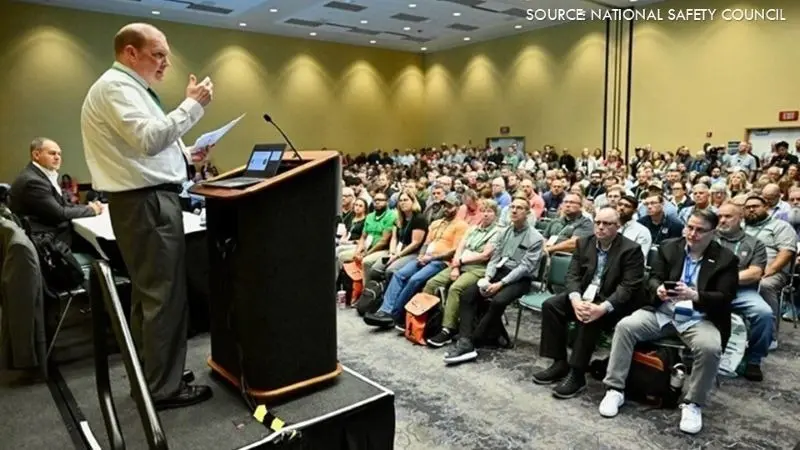
At the forefront of the discussion was Prentice Cline, acting deputy director of OSHA’s Directorate of Enforcement Programs. Addressing a packed auditorium of safety professionals, industry leaders, and compliance officers, Cline emphasized that despite decades of technological advancement, regulatory oversight, and educational campaigns, foundational workplace safety rules—particularly those concerning heights—are routinely ignored or inadequately managed.
The financial fallout is staggering. According to comprehensive data spanning OSHA’s 2025 fiscal year, violations cited solely within the Foundation, Structure, and Building Exterior Contractors sector (categorized under NAICS Code 2381) accumulated a monumental $80,686,128 in penalties. Within this single contractor category, the standard governing the Duty to have Fall Protection alone accounted for more than half of all assessed penalties, totaling $40,783,225.
Complementing the federal enforcement figures, Bureau of Labor Statistics (BLS) data analyzed by the NSC demonstrates the human cost of these compliance failures: falls resulted in 844 worker deaths in 2024 alone. These figures frame the core mission of the annual NSC Safety Congress & Expo: to provide organizations with actionable insights, empower them to identify persistent hazards, and encourage the proactive implementation of lifesaving safety programs before tragedy strikes.
Chronology: The Road to the 2026 Safety Congress & Expo
To understand the weight of the findings presented at the 2026 NSC Safety Congress & Expo, it is necessary to examine the timeline of data collection, regulatory analysis, and industry response leading up to the announcement.
- Calendar Year 2024 (The Human Toll): Throughout this period, job sites across the United States experienced hundreds of fatal incidents. Data compiled later by the Bureau of Labor Statistics and analyzed by the NSC revealed that falls from elevations, ladders, and scaffolding culminated in 844 preventable fatalities, cementing falls as a leading cause of occupational death, particularly in the construction sector.
- Fiscal Year 2025 (Enforcement and Financial Penalties): OSHA inspectors conducted thousands of targeted and complaint-based inspections nationwide. During this financial cycle, regulatory enforcement yielded massive financial penalties for non-compliant employers. Notably, foundation, structure, and building exterior contractors (NAICS Code 2381) were hit with over $80.6 million in fines, driven heavily by systemic failures in fall protection compliance.
- Early Fiscal Year 2026 (Data Aggregation and Preliminary Review): As OSHA closed out the preliminary inspection datasets for fiscal year 2026, safety statisticians noted that the rank order of safety violations bore a striking resemblance to previous years. Fall protection standards remained comfortably in the number-one spot, followed closely by hazard communication, ladders, and scaffolding.
- September 23, 2026 (The Official Unveiling): At the National Safety Council’s 2026 Safety Congress & Expo, OSHA officials—led by Prentice Cline—officially released the preliminary Top 10 most frequently cited standards. The announcement served as the centerpiece of the conference, sparking nationwide discussions among safety executives regarding corporate accountability, training deficiencies, and the urgent need for a cultural shift in high-risk industries.
Supporting Data: Breaking Down the Numbers
The quantitative analysis of OSHA’s inspection logs and associated economic impacts paints a stark picture of occupational safety in the United States. While the Top 10 list serves as a qualitative guide for hazards, the financial and mortal metrics underscore why these standards demand immediate organizational attention.
The Financial Burden on Contractors (NAICS Code 2381)
The economic penalties levied against Foundation, Structure, and Building Exterior Contractors during FY 2025 illustrate how expensive non-compliance can be, even before factoring in litigation, reputational damage, project delays, and workers’ compensation claims:
- Total Sector Penalties: $80,686,128
- Duty to Have Fall Protection (Standard 1926.501): $40,783,225 (Accounting for over 50% of the category’s total fines)
- Fall Protection Training Requirements: $4,095,070
- Fall Protection Systems Criteria and Practices: $1,537,595
- Ladder-Related Violations: $8,514,502
- Personal Protective Equipment (PPE) Violations (Eye, Face, Head): $8,403,413
The Human Toll: Fatalities and Injuries
The Bureau of Labor Statistics data underscores that OSHA citations are not merely bureaucratic checkboxes; they are the thin red line between life and death on a job site.
- 844 Fatalities: In 2024, falls accounted for nearly a third of all construction-related deaths.
- Thousands of Lost-Time Injuries: Beyond fatalities, tens of thousands of workers suffer non-fatal, debilitating injuries annually due to inadequate harness usage, unsecured scaffolding, unstable ladder setups, and missing perimeter guards.
Official Responses and Industry Leadership
The release of the 2026 Top 10 list drew immediate commentary from top safety executives and regulatory leaders, who collectively called for an aggressive departure from complacency in workplace safety management.
Lorraine Martin, CEO of the National Safety Council
In her keynote address surrounding the OSHA data release, NSC CEO Lorraine Martin did not mince words regarding the persistent nature of workplace violations.
"Year after year, the OSHA Top 10 reminds us how pervasive preventable workplace hazards remain," Martin stated. "Employers should use these findings to evaluate their workplaces, install critical safeguards, and implement proven solutions that help protect workers and save lives."
Martin further emphasized the human element behind the regulatory statistics, reminding attendees that safety compliance is fundamentally an ethical obligation rather than a legal hurdle.
"Every workplace fatality represents a person who should have returned home safely at the end of the day," Martin added. She urged employers to look past minimum compliance standards, learn from historical incident data, and take proactive measures before tragedy strikes their workforce.
Prentice Cline, OSHA Directorate of Enforcement Programs
Representing the regulatory body at the NSC expo, Prentice Cline provided critical context regarding how OSHA utilizes inspection data to steer its enforcement strategies. Cline highlighted that the recurring appearance of the same violations year after year indicates that many organizations fail to conduct routine internal audits or invest adequately in supervisor training.
Cline noted that OSHA’s enforcement efforts are increasingly focused on repeat offenders and willful violators, particularly in industries where high-elevation work is a daily operational reality. By spotlighting these violations at major industry gatherings like the NSC expo, OSHA aims to foster a collaborative dialogue where employers understand why these standards are consistently breached and how they can recalibrate their safety management systems.
Implications for Employers and Safety Professionals
The unveiling of the 2026 OSHA Top 10 carries profound implications for corporate leadership, project managers, safety directors, and small-to-midsize business owners across the construction, manufacturing, and general industry sectors.
1. Shifting from Compliance to Safety Culture
Meeting the minimum requirements of an OSHA standard is no longer sufficient to prevent catastrophic accidents or avoid crippling fines. Organizations must transition from a reactive compliance model—where safety is only addressed when an inspector is on-site—to a proactive safety culture. This involves empowering frontline workers to halt work immediately if unsafe conditions are observed, without fear of retaliation.
2. Prioritizing Targeted Training Investments
With fall protection training violations costing contractors millions of dollars in a single fiscal year, companies must audit their educational programs. Training cannot be a static, check-the-box video watched during onboarding. It must include hands-on instruction, practical demonstrations of harness inspection and fitting, and continuous reinforcement by competent onsite supervisors.
3. Financial Risk Mitigation
For smaller contractors operating on tight profit margins, a single OSHA penalty stemming from an unprotected leading edge or an uninspected ladder can threaten the financial viability of the business. Beyond federal fines, the indirect costs of workplace accidents—including OSHA investigations, increased insurance premiums, legal fees, and lost productivity—often dwarf the initial citation amount. Utilizing the OSHA Top 10 as an internal audit checklist can help companies preemptively eliminate these financial vulnerabilities.
4. Leveraging Industry Resources
Conferences like the NSC Safety Congress & Expo provide invaluable roadmaps for safety improvement. Employers are encouraged to leverage free resources provided by OSHA, the NSC, and trade associations to conduct comprehensive gap analyses of their facilities and job sites. By studying the specific areas where industry peers are failing—such as ladder safety, eye and face protection, and fall protection systems criteria—organizations can harden their operations against the most common hazards in the modern workplace.
