

By Anthony Capkun
Published September 23, 2026
Main Facts
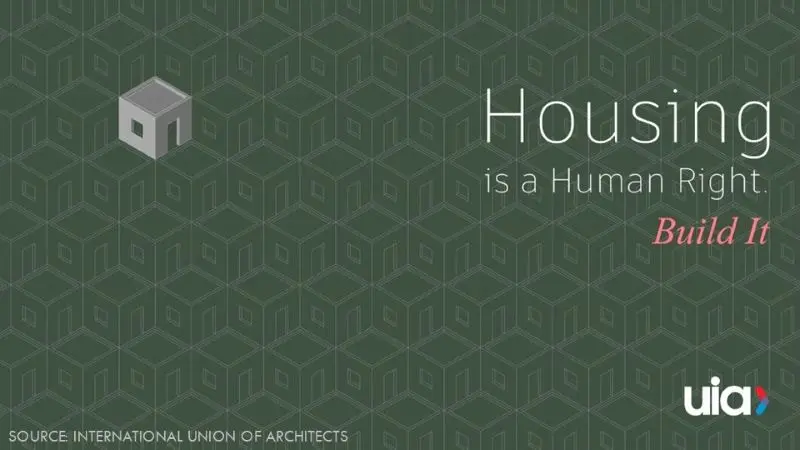
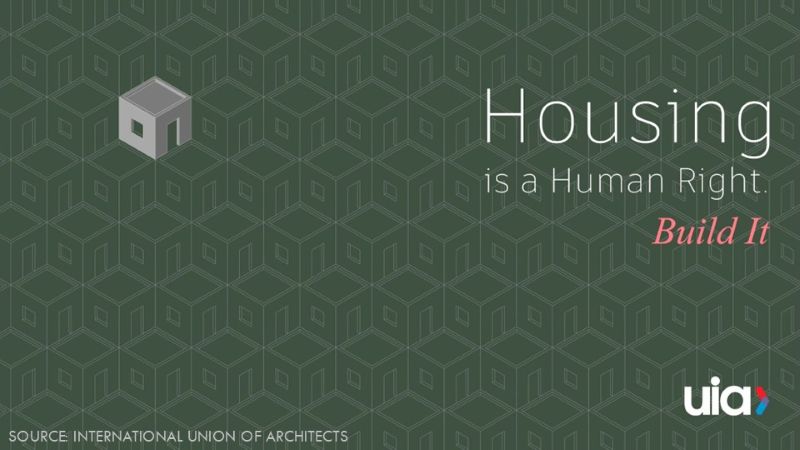
As the global community prepares to observe World Architecture Day on October 5, 2026, the International Union of Architects (UIA) has issued a powerful and unambiguous rallying cry: “Housing is a human right. Build it.”
Established by the UIA in 1985, World Architecture Day is celebrated annually on the first Monday of October, running in parallel with the United Nations’ World Habitat Day. This year’s campaign targets one of the most pressing socio-economic challenges of the modern era: the severe global housing shortage. Millions of people worldwide find safe, adequate, and affordable shelter entirely out of reach. In response, the UIA is urging architects, urban planners, and construction industry leaders to champion equitable access to housing through deliberate design, rigorous research, and active civic advocacy.
For the American metal construction industry, this year’s theme is more than a philosophical discussion—it is a direct call to action. Addressing the contemporary housing crisis demands practical, sustainable, and context-responsive methodologies. These include the creation of inclusive housing models, the optimization of prefab construction, and the intelligent reuse of existing building stock.
The metal construction sector possesses the technology, scalability, and material efficiency to deliver desperately needed housing solutions both domestically and internationally. However, realizing this potential requires a fundamental shift in how the industry positions itself within broader civic and architectural conversations.
Chronology: The Evolution of World Architecture Day and Global Housing Advocacy
To understand the weight of the UIA’s 2026 declaration, it is vital to trace the historical intersection of international architecture advocacy and global housing initiatives:
- 1985 (Inception): The International Union of Architects establishes World Architecture Day, designating the first Monday of October as a recurring international event to highlight the contributions of architecture to society. The date is deliberately synchronized with the United Nations’ World Habitat Day to amplify messaging around sustainable urban development.
- Decades of Urbanization (1990s–2010s): Throughout the late 20th and early 21st centuries, rapid global urbanization places unprecedented strain on municipal infrastructures. World Architecture Day themes progressively shift toward sustainability, climate resilience, and public space, though systemic housing affordability remains an elusive target for many developing and developed nations alike.
- The Post-Pandemic Affordability Crunch (2020–2025): Supply chain disruptions, escalating material costs, and labor shortages severely exacerbate global housing deficits. Governments, urban centers, and architectural bodies face intense public pressure as homelessness rates rise and housing prices outpace wage growth.
- September 23, 2026 (The UIA Mandate): The UIA formally announces the 2026 theme: “Housing is a human right. Build it.” The union pivots the global architectural community away from purely aesthetic pursuits toward structural, social justice-oriented housing delivery.
- October 5, 2026 (Upcoming Observance): Architects, engineers, and construction sector stakeholders worldwide prepare to host conferences, design workshops, and policy forums centering on equitable, scalable housing production.
Supporting Data: The Anatomy of the Global and Domestic Housing Crisis
The urgency behind the UIA’s 2026 mandate is underscored by sobering statistics regarding housing availability, construction efficiency, and environmental impact:
- The Scale of Need: According to international housing coalitions, over 1.6 billion people worldwide live in substandard housing or informal settlements, a number projected to grow significantly over the next two decades if systemic building reforms are not enacted.
- The Speed Advantage of Prefabrication: Traditional stick-frame construction methods are increasingly hampered by skilled labor shortages and weather-related delays. Conversely, data from the modular and metal building sectors indicates that utilizing pre-engineered metal building (PEMB) systems and prefabricated components can reduce overall construction timelines by 30% to 50%.
- Sustainability Metrics: Buildings account for nearly 40% of global energy-related carbon emissions. Steel, as one of the most recycled materials on earth, offers a circular lifecycle. Structural steel recycling rates consistently exceed 85% in North America, minimizing resource extraction and embodied carbon when compared to traditional carbon-intensive materials.
- Cost Predictability: Metal construction minimizes on-site waste through precision factory fabrication. In an era of volatile material pricing, the predictability of pre-engineered systems helps developers rein in runaway budgets, translating directly to lower costs for multi-family and affordable housing end-users.
Official Responses and Industry Perspectives
The declaration from the UIA has generated widespread commentary across architectural, engineering, and construction landscapes.
International architectural leaders have emphasized that the housing crisis cannot be solved through conventional means alone. During preliminary briefings for World Architecture Day 2026, UIA representatives noted that architects must become active policy advocates rather than passive designers. They argue that zoning laws, antiquated building codes, and exclusionary land-use policies must be reformed to accommodate innovative, dense, and mixed-income housing developments.
Within the manufacturing and construction sectors, responses highlight a readiness to deploy advanced technologies. Pre-engineered metal building manufacturers have long proven their capability in commercial, industrial, and institutional markets. Industry advocates point out that these same technologies—ranging from cold-formed steel (CFS) framing to modular structural insulated panels (SIPs) framed in metal—are uniquely suited for rapid multi-family housing, urban infill projects, and transitional shelter communities.
However, industry leaders acknowledge a persistent structural communication gap. While engineering journals and construction expos frequently celebrate the technical merits of metal buildings, these solutions are occasionally overlooked in high-level municipal planning sessions where traditional building typologies dominate the conversation.
Implications for the Metal Construction Industry
For the metal construction sector, the UIA’s 2026 theme raises critical strategic questions about industry positioning, advocacy, and future market growth.
Beyond the Technical Question
For years, trade organizations and manufacturers have focused internally, debating questions such as: “What role can metal building systems, prefab construction, and other metal-based building technologies play in delivering housing more quickly, efficiently, and at scale?”
The answer to that question is already an emphatic and demonstrable yes. Metal construction systems are inherently scalable, durable, fire-resistant, and adaptable. The variety of housing models and types achievable through modern metal framing is limited only by human imagination—ranging from sleek urban micro-apartments and modular student housing to suburban multi-family developments and disaster-relief shelters.
The Real Question: Securing a Seat at the Table
Because the technological capability of metal construction is no longer in doubt, the paradigm must shift. The fundamental challenge facing the industry today is not operational; it is relational and political.
The essential question that industry stakeholders, manufacturers, contractors, and trade associations must ask is:
“How do we make sure our metal construction industry is invited to every discussion that’s serious about delivering solutions?”
Too often, municipal housing task forces, urban development committees, and philanthropic housing initiatives default to traditional construction methods out of habit or familiarity. To change this, the metal construction community must aggressively step out of its traditional industrial and commercial silos.
Actionable Steps for Industry Leadership
- Engage Policymakers Early: Manufacturers and contractors must build direct channels of communication with city planners, zoning boards, and regional housing authorities to educate them on the speed, safety, and architectural versatility of modern metal systems.
- Collaborate with Architects: Fostering closer ties with the architectural community—particularly ahead of events like World Architecture Day—ensures that designers view metal not merely as an industrial aesthetic, but as a warm, flexible, and socially responsible medium for residential design.
- Champion Adaptive Reuse: Aligning with the UIA’s call to reuse existing building stock, the metal industry should highlight how structural steel framing enables seamless building additions, vertical expansions, and interior retrofitting of obsolete commercial properties into vibrant residential spaces.
- Promote Environmental and Economic Equity: By consistently publishing lifecycle analyses and demonstrating long-term maintenance savings, the metal construction sector can prove to municipal stakeholders that investing in metal infrastructure yields durable, cost-effective housing that serves communities for generations.
As October 5, 2026, approaches, the global architectural community will unite under the banner that housing is a fundamental human right. For America’s metal construction industry, this moment represents an unprecedented opportunity to move from the periphery of residential development to the very center of the solution—proving that when it comes to building a more equitable world, metal is ready to construct the future.
