

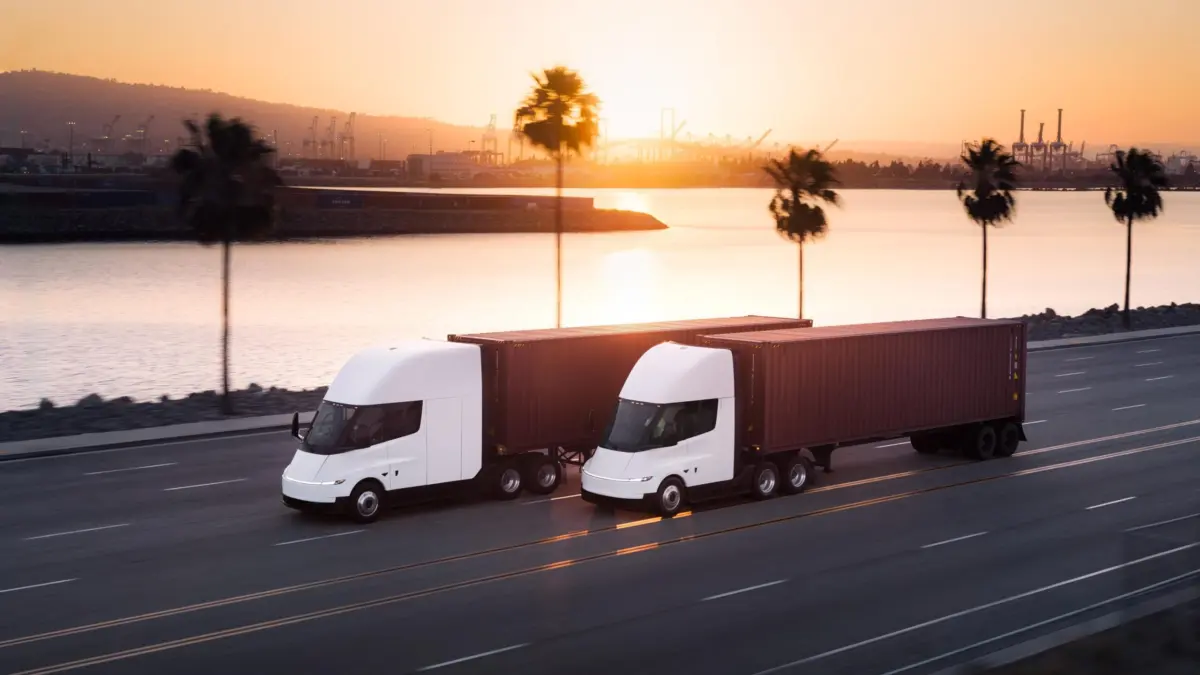
Nearly a decade after capturing the imagination of the transportation industry and Wall Street alike, Tesla’s heavy-duty electric Class 8 truck is officially in volume production. On Thursday evening, Tesla hosted a high-profile launch event at its brand-new Semi factory, situated adjacent to Gigafactory Nevada in Sparks. The facility represents a massive operational milestone for the company, boasting an ambitious production capacity of up to 50,000 trucks annually—translating to roughly 1,000 units per week.
While the event was designed to signal to customers, investors, and logistics giants that the agonizingly long wait is finally over, it also laid bare the immense engineering hurdles, shifting specifications, and strategic pivots required to bring an electric semi-truck to the commercial market.
First deliveries rolled out to eager enterprise customers this week, marking the official commercial genesis of a vehicle that was initially unveiled as a futuristic concept all the way back in November 2017. Yet, despite the celebratory atmosphere at the Nevada facility, the event left several critical financial and logistical questions unanswered. Tesla notably omitted official order backlog numbers and declined to provide a formal, updated baseline price for the vehicle, leaving industry watchers to rely on leaked pricing models and market estimates.
Main Facts: Production, Pricing, and Performance Specs
The commercial launch of the Tesla Semi brings clarity to a vehicle configuration that has undergone nearly three years of iterative refinement since its initial concept days. The production-ready lineup is split into two primary trims tailored for regional and long-haul commercial applications:
- Standard Range Variant: Delivers an estimated 325 miles of range while operating at a maximum gross combination weight (GCW) of 82,000 pounds.
- Long Range Variant: Delivers an impressive 500 miles of range under a fully loaded 82,000-pound GCW payload.
Rather than relying on theoretical tests conducted with diminishing payloads, Tesla’s Director of Semi Truck Engineering, Dan Priestley, emphasized that the 500-mile metric is achieved with a fully loaded vehicle. Furthermore, Tesla Vice President of Engineering Lars Moravy noted that if a Semi is deployed with a lighter load—around 60,000 pounds—its range could potentially stretch to roughly 600 miles.
Despite the vehicle entering volume production, official pricing transparency remains elusive. When the concept was unveiled in 2017, Tesla advertised a starting price of $150,000 for the 300-mile variant and $180,000 for the 500-mile version. Tesla has never officially updated those figures publicly, though automotive outlet Electrek reported earlier this year that Tesla sales representatives were actively quoting commercial customers approximately $290,000 for the 500-mile Long Range version.
Chronology: A Nine-Year Road to Commercialization
The path from concept to commercial reality has been fraught with delays, supply chain bottlenecks, and shifting economic landscapes.
- November 2017: Elon Musk formally unveils the Tesla Semi concept, promising a revolutionary electric truck with jaw-dropping acceleration, long-range capabilities, and a 2019 production start date.
- 2019–2021: Production dates slip repeatedly. The automotive industry is broadsided by the COVID-19 pandemic, followed by a crippling global semiconductor and parts shortage that forces automakers to prioritize high-volume consumer passenger cars over commercial heavy-duty projects.
- December 2022: Tesla delivers a small, pilot-batch run of Semi trucks to multinational food and beverage giant PepsiCo. However, industry analysts note that these initial units were largely hand-built on a pilot line rather than a scalable assembly line.
- August 2025–February 2026: Tesla spends three rigorous years redesigning the vehicle’s powertrain, battery architecture, and thermal systems, shaving nearly 1,000 pounds off the truck’s overall weight. In February 2026, the final production design is officially published.
- April 2026: The first production-line Semi rolls off the assembly line at the newly constructed dedicated Semi factory in Sparks, Nevada, officially initiating volume production.
- Current Week: Tesla hosts its major customer and investor event, celebrating the formal handover of the first wave of production trucks to fleets including PepsiCo, US Foods, DHL, WattEV, ABF Freight, Einride, IMC Logistics, and OK Produce.
Supporting Data: Engineering, Efficiency, and the EV Advantage
A significant portion of Thursday’s presentation was dedicated to unpacking the heavy engineering updates and battery technology that allow the Semi to function under brutal commercial trucking conditions.
Battery Chemistry and Powertrain Overhauls
The production Semi utilizes Tesla’s proprietary in-house 4680 battery cells, a substantial upgrade that replaces the outsourced 2170 cells employed during early prototype testing. Coupled with heavy aerodynamic and mechanical efficiency gains, this transition allows Tesla to utilize a smaller, lower-mass, and ultimately more cost-effective battery pack without sacrificing range.
The powertrain has also been thoroughly re-engineered since the 2017 reveal:
- Rotor Design: The original carbon-fiber-sleeved rotor has been replaced with a more robust steel-caged rotor.
- Stator and Axle: The vehicle incorporates a bar-wound stator shared with the Cybertruck and a redesigned drive axle that is roughly 80 kilograms (176 pounds) lighter than earlier iterations.
- Lubrication Simplification: Tesla eliminated the three separate oils used in the original drive axle design, removing oil from the wheel hubs entirely and relying on a single common oil for the motor and gearbox. Moravy projects this fluid will comfortably last over 250,000 miles of heavy service.
- Steering and Agility: Hydraulic steering has been entirely replaced by a redundant electric power steering system. Combined with an increased wheel cut, the massive Class 8 truck boasts a turning radius comparable to a Tesla Model Y—a deliberate design choice intended to simplify tight urban navigation and chaotic loading-dock maneuvers.
- Thermal Management: The Semi shares key thermal components—such as pumps, compressors, and heat exchangers—with Tesla’s newly road-worthy Cybercab robotaxi. This integrated thermal architecture eliminates long refrigerant lines running to the front of the vehicle, permitting the intelligent transfer of waste heat between the cabin, battery pack, and drive units.
Efficiency Gains and Diesel Disruption
Tesla claims that the fully loaded Semi consumes roughly 1,700 Watt-hours per mile—a marked improvement over the company’s original target of 2,000 Wh/mile. This heightened efficiency directly addresses the primary economic driver for commercial fleet operators: Total Cost of Ownership (TCO).
With U.S. diesel prices having experienced historic highs—soaring past $6.50 a gallon in various regions, representing nearly double historical norms—electric propulsion presents a compelling financial argument. Tesla executives emphasized that while the volatile global oil and diesel markets fluctuate unpredictably, electricity prices have historically remained flat over the past two decades.
Official Responses and Customer Ecosystem
Although Tesla CEO Elon Musk was physically absent from the event due to state-level diplomatic engagements in Washington, D.C.—where he attended a state dinner alongside President Trump and Chinese President Xi—he addressed attendees via a pre-recorded video message.
"This is really going to be a revolutionary truck, that is capable of carrying the heaviest loads over very long distances," Musk stated. "With ease of recharge, Megacharger that’s capable of a megawatt of power. This is really going to be a phenomenal truck."
Despite Musk’s absence, the customer roster speaking on behalf of the Semi’s commercial viability was robust. Over the past year, the company has systematically secured commitments from major logistics players. Autonomous trucking startup Einride notably announced a massive 500-truck order in August, while IMC Logistics committed to acquiring 50 Semis for California drayage operations. Furthermore, a coalition of the world’s largest cargo-owning shippers selected Tesla to supply 2,500 trucks dedicated to zero-emission freight shipping across California.
To support these deployments, Tesla is aggressively scaling its Megacharger network. Capable of pumping up to 1.2 Megawatts of power per charging stall, the Megacharger infrastructure enables a Semi to replenish its massive 822 kWh battery pack from 6% to 60% in roughly 30 minutes. Tesla aims to establish more than 30 dedicated Semi charging stations encompassing over 200 megawatt-capable posts by the end of the year, alongside custom solutions for customer-installed overnight depot charging.
Beyond hardware, Tesla is marketing the Semi as an integrated software and fleet management platform. Executives highlighted that Tesla’s existing pilot fleets have demonstrated an operational uptime exceeding 98%, vastly outperforming the industry-standard 90% to 95% reliability rate typical of diesel-powered Class 8 trucks. This ecosystem is backed by dedicated mobile service units, remote vehicle diagnostics, and over-the-air (OTA) software updates, alongside driver profile synchronization that allows personal settings to follow drivers seamlessly from one truck to another.
Implications: The Road Ahead for Freight and Tesla’s Reputation
The transition of the Tesla Semi from a perpetual "coming soon" project into actual volume production carries profound implications for the commercial transportation sector, as well as for Tesla’s corporate credibility.
For the freight industry, the commercial viability of a 500-mile electric semi operating at a full 82,000-pound gross weight rating shatters long-standing skepticism regarding the feasibility of battery-electric heavy-duty transport. If fleets can successfully integrate the Semi while maintaining the touted 98% uptime and capitalizing on lower maintenance and energy overhead, logistics providers will face mounting pressure from both corporate sustainability mandates and bottom-line economics to accelerate fleet electrification.
However, significant challenges remain on the horizon. The primary bottleneck moving forward will not necessarily be generating demand—as Musk noted, the "waiting list is significant"—but rather execution and delivery scale. Commercial operators have waited nearly a decade for these vehicles; any subsequent manufacturing bottlenecks, delivery delays, or reliability slip-ups in real-world deployment will test the patience of enterprise partners.
Ultimately, the Tesla Semi has crossed the threshold from an ambitious technological proof-of-concept into the bruising reality of industrial manufacturing and commercial fleet logistics. As the first production units hit public highways and freight depots this week, the ultimate verdict on the Tesla Semi will be written not in presentation slides or keynote speeches, but on the balance sheets of the logistics companies daring to electrify America’s supply chain.
