

For home cooks navigating the perennial kitchen paradox—wanting a versatile array of specialized culinary tools while fighting for precious square inches of counter and cabinet space—the appliance aisle is a minefield of compromise. Small-kitchen owners know the frustration all too well: the endless daily shuffle of hauling a blender out of the pantry only to swap it for a food processor, or abandoning high-ambition recipes altogether because the setup and teardown of equipment feels like a chore.
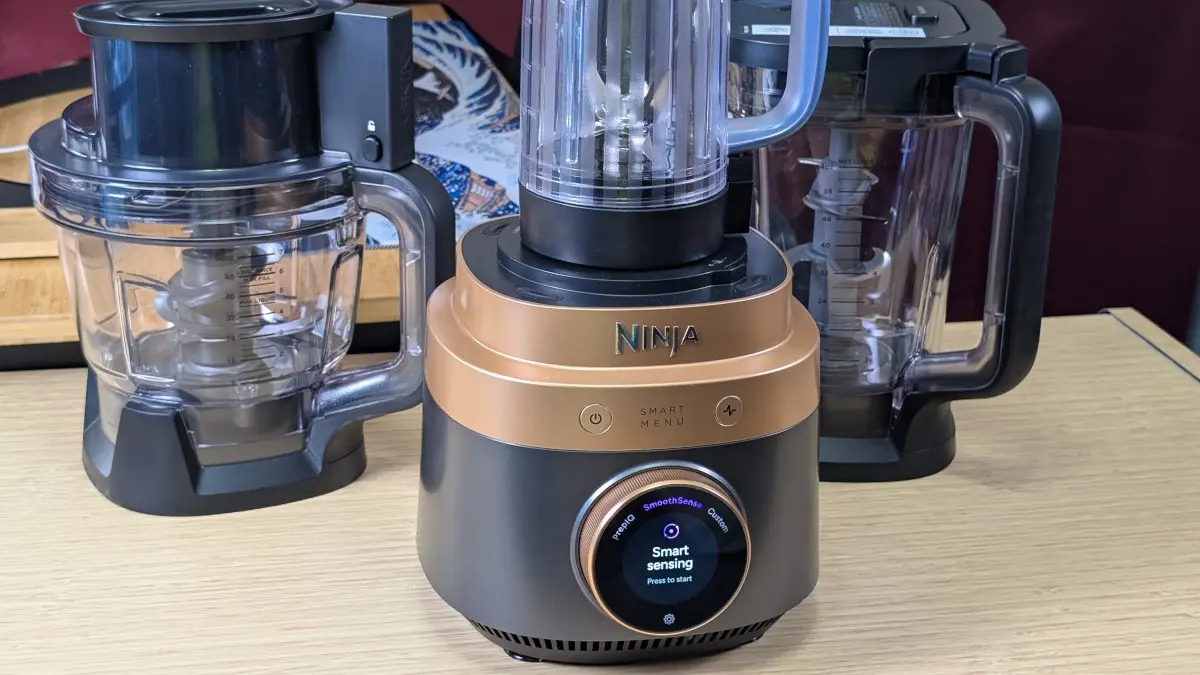
Enter the Ninja CrushBoss Blender and Kitchen System. Priced at $320, this powerhouse multi-appliance system attempts to solve the storage and versatility conundrum by merging a high-capacity blender, a fully featured food processor, and a personal smoothie tumbler into a single ecosystem powered by an 1,850-watt motor base.

Following a rigorous two-week testing period in a compact home kitchen, the CrushBoss emerges as a compelling, if occasionally unwieldy, solution for specific types of culinary households. But does its modular brilliance justify the footprint, and is it truly the ultimate space-saving panacea for modern cooks?
Main Facts: What is the Ninja CrushBoss?
At its core, the Ninja CrushBoss is a modular kitchen ecosystem designed to consolidate multiple countertop mainstays into a single motorized base. Unlike previous iterations—such as the Ninja Detect, Professional Plus, and Foodi Power Blender lines—the CrushBoss introduces advanced attachments like the PrecisionDice and plastic MultiBlade Disc systems, alongside a heavily redesigned travel tumbler.

The system centers around three primary vessels included in the package:
- A 72-ounce blender pitcher equipped with a traditional stack-blade assembly for large-batch blending, pureeing, and crushing ice.
- A 64-ounce food processor bowl featuring a comprehensive suite of accessories, including a chopping blade, a dough blade, the MultiBlade Disc, and the PrecisionDice dicing kit.
- A 26-ounce smoothie tumbler tailored for single-serve blending, complete with a travel-friendly handle, a flip-top lid, and a wide smoothie straw.
The 1,850-watt base utilizes an intelligent recognition interface. When a vessel is locked into place, the preset menu automatically adapts to match the attachment. Users navigate settings by rotating the outer ring of a small LCD screen and clicking inward to select—a tactile control method that bridges the gap between traditional buttons and modern touchscreens.

Chronology: Putting the CrushBoss Through Its Paces
To evaluate the true daily utility of the Ninja CrushBoss, testing went beyond standard, controlled demonstrations. Every single attachment, preset program, and specialized accessory included in the box was subjected to repeated, real-world stress tests over a two-week period.
Week 1: The Food Processor Deep Dive
Given the sheer volume of accessories packed into the food processor bundle, the first week was heavily weighted toward prep work.

- PrecisionDice Testing: Using the dicing attachment, a fruit salad featuring notoriously difficult-to-cut mangos, sticky pineapples, strawberries, and firm watermelon was processed with zero jams or uneven chunks.
- MultiBlade and Slicing: Swapping over to the MultiBlade disc with standard and crinkle-cut inserts, potatoes and cucumbers were sliced uniformly. A quick coleslaw test involving shredded carrots and cabbage yielded minor un-processed wedge remnants trapped between the blade and lid—a common minor flaw in food processors, though easily remedied by tossing the strays into a bowl of ramen.
- The Cheese Stress Test: To test the motor’s limits, blocks of cheddar cheese were put through the shredder, slicer, and dicer. The shredder performed brilliantly with minimal waste. Slicing produced passable results, but attempting to force cheese cubes through the dicing tool quickly clogged the mechanism, triggering the system’s safety shutoff—a clear boundary marker for the machine’s capabilities.
- Dough Preparation: The dough blade was run through multiple cycles using the dedicated bread dough preset. While the machine successfully integrated ingredients up to its 2-pound capacity, the motor noticeably strained during later cycles, prompting a quick final hand-knead to achieve the ideal gluten structure.
Week 2: Blending, Beverages, and Ergonomics
The second week focused on the 72-ounce pitcher and the 26-ounce smoothie tumbler.
- Smoothies and Ice: Both vessels handled frozen fruit, dense yogurt, and ice-crushing tasks with fluid efficiency, producing consistent textures.
- Ergonomic Assessments: The redesigned smoothie tumbler drew immediate praise for mimicking the user-friendly feel of modern insulated travel mugs (such as a Stanley cup) rather than legacy personal blenders like the NutriBullet.
- Storage and Cleanup Realities: The final days of testing brought practical limitations to light, specifically concerning cabinet storage for razor-sharp dicing discs and dishwasher sizing constraints for the bulkier vessels.
Supporting Data & Performance Analysis
Evaluating a $320 kitchen system requires weighing its raw specifications against practical performance metrics.

Power and Intelligence
The 1,850-watt motor provides immense torque, ensuring that heavy loads—like dense root vegetables or frozen berries—rarely bog the machine down. Ninja highlights intelligent blending technologies branded as PrepIQ and SmoothSense, which supposedly track the consistency and type of food being processed to adjust cycles dynamically. However, in informal testing, these intelligent modes yielded virtually identical results to standard preset programs or manual speed controls.
Accessory Durability Concerns
While the stainless steel components perform admirably, the inclusion of a plastic MultiBlade Disc and interchangeable plastic slicing/shredding inserts marks a shift in material construction. While this design choice successfully reduces overall product weight and manufacturing costs, long-term durability remains an open question when compared to traditional, all-metal food processor discs subjected to heavy-duty daily use.

Value Proposition
Priced at $320, the Ninja CrushBoss occupies a middle ground in the market. It is considerably more expensive than bare-bones single-function blenders, yet it undercuts high-end commercial ecosystems like a fully accessorized Vitamix Ascent X by hundreds of dollars. For users looking to replace a aging food processor, a blender, and a personal smoothie maker all at once, the cost represents a notable consolidation of capital expenditure.
Official Responses & Manufacturer Intent
SharkNinja designed the CrushBoss line to address the growing consumer appetite for multi-functional kitchen apparatuses that maximize efficiency without forcing users to sacrifice counter space to multiple single-use motors.

In official documentation and product positioning, the company emphasizes that the system is built for versatility—catering specifically to households that require scalable prep sizes, from a single morning protein shake to a massive family-style batch of ingredients. SharkNinja also maintains a modular product strategy, meaning consumers can often purchase individual components or configurations separately down the line, accommodating users who may not desire the entire all-in-one bundle.
Importantly, safety parameters built directly into the system—such as automated motor cutoffs and thermal sensors—are officially acknowledged as protective measures designed to prevent burnout when the machine encounters structural resistance, such as over-dense bread dough or jammed cheese blocks. Furthermore, manufacturer guidelines explicitly state that the CrushBoss is not suitable for hot blending, advising users to refrain from processing boiling liquids or steaming soups within the vessels.

Implications: Who is the Ninja CrushBoss For?
Ultimately, the Ninja CrushBoss forces a pragmatic reckoning with your personal cooking habits and kitchen architecture.
The Ideal Consumer
This kitchen system shines brightest in two specific household environments:

- Large Families: Households that routinely cook in bulk will appreciate the massive capacity of the 72-ounce pitcher and the time-saving efficiency of the PrecisionDice food processor attachments.
- Dedicated Meal Preppers: Individuals who batch-prep ingredients weekly will find immense value in the ability to dice, slice, shred, and blend back-to-back without changing motorized bases.
The Caveat for Small Spaces
Paradoxically, while the CrushBoss is marketed as a space-saver because it relies on a single motor base, the supporting cast of vessels, lids, pushers, and razor-sharp cutting discs demands a significant amount of real estate. If you live in a compact apartment with limited cabinet depth, storing all the attachments safely can become an organizational hurdle.
Additionally, dishwasher compatibility depends heavily on your specific appliance setup. Because the vessels and attachments are rated strictly for top-rack dishwasher placement, owners of older or non-adjustable dishwashers will find themselves washing the bulky 72-ounce pitcher and 64-ounce processor bowl entirely by hand.

The Verdict
The Ninja CrushBoss 4-in-1 is a brilliant conceptual achievement that taps into the timeless appeal of multi-functional kitchen workhorses like the classic KitchenAid stand mixer. It performs every individual task—blending, pureeing, shredding, and dicing—with commendable competence.
For culinary enthusiasts with adequate storage looking to streamline their appliance collection into one powerful ecosystem, the CrushBoss is a worthy investment. For minimalists in tiny apartments, however, the sprawling array of modular parts might prove to be more trouble than it’s worth.
