

By Tech & Lifestyle Desk
For over a decade, Cricut has been a household name in the DIY and crafting community, synonymous with precision digital die-cutting machines that slice through vinyl, cardstock, and fabric. However, a glaring gap has always existed in the company’s ecosystem: while Cricut machines were exceptional at cutting, users relied on traditional inkjet or laser printers to get their designs onto paper before feeding them into a Cricut device.
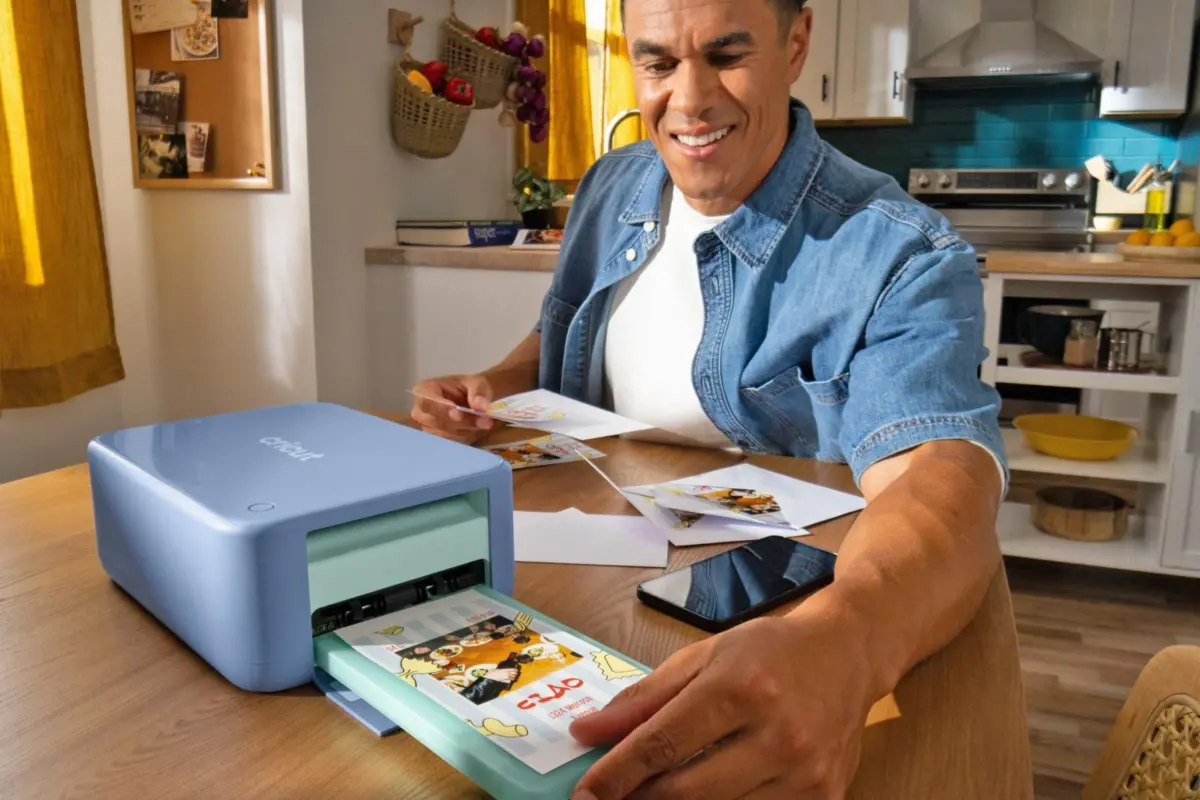
That workflow is about to undergo a massive shift. Cricut has officially announced its first-ever line of crafting machines equipped with integrated printing capabilities. Dubbed the Cricut StickerPix Print and the Cricut StickerPix Print Plus Cut, these compact devices are tailored specifically as all-in-one solutions for transforming digital photos and custom graphics into professional-grade stickers. Designed with space-conscious crafters in mind, these machines represent a strategic pivot for a brand looking to capture an even larger share of the booming sticker-making market.
Main Facts: What Are the Cricut StickerPix Machines?
The launch introduces two distinct models that bridge the long-standing gap between printing and cutting. Both machines are among the smallest in Cricut’s hardware lineup, making them ideal for apartment dwellers, college students, or anyone whose crafting aspirations are constrained by limited storage space.
1. The Cricut StickerPix Print Plus Cut ($299 starting price)
- Functionality: Combines thermal printing and precision cutting in a single compact footprint.
- Media Support: Compatible with 4×7-inch sticker sheets and standard 4×6-inch photo paper.
- Printing Technology: Utilizes a dye-sublimation printing process. Instead of spraying liquid ink, it uses heat to transfer dye, resulting in superior color reproduction, richer gradients, and smudge-proof outputs.
- Durability: Unlike traditional Cricut desktop machines, the StickerPix line features a built-in lamination process that automatically applies a protective layer over the prints, rendering them water-resistant, scratch-proof, and fade-resistant.
- Cutting Style: Capable of "kiss-cutting"—slicing precisely through the top layer of vinyl or sticker paper while leaving the backing sheet intact, allowing users to peel off individual stickers from a larger sheet.
2. The Cricut StickerPix Print ($169 starting price)
- Functionality: A printing-only variant that forgoes the mechanical cutting blade.
- Media Support: Designed to print directly onto pre-cut sticker sheets (featuring geometric shapes like circles, squares, and rectangles) as well as standard 4×6-inch photos.
- Target Audience: Ideal for crafters who want high-quality sticker output and photo printing capabilities without the complexity or added cost of a cutting mechanism.
Both machines are available individually or as part of tiered "Essential" and "Ultimate Plus" bundles that include varying quantities of proprietary consumables, such as dye-sublimation ribbons, sticker paper, and photo media.

Chronology: The Evolution of Cricut’s Hardware Ecosystem
To fully understand the significance of the StickerPix release, it is helpful to look back at how Cricut has evolved its product offerings to meet changing consumer trends.
- Pre-2010s: The Cartridge Era
Cricut established itself in the scrapbooking market with standalone electronic cutters that relied on physical cartridges to dictate designs. - The Transition to Digital (Design Space)
Cricut phased out cartridges in favor of its cloud-based software, Cricut Design Space, introducing iconic machines like the Cricut Explore and Cricut Maker series. These devices could cut intricate shapes, score paper, and engrave metal, but they strictly required separate home printers for "Print Then Cut" projects. - The Rise of the Custom Sticker Boom
Throughout the late 2010s and early 2020s, platforms like Etsy, TikTok, and Instagram fueled a massive surge in popularity for small-batch custom stickers, laptop decals, and journaling supplies. Crafters frequently complained about the friction of the "Print Then Cut" workflow, which required calibrating home inkjet printers, dealing with smeared ink, and manually applying clear laminate sheets to protect stickers from water damage. - The Present: The StickerPix Era
Recognizing the demand for a streamlined, foolproof sticker-making machine, Cricut developed the StickerPix series. By packing a dye-sublimation printer, an automated laminator, and a precision cutter into a single desktop footprint, the company has effectively streamlined a multi-step manufacturing process into a one-touch consumer appliance.
Supporting Data: Specifications, Pricing, and Ecosystem Breakdown
| Feature / Specification | Cricut StickerPix Print | Cricut StickerPix Print Plus Cut | Traditional Cricut Machines (e.g., Maker 4) |
|---|---|---|---|
| Base Price | $169 | $299 | $399+ |
| Primary Function | Printing & Photo Output | Print + Kiss-Cut Integration | Heavy-Duty Cutting, Scoring, Engraving |
| Print Technology | Dye-Sublimation (Heat-transfer) | Dye-Sublimation (Heat-transfer) | Requires external Inkjet/Laser printer |
| Built-in Lamination | Yes | Yes | No (Manual application required) |
| Cutting Capabilities | None (Uses pre-cut sheets) | Kiss-cutting (Top layer only) | Die-cutting (Slices through backing paper) |
| Max Media Size | 4×6 inches | 4×7 inches (Stickers) / 4×6 (Photos) | 12×12 inches up to 12×24 inches |
Consumables and Ongoing Costs
Because the StickerPix machines utilize dye-sublimation technology rather than standard inkjet cartridges, users will need to purchase proprietary Cricut ink ribbons and specialized paper packs. While dye-sublimation eliminates clogged print heads and messy ink spills—common headaches with traditional inkjet printers—it introduces a closed-ecosystem consumable model similar to photo printers like the Canon Selphy or Fujifilm Instax.
Official Responses and Industry Insights
In official blog posts and promotional launch materials, Cricut executives emphasized that the StickerPix lineup was born out of direct community feedback.
"Our community has always pushed the boundaries of creativity, and sticker-making has grown from a niche hobby into a dominant cultural trend," noted a Cricut product manager during the unveiling. "With StickerPix, we wanted to remove every barrier of entry. You no longer need a bulky desktop printer, a separate laminator, and a complex calibration process. We’ve distilled professional sticker production into a device that sits comfortably on a coffee table."
Industry analysts have noted that this move positions Cricut more directly against consumer photo-printing giants like HP, Canon, and Fujifilm, while expanding its total addressable market to younger demographics who prioritize quick, aesthetic journaling, phone case decoration, and laptop personalization over traditional scrapbooking.

However, niche crafting purists have pointed out a notable limitation: unlike larger Cricut machines (such as the Maker or Explore series), the StickerPix Print Plus Cut is only capable of kiss-cutting (slicing through the top vinyl layer). It cannot perform traditional die-cutting (slicing all the way through the thick backing paper to create individual, standalone sticker decals). For users requiring fully detached die-cut stickers, older Cricut hardware or manual trimming will still be necessary.
Implications: What StickerPix Means for the Future of Crafting
The introduction of the Cricut StickerPix series carries several broad implications for both the brand and the wider DIY market:
1. Democratization of Crafting
By eliminating the technical hurdles of the traditional "Print Then Cut" calibration process—which has notoriously frustrated beginners for years—Cricut has significantly lowered the learning curve. Users can pull an image directly from their phone, send it to the StickerPix, and retrieve a laminated, perfectly cut sticker sheet in minutes.
2. A Shift Toward Compact Appliances
Traditional crafting machines require significant desk space, dedicated craft rooms, or heavy storage bins. The compact, all-in-one nature of the StickerPix signals a shift toward lifestyle-oriented tech appliances that can live on a living room shelf or kitchen counter without dominating the room.
3. Expansion of the Consumables Business Model
By adopting dye-sublimation printing, Cricut secures a steady, recurring revenue stream through proprietary paper and ribbon bundles. This mirrors the business model of traditional printer manufacturers, ensuring long-term profitability beyond the initial hardware sale.

4. Competition in the Personalization Space
As mobile printing and customized stationery continue to trend among Gen Z and millennial creators, Cricut is positioning itself not just as a tool manufacturer for serious crafters, but as a lifestyle brand for everyday expression. Whether these smaller, specialized machines can siphon market share away from dedicated instant photo printers and portable sticker makers remains to be seen, but Cricut’s strong brand loyalty gives it a formidable head start.
The Cricut StickerPix Print and StickerPix Print Plus Cut are available for order now through Cricut’s official website and major authorized craft retailers, with shipping slated for the upcoming retail season.
