

Main Facts
In the modern home-services sector, commercial scaling is frequently portrayed through an idealized, frictionless lens. Industry narratives routinely celebrate a simple trajectory: launch an enterprise, onboard a handful of technicians, ramp up digital marketing, and capture ascending consumer demand.
The reality on the ground, however, is far more complex. For Stephanie and David Postell, co-founders of Anchor Heating & Air in Charleston, South Carolina, building a thriving enterprise was not the result of a single fortuitous launch or a lucky break. Instead, it was forged through resilience, hard-earned operational discipline, and a commitment to sustainable business practices.
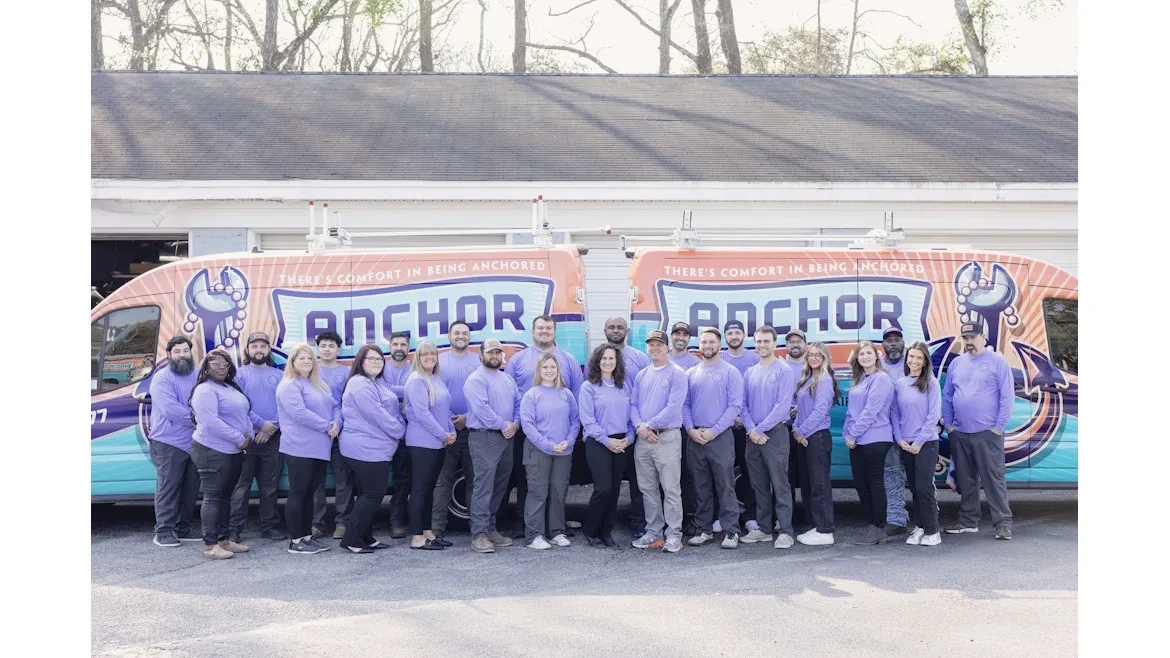
Launched in December 2021, Anchor Heating & Air has evolved into a regional force. Four years into operations, the company employs 27 people and is tracking toward $7.5 million in annual revenue—all achieved without sacrificing profitability or local consumer trust.
At the core of the company’s success is a counterintuitive philosophy that prioritizes net profit margins over vanity revenue metrics, seasoned technical expertise over rapid workforce expansion, and deep community integration over aggressive, short-term pay-per-click advertising. In an HVAC industry increasingly dominated by private equity roll-ups, rapid consolidation, and high-pressure sales cultures, Anchor represents an alternative blueprint: a model anchored in long-term stability, ethical client engagement, and uncompromising operational integrity.
Chronology: The Road to Anchor Heating & Air
To understand the operational philosophy driving Anchor Heating & Air today, one must examine the winding professional trajectory of its founders. Neither Stephanie nor David Postell arrived at their current success by following a straight line.
The School of Hard Resets
Before launching Anchor in late 2021, the Postells spent years navigating the volatile landscape of the trades. Their career path was marked by multiple professional reinventions triggered by corporate instability, leadership shakeups, broken business partnerships, and unexpected investor fallout.
While these disruptions were painful in the short term, they served as an uncompromising crucible. Each setback forced a hard operational and philosophical reset, stripping away extraneous business ideas and clarifying what truly mattered.
"When everything gets taken away, you get really clear on what actually matters," Stephanie Postell reflects. "For us, it was people, reputation, and doing things the right way; no shortcuts."
December 2021: The Birth of Anchor
Armed with lessons learned from previous corporate failures, the Postells launched Anchor Heating & Air in Charleston. Rather than repeating past mistakes—such as underpricing services or scaling headcount too quickly—they designed the new enterprise from day one with structural integrity, intentionally building a company they actually wanted to work in.
The Strategic Acquisition
One of the most defining moments in Anchor’s timeline occurred not through organic market capture, but via a targeted acquisition. When the opportunity arose to purchase the customer base of a struggling local HVAC competitor, Postell made a calculated and unconventional choice.
Rather than absorbing the troubled company’s existing workforce to accelerate growth, she elected to buy the customer relationships only.
"I didn’t take a single employee from that company," Postell notes. "I already knew who I wanted to hire. I wasn’t going to compromise our culture just to grow faster."
This strategic maneuver provided immediate, pre-existing demand without the risk of cultural contamination or unvetted labor. It allowed Anchor to selectively recruit seasoned technicians whose personal values aligned seamlessly with the company’s long-term vision.

Supporting Data and Financial Discipline
The operational strategies implemented by the Postells are backed by impressive financial metrics that highlight the viability of a margin-first business model.
Pricing for the Future
A foundational pillar of Anchor’s early strategy was its approach to pricing. Many startup contractors make the mistake of pricing their services based on what their business looks like on day one. Postell rejected this approach, choosing instead to price services based on what the company needed to become in the future.
"You have to charge for what you’re building, not what you are today," she explains. "If you undercharge at the beginning, you limit every decision you can make later."
Margins Over Milestones
This forward-thinking pricing philosophy yielded immediate dividends. In its inaugural year of operation, Anchor generated approximately $1.4 million in revenue accompanied by a remarkable net profit margin of roughly 38%.
While market pressures and weather variability naturally fluctuate over time—bringing the company’s net margins closer to a still-healthy 10% in subsequent years—that initial profitability provided foundational leverage. High early margins allowed the company to invest heavily in top-tier equipment, maintain financial independence, and secure the absolute confidence of lenders and commercial vendors.
"When you’re profitable, doors open," Postell says. "Banks say yes. Vendors say yes. You’re not constantly reacting, you’re choosing."
Community and Workforce Investment
Anchor’s financial health also translates directly into regional economic impact. The company employs 27 skilled professionals in the Charleston area and projects contributing nearly $100,000 back to the local community through sponsorships, charitable partnerships, and veteran-focused gift drives.
Official Responses and Industry Insights
Stephanie Postell’s candid reflections on the HVAC industry offer valuable insights for contractors navigating similar market conditions. Her perspectives challenge traditional wisdom regarding vanity metrics, workforce development, and customer interactions.
The Danger of Vanity Metrics
Like many home-service entrepreneurs, Postell admits she once measured business success primarily through top-line revenue growth. However, a significant perspective shift occurred after she hosted a national conference for married home-service business owners.
"So many people talk about revenue like it’s the ultimate win," she observes. "लेकिन nobody talks about what’s left over."
This realization crystallized into one of her most frequently quoted operational mantras: "Revenue is for vanity. Profit is for sanity."
By prioritizing net income over gross billings, Postell ensures that market downturns or weather anomalies do not threaten the structural viability of the business. "Some years are about building," she notes. "I’d rather protect my people and our culture than force growth that doesn’t make sense."
Experience Before Speed in Hiring
Addressing common industry challenges regarding labor shortages, Postell clarifies her stance on technician recruitment. While she acknowledges the critical importance of workforce development and entry-level training, she emphasizes the timing required for sustainable growth.

"When you’re young and growing fast, inexperience is expensive," she explains.
By prioritizing seasoned technicians who execute installations and repairs correctly on the first visit, Anchor drastically minimizes expensive callbacks and customer complaints. While experienced labor demands higher upfront payroll costs, the investment protects profit margins, safeguards customer satisfaction, and reinforces the company’s brand equity.
Patient, Pressure-Free Customer Service
Internal company philosophies directly dictate how Anchor technicians interact with homeowners. Rather than enforcing strict quotas or encouraging high-pressure sales tactics driven by desperate revenue targets, management empowers technicians to act as educators.
"Our techs aren’t rushed," Postell says. "They’re building relationships, not closing deals."
Illustrating this patience, she shares the account of a homeowner who delayed replacing an aging HVAC system across three separate cooling seasons before finally committing. When the customer was ready, they purchased multiple systems with zero buyer’s remorse, having developed absolute trust in Anchor’s guidance over time.
"I don’t care what decision a homeowner makes," Postell adds. "It’s 72 degrees at my house. My reputation is worth more than any single sale."
Implications for the HVAC Industry
The operational model demonstrated by Anchor Heating & Air carries profound implications for independent contractors operating across the United States.
A Counter-Narrative to Private Equity Roll-Ups
As institutional investors and private equity firms aggressively acquire independent HVAC and plumbing companies across North America, many operators feel pressured to prioritize rapid, unyielding top-line growth to satisfy valuation metrics. Anchor’s trajectory proves that independent contractors can carve out highly profitable, respected niches by leaning into hyper-local community trust, rigorous margin protection, and deliberate, measured expansion.
Redefining Local Marketing
By shifting capital away from expensive, hyper-competitive digital pay-per-click channels and redirecting it into tangible community presence—such as local festivals, charitable sponsorships, and visible civic involvement—Anchor creates a self-sustaining marketing loop. Accountability is built naturally into this proximity; when business owners live and work within the communities they serve, service failures are addressed immediately, fostering deep-rooted brand loyalty.
Actionable Takeaways for Contractors
For trade professionals seeking to integrate Postell’s operational philosophies into their own businesses, the transition does not require an overnight corporate overhaul. Contractors can initiate change by focusing on core fundamentals:
- Audit Pricing Structures: Ensure service rates reflect the true cost of the business you intend to build, not just your current overhead.
- Protect Profit Margins: Stop treating top-line revenue as the sole indicator of success; track net profitability meticulously.
- Prioritize Quality Labor: Balance training programs with strategic hires of seasoned professionals to minimize costly callbacks during critical growth phases.
- Cultivate Patience in Sales: Empower technicians to educate consumers without applying high-pressure closing tactics.
- Root the Brand Locally: Invest marketing dollars directly into community visibility and genuine civic engagement.
Conclusion: Building Something That Lasts
After navigating multiple professional reinventions, Stephanie Postell has achieved a crystal-clear vision of corporate success. For her, true achievement is not defined by an arbitrary revenue milestone or a quick corporate exit. Instead, it is found in building an enterprise bearing her name that treats its employees honorably, serves its clientele with unyielding honesty, and contributes consistently to its community.
"Everything we went through led us here," Postell concludes. "And I wouldn’t change it."
In an industry increasingly driven by automated efficiency and corporate consolidation, Anchor Heating & Air stands as a compelling reminder: how a company grows is ultimately far more important than how fast it scales.
