

Stepping into the world of real estate investing for the first time can feel like navigating a labyrinth of competing strategies. From house hacking and long-term rentals to out-of-state property plays and short-term vacation rentals, beginners are routinely bombarded with advice that often causes analysis paralysis.
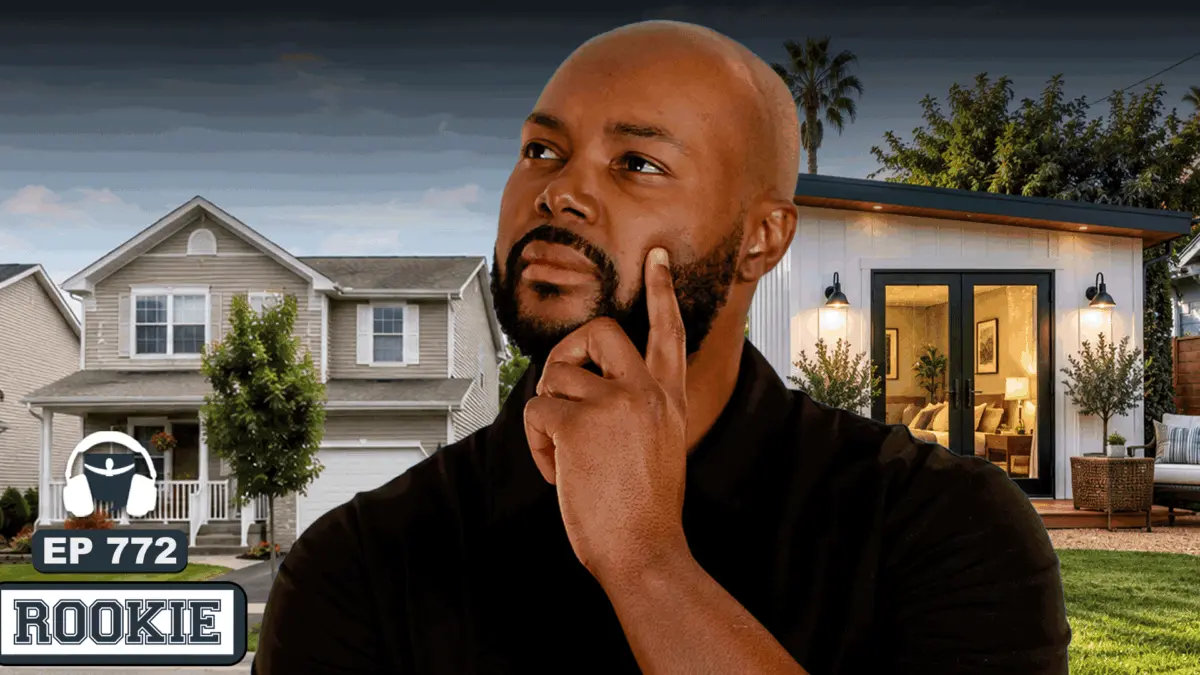
To help demystify the process, real estate experts Ashley Kehr and Tony J. Robinson, hosts of the Real Estate Rookie Podcast, recently dedicated an episode of "Rookie Reply" to tackling burning listener questions sourced directly from the BiggerPockets Forums. By breaking down three distinct scenarios—ranging from Southern California market strategies and South Florida house hacking to a classic fork-in-the-road dilemma between a duplex and a mountain getaway—the hosts provided a masterclass in modern real estate fundamentals.
The Core Dilemmas: Main Facts and Market Realities
The episode centered on three core dilemmas faced by modern beginner investors:
- The Geographic Conundrum: Whether a high-cost-of-living area like Southern California can support long-term wealth building, or if beginners should automatically look out of state for cash flow.
- The House Hacking Blueprint: How to accurately analyze a first-time purchase (such as a duplex versus a single-family home) in competitive markets like South Florida without getting bogged down by extraneous metrics.
- The Strategy Crossroads: A choice for a seasoned W-2 earner between buying a long-term multi-family rental or a short-term vacation property near the mountains or a lake, weighed against tax advantages and personal utility.
According to the hosts, the overarching trap for rookies is comparing paths indefinitely instead of committing to a clear next move. "One of the hardest parts of being a rookie is that every strategy can sound like the right strategy," Kehr noted during the broadcast.
Chronology of Investor Scenarios: From Hesitation to Execution
The discussion unfolded across three distinct case studies submitted by community members, each representing a different phase of the real estate journey.
Phase 1: The Long-Term Wealth Debate in Southern California
The conversation kicked off with a submission from Bryan, a Southern California-based investor with a healthy savings account who had been sitting on the sidelines. Bryan questioned whether it makes sense to pursue traditional long-term rentals in a high-priced state or look out of state for immediate cash flow.
Robinson addressed the query by redefining wealth through a real estate lens: equity and appreciation built up over decades. He suggested that if historical trends hold, purchasing real estate in California could yield massive equity gains over a 20- to 30-year horizon, especially when combined with loan paydown by tenants.
To offset the state’s notoriously low initial cash flow, Robinson recommended alternative monetization strategies:
- Renting by the individual room.
- Leasing properties for specialized uses, such as sober living or assisted living facilities.
- Partnering with operators who execute those strategies while paying a premium rent.
- Implementing mid-term rental models to bridge the gap between traditional long-term leases and short-term volatility.
Adding to this, Kehr emphasized the importance of property type when targeting appreciation. Drawing from her personal portfolio, she noted that single-family homes historically outperform small multi-family units in appreciation due to a significantly broader buyer pool upon exit.
Phase 2: Decoding the South Florida House Hack
The second scenario zoomed in on a South Florida rookie planning to use a conventional loan with a 3.5% to 5% down payment to purchase either a duplex (ranging from $300,000 to $500,000) or a single-family home.
Kehr and Robinson outlined a three-step evaluation framework for analyzing these deals:
- Run full expenses: Do not omit costs just because you plan to live there. Factor in total property taxes, insurance, and maintenance as if the property were fully detached.
- Evaluate comparative living costs: Compare your net out-of-pocket living expense (total mortgage minus rental income collected from roommates or adjacent units) against what you would normally pay to rent a comparable apartment in the area. If your living costs drop significantly, you are winning.
- Account for forced savings: Factor in tenant-driven mortgage paydown and long-term market appreciation.
Robinson introduced the concept of the "supermax house hack," where an investor purchases a duplex, lives in one unit while renting out its spare rooms by the individual bed, and simultaneously rents out the entire adjacent unit. Furthermore, Robinson advised underwriting the deal to ensure it can at least break even as a standalone asset once the owner eventually moves out.
Phase 3: The Crossroad of Duplexes vs. Vacation Homes
The final inquiry came from Chris, a W-2 earner in his early 40s in the 35% tax bracket who had spent 20 years on the sidelines. Chris narrowed his entry strategy down to two options:
- Option 1: Purchase a local duplex or triplex for long-term rentals, targeting a 5% to 15% annual return on investment (ROI).
- Option 2: Purchase a mountain or lake house an hour away to use personally for a few weeks a year and short-term rent out the remainder of the time using a property management company.
Supporting Data and Tax Implications
The debate between Chris’s two options sparked a deep dive into tax strategy and operational mechanics.
Kehr initially advocated for the short-term rental (STR) route, pointing to a powerful tax loophole. High-income W-2 earners who qualify as real estate professionals—or who meet specific material participation rules—can leverage a cost segregation study and bonus depreciation to write off paper losses against their active W-2 income, drastically reducing their tax liability.
However, Robinson injected a crucial operational caveat: material participation. To utilize the short-term rental tax loophole, an investor generally must meet the IRS test of spending at least 100 hours annually on the property (and more than any other single individual, including cleaners and handymen) or 500 total hours across the year. Utilizing a hands-off, third-party property management company can make proving material participation exceptionally difficult.
"You’d have to calculate how much you’d actually save in taxes and whether that’s worth 100 hours of your time," Kehr noted, advising Chris to consult a certified public accountant (CPA) before making a final commitment.
Expert Recommendations and Strategic Implications
Concluding the session, the hosts synthesized their advice into actionable takeaways for beginner investors regardless of market conditions:
- Speed Over Perfection: For those who have procrastinated for years, the primary objective should be breaking paralysis. Executing a clean, functional deal quickly provides a crucial "proof of concept" that outweighs months of over-analyzing minor return variations.
- Understand Operator Fit: Real estate strategies are not one-size-fits-all. Whether choosing a long-term rental, a house hack, a duplex, or an Airbnb, the investment must align with the investor’s personal bandwidth, risk tolerance, and lifestyle goals.
- Avoid Trend-Chasing: "The rookie move is not to chase the trend," Robinson summarized. "It’s to understand the risk, know your numbers, and choose the deal that helps you keep learning without putting your financial life under too much pressure."
As prospective buyers continue to face high interest rates and shifting housing inventories, the insights from the Real Estate Rookie forum highlight that disciplined underwriting and strategic positioning remain the ultimate keys to building sustainable, long-term wealth.
