

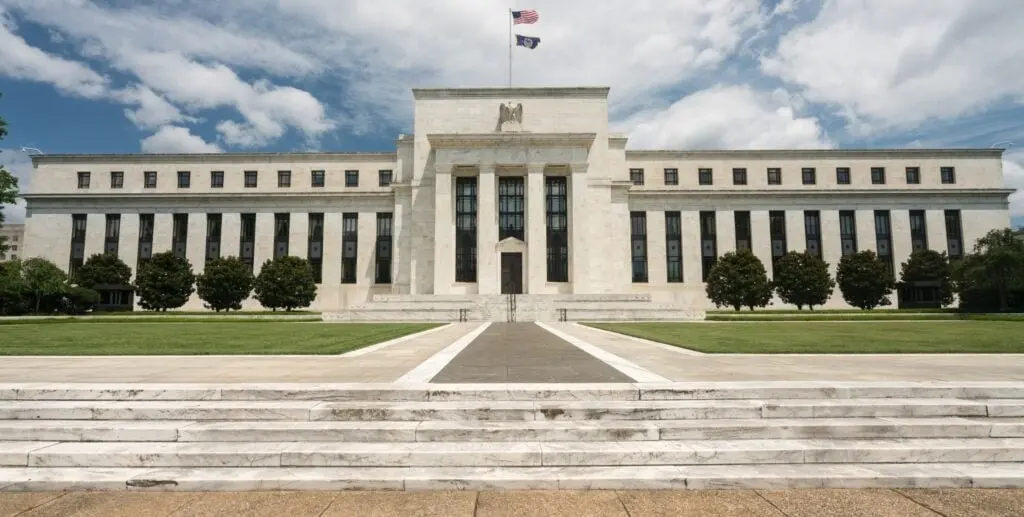
As the financial markets recalibrate to a shifting macroeconomic landscape, real estate investors find themselves grappling with a familiar challenge. Just as many anticipated a sustained downward trajectory for borrowing costs—fueled by expectations of a pivot from the Federal Reserve—a fresh quarter-percentage-point rate hike has disrupted consensus forecasts.
For the real estate sector, this policy shift injects renewed friction into deal-making, forcing both seasoned operators and new market entrants to reassess their leverage strategies, acquisition timelines, and portfolio management techniques. While higher financing costs introduce immediate headwinds for cash-flow-dependent strategies, they also create localized pockets of opportunity for capital-rich buyers willing to navigate a cooling market.
Main Facts: The Anatomy of the Rate Hike
The recent policy adjustment by the Federal Reserve marks a significant pivot following a brief period of anticipated monetary easing. Sparked principally by rising inflationary pressures—exacerbated by geopolitical tensions in the Middle East—the central bank opted to tighten monetary policy once again.
Crucially, industry observers emphasize a persistent misconception regarding the Fed’s purview: the Federal Reserve does not directly set consumer mortgage rates. Instead, mortgage rates are dynamically tethered to broader economic indicators, including long-term Treasury yields, shifting inflation expectations, and market demand for mortgage-backed securities (MBS).
However, the psychological and indirect economic impacts of the federal funds rate are profound. Moving from a baseline mortgage rate of around 6.75% to north of 7% acts as an immediate affordability barrier, pricing out a substantial segment of retail owner-occupants and reshaping buyer demand across the United States.
Chronology of a Cycle: The Policy Actors Change, the Script Remains
To understand the current environment, real estate analysts often look to recent history. The trajectory of monetary policy over the past several years has featured a rotating cast of policymakers against a backdrop of persistent economic volatility:
- The Powell-Biden Era: Marked by aggressive, rapid rate hikes designed to combat post-pandemic inflation, effectively ending the era of ultra-cheap debt that fueled a decade-long real estate boom.
- The Powell-Trump Transition: Navigating an environment of sticky inflation, persistent housing shortages, and volatile capital markets while keeping borrowing costs elevated to cool economic overheating.
- The Warsh Appointment and Beyond: With new leadership at the Federal Reserve under Kevin Warsh, markets initially priced in a rapid return to accommodative monetary policy. Instead, stubborn inflation metrics and geopolitical shocks forced a continuation of tighter monetary conditions.
Despite the changing personnel at the helm of the central bank, the structural outcome for real estate investors remains consistent: highly leveraged rental acquisitions face severe cash-flow compression, and home flippers must navigate a more constrained, cautious buyer pool.
Supporting Data: Regional Divergence and Market Fragmentation
The American housing market is far from a monolith. While national headlines focus on rising borrowing costs and stagnant transaction volumes, regional data highlights a deeply fragmented landscape where local economic fundamentals dictate market health.
According to recent housing reports from industry trackers like Realtor.com and HousingWire, market cooling is occurring at vastly different speeds across the country:
- The Midwest: Emerging as a fertile hunting ground for value-seeking investors. Pending home sales in the region dropped by approximately 4.3% year-over-year, creating less competitive bidding environments and higher negotiation leverage.
- The West: Continuing to cool, with pending sales down 3.3% and price-reduction listings exceeding 20% in several key metros, signaling growing vendor flexibility.
- The South and Northeast: Demonstrating surprising resilience. Pending sales ticked upward by 1.8% in the South and 1.1% in the Northeast, though price adjustments are unevenly distributed—affecting roughly 14.1% of listings in the Northeast compared to more than 20% across parts of the South.
Furthermore, inventory constraints keep downward pressure on severe price drops. As broker-owner Beau Keenan of Dickson Realty noted in market sentiment reports, the combination of record-high home valuations and 7% mortgage rates creates a compounding affordability crisis for retail buyers, effectively sidelining a massive swath of potential owner-occupants.
Official Responses and Industry Perspectives
Real estate executives, mortgage brokers, and financial analysts have offered mixed assessments regarding how market participants should respond to the ongoing high-rate environment.
Mortgage executive Benjamin Cohen highlighted the upside of a slower market for prepared buyers in a recent Realtor.com market analysis:
"For buyers, a slower market can actually create opportunity. There is more time to make a decision, more negotiating power, and potentially more flexibility from sellers."
This sentiment is echoed by institutional and high-net-worth acquisition specialists. Anna-Marie Ellison, vice president of sales at John R. Wood Properties Christie’s International Real Estate, pointed out that cash reserves and existing equity continue to insulate major market players from the immediate pain of rate hikes.
"A lot of our buyers are coming in with equity from a home they just sold, or they’re paying cash outright, so a hike isn’t going to keep them away."
Concurrently, data released by the Federal Reserve Bank of New York underscores that consumer inflation expectations and baseline rent growth remain remarkably firm. This ongoing resilience in rental demand provides a vital operational safety net for residential landlords, even as acquisition financing costs rise.
Strategic Implications for Real Estate Investors
As the macroeconomic environment continues to test traditional investment models, market participants must adapt their strategies to protect capital and maximize long-term yields.
1. The Power of Liquidity and Alternative Financing
True to the timeless hip-hop adage popularized by the Wu-Tang Clan—"Cash Rules Everything Around Me"—liquid capital and substantial equity reserves remain the ultimate shields against high interest rates. Investors who rely strictly on conventional debt and aggressive leverage (such as complex BRRRR strategies or low-down-payment fix-and-flips) face narrowing margins. Those with access to cash, private money partnerships, or substantial portfolio equity are uniquely positioned to secure off-market discounts from distressed or motivated sellers.
2. Shifting Focus from Expansion to Asset Optimization
For existing landlords locked into low-rate mortgages secured during previous years, taking on new high-rate debt to expand a portfolio carries escalating risk. Industry veterans suggest that capital may be better deployed inward. Utilizing positive cash flow from existing, stabilized properties to fund value-add property upgrades, energy-efficiency improvements, or deferred maintenance can yield high returns while insulating portfolios from external market turbulence.
3. Portfolio Rationalization and Risk Mitigation
For multi-property operators who over-leveraged during the peak of the market, the prolonged high-rate environment necessitates a hard look at asset performance. If refinancing high-rate short-term debt has proven unachievable, strategic disposition—selling underperforming assets to take a calculated loss and de-lever the remaining portfolio—may be the prudent path forward. Preserving a smaller, highly liquid, and operationally sound portfolio reduces daily stress and ensures long-term survival.
Final Thoughts
The unexpected return of tighter monetary policy serves as a stark reminder that real estate investing is inherently cyclical. While the temptation to aggressively scale portfolios remains strong, disciplined operators recognize that surviving market corrections requires patience, rigorous asset evaluation, and a commitment to fundamentals.
By prioritizing cash flow, protecting liquidity, and capitalizing on regional market inefficiencies, real estate investors can weather the current storm—ensuring they live to fight another day while building resilient, long-term wealth.
