

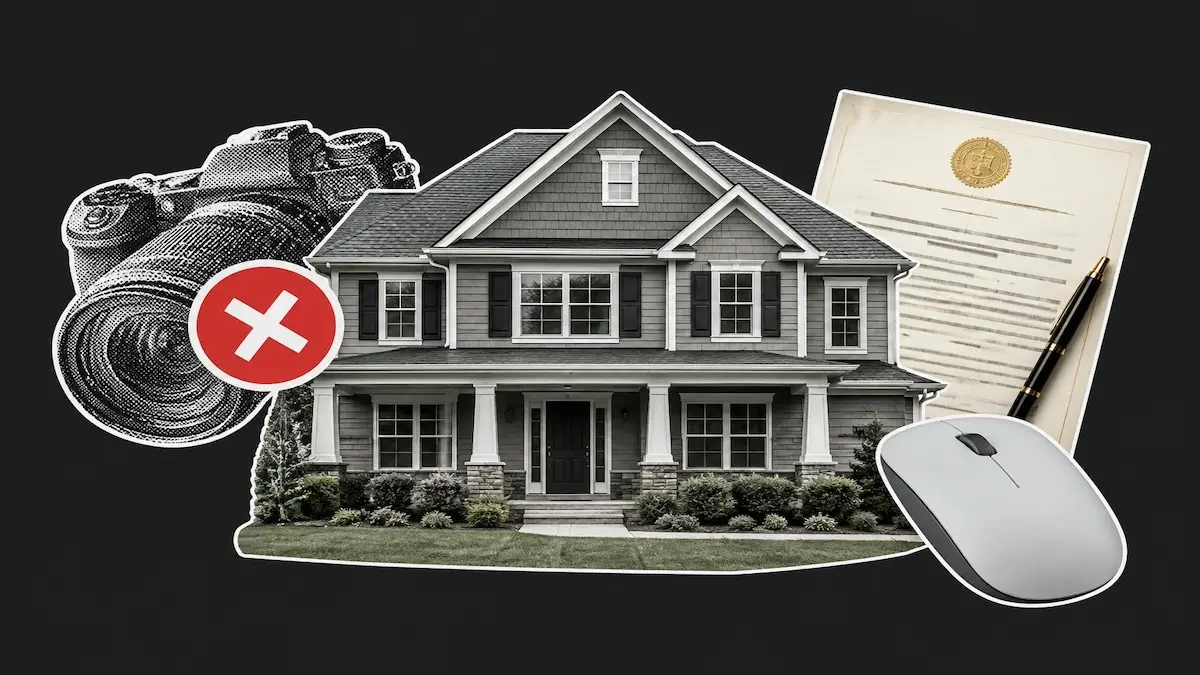
TRENTON, N.J. — In an era where digital footprints extend deeply into private lives, the boundary between the public real estate market and personal sanctuary is facing a legislative reckoning. New Jersey homebuyers could soon possess the explicit legal authority to scrub interior photographs of their newly purchased homes from real estate databases, brokerage websites, and social media platforms.
The proposed measure, designated as Assembly Bill No. 5422 and sponsored by Assemblyman William F. Moen Jr., targets a growing concern among modern consumers: the lingering exposure of private living spaces long after a real estate transaction has concluded. By establishing a standardized framework for the removal of detailed interior imagery, the bill seeks to address modern privacy vulnerabilities in an increasingly digitized housing market.
Main Facts: What Assembly Bill No. 5422 Proposes
At its core, Assembly Bill No. 5422 introduces a regulated process designed to hand control of a home’s digital interior footprint directly to its new owner. If enacted, the legislation will alter how real estate listings are handled post-sale across the Garden State.
- The Privacy Window: Beginning on the official date of sale and extending up to 30 days post-closing, the new property owner holds the statutory right to demand the total removal of interior photographs.
- Standardized Documentation: Within six months of the bill’s enactment, the New Jersey Division of Consumer Affairs would be mandated to develop and issue an official, standardized "image removal request form."
- The Compliance Chain: Listing agents, brokerages, and unrepresented (For-Sale-By-Owner) sellers are legally required to provide this form to the buyer no later than the date of closing.
- The Removal Window: Once a buyer submits a completed and signed form, the designated real estate professional or seller has a strict 30-day window to ensure that all interior imagery is purged from Multiple Listing Services (MLSs), brokerage websites, promotional social media accounts, and third-party marketing databases.
- Enforcement and Penalties: Non-compliance carries direct financial consequences. Violations are punishable by fines of up to $500 for a first offense and up to $1,000 for subsequent offenses, enforced by the New Jersey Real Estate Commission or the Division of Consumer Affairs.
Chronology: The Path to Legislative Action
The introduction of Assembly Bill No. 5422 does not happen in a vacuum; it is the culmination of a steady evolution in how real estate marketing intersects with personal security and digital surveillance.
The Rise of Hyper-Visible Real Estate (Early 2000s–2010s)
For decades, interior photographs of homes were confined to printed listing sheets, local newspaper advertisements, and physically distributed booklets. The advent of the internet shifted these assets online. Platforms like Zillow, Realtor.com, and local MLS portals transformed ephemeral listing photos into permanent digital artifacts. For a long time, the prevailing industry consensus was that once a home sold, its digital interior record remained as a historical archive or a tool for future valuations.
The Modern Surveillance and Safety Shift (2020–Present)
In recent years, the convergence of high-resolution digital cameras, 3D virtual walkthroughs (such as Matterport tours), drone footage, and social media marketing has created hyper-detailed digital twins of private homes. Security experts, privacy advocates, and consumers began to push back. High-profile incidents involving stalking, burglaries where perpetrators utilized old listing photos to map out home layouts, and general anxieties over data privacy forced lawmakers to reevaluate the status quo.
Assemblyman William F. Moen Jr. drafted A-5422 to bridge this gap, recognizing that the current real estate ecosystem leaves new homeowners vulnerable to having the intimate details of their living spaces publicly searchable indefinitely.
The Legislative Timeline Ahead
If the bill successfully navigates the New Jersey State Legislature and is signed into law, a structured rollout will follow:
- Immediate Enactment: The statute takes effect immediately upon signature.
- Form Development: The New Jersey Division of Consumer Affairs has a six-month window to formulate, approve, and publish the standardized image removal request form.
- Grace and Preparation Period: Mandatory enforcement begins precisely 90 days after the state officially publishes the request form, giving the real estate industry time to update operational procedures and compliance software.
Supporting Data: The Digital Footprint of Modern Real Estate
To understand the necessity of A-5422, one must examine the sheer volume and persistence of data generated during a standard real estate transaction.
The Lifespan of Listing Data
According to real estate technology analysts, a typical suburban home listing generates between 25 and 50 high-definition interior photographs, often supplemented by floor plans and 3D video tours. When a home sells, these assets are rarely deleted. Instead, they are frequently scraped by third-party data aggregators, repurposed by interior design blogs, or left archived on brokerage web pages for Search Engine Optimization (SEO) purposes.
- Syndication Reach: A single listing is often syndicated across dozens, sometimes hundreds, of downstream websites simultaneously.
- The Scraping Economy: Automated web scrapers harvest real estate photos to populate valuation models, comparative market analysis (CMA) tools, and automated neighborhood databases.
- The Vulnerability Index: According to property security consultants, detailed interior photos can expose the layout of master bedrooms, the location of home safes, the presence of specific security system panels, and the floor plans of children’s rooms—information that bad actors can exploit.
Financial and Operational Impact on Licensees
While the fines ($500 for a first offense, $1,000 for subsequent violations) may appear modest on paper, the operational and reputational costs to real estate brokerages are significant. Agents will now be forced to audit not just their own websites, but also ensure that downstream third-party platforms comply with deletion requests. This introduces new administrative workflows that brokerages must manage to avoid regulatory penalties.
Official Responses and Industry Reactions
The introduction of Assembly Bill No. 5422 has elicited a range of responses from consumer advocates, real estate professionals, and legal analysts.
Consumer Privacy Advocates
Advocates for digital privacy have widely praised the legislation as a long-overdue modernization of property rights. In an era where individuals pay premium prices to remove their personal phone numbers and home addresses from data broker sites, the idea that the inside of one’s newly purchased home remains public domain has long seemed contradictory.
"A home is meant to be a sanctuary," notes digital rights analysts. "When you purchase a home, you purchase the privacy that comes with it. Allowing the digital ghost of the previous owner’s staging—or worse, the previous owner’s actual belongings—to remain accessible to the entire world indefinitely is a major security loophole."
Real Estate Professionals and Brokerages
Conversely, the real estate industry has expressed mixed feelings, balancing consumer protection desires against logistical burdens. Representatives from local realtor associations point out that while the intent is noble, the mechanics of scrubbing data from the internet can be complex and, at times, beyond the direct control of an individual listing agent.
- The Third-Party Dilemma: Once photos are syndicated to third-party aggregators that do not have direct contractual relationships with the listing agent, compelling those platforms to delete images within the 30-day window can prove difficult.
- Historical Data Value: Appraisers and agents rely on historical listing photos to evaluate property condition changes over time. Stripping these photos entirely from MLS archives could complicate future valuations and market trend analyses.
Despite these concerns, industry compliance experts are advising brokerages to prepare for the inevitability of the law by updating their transaction management software to automatically track closing dates, issue the new state-mandated forms, and execute comprehensive digital sweeps.
Implications: What A-5422 Means for the Future of Real Estate
If New Jersey successfully implements Assembly Bill No. 5422, it could serve as a bellwether for other states grappling with digital privacy in the property sector. The implications stretch across several key domains:
1. Shift in Marketing Strategies
Real estate marketing may pivot toward temporary or less invasive digital footprints. Agents and media providers might utilize more stylized, obscured, or staging-heavy imagery that minimizes personal identifiers, or they may rely more heavily on ephemeral virtual tours that expire automatically upon closing.
2. Heightened Legal Liability for FSBO Sellers
By explicitly extending these rules to For-Sale-By-Owner transactions, the bill closes a potential loophole where unrepresented sellers might ignore privacy protocols. FSBO sellers will now be held to the same legal standard as licensed professionals, increasing their legal exposure if they fail to provide or honor the image removal request.
3. A New Standard for National Consumer Privacy
As state legislatures across the U.S. increasingly take the lead on digital privacy—following in the footsteps of comprehensive data privacy laws in states like California, Virginia, and Texas—real estate privacy is emerging as the next frontier. If New Jersey proves that post-sale photo removal is administratively feasible, other states are likely to introduce parallel legislation, potentially forcing national real estate portals to build automated "right to be forgotten" tools specifically for home interiors.
Conclusion
Assembly Bill No. 5422 represents a fundamental philosophical shift: moving the homebuying process from an era of permanent public exhibition to one where personal privacy reclaims its place at the threshold. As the bill moves through the legislative process, New Jersey homebuyers, agents, and brokers alike are watching closely to see how the state balances the commercial demands of the real estate market with the fundamental right to domestic peace and security.
