

By Verge Staff
Published: September 27, 2026
Main Facts
The intersection of technology, philanthropy, and education has historically been paved with ambitious intentions. Among the most iconic—and polarizing—experiments of the early 2000s was the One Laptop Per Child (OLPC) initiative. Spearheaded by visionary technologists, the project set out to bridge the global digital divide by designing, manufacturing, and distributing a rugged, low-cost computer—the XO-1—to millions of children in developing nations.
The core premise was simple yet radical: What if every child on Earth had access to a personal computer? For Silicon Valley executives and academic elites, it felt like a silver bullet capable of democratizing global education, accelerating literacy, and pulling communities out of poverty through self-directed learning.
However, reality proved significantly more complicated than the idealized blueprints. In the latest episode of Version History, host David Pierce is joined by The Verge’s Adi Robertson and tech journalist David Imel to dissect the OLPC phenomenon. The panel tackles the central paradox of the XO-1: Was it a triumph of innovative, purpose-built hardware, or was it fundamentally a deeply flawed idea born of Western technological hubris?
The episode marks the midpoint of Version History’s fifth season, which has taken listeners on a nostalgic and analytical tour of educational technology icons—ranging from the genesis of The Oregon Trail to the cultural footprint of the TI-82 graphing calculator. Yet, unlike retro gaming or classroom gadgets, the OLPC venture carried geopolitical stakes, massive financial investments, and profound human consequences.
Chronology: The Rise and Fall of the XO-1
To understand how the OLPC initiative unfolded, it is necessary to trace its trajectory from an academic dream at the Massachusetts Institute of Technology (MIT) to a stark lesson in hardware economics.
2005–2006: The Genesis and the $100 Laptop Promise
The initiative was officially unveiled in January 2005 at the World Economic Forum in Davos, Switzerland, by Nicholas Negroponte, co-founder of the MIT Media Laboratory. The concept captured global media attention instantly, driven largely by a headline-grabbing promise: a fully functional, network-enabled laptop that would cost a mere $100 to manufacture.
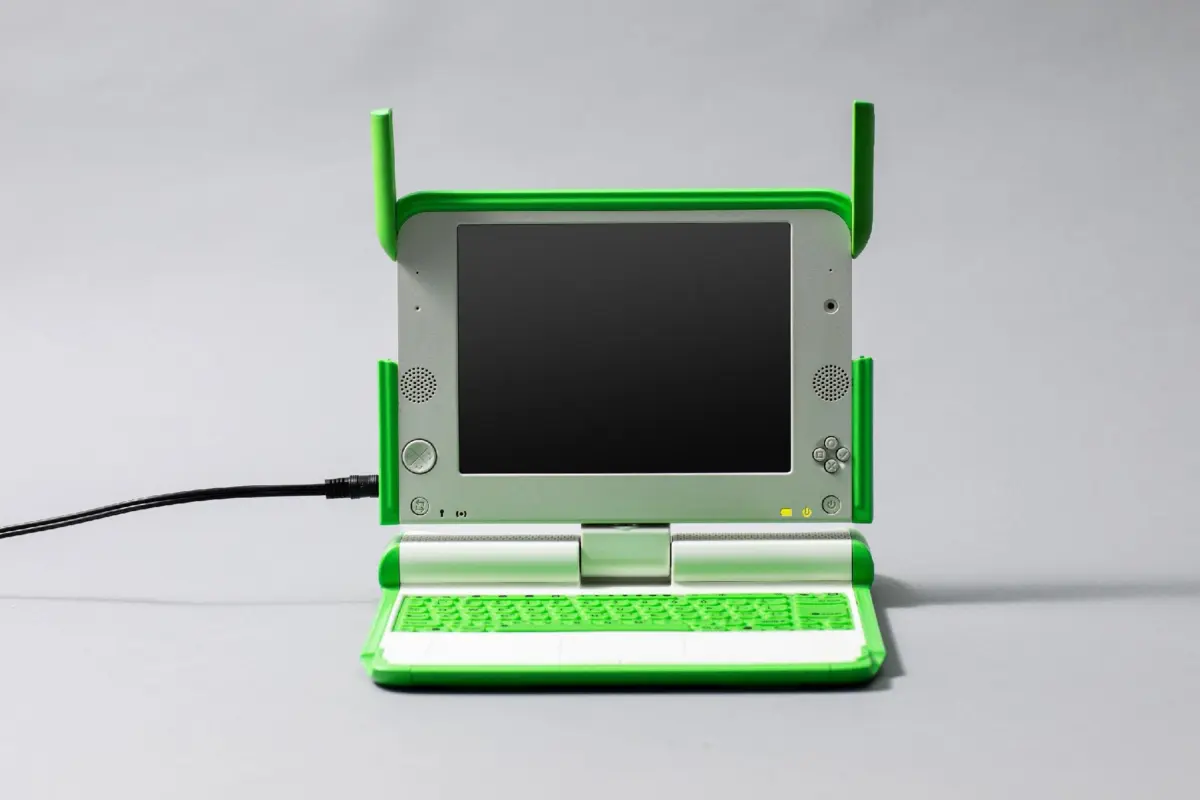
The machine was designed from the ground up, discarding industry standards to achieve its low price point. It featured a unique, convertible chassis, a sunlight-readable display, a hand-crank charging option (though this was later largely abandoned due to cost and durability hurdles), and a custom-built open-source operating system known as Sugar.
2007–2008: Production Realities and Scope Creep
As the project transitioned from concept to mass production, the engineering and economic realities began to bite. The ambitious $100 price tag proved elusive. By the time the XO-1 rolled off production lines in late 2007, the actual unit cost had crept closer to $188—nearly double the original target.
Furthermore, the distribution model shifted. Instead of governments buying millions of units directly for pennies, nations were asked to purchase them in batches of hundreds of thousands. This financial burden forced developing countries to choose between investing in basic infrastructure—such as clean water, textbooks, and electricity—or buying experimental laptops.
2009–2014: Stalled Deployments and Organizational Turmoil
While notable deployments occurred in countries like Peru, Uruguay (via the independent Plan Ceibal), and Rwanda, the initiative faced immense internal friction. Disagreements over software philosophy, hardware specifications, and partnerships fractured the OLPC organization.
Crucially, Microsoft eventually entered the picture, offering a specialized version of Windows XP to run on the XO-1, which conflicted with the project’s original open-source, Linux-based Sugar ethos. By the early 2010s, OLPC had largely ceased active hardware development, leaving behind a complex legacy of lessons for modern educational tech deployers.
Supporting Data & Hardware Innovation
Despite its commercial and operational shortcomings, the XO-1 was an undeniable engineering marvel that forced the mainstream tech industry to rethink what a computer could be.
Key Specifications and Design Innovations of the XO-1:
- The Display: The XO-1 utilized a dual-mode liquid-crystal display. In standard color mode, it was low-resolution, but switching to "reflect mode" turned it into a high-resolution monochrome screen that was brilliantly readable under direct, blinding tropical sunlight—a critical feature for outdoor classrooms in developing regions.
- Power Efficiency: Powered by an ultra-low-power AMD Geode processor, the entire system consumed less than 2 watts of power (compared to 20–30 watts for standard laptops of the era). This allowed it to run on alternative energy sources like foot-pedal generators and solar panels.
- Mesh Networking: The laptop included pivoting "ears" which served as dual Wi-Fi antennas. The machine was designed to act as a decentralized mesh router, allowing clusters of XO-1s to share a single internet connection across an entire village without needing traditional wireless access points.
- Ruggedized Body: Encased in rubberized, moisture-resistant plastic with a spill-proof keyboard, the XO-1 was built to withstand the rough-and-tumble environment of classrooms in remote areas where replacement parts were nonexistent.
| Feature | OLPC XO-1 | Standard 2007 Netbook/Laptop |
|---|---|---|
| Target Price | $100 (actual ~$188) | $300 – $500+ |
| Power Consumption | ~2 Watts | 20–40 Watts |
| Display Technology | Dual-mode (Reflective B&W / Color LCD) | Standard TFT LCD |
| Operating System | Sugar (Custom Linux-based GUI) | Windows XP / Standard Linux |
| Networking | Ad-hoc Mesh Networking (802.11s) | Standard Wi-Fi Infrastructure |
Official Responses and Critiques
The reception of the OLPC initiative has generated decades of debate among economists, educators, and software engineers.
Proponents of the project argued that the XO-1 sparked a revolution in the computing industry. It directly inspired the netbook boom of the late 2000s, proving to giants like Intel and ASUS that there was a massive, untapped global market for ultra-cheap, portable computing devices. Figures within the MIT Media Lab maintained that the value of the project wasn’t just in the hardware delivered, but in the paradigm shift it created regarding children’s agency in learning.
Conversely, fierce critics—most notably educational technology researcher Sugata Mitra (famous for his "Hole in the Wall" experiments) and various international economists—pointed out fundamental flaws in the "one device, one child" philosophy.
Prominent criticisms included:
- The "Software First" Neglect: Critics argued that providing hardware without localized, culturally relevant educational software and teacher training was akin to giving books to people who hadn’t been taught to read.
- Opportunity Cost: Economists questioned whether spending millions of dollars on proprietary hardware was the most effective use of foreign aid when basic educational necessities were lacking.
- Maintenance and Sustainability: Once deployed, broken XO-1 units often sat in piles because local technicians lacked the training or spare parts to repair them.
As Adi Robertson notes in the Version History episode, the debate often boils down to a clash between idealistic Silicon Valley techno-solutionism and the messy realities of grassroots infrastructure.
Implications: What the XO-1 Teaches Us Today
As we examine the educational technology landscape of the mid-2020s—marked by surging debates over artificial intelligence in classrooms, tablet-based curricula, and remote learning disparities—the lessons of the OLPC XO-1 remain urgently relevant.
1. Hardware Alone Cannot Fix Systemic Inequality
The primary takeaway from the XO-1 is that technology is a multiplier, not a substitute. Dropping a computer into a child’s hands does not magically overcome structural issues like poverty, lack of electrical grids, poorly funded schools, or inadequate teacher pay. Sustainable educational uplift requires holistic ecosystem support.
2. The Legacy of Open-Source and Affordable Computing
Even though the XO-1 did not achieve its utopian vision of total global saturation, its DNA lives on. The push for ultra-low-cost hardware paved the way for affordable Chromebooks in modern classrooms, low-cost tablets in developing nations, and open-source software environments designed specifically for cognitive development rather than corporate productivity.
3. Guarding Against Techno-Solutionism
For modern tech developers, the OLPC story serves as an eternal cautionary tale against assuming that Silicon Valley solutions can be universally copy-pasted across vastly different cultural and economic landscapes without deep community consultation and localized adaptation.
To hear the full debate on whether the OLPC XO-1 was a stroke of genius or a cautionary disaster, tune in to the latest episode of Version History, available now on all major podcast platforms. Verge subscribers can listen ad-free by linking their accounts.
