

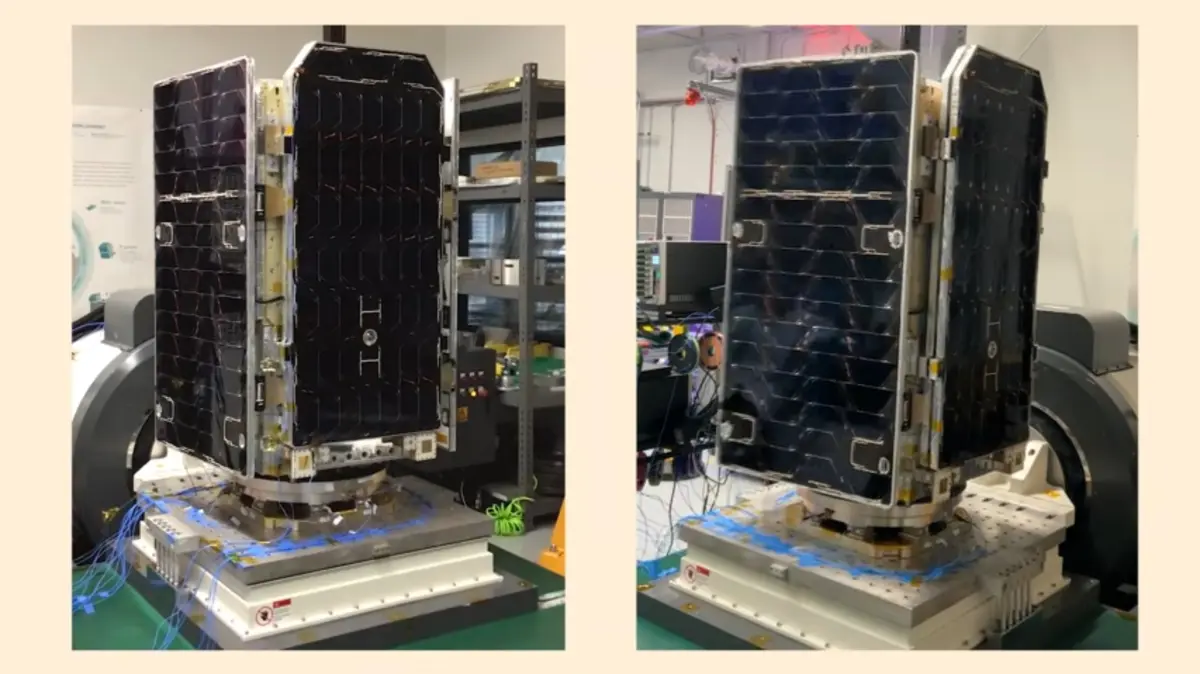
As the terrestrial infrastructure supporting the artificial intelligence boom strains under unprecedented demands for electricity, land, and water, tech giants are increasingly casting their gaze upward. On October 1, Google plans to launch a crucial prototype into low-Earth orbit aboard a SpaceX Transporter-18 rideshare flight. The mission marks a foundational step in Project Suncatcher, an ambitious long-term initiative to determine whether machine learning and advanced computing can successfully migrate off Earth.
While not yet a full-scale orbital data center—a concept popularized by AI entrepreneurs and visionaries like Elon Musk—Google’s upcoming test represents a definitive stride toward that horizon. By placing proprietary Tensor Processing Units (TPUs) into space, Google aims to answer a fundamental question: Can specialized AI hardware survive, function, and eventually thrive in the harsh environment of outer space?
Main Facts: What Google Is Launching
The centerpiece of Google’s October 1 launch is a refrigerator-sized prototype satellite known as "MWP." Developed in partnership with satellite imaging powerhouse Planet, the satellite is designed to run on solar power and perform localized, low-power AI computations in orbit.
Unlike earthbound training clusters that handle massive language models, medical research simulations, or continuous live-streaming data, the MWP satellite will execute lightweight testing operations. The primary objective is durability and performance verification. Google’s engineering teams must confirm whether their customized AI silicon can withstand the intense mechanical vibrations of a rocket launch, the drastic thermal swings of low-Earth orbit, and the constant exposure to cosmic radiation.
Project Suncatcher, first introduced by Google late last year, is officially classified by the company as a long-term "moonshot." In a recent blog post detailing the initiative, Google’s research teams highlighted the rigorous pre-launch testing required to ensure their hardware could survive the journey to space.
Google CEO Sundar Pichai captured the high-stakes, experimental nature of the mission in a post on X (formerly Twitter): "Can our TPUs survive and operate in space? Well, we’re going to find out. One small step for TPUs…"
Chronology: The Road to Orbit
The path to Google’s October 1 launch has been meticulously planned across several distinct milestones over the past two years:
- Late 2025: Google officially announces Project Suncatcher, outlining a speculative roadmap to explore whether space-based infrastructure can support scalable machine learning workloads. Research and development teams begin stress-testing TPUs against simulated rocket-launch vibrations and vacuum conditions.
- September 2026: Google and Planet publicly confirm details of the upcoming MWP satellite test. Google’s senior director for Paradigms of Intelligence, Travis Beals, publishes a comprehensive technical overview of the initiative.
- October 1, 2026 (Scheduled): The SpaceX Transporter-18 rideshare mission lifts off, carrying the MWP test satellite into low-Earth orbit.
- 2027 (Projected Milestone): Assuming the initial October test succeeds, Google and Planet plan to launch two additional AI-equipped satellites. This secondary phase will test high-bandwidth laser links between orbiting nodes—a critical step for synchronizing distributed space computing.
Supporting Data: The Energy Equation and Orbital Physics
The push toward orbital data centers is not driven merely by novelty; it is fundamentally an economic and logistical calculation rooted in energy availability.
According to Google’s research data, satellites stationed in low-Earth orbit have access to roughly eight times more solar power than comparable structures built on the surface of the Earth. Terrestrial solar farms face severe limitations imposed by the day-night cycle, weather patterns, atmospheric filtering, and geographical constraints. In contrast, orbital solar arrays can capture unfiltered sunlight with significantly higher efficiency.
"Eventually," Travis Beals wrote in his architectural breakdown for Google, "it could be possible to link together multiple constellations of satellites, allowing them to manage larger AI workloads while in orbit."
However, turning this vision into reality requires overcoming immense physical hurdles. Any computational hardware deployed to space must contend with:

- Radiation: High-energy cosmic rays and solar flares can flip bits in memory and degrade silicon over time, requiring robust error-correction and radiation-hardened designs.
- Thermal Management: Space features extreme temperature differentials. Satellites alternate rapidly between direct, unfiltered solar heating and the freezing vacuum of Earth’s shadow.
- Orbital Debris: The growing congestion of low-Earth orbit poses a constant collision hazard for expensive hardware constellations.
Furthermore, the technological leap required for inter-satellite communication is staggering. To achieve distributed processing, satellites must communicate using high-bandwidth optical laser links. As Beals noted, maintaining these connections requires "extraordinary precision, similar to hitting a coin-size target from miles away while both points are in motion."
Official Responses and Industry Perspectives
Google is far from alone in eyeing the cosmos for computational real estate. Major tech enterprises and specialized startups—including Nvidia and SpaceX—are actively investigating the feasibility of deploying data centers beyond the atmosphere. Yet, industry analysts urge caution, distinguishing between scientific validation and commercial viability.
Mahdi Eslamimehr, executive vice president at Quandary Peak Research, argues that launching hardware is only the first of many hurdles.
"Proving that chips work in orbit is not proving a business model," Eslamimehr said. He emphasizes that even if Project Suncatcher succeeds completely, it will not lower municipal electricity or water bills on Earth, nor will it replace the hundreds of terrestrial data center projects currently bottlenecked by local resistance.
"I welcome the experiments, but I expect everyday AI services to remain overwhelmingly dependent on terrestrial facilities in 2027 and 2028," Eslamimehr added. Pointing to the long timelines required to scale space infrastructure, he dryly noted, "A promise about 2035 does not pay an electricity bill in 2026."
Implications: A Solution to Terrestrial Backlash?
The sudden allure of space-based data infrastructure must also be viewed through the lens of growing public friction on Earth. Across the United States and globally, the rapid expansion of artificial intelligence has triggered intense local backlash.
Communities near planned and operational data centers have organized widespread protests, raising alarms over:
- Massive electrical consumption that threatens local grid stability and drives up consumer utility rates.
- Heavy water usage required for server cooling systems.
- Noise pollution from industrial cooling fans and emergency generators.
- Land-use conflicts that threaten local ecosystems and aesthetic zoning.
With data center expansion threatening to become a major flashpoint in local politics and upcoming midterm elections, tech companies are desperately seeking alternatives. Public relations campaigns backed by big tech have struggled to completely neutralize negative public sentiment.
Moving data centers to space offers an enticing theoretical escape hatch: if the servers are in orbit, they consume no municipal water, crowd no local land, and draw power directly from unfiltered space solar arrays, completely bypassing terrestrial grid dependencies.
Yet, experts caution that space-based computing remains in its infancy. While Google’s SpaceX launch on October 1 represents a bold and fascinating milestone for Project Suncatcher, humanity’s heavy-duty AI workloads will remain firmly anchored to the earth for the foreseeable future. Space may well hold the key to the next generation of scalable computing, but the bridge from science fiction to commercial reality will be measured in decades, not months.
