

By Sports & Gaming Desk
Published: October 24, 2023
Main Facts
In the modern landscape of high-definition, fast-paced sports gaming dominated by cinematic blockbusters like EA Sports FC, Madden NFL, and MLB The Show, a quiet titan operates almost entirely in the shadows of raw numerical data. Out of the Park Baseball (often abbreviated as OOTP) is not a game of twitch-reflex timing, motion-captured swing mechanics, or vibrant stadium atmospheres. Instead, it is a meticulously detailed management simulation that trades polygons for spreadsheets, offering players an exhaustive, hyper-realistic dive into the economics, statistics, and organizational governance of professional baseball.
According to veteran players, platform data, and community metrics, OOTP occupies a unique space in digital entertainment. It caters to a distinct breed of sports enthusiast—the analytical "stathead" who finds more genuine thrill in negotiating a team-friendly contract extension for a struggling relief pitcher than in hitting a walk-off home run.
The core premise of OOTP is deceptively straightforward: you assume the role of a General Manager (GM), a field manager, or both, steering a baseball franchise through decades of play. Yet beneath that simple premise lies a labyrinth of depth. The game features exhaustive databases spanning contemporary Major League Baseball (MLB) rosters, historical eras reaching back to the nineteenth century, every tier of the minor league system, international circuits such as South Korea’s Korea Baseball Organization (KBO), and international competitions like the World Baseball Classic.
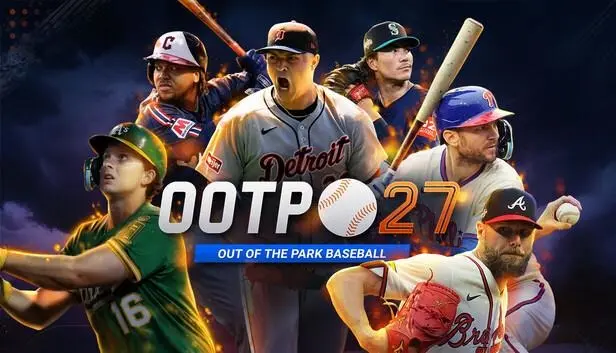
With the release of OOTP Baseball 27—currently available on Steam and via the developer’s official portal—the franchise continues to refine its ecosystem, cementing its status as the gold standard for text-based sports simulations.
Chronology: The Evolution of a Statistical Empire
To understand the cultural and operational footprint of Out of the Park Baseball, one must look at how the simulation genre evolved from humble shareware beginnings into an institutional hobby.
1. The Origins of Text-Based Simulation (Late 1990s – Early 2000s)
Long before OOTP became a commercial powerhouse, the sports simulation market was filled with rudimentary text simulators, utility programs, and DOS-based manager games. Markus Heinsohn founded the OOTP Developments studio in the late 1990s out of a personal desire for a deeper, more accurate baseball simulation. The initial releases were passion projects built in Europe—ironically, by developers outside the traditional American baseball establishment—yet they quickly attracted a cult following online.
2. The Professionalization and Expansion Era (2000s – 2010s)
As personal computing power grew, so did the ambitions of the OOTP engine. The software transitioned from a niche indie project into a globally recognized franchise, securing official licensing partnerships with Major League Baseball and the MLB Players Association (MLBPA). This allowed the game to feature authentic player names, likenesses, and logos, transforming user experiences from fictional universes into exact historical and contemporary replicas. During this period, the game introduced historical databases, allowing users to replay any MLB season from 1876 to the present day, reshaping baseball history through alternate outcomes.
3. Modern Iterations and the Sandbox Era (2020s – Present)
In recent years, OOTP has evolved past traditional annual sports game release cycles by incorporating extensive customization tools, modern analytics engines (including advanced sabermetrics like WAR, wRC+, and FIP), and expansive commissioner modes. The contemporary iterations—culminating in OOTP 27—balance accessibility features with uncompromising depth, attracting thousands of dedicated players who log thousands of hours across multiple editions.
Supporting Data: By the Numbers
To contextualize the sheer scope and player engagement of Out of the Park Baseball, consider the quantitative metrics associated with the franchise:
- Time Investment: Dedicated players regularly log thousands of hours on digital storefronts like Steam. It is not uncommon for franchise veterans to report upwards of 2,000 to 3,000 hours played across various franchise iterations.
- Database Depth: The game tracks hundreds of thousands of historical and active players, factoring in dozens of distinct developmental attributes, personality traits (greed, work ethic, leadership), and team chemistry dynamics.
- Simulation Speed: Unlike a traditional video game where a 162-game season takes months of nightly gaming sessions to complete, OOTP allows users to simulate an entire Major League season—including drafts, trades, and postseason play—in as little as two to four hours.
- Customization Freedom: Over 90% of user interactions occur through data tables, scouting reports, and financial ledgers, yet the game accommodates an infinite variety of user-defined constraints, from total fantasy draft leagues to strict historical accuracy modes.
Official Responses and Developer Insights
The longevity and success of Out of the Park Baseball are driven by a development philosophy centered on community engagement and an unwavering commitment to simulation authenticity.
In past interviews and developer roundtables, Markus Heinsohn and the OOTP Developments team have emphasized that their primary goal has never been mass-market arcade appeal. Instead, the focus is on creating a living, breathing ecosystem where every transaction has ripple effects.
"We are not trying to compete with cinematic action games," a studio representative noted in a community briefing. "Our players want to feel the weight of a front-office decision. They want to experience the anxiety of handing out a seven-year contract to a player who might hit a physical wall by year three. The drama in OOTP isn’t generated by a joystick; it’s generated by mathematics, probability, and human narrative."
Furthermore, the developers have continuously embraced the modding and community-created content ecosystem. From custom historical uniform packs and fictional ballparks to intricate alternate-universe leagues shared on fan forums, OOTP Developments has actively empowered its user base to shape the boundaries of the software.
Implications: The Psychological and Cultural Impact on Sports Nerds
What does the enduring popularity of Out of the Park Baseball tell us about modern sports fandom?
1. The Death of the "Passive Fan"
Modern sports fans are increasingly data-literate. With the rise of public sabermetrics, Statcast data, and complex front-office maneuvering (typified by the "Moneyball" era and its successors), fans no longer just watch games—they analyze rosters, evaluate payroll efficiency, and critique front-office strategy. OOTP serves as the ultimate outlet for this intellectual curiosity. It democratizes the executive suite, allowing any fan to test their hypothetical roster constructions against a rigorous simulation engine.
2. Narrative Generation in Sandbox Environments
Unlike scripted video game campaigns or linear narratives, OOTP generates unique, emergent stories. A fan playing as their favorite real-world franchise—such as a New York Mets devotee guiding their club through an alternate timeline where Brandon Nimmo develops into a multi-time MVP, Kodai Senga secures successive Cy Young Awards, and a blockbuster trade for Ronald Acuña Jr. yields a drought-breaking World Series title—experiences a deeply personal form of sports catharsis.
This emotional investment is powerful. When a player spends hours scouting a late-round draft pick, watches that prospect toil through Double-A, and eventually sees them become a franchise cornerstone, the psychological reward rivals any traditional gaming triumph. Conversely, the stress of impending contract negotiations and the threat of fan backlash if a beloved veteran is traded away mirror the genuine anxieties of real-world sports ownership.
3. The Rise of "Cozy" Analytical Gaming
While games like Tiny Bookshop or Stardew Valley are commonly associated with the "cozy gaming" movement—experiences designed to lower stress and offer comforting routines—OOTP occupies a fascinating intersection. For the quantitative sports nerd, OOTP is a cozy game. Its static interface, lack of time-sensitive physical inputs, and ability to run quietly in the background while the user multitasks make it an inviting mental retreat. It is a game that waits patiently for your decisions, offering a comforting sanctuary where logic, statistics, and baseball romance intersect.
Conclusion
Out of the Park Baseball 27 may look like a glorified spreadsheet wrapped in baseball nomenclature, but to its devoted community, it is much more than that. It is a time machine, a laboratory, a storytelling engine, and a sanctuary for those who believe that the true soul of baseball lives not just in the crack of the bat, but in the quiet calculus of the front office.
Whether you are a seasoned executive managing a fictional 19th-century league or a modern fan trying to break a century-long championship drought, OOTP offers an unmatched depth of experience. For a very particular brand of sports nerd, there is simply no substitute.
