

By Matt Jachman
The ACHR NEWS
Special Retrospective Feature
Introduction: A Paradigm Shift in Building Science
Twenty-five years after the unimaginable tragedy of September 11, 2001, the cascading impacts of that fateful day continue to reverberate across modern society. While the immediate horrors of the terrorist attacks on the World Trade Center in New York City are etched permanently into the global consciousness, the long-term, invisible consequences remain a profound public health crisis.
For the heating, ventilation, and air-conditioning (HVAC) and building science industries, 9/11 marked a watershed moment. It fundamentally transformed how engineers, facility managers, and regulatory bodies conceptualized indoor air quality (IAQ).
Prior to 2001, the primary focus of commercial building ventilation was thermal comfort, energy efficiency, and the mitigation of standard, everyday indoor pollutants. The destruction of the twin towers—and the simultaneous anthrax mail attacks that autumn—shattered those conventional boundaries. Overnight, the HVAC sector was thrust onto the front lines of national security and environmental disaster response, tasked with understanding how ventilation systems could either spread lethal contamination or serve as a critical defense shield.
Main Facts: The Immediate Atmospheric Catastrophe
When hijackers deliberately flew commercial airliners into the World Trade Center’s twin towers, the resulting structural collapses obliterated the seven-building complex and heavily damaged or caused partial-to-total collapses in several surrounding skyscrapers.
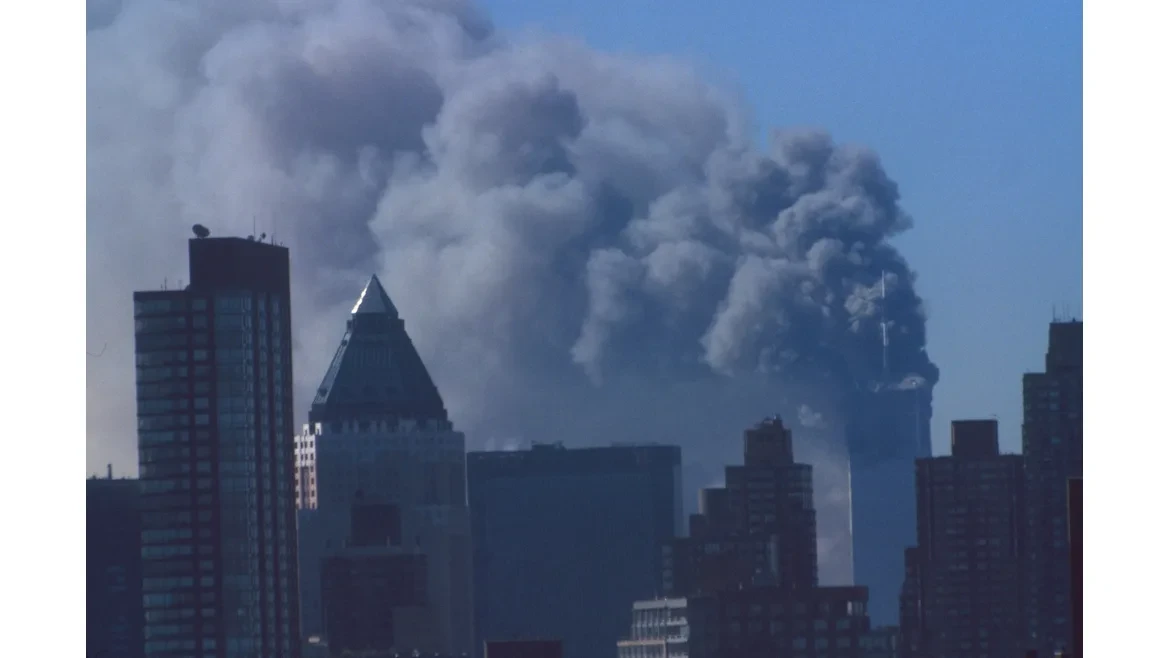
The physical destruction released massive, unprecedented plumes of contaminant-laden smoke, pulverized concrete, glass fibers, asbestos, heavy metals, and unburned jet fuel. While the towering dust clouds settled relatively quickly across Lower Manhattan, the atmospheric threat was far from over. Fires smoldered beneath the mountain of debris at Ground Zero for months, continuously feeding a toxic stew of smoke, airborne toxins, and resuspended particulate matter.
As rescue and recovery operations commenced, the surrounding urban ecosystem—including hundreds of commercial high-rises, residential towers, and institutional facilities—was flooded with these microscopic hazards. Buildings throughout Lower Manhattan inadvertently drew the toxic outside air into their mechanical ventilation systems, depositing tons of hazardous particulates deep inside ductwork, filters, and interior spaces.
This unheralded crisis exposed a stark reality: standard commercial building systems were completely unprepared to handle an airborne, large-scale environmental disaster of this magnitude.
Chronology of Response: From Emergency Containment to Industry Evolution
September 2001: The Immediate Aftermath and HVAC Mobilization
Within two weeks of the attacks, The ACHR NEWS began tracking the critical intersection of 9/11 recovery efforts and indoor air quality. Industry experts quickly realized that exterior cleanup alone would not suffice.
Jim Pearson, chairman of the Mechanical Systems Hygiene Institute, sounded an early, urgent alarm regarding the widespread infiltration of Lower Manhattan buildings by toxic particulate matter. Pearson noted that protecting building occupants would require an unprecedented mobilization—"an army of cleaners" equipped with heavy-duty respirators, high-efficiency particulate air (HEPA) filtration units, and rigorous decontamination protocols.
"Just cleaning the building will not be enough. A big building will be filled with tons of particulates," Pearson warned at the time, emphasizing that complex HVAC infrastructure would require comprehensive industrial cleaning. "This is a situation that none of us have ever had to face before."
January 2002: ASHRAE Confronts the New Normal
By January 2002, the American Society of Heating, Refrigerating and Air-Conditioning Engineers (ASHRAE) took center stage at the AHR Expo in Atlantic City, New Jersey. The organization was grappling with a dual-threat landscape: the environmental fallout of 9/11 and the wave of anthrax attacks that had terrorized the U.S. postal system and office buildings that same fall.
During the conference, members dissected a newly rushed guideline document: Risk Management Guidance for Health and Safety Under Extraordinary Incidents. Panelists and building science experts offered practical, emergency recommendations for building owners and managers struggling to secure their facilities against potential bioterrorism and heavy dust loads.

James Woods of the HP-Woods Research Institute highlighted the profound policy and technical vacuum facing the industry during those tense months. "There is not a whole lot of guidance to address the types of issues we are dealing with now," Woods stated, capturing the widespread uncertainty among engineers who were suddenly tasked with defending civilian infrastructure from asymmetric threats.
July 2002: Deconstructing the Ground Zero Dust Load
The dialogue continued into ASHRAE’s annual meeting held that July in Honolulu, Hawaii. Engineers, toxicologists, and researchers convened to evaluate empirical data regarding the specific chemical compositions and physical characteristics of the airborne particles recovered at and near Ground Zero. This scientific deep-dive laid the groundwork for future engineering standards, forcing a long-term re-evaluation of filter efficiencies, damper controls, and emergency shut-off protocols in urban commercial architecture.
Supporting Data: The Human Toll and Long-Term Health Crisis
A quarter-century later, the true scale of the toxic exposure resulting from the 9/11 attacks has come into devastating focus. While nearly 3,000 precious lives were lost on the day of the attacks, epidemiological data reveals a staggering subsequent death toll.
It is currently estimated that more than three times as many people have died from long-term, attack-related illnesses—including aggressive cancers, pulmonary fibrosis, chronic obstructive pulmonary disease (COPD), and cardiovascular diseases—than were murdered on September 11 itself.
The federal government’s response to this ongoing medical crisis is managed through the World Trade Center Health Program, administered by the U.S. Centers for Disease Control and Prevention (CDC). Today, the program provides vital medical monitoring and treatment to more than 145,000 individuals, encompassing both heroic first responders and civilian survivors who lived, worked, or studied in Lower Manhattan. Shockingly, data indicates that roughly two-thirds of these registered individuals have been diagnosed with at least one official 9/11-related health condition, proving that the invisible airborne contaminants trapped and circulated in the wake of the disaster remain lethally active decades later.
Official Responses and Regulatory Shifts
The catastrophes of 2001 served as a catalyst for sweeping regulatory and operational updates across federal agencies and professional societies. The National Institute for Occupational Safety and Health (NIOSH), the Occupational Safety and Health Administration (OSHA), and the Environmental Protection Agency (EPA) were forced to revise exposure limits and emergency response frameworks for urban environments.
For ASHRAE and other standard-setting bodies, 9/11 catalyzed the development of proactive defense mechanisms for building systems. These included:
- Enhanced Filtration Standards: Accelerated adoption of MERV (Minimum Efficiency Reporting Value) ratings, pushing facilities to incorporate higher-grade filters capable of capturing finer sub-micron particles.
- Emergency Ventilation Controls: Implementation of rapid automated shutdown systems to prevent outdoor contaminants from being drawn into buildings during external toxic releases.
- Building Vulnerability Assessments: Comprehensive risk-management protocols designed to secure critical infrastructure—such as air intakes, mechanical rooms, and filtration banks—against unauthorized access or airborne chemical and biological agents.
Broader Implications: The Modern IAQ Renaissance
The legacy of 9/11 extends far beyond immediate disaster response; it fundamentally changed societal expectations regarding the air we breathe indoors. The tragedy shattered the illusion that indoor environments are naturally insulated from external atmospheric chaos.
In the years following 2001, the methodologies developed to combat Ground Zero dust loads and biological threats laid the intellectual and technical groundwork for modern IAQ management. The heightened awareness forged during this era paved the way for subsequent advancements in indoor air management—from mitigating wildfire smoke plumes that now regularly choke vast regions of North America, to upgrading commercial ventilation systems to combat airborne pathogens like SARS-CoV-2.
Today, when building owners invest in advanced air purification, ultraviolet germicidal irradiation (UVGI), dynamic filtration, and real-time IAQ monitoring, they are operating within a framework forged in the crucible of Lower Manhattan’s darkest hours.
Conclusion
Twenty-five years after the towers fell, the HVAC and building science professions continue to honor the victims and survivors of September 11 by striving to make indoor spaces safer, more resilient, and healthier. The lessons learned from the dust and smoke of Ground Zero permanently elevated indoor air quality from a secondary operational consideration to an essential pillar of public health and national security.
Matt Jachman is an editor at The ACHR NEWS. He has 30-plus years of experience in community journalism and a bachelor’s degree in English from Wayne State University in Detroit.
