

WASHINGTON — For decades, the backbone of the residential HVAC service model relied on a predictable, albeit rigid, seasonal rhythm: a technician shows up on a homeowner’s doorstep twice a year—once in the balmy days of spring to prep the air conditioner, and once in the brisk air of autumn to service the furnace.
These traditional maintenance agreements have long been prized by contractors as the gold standard for securing recurring revenue, driving customer retention, smoothing out scheduling valleys, and generating warm leads for eventual system replacements. But as smart home technology matures, the industry is experiencing a seismic shift. Today, forward-thinking residential HVAC contractors are discovering that remote monitoring is effectively replacing—or drastically supercharging—the traditional maintenance contract.
By leveraging connected smart thermostats and cloud-based diagnostics platforms, contractors are no longer bound by a twice-a-year touchpoint. Instead, they are maintaining a vigilant, 365-day-a-year digital watch over their customers’ indoor climate systems. This evolution marks a transition from reactive, calendar-based maintenance to proactive, condition-based servicing—a development that is fundamentally altering operational efficiency, boosting profitability, and redefining the contractor-homeowner relationship.
The Main Facts: A Shift Toward 365-Day Connected Oversight
At the heart of this transformation is the integration of advanced smart thermostats with specialized contractor diagnostic portals. Rather than waiting for a system to break down catastrophically on the hottest day of summer or the freezing night of winter, modern thermostats are engineered to broadcast real-time health data directly to service professionals.
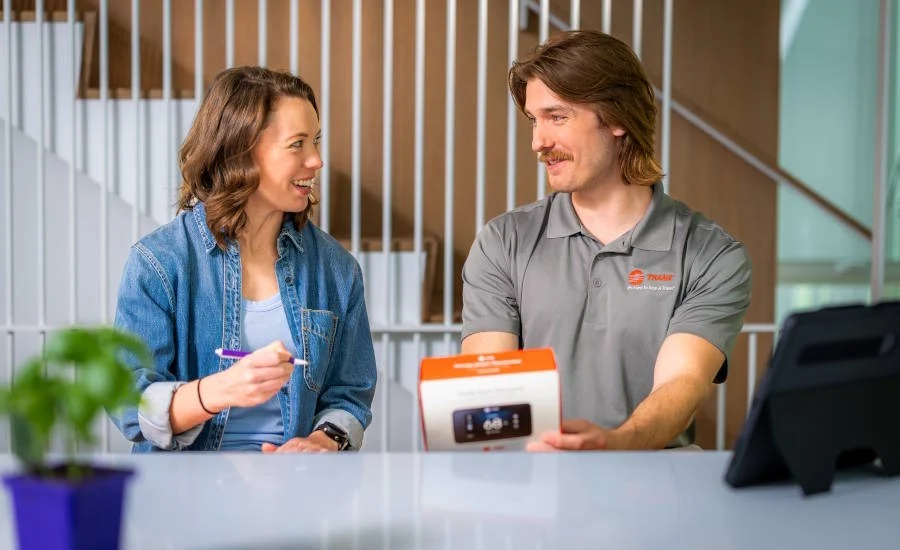
Manufacturers are heavily investing in ecosystem interoperability. For instance, platforms like Trane Diagnostics pull data straight from communicating thermostats—such as the Trane Link UX360—and newly introduced non-communicating options like the Trane Priority Smart Thermostat.
Through these devices, contractors gain instant, remote visibility into a treasure trove of operational metrics:
- HVAC system configurations
- Indoor temperature and humidity trends
- Detailed homeowner programming schedules
- Comprehensive runtime histories
- System performance data and diagnostic error codes
"This visibility helps contractors move from calendar-based maintenance to condition-based maintenance, allowing them to prioritize attention where it is needed most," explains Caitlin Butler, Product Manager for Thermostats and the Home App at Trane.
Crucially, this system is built with strict privacy and security parameters at its core. Homeowners must explicitly authorize contractors to view their system data or make configuration changes. Utilizing features like Dealer Remote Access (DRA) via the Trane Home app, homeowners retain total control: they can grant edit access for a specified duration and have the absolute power to grant or revoke that access at any moment.
Chronology: The Evolution of Connected HVAC Diagnostics
To understand where the industry is heading, it helps to examine how digital tools have rapidly evolved over the past decade.
- Early 2010s (The Wi-Fi Awakening): The residential market saw the introduction of early consumer smart thermostats. While revolutionary for energy savings and smartphone scheduling, these devices offered virtually no meaningful integration with professional HVAC service workflows. They were consumer gadgets, not commercial tools.
- Late 2010s (Manufacturer Ecosystems Emerge): HVAC original equipment manufacturers (OEMs) began developing proprietary apps and connected controls. These allowed homeowners to adjust temperatures remotely, but diagnostic capabilities remained basic, often limited to crude filter-change reminders or basic fault codes displayed locally on the thermostat screen.
- The Early 2020s (Real-Time Cloud Diagnostics): Cloud connectivity matured, enabling bidirectional data flow between residential units and contractor dispatch centers. Thermostats evolved from simple remote controls into health monitors, transmitting performance alerts directly to technician mobile applications.
- Recent Years (Advanced Subscriptions and AI Assistants): The landscape shifted further with the introduction of tiered, subscription-based diagnostic platforms. Last year, advanced tiers—such as Trane’s Diagnostics Premium—unlocked predictive analysis, extended runtime history graphing, automated system report generation, and embedded AI tech assistants. Today, remote monitoring is transitioning from an upscale add-on feature to a core operational strategy for top-tier contracting businesses.
Supporting Data and Operational Benefits: Sashing Truck Rolls and Callbacks
For HVAC business owners, the financial math behind remote monitoring is compelling. Truck rolls are expensive; dispatching a technician, paying their hourly wage, fueling a service vehicle, and consuming valuable time that could be spent on high-margin installations eats heavily into net margins. Furthermore, costly callbacks—where a technician must return to a job site because a problem wasn’t fully resolved on the first visit—drain profitability and frustrate consumers.
Remote monitoring acts as a powerful shield against these inefficiencies. When a potential problem occurs, the system generates an email notification containing specific diagnostic data: the exact alert code, a detailed description of the issue, potential underlying causes, and recommended solutions.
Armed with this information, service managers can review system parameters before picking up the phone. In many cases, minor configuration issues can be resolved remotely during a Dealer Remote Configuration (DRC) session, completely eliminating an unnecessary truck roll.
When an on-site visit is unavoidable, the operational advantages multiply:
- First-Time Fix Rates: Technicians arrive at the home knowing precisely what is broken. They can pack the exact parts, tools, and replacement components needed for the repair in their truck, drastically increasing first-time fix rates.
- Strategic Dispatching: Dispatchers can intelligently route jobs. Complex, highly technical system failures can be assigned to veteran technicians, while routine checkups or minor diagnostics can be routed to newer apprentices, optimizing labor efficiency across the company.
- Predictive Problem Solving: Platforms utilizing extended runtime histories (such as tracking up to a full year of performance graphs) allow contractors to spot micro-trends in equipment behavior, addressing failing components before they trigger a system lockout.
Deep Dive: Real-World Scenarios and Advanced Diagnostics
To fully appreciate the value of cloud-connected thermostats, consider two common residential HVAC failures that historically resulted in severe property damage or exorbitant utility bills:
1. The Condensate Switch Trip Smart Diagnostics Alert (SDA)
When an air conditioner runs, it naturally pulls moisture out of the air, which drains through a condensate line. Over time, algae, dust, and sludge can clog the drain pan or pipe. In a traditional setup, the water backs up until a safety switch trips, shutting down the system—often on the hottest, most humid day of the year. If the safety switch fails or overflows, it can lead to catastrophic water damage, including collapsed ceilings, ruined drywall, and buckled hardwood floors.
With smart diagnostics, the thermostat catches the tripped switch or abnormal water level immediately. The contractor is notified instantly via email, and the homeowner receives an app alert prompting them to connect with their service provider. The issue is addressed before a single drop of water can damage the home’s structure.
2. Excessive Electric Heat Usage SDA
On heat pump systems, auxiliary electric strip heat is designed to kick on only during extreme cold snaps when the ambient air cannot supply enough heat. However, if a heat pump malfunctions (e.g., a reversing valve sticks or refrigerant leaks), the system may secretly rely entirely on expensive auxiliary electric resistance heat to maintain the homeowner’s set temperature.
Homeowners rarely notice this transition because their home still feels warm. They only discover the problem weeks later when they open an astronomically high electric bill. Smart diagnostic alerts track system performance parameters and flag excessive electric heat usage immediately. Contractors can diagnose the mechanical failure and deploy a technician to repair the heat pump long before the homeowner is subjected to an unexpected financial shock.
Premium Tiers and Technological Innovations
As the sector continues to innovate, software features embedded within advanced diagnostic subscriptions are giving contractors unprecedented tools to build customer trust and empower their workforce.
Key features driving this next wave of adoption include:
- Automated System Reports: Contractors can generate comprehensive System Report PDFs detailing equipment health and efficiency trends, which can be emailed directly to the customer. This transparency builds profound consumer trust. Furthermore, centralized digital storage of these reports ensures fast, informed decision-making for future service calls.
- Embedded AI Tech Assistants: Labor shortages continue to plague the trades. To bridge the skills gap, platforms now incorporate intelligent AI chatbots directly into technician apps. These assistants offer on-the-go access to complex product manuals, wiring diagrams, and troubleshooting steps. By providing instant, intelligent support on site, these tools reduce a technician’s dependency on over-the-phone supervisor support, speed up problem resolution, and elevate overall service quality.
Implications for the Future of the HVAC Industry
The widespread adoption of smart thermostats and remote monitoring portends profound structural changes for the residential HVAC contractor ecosystem.
First, it changes how companies market themselves. Contractors can differentiate their businesses by moving away from generic commodity pricing and instead packaging tiered "Connected Care" service agreements. These plans—ranging from basic remote health alerts to all-inclusive predictive maintenance—offer recurring monthly revenue streams that stabilize cash flow year-round.
Second, it redefines customer loyalty. In a traditional model, a homeowner might use a different HVAC company every time their system breaks down, shopping strictly based on who can get there the fastest or cheapest. When a contractor monitors a home’s climate system 365 days a year, provides proactive alerts, and fixes minor issues remotely, they transition from an episodic vendor to a trusted, indispensable home advisor.
"A lot of technicians are exploring ways to incorporate remote monitoring into service and maintenance offerings as a way to stay connected with customers between scheduled visits," Butler notes. "We see contractors leveraging remote monitoring as a way to differentiate their business, create new levels of service agreements, and overall improve their business operations by reducing costly truck rolls and securing recurring revenue through desirable maintenance plans for customers."
Ultimately, the humble thermostat has evolved from a passive wall-mounted dial into the nerve center of a modern, data-driven service enterprise. For HVAC contractors willing to embrace the technology, the message is clear: the future of maintenance isn’t about waiting for things to break—it’s about watching them closely enough that they never catch you by surprise.
