

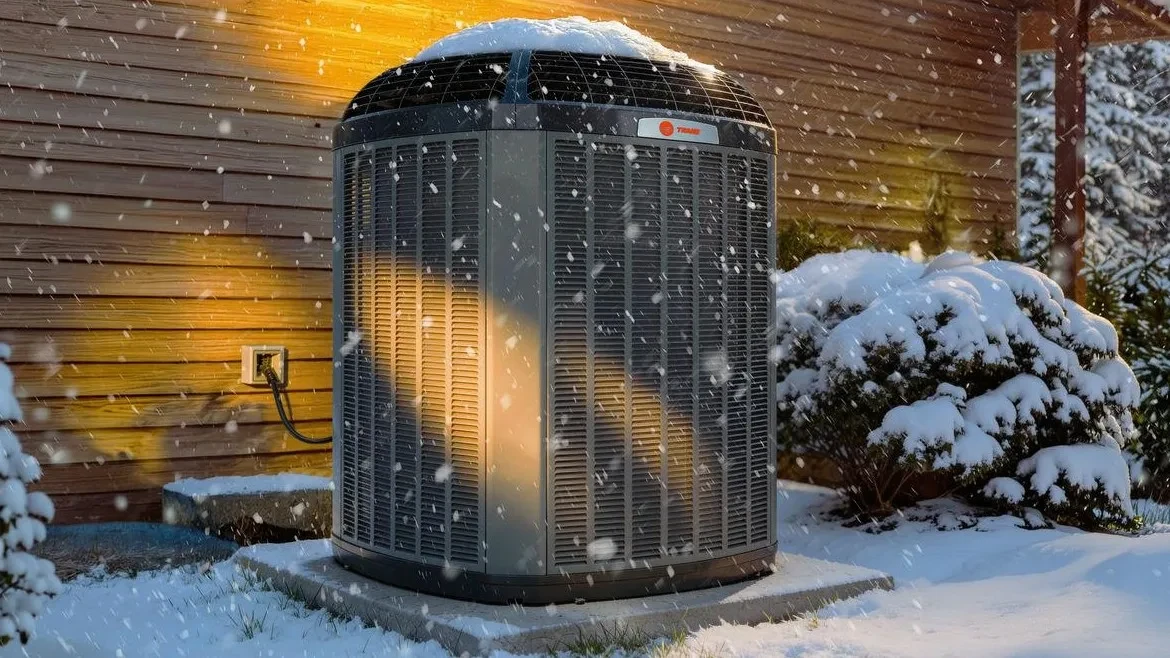
SWORDS, Ireland — Marking a major milestone in residential HVAC innovation and home electrification, Trane Technologies has officially launched its first-ever line of cold-climate heat pumps engineered specifically for residential markets. Marketed under two of the company’s flagship brands, the systems arrive as the Trane 20 TruComfort with WeatherGuard and the American Standard AccuComfort Platinum 20 (featuring All Weather technology).
Designed from the ground up to conquer harsh winters without relying heavily on traditional fossil-fuel or auxiliary electric resistance heating, these advanced variable-speed systems represent a paradigm shift. For decades, extreme cold has been viewed as the ultimate boundary for heat pump technology, often forcing homeowners in northern climates to maintain backup furnaces or endure plummeting indoor comfort when temperatures drop. Trane Technologies’ new release aims to shatter those historical limitations, providing reliable, sustainable heating performance even as outdoor air plunges to punishing sub-zero extremes.
Available now in nominal sizes of 3, 4, and 5 tons, the new systems are poised to accelerate the transition toward all-electric home comfort across North America’s coldest regions.
Main Facts: Engineering High Performance in Extreme Weather
The core engineering achievement of the Trane 20 TruComfort and American Standard AccuComfort Platinum 20 lies in their extraordinary thermal capacity and operational envelope. Unlike standard heat pumps that experience sharp capacity drop-offs as the thermometer dips, these units are engineered to maintain 100% heating capacity at ambient temperatures as low as 5°F.
Furthermore, the systems continue continuous heating operation in ambient temperatures ranging from -20°F up to 66°F. On the opposite end of the seasonal spectrum, they deliver robust cooling performance across an ambient range of 55°F to 115°F.
Key Technical Specifications and Features:
- Capacity Sizing: Available in 3-, 4-, and 5-ton configurations to suit a wide variety of residential floor plans.
- Variable-Speed Inverter Technology: The advanced variable-speed compressor can continually adjust its output in increments as fine as 0.1%. This ultra-fine tuning matches the exact heating or cooling load of the home in real time, eliminating the dramatic temperature swings associated with traditional single-stage or two-stage equipment.
- Advanced Airflow Algorithms: Proprietary control logic helps deliver supply air at temperatures up to 110°F, ensuring that the air felt coming out of supply vents feels comfortably warm, dispelling the common homeowner myth that heat pumps blow "cool" air in the winter.
- Dual-Fuel Versatility: While fully capable of operating as standalone all-electric heating systems, both models are fully compatible with dual-fuel applications for homes equipped with existing gas or oil furnaces.
- Trane Link Communication: Equipped with Trane Link technology, the systems create a fully communicating ecosystem that optimizes system performance, streamlines installation, and integrates seamlessly with smart thermostats and indoor air quality (IAQ) solutions.
- Zoning Capabilities: The heat pumps are fully zoning-capable when paired with compatible Link-enabled indoor equipment.
- Dealer Diagnostics: Integrated connectivity provides HVAC contractors and dealers with advanced remote diagnostics and deep system visibility, making troubleshooting and routine maintenance faster and more precise.
- Warranty Protection: Both systems are backed by robust manufacturer warranties, offering coverage for the compressor for up to 12 years and the outdoor coil and parts for up to 10 years (upon proper product registration).
Chronology: From DOE Challenge to Real-World Validation
The journey toward the commercial launch of the Trane 20 TruComfort and American Standard AccuComfort Platinum 20 is the result of years of rigorous research, engineering development, and grueling field testing.
The U.S. Department of Energy (DOE) Challenge
The development of these systems was heavily influenced by industry-wide initiatives to meet stricter energy and environmental standards. Both heat pump models officially surpassed the stringent performance requirements of the U.S. Department of Energy (DOE) Residential Cold Climate Heat Pump Technology Challenge. This nationwide initiative was designed to accelerate private-sector innovation, pushing manufacturers to engineer heat pumps that could maintain high efficiency and reliable heating capacity in some of the coldest regions of the United States without relying on inefficient backup resistance strips.
Field Testing Across Extreme Climates
Before bringing the units to the residential market, Trane Technologies subjected the equipment to nearly 18,000 hours of rigorous field testing.
Installations were strategically placed in real residential homes across some of the most punishing climate zones in North America, including:
- Minnesota
- Montana
- New York
- Pennsylvania
- Wisconsin
- Texas (to test extreme cooling loads and humidity management)
During this multi-state testing phase, the equipment was monitored under brutal real-world conditions, enduring outdoor ambient temperatures bottoming out at -21°F. The data gathered from these field trials allowed engineers to fine-tune the variable-speed algorithms, defrost cycles, and refrigerant pressures, ensuring commercial-grade reliability before the first units rolled off the assembly line for public distribution.
Supporting Data & Industry Context: The Electrification Movement
The rollout of the Trane 20 TruComfort and AccuComfort Platinum 20 arrives at a critical juncture for the North American HVAC industry and the broader global energy economy. Decarbonization goals, rising fossil fuel costs, and federal incentives (such as those outlined in the Inflation Reduction Act) have created unprecedented demand for high-efficiency heat pumps.
The Thermal Gap in Legacy Heat Pumps
Historically, standard air-source heat pumps faced severe thermodynamic challenges. As outside temperatures dropped below freezing, the density of the air decreased, and the heat pump had to work significantly harder to extract thermal energy from the ambient air. This resulted in:
- Capacity Fade: The heat pump’s ability to heat the home dropped substantially, often by 30% to 50% when temperatures fell below 15°F.
- Reliance on Backup Heat: To compensate for capacity loss, systems relied heavily on electric resistance heat strips inside the air handler. These strips act essentially like household toaster coils, consuming massive amounts of electricity and driving up winter utility bills.
- Homeowner Hesitation: Consumers in northern latitudes (such as the Upper Midwest, New England, and the Mountain West) historically avoided heat pumps, fearing freezing indoor temperatures during severe polar vortex events.
How the New Systems Close the Gap
By maintaining 100% of their heating capacity down to 5°F and continuing to operate reliably down to -20°F, the Trane and American Standard cold-climate units effectively neutralize the traditional "cold-weather penalty."
From an energy efficiency standpoint, variable-speed inverter compressors consume only the exact amount of electricity required to maintain the indoor setpoint. When paired with smart thermostats, the system dynamically shifts its operating frequency, drastically reducing electrical draw compared to legacy systems and minimizing or entirely eliminating the need for expensive backup strip heat.
Official Responses: Leadership Perspectives
Mark Majocha, president of residential HVAC at Trane Technologies, emphasized the broader societal and technological significance of the launch during the product announcement in Swords, Ireland.
"This launch marks an important step in making residential electrification practical for more homeowners," Majocha stated. "For years, extreme cold has been seen as the limit of what heat pumps could achieve. We are redefining that expectation with innovative heat pump systems designed to deliver the efficiency, intelligence, and reliable performance homeowners need to confidently move toward all-electric comfort. We are proud to help expand access to more sustainable homes without compromising comfort or peace of mind."
Industry analysts have similarly echoed these sentiments, noting that equipment manufacturers must bridge the gap between green energy mandates and consumer reliability. By ensuring that contractors have access to advanced diagnostic tools via Trane Link, Trane Technologies is also addressing another major pain point in the HVAC industry: the skilled labor shortage and the need for faster, more accurate service calls.
Implications: What This Means for Homeowners, Dealers, and the Market
The commercial availability of the Trane 20 TruComfort and American Standard AccuComfort Platinum 20 carries profound implications for multiple stakeholders across the residential housing and energy sectors.
1. For Homeowners: Comfort, Savings, and Sustainability
Homeowners living in cold-climate regions no longer have to choose between lower carbon footprints and reliable winter heating.
- Lower Utility Bills: By eliminating or drastically reducing reliance on auxiliary electric resistance heat, homeowners can expect lower winter heating bills, even during extended cold snaps.
- Precise Indoor Environment: The 0.1% variable-speed adjustment capability prevents the "hot and cold cycles" common with standard equipment, maintaining a constant, uniform temperature throughout the home.
- Future-Proofing: As municipalities and states increasingly incentivize or mandate building electrification and phase out fossil-fuel heating appliances, installing a cold-climate heat pump future-proofs the home against future regulatory shifts.
2. For HVAC Contractors and Dealers
Dealers and installation contractors stand to benefit significantly from the design philosophies embedded in these units:
- Simplified Diagnostics: Trane Link communicating technology gives technicians deep remote visibility into system performance. Contractors can identify potential issues before rolling a truck, saving time and improving customer satisfaction.
- Flexible Installation: Because the units support both all-electric and dual-fuel configurations, dealers have maximum flexibility when designing HVAC solutions for retrofits or new construction projects.
- Expanded Market Opportunities: Contractors in northern regions can now actively pitch heat pumps to customers who previously would have automatically rejected them in favor of traditional gas furnaces and standard air conditioners.
3. For the Broader HVAC Market
The successful deployment of the DOE Cold Climate Heat Pump Challenge participants—led by heavyweights like Trane Technologies—signals a permanent transformation in product development. As manufacturing standards adapt to a warming planet and a transitioning energy grid, cold-climate heat pumps are rapidly evolving from niche luxury items into the industry standard for residential climate control.
Availability
The Trane 20 TruComfort with WeatherGuard and the American Standard AccuComfort Platinum 20 are available through authorized Trane and American Standard dealers nationwide. Homeowners interested in upgrading their home comfort systems can contact certified local contractors to explore sizing, regional utility rebates, and federal tax incentives.
