

By Anthony Capkun
Published: October 1, 2026
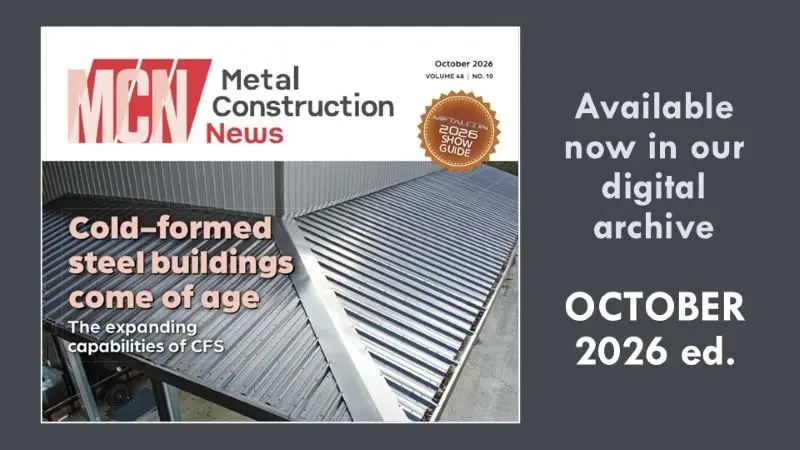
The metal construction and engineering sectors stand at a critical technological and operational crossroads. As urban centers densify, climate extremes intensify, and labor markets demand unprecedented precision, the industry is forced to evolve rapidly. Capturing this transformative moment, Metal Construction News (MCN) has officially released its highly anticipated October 2026 edition.
Packed with deep-dive technical features, critical operational strategies, and the comprehensive official guide to METALCON 2026, the latest issue addresses the most pressing challenges and groundbreaking advancements shaping the built environment today. From the maturation of cold-formed steel engineering to advanced thermal envelope diagnostics and modern workforce management, this month’s edition serves as an indispensable playbook for contractors, architects, engineers, and facility managers alike.
Main Facts: What Defines the October 2026 Edition
The October 2026 issue of Metal Construction News is anchored by six major editorial pillars, each dissecting a vital trend impacting modern metal construction:
- The Maturation of Cold-Formed Steel (CFS): Long valued for its lightweight and cost-effective properties, CFS has broken through traditional engineering boundaries. Modern design software, automated prefabrication, and advanced metallurgy are allowing CFS systems to take on multi-story, heavy-load structural applications previously dominated by traditional framing materials.
- The Definitive METALCON 2026 Show Guide: Serving as the ultimate companion for North America’s premier annual metal construction event, the guide maps out expansive exhibition floors, specialized educational masterclasses, and keynote sessions addressing the industry’s future.
- Redefining Ice Damming as a Thermal Failure: Shifting the narrative away from simple seasonal nuisances, MCN highlights how ice damming in large-scale metal distribution centers is symptomatic of deeper building envelope failures, risking catastrophic structural degradation.
- Labor Tracking Complexities in Multisite Operations: With project portfolios increasingly scattered geographically, the industry faces severe profit leakage driven by antiquated manual timekeeping, uncompensated travel hours, and blurred cost codes.
- The Safety Equipment Evolution: A widening chasm has emerged between baseline OSHA compliance and cutting-edge personal protective equipment (PPE) designed with integrated ergonomics, IoT tracking, and superior impact absorption.
- Hurricane Resilience via AMCA 550 Louvers: As coastal climate threats escalate, architectural specifications along the Atlantic and Gulf corridors must adapt, making AMCA 550-certified louvers a non-negotiable standard for wind-driven rain defense.
Chronology of Industry Shifts Leading to October 2026
To understand the weight of the topics featured in this month’s MCN issue, one must examine the trajectory of the metal construction sector over the preceding years:
- 2023–2024 (The Post-Pandemic Pivot): The industry grappled with severe supply chain volatility for raw steel and aluminum, forcing contractors to lean heavily on localized fabrication and prefabricated systems like cold-formed steel to maintain project schedules.
- 2025 (The Digital and Climate Reckoning): Extreme weather events across North America exposed vulnerabilities in commercial building envelopes, particularly in massive logistics hubs and coastal facilities. Simultaneously, labor shortages forced companies to adopt digital tracking tools to protect shrinking profit margins.
- Late 2025 to Mid-2026 (Regulatory and Technological Convergence): Building codes tightened regarding wind-driven rain and energy efficiency. Safety regulators and manufacturers pushed past minimum compliance, introducing smart wearables and advanced safety gear.
- October 2026 (The Current Horizon): MCN’s October release consolidates these lessons, arriving just in time to prepare the industry for the annual METALCON gathering and setting the tone for construction standards heading into 2027.
Supporting Data and Technical Breakdown
1. Cold-Formed Steel Come of Age
The structural capacity of cold-formed steel has undergone a paradigm shift. Historically limited to non-load-bearing interior partitions and light-gauge residential framing, CFS is now utilized in mid-rise commercial construction scaling up to 10 stories. Enhanced yield strengths (frequently exceeding 50 ksi) combined with panelized off-site prefabrication have reduced on-site framing labor hours by up to 35%, according to industry data cited within the MCN feature.
2. The Hidden Economics of Multisite Labor Tracking
Labor typically accounts for 40% to 50% of a commercial construction project’s direct costs. However, MCN’s operational analysis reveals that companies operating across multiple concurrent job sites lose an estimated 4% to 7% of gross labor margins annually to inaccurate travel time allocation and miscategorized task hours. In an era of razor-thin competitive bidding, these discrepancies can mean the difference between a profitable contract and a severe loss.
3. Thermal Dynamics of Large-Scale Distribution Centers
Massive distribution footprints—often exceeding one million square feet—pose unique thermodynamic challenges. Ice damming on low-slope metal roofs is rarely an isolated plumbing or drainage issue; rather, it is a direct indicator of continuous thermal bridging and exfiltration of warm interior air into the unconditioned roof cavity. MCN outlines diagnostic frameworks using infrared thermography to identify these envelope failures before structural timber or insulation components suffer irreparable moisture damage.
Official Responses and Industry Expert Perspectives
Industry leaders and association executives have praised the timely release of the October 2026 edition, noting its direct relevance to current operational hurdles.
-
On Cold-Formed Steel Innovation:
“We are no longer just replacing wood or hot-rolled steel with lighter alternatives; we are reimagining what structural framing can achieve,” notes a leading structural engineering consultant featured in the issue. “Software advancements allow us to model complex composite wall assemblies that withstand seismic and lateral loads with an efficiency previously thought impossible.” -
On Coastal Architectural Standards:
“Architects designing in hurricane zones cannot afford to view louvers and vents as mere aesthetic afterthoughts,” states a prominent coastal architecture principal. “With AMCA 550 certification becoming the benchmark, specifying tested products prevents catastrophic interior water infiltration during Category 4 and 5 events, safeguarding millions of dollars in mission-critical equipment.” -
On the METALCON 2026 Outlook:
“METALCON continues to serve as the beating heart of our industry,” remarked an event organizer previewing the show guide. “This year’s educational tracks directly address the workforce and technological shifts documented in MCN’s pages, ensuring attendees leave with actionable strategies rather than just theoretical concepts.”
Implications for the Future of Metal Construction
The insights compiled in Metal Construction News for October 2026 carry profound implications for stakeholders across the building lifecycle:
For General Contractors and Subcontractors
The margin for error in estimating and project management is shrinking. Companies that fail to modernize their labor tracking systems will find themselves outbid by competitors utilizing real-time, GPS-enabled field software. Furthermore, adopting advanced safety equipment that transcends basic OSHA minimums will be vital for retaining top-tier talent in a competitive labor market.
For Architects and Specifiers
Specification writing is becoming increasingly rigorous. Whether selecting envelope insulation to prevent thermal bridging and ice damming or ensuring compliance with AMCA 550 standards for coastal louvers, liability demands that design professionals stay ahead of regional climate realities and evolving building codes.
For Facility Owners and Developers
Long-term asset management depends heavily on initial construction choices. Investing in robust, engineered cold-formed steel structures and properly specified thermal envelopes drastically reduces lifecycle maintenance costs, lowering operational expenditures over a building’s multi-decade lifespan.
Conclusion
Metal Construction News has once again proven its value as an essential industry compass. By tackling complex structural evolution, thermal building science, operational logistics, and safety compliance head-on, the October 2026 edition equips industry professionals with the knowledge required to build smarter, safer, and more profitably.
Industry professionals can access the complete October 2026 edition online, alongside a wealth of historical resources, through the official Metal Construction News Digital Edition Archive. As the sector converges for METALCON 2026, the insights contained within this month’s issue will undoubtedly serve as a foundational roadmap for the future of metal construction.
