

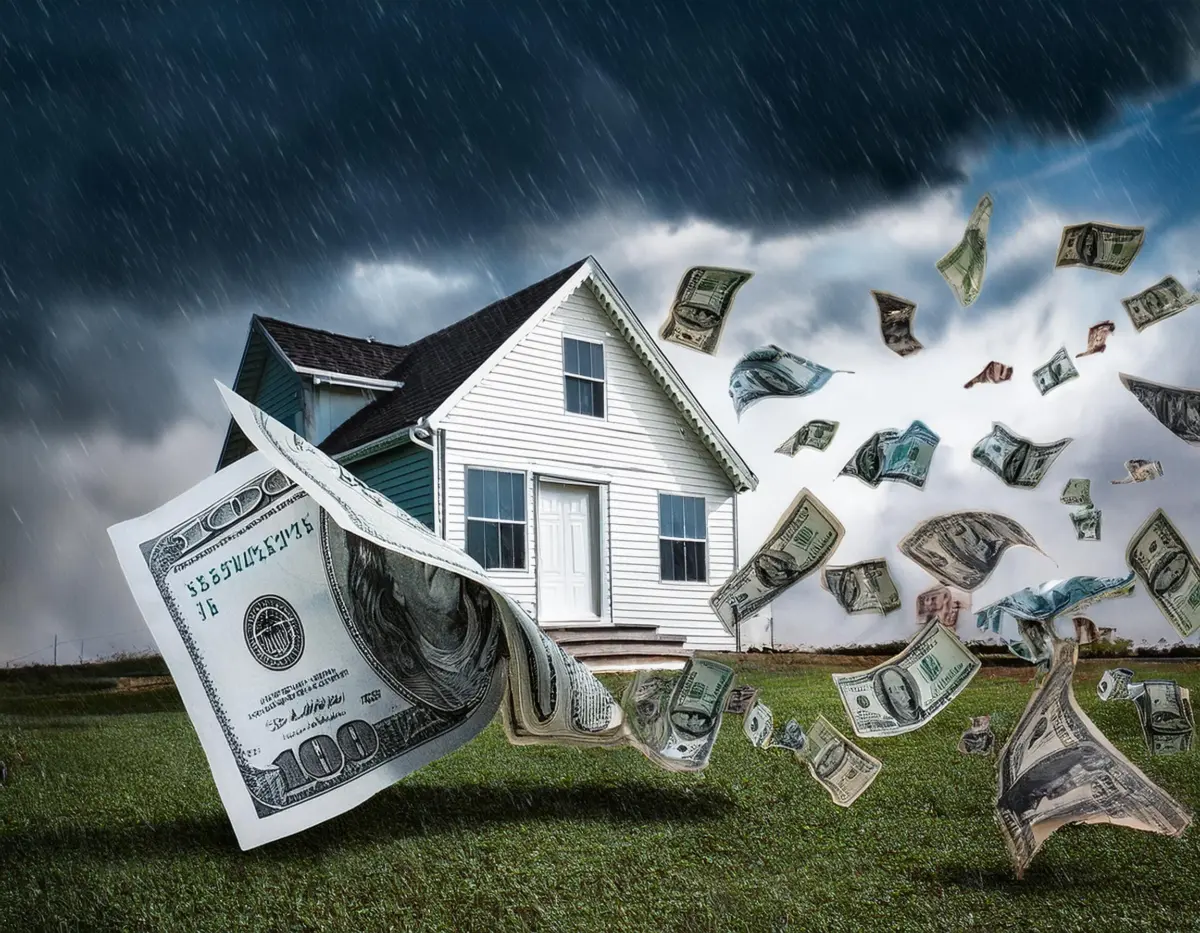
WASHINGTON — As extreme weather events continue to escalate in frequency and severity across the United States, a new nationwide study has laid bare a sobering reality for property owners: the financial safety net protecting American homes is fraying at the seams.
According to the third annual Extreme Weather Report released by tech-native insurance group Hippo Holdings, a staggering 50% of U.S. homeowners have paid out of pocket for weather-related property damage over the past three years. Meanwhile, nearly 80% of respondents admit they feel financially unprepared to handle an unexpected climate-driven repair, lacking either the necessary liquid savings or the DIY capability to mend their homes.
The report, which surveyed 1,047 homeowners across the country, paints a vivid picture of a populace increasingly vulnerable to the elements not just physically, but economically. From debilitating household debt to widespread confusion surrounding insurance policies, the findings suggest that the fallout from severe storms extends far beyond cracked foundations, ruined roofs, and flooded basements—it threatens the long-term financial stability of American families.
Main Facts: The Scope of the Crisis
The data compiled by Hippo Holdings underscores an escalating crisis at the intersection of climate change and personal finance. Nearly 60% of all survey respondents reported experiencing some form of weather-related home damage over the last three years. Of those who sustained damage, half were forced to absorb the financial blow entirely out of pocket.
The expenses involved are far from trivial. The survey revealed that 21% of affected homeowners shelled out $2,000 or more for repairs, while 9% faced bills exceeding $5,000. For households living paycheck to paycheck, these unexpected outlays can be catastrophic.
Compounding the immediate financial shock is the lingering debt left in the wake of severe weather. Nearly 25% of homeowners who paid out of pocket are still carrying debt from their repairs. Perhaps most alarming is the longevity of this financial burden: among those currently in debt due to weather damage, 71% have been carrying that balance for at least two years.
Beyond direct repair costs, the ripple effects of property damage touch nearly every corner of household financial health. The report notes that 16% of homeowners who experienced damage were forced to delay contributions to their emergency savings or retirement accounts to cover the expenses.
Furthermore, a persistent communication gap between insurers and policyholders continues to exacerbate the crisis. Thirty-nine percent of homeowners have mistakenly assumed that certain types of weather damage were covered by their standard policies, and 19% of all respondents ultimately had to pay out of pocket as a direct result of this misunderstanding. Compounding this uncertainty, more than half of homeowners (55%) cannot recall their current deductible, leaving them profoundly exposed to unpredictable financial liabilities when disaster strikes.
Chronology: How the Vulnerability Gap Widened
To understand how American homeowners arrived at this precarious juncture, it is helpful to examine the historical and recent progression of the property insurance and extreme weather landscape over the past decade.
Phase One: The Escalation of Extreme Weather (2014–2020)
Over the last ten years, the frequency of billion-dollar weather and climate disasters in the U.S. has accelerated dramatically. Driven by shifting atmospheric patterns, rising ocean temperatures, and prolonged droughts, events that once occurred on a generational scale—such as historic freezes, severe convective storms, and catastrophic wildfires—became regular occurrences. During this period, homeowners grew accustomed to filing claims, while traditional insurers began absorbing unprecedented underwriting losses.
Phase Two: The Hardening Market and Rising Costs (2021–2023)
As weather-related payouts surged, insurance carriers across the nation began raising premiums, tightening underwriting guidelines, and narrowing coverage definitions. It was against this backdrop that Hippo Holdings launched its Extreme Weather Report series three years ago. By tracking consumer sentiment year-over-year, the insurance group began documenting a widening preparedness gap. Homeowners were hit with a dual punch: escalating replacement costs due to inflation in the building materials sector, coupled with higher deductibles and more stringent insurer requirements.
Phase Three: The Present Affordability and Preparedness Crunch (2024–2026)
In the current landscape, cost has officially cemented itself as the primary barrier to home hardening. For the second consecutive year, financial constraints are cited as the single largest impediment to investing in protective home upgrades. In 2026, 39% of homeowners identify affordability as the top reason they cannot fortify their properties against incoming storms. As out-of-pocket costs mount, a significant portion of the American populace finds itself trapped in a reactive cycle: unable to afford preventive upgrades, vulnerable to frequent storms, and perpetually unequipped to pay for repairs without sliding into long-term debt.
Supporting Data: By the Numbers
A closer examination of the data reveals deep structural vulnerabilities in how Americans approach property risk management and disaster preparedness.
- 50%: The percentage of U.S. homeowners who paid out of pocket for weather damage over the last three years.
- 78%: The proportion of homeowners who feel financially unprepared for an unexpected weather repair (lacking savings or DIY skills).
- 22%: The share of homeowners who feel very financially prepared for a sudden weather-related repair.
- 25%: The percentage of out-of-pocket payers who are still carrying debt from their weather repairs.
- 71%: The portion of debt-carrying homeowners who have held that balance for at least two years.
- 21% vs. 9%: The percentage of homeowners who paid $2,000+ and $5,000+, respectively, for weather-related repairs.
- 39%: Homeowners who mistakenly believed specific types of damage were covered by their insurance, leading 19% of all respondents to pay out of pocket.
- 55%: Homeowners who cannot recall their current deductible.
- 16%: Affected homeowners who delayed savings or retirement contributions because of weather damage.
- 39%: Homeowners who cite "cost" as the top barrier to investing in protective home upgrades in 2026.
Paradoxically, while homeowners acknowledge their vulnerability, their reliance on expert guidance remains misaligned. When asked about trusted sources for weather and safety advice, 65% of homeowners point to local meteorologists, and 31% rely on friends and family. In stark contrast, insurance agents—professionals whose daily vocation is property risk assessment—are trusted sources for only 12% of homeowners.
This disconnect is further highlighted by lifestyle habits: while 85% of respondents actively monitor local weather alerts as a storm approaches, a meager 21% took the time to review their home insurance coverage as a preparedness step over the preceding 12 months.
Official Responses and Industry Perspectives
The findings of the report have sparked urgent conversations among insurance executives, risk analysts, and consumer advocates regarding the shared responsibility of climate resilience.
Rick McCathron, president and CEO of Hippo Holdings, emphasized that the implications of inadequate weather preparedness extend far beyond physical property damage.
"Protecting a home means protecting the financial future of the people inside it," said McCathron. "When a single weather event can push homeowners into years of debt, the damage extends far beyond the property."
McCathron pointed out that the traditional paradigm of insurance—whereby a company simply pays a claim after a disaster occurs—is no longer sufficient to safeguard communities in an era of rapid climate volatility. Instead, a proactive model is required.
"Preparedness shouldn’t start the day a storm is forecasted," McCathron continued. "Homeowners and insurers both have a role to play before severe weather hits—homeowners in taking preventive steps to protect their properties, and insurers in proactively reaching out to their customers before damage occurs."
Industry experts echo McCathron’s sentiment, noting that insurance companies must transition from passive financial backers to active risk-mitigation partners. By offering premium discounts for fortified roofs, impact-resistant windows, and advanced smart-home leak detection systems, insurers can incentivize homeowners to harden their properties against prospective losses before they materialize.
Consumer advocates, meanwhile, stress the urgent need for financial literacy campaigns focused specifically on property insurance literacy. Because more than half of all homeowners cannot recall their deductible and nearly two-fifths harbor dangerous misconceptions about their coverage limits, consumer groups argue that state regulators and insurance providers must collaborate to make policy language more transparent and accessible.
Implications: Navigating the Future of Homeownership
The trajectory outlined in Hippo’s Extreme Weather Report carries profound implications for the American housing market, the insurance sector, and household balance sheets alike.
1. The Growing Affordability Crisis in Housing
As climate risks become more pronounced, the cost of homeownership is rising disproportionately to general inflation. When homeowners are forced to drain their retirement accounts or carry multi-year credit card debt to repair storm-damaged roofs, the fundamental affordability of owning a home is eroded. In high-risk flood, wildfire, and hurricane zones, this dynamic threatens to depress property values and price out working-class families entirely.
2. The Imperative of Proactive Home Hardening
The report makes it abundantly clear that reactive spending is a losing battle. Fixing damage after it occurs costs significantly more in the long run than investing in preventive infrastructure upfront. However, because 39% of homeowners cite cost as a prohibitive barrier to home upgrades, public-private solutions are urgently needed. Government grants, low-interest green loans for home hardening, and insurance-backed incentive programs could bridge the affordability gap, enabling vulnerable households to retrofit their properties.
3. Reinventing the Insurer-Policyholder Relationship
For insurance companies, the low trust rating among consumers (at just 12%) represents both a challenge and an opportunity. To regain consumer confidence, insurers must reinvent their engagement strategies. Rather than interacting with policyholders only at annual renewal time or immediately following a catastrophe, tech-forward insurers are beginning to leverage IoT (Internet of Things) devices, real-time weather analytics, and educational outreach to help customers safeguard their homes year-round.
Conclusion
Ultimately, the data from the 2026 Extreme Weather Report serves as a clarion call. With nearly 80% of U.S. homeowners financially unprepared for severe weather and millions sliding into prolonged debt, the status quo is untenable. Mitigating the financial fallout of climate extremes will require a concerted, cooperative effort—one where homeowners take proactive steps to fortify their dwellings, and the insurance industry steps forward as an active, trusted partner in long-term community resilience.
