

Main Facts: The Scope of Assembly Bill 1346
On January 1, 2024, California embarked on one of its most ambitious environmental regulatory shifts to date. Under Assembly Bill 1346 (AB 1346), signed into law in late 2021, the state officially banned the sale of new gas-powered equipment utilizing Small Off-Road Engines (SORE) rated under 25 gross horsepower (19 kilowatts).
While public discourse and media headlines focused almost exclusively on residential lawn and garden tools—specifically leaf blowers and lawnmowers—the regulatory net cast by the California Air Resources Board (CARB) is significantly wider. The definition of SORE includes any spark-ignition engine operating at or below 25 horsepower. Consequently, the ban has swept up a vast array of critical industrial, construction, and roofing machinery, including:
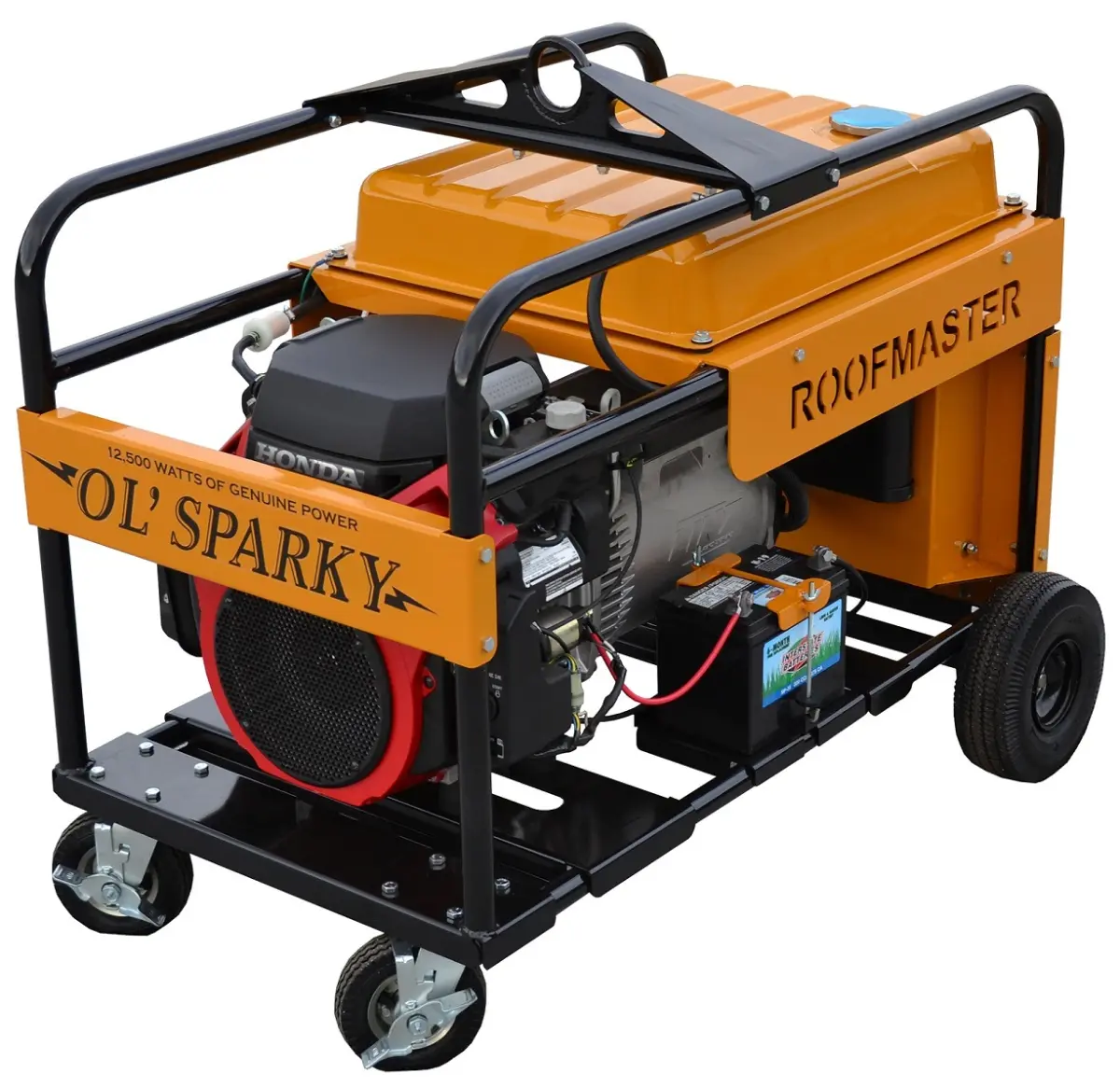
- Portable generators
- Material-handling hoists and pumps
- Roof tear-off machines
- Asphalt and adhesive application equipment
- Chainsaws and concrete saws
- Weed trimmers and commercial utility carts
Affected SORE Equipment (< 25 HP)
├── Landscaping (Lawnmowers, Leaf Blowers, Trimmers)
├── Forestry & Clearing (Chainsaws, Brush Cutters)
└── Construction & Roofing (Generators, Tear-off Machines, Pumps, Material Hoists)
The legislation does not criminalize the use of existing, gas-powered SORE equipment currently owned by contractors, landscapers, or homeowners. However, it completely halts the sale of new gas-powered units within state lines once pre-2024 engine inventories are depleted.
For the construction and roofing sectors, this regulatory shift presents an immediate operational challenge. Heavy-duty applications, such as hot-air welding of thermoplastic membranes, require high, uninterrupted electrical output that battery-powered alternatives cannot yet reliably deliver. As manufacturers exhaust their stockpiles of grandfathered, pre-2024-compliant engines, contractors face a rapidly closing window to purchase traditional gas-powered equipment.
Chronology of the Regulation
The transition from fossil-fuel-reliant job sites to an electrified future has been years in the making. The timeline below highlights the critical milestones of this regulatory shift:
October 2021: Legislative Passage
Governor Gavin Newsom signed AB 1346 into law after it successfully passed the California State Legislature. Authored by Assemblymember Marc Berman (D-Menlo Park), the bill directed CARB to write and implement regulations to phase out the sale of SORE by 2024, or as soon as CARB deemed technologically feasible.
December 2021: CARB Rulemaking
Following the legislative mandate, CARB formally adopted amendments to its SORE regulations. The board established the January 1, 2024 deadline for the elimination of new gas-powered SORE sales for most applications. Recognizing supply chain and technological constraints, CARB allowed a slightly extended timeline for certain specialized categories, such as portable generators, which must transition to zero-emission standards by 2028.
2022–2023: The Transition and Grace Period
During this phase, manufacturers and distributors raced to adjust their inventories. CARB rules allowed for the continued sale of equipment built with engines manufactured before the January 1, 2024 cutoff date. This created a strategic buffer, allowing distributors to sell "certified" pre-2024 engine stock until supplies were entirely exhausted.
January 1, 2024: The Ban Takes Effect
The sales ban officially commenced. From this date forward, any new SORE equipment manufactured must be zero-emission (primarily electric or battery-powered) to be legally sold in California. Retailers and distributors were prohibited from ordering new shipments of gas-powered SORE machinery under 25 horsepower unless they utilized leftover, pre-certified 2023 engines.
Present and Beyond: Inventory Exhaustion
The industry has entered a critical phase. Grandfathered 2023 inventories are dwindling. Industry experts predict that by late 2024 or early 2025, the supply of new, legal gas-powered SORE machinery in California will be entirely depleted, forcing a mandatory pivot to electric and battery-powered alternatives.
Supporting Data and Technical Realities
To understand the urgency behind AB 1346, it is necessary to examine the environmental data compiled by CARB, contrasted against the technical energy demands of industrial job sites.
The Environmental Impetus
According to CARB data, small off-road engines are disproportionately high polluters compared to modern passenger vehicles. Because SORE systems historically lacked the advanced catalytic converters and emissions-control systems found in cars, their exhaust contains high concentrations of reactive organic gases (ROG) and nitrogen oxides ($NO_x$), which contribute to smog.
Smog-Forming Emissions Comparison (One Hour of Operation)
┌──────────────────────────────────────────────────────────┐
│ Commercial Leaf Blower: 1,100 Miles in a Standard Car    │ ████████████████████
├──────────────────────────────────────────────────────────┤
│ Moderate-use SORE: ~300-500 Miles in a Standard Car     │ ████████
└──────────────────────────────────────────────────────────┘
CARB’s air quality modeling indicated that:
- Operating a commercial lawn mower for one hour emits the same volume of $NO_x$ and ROG as driving a 2017 Toyota Camry approximately 300 miles.
- Operating a commercial leaf blower for just one hour produces emissions equivalent to driving that same passenger vehicle 1,100 miles—roughly the distance from Los Angeles, California, to Denver, Colorado.
- By 2020, cumulative emissions from SORE in California exceeded the emissions produced by all of the state’s 22 million light-duty passenger cars combined.
The Industrial Energy Gap
While these statistics present a clear environmental case for regulating consumer lawn equipment, industrial contractors argue that the physical laws of energy density present a major obstacle for construction applications.
| Metric | Gasoline Fuel | Lithium-Ion Battery (Current Tech) |
|---|---|---|
| Energy Density | ~12,000 Wh/kg | ~250 Wh/kg |
| Power Delivery | Continuous, high-torque | Variable, degrades with charge level |
| Refuel/Recharge Time | 2–5 minutes | 1–4 hours (dependent on power source) |
| Performance in Cold/Heat | Highly resilient | Susceptible to thermal degradation |
In roofing, particularly commercial low-slope roofing, single-ply membranes (such as TPO and PVC) are fused together using automatic hot-air welders. These welders require a continuous, clean draw of electricity—often requiring 230-volt, three-phase power at 30 to 40 amps.
On a standard job site without grid access, this power is supplied by portable, gas-powered generators. To replicate this continuous power output using current battery technology, a contractor would need a battery system weighing several hundred pounds. This introduces significant structural load-bearing concerns for roof decks and poses severe safety risks for crew members tasked with transporting the equipment.
Official Responses and Industry Perspectives
The implementation of AB 1346 has drawn sharp contrasts in feedback from state regulators, environmental advocates, and trade associations.
The Regulator’s Position: California Air Resources Board (CARB)
CARB maintains that the transition is both technologically feasible and vital for public health, particularly for operators who suffer direct exposure to engine exhaust. To ease the transition, CARB launched the Clean Off-Road Equipment Voucher Incentive Project (CORE), allocating tens of millions of dollars to subsidize the purchase of zero-emission professional landscaping and construction equipment.
"We are committed to cleaning up our air and protecting public health, especially in communities heavily impacted by localized pollution," a CARB representative noted during public hearings. "The technology for zero-emission equipment is advancing rapidly, and these regulations provide the market signal necessary to accelerate that innovation."
The Industry’s Critique: Roofing and Construction Associations
Trade groups, such as the Western States Roofing Contractors Association (WSRCA) and the National Roofing Contractors Association (NRCA), have expressed frustration over what they characterize as a lack of practical understanding of commercial construction environments.
While these associations support emissions-reduction goals, they argue that the state’s definition of SORE was too broad, failing to distinguish between a homeowner’s backyard leaf blower and a commercial contractor’s critical power infrastructure.
In an industry advisory, the WSRCA highlighted the operational disconnect:
"While screw guns and reciprocating saws have successfully transitioned to battery power, high-draw equipment like hot-air welders, heavy-duty material pumps, and vacuum systems cannot run on standard commercial batteries. The market lacks viable, portable, and affordable zero-emission alternatives for these heavy-duty applications. Forcing this transition before the technology matures risks delaying vital infrastructure projects and driving up construction costs across the state."
Long-Term Implications for the Market
As California navigates this regulatory transition, the SORE ban is poised to trigger several long-term economic and operational shifts.
Long-Term Market Effects of the SORE Ban
├── Short-Term: Panic buying & depletion of 2023 compliant stock
├── Mid-Term: Supply chain arbitrage (out-of-state purchasing risks)
└── Long-Term: Increased project overhead & forced battery innovation
1. The Secondary Market and Cross-Border Sourcing
As legal, new gas-powered SORE equipment disappears from California retail shelves, contractors are increasingly looking beyond state borders. Purchasing compliant equipment in neighboring states like Nevada, Arizona, or Oregon and transporting it into California has become a common strategy.
However, this practice carries regulatory risks. CARB maintains strict enforcement mechanisms and can levy heavy fines against businesses operating non-compliant, newly manufactured out-of-state engines for commercial purposes. Consequently, the market value of used, pre-2024 gas-powered equipment is expected to surge, creating a robust secondary market for older machinery.
2. Rising Operational Costs and Project Delays
The transition to zero-emission equipment requires a high initial capital investment. Electric generators and large-scale battery banks are significantly more expensive than their gas-powered counterparts. Additionally, the logistical challenge of managing charging schedules on job sites without temporary utility power will likely extend project timelines. These increased overhead costs are expected to be passed down directly to commercial property owners and residential consumers.
3. Forced Technological Innovation
On a positive note, the strict regulatory environment in California historically serves as a catalyst for broader technological innovation. Manufacturers are pouring research and development dollars into high-capacity solid-state batteries, portable hydrogen fuel cell generators, and more efficient electric motors to meet the demands of the California market.
Until these advanced technologies achieve commercial viability and cost parity, however, California contractors must adapt to a challenging transitional phase. For businesses planning to update their fleets or replace aging machinery, the window of opportunity to secure traditional gas-powered SORE equipment is rapidly closing. As industry veterans suggest: the best time to invest in available stock was yesterday; the second-best time is today.
