

Main Facts
On January 1, 2024, California officially enacted a sweeping ban on the sale of new gas-powered small off-road engines (SORE) rated under 25 gross horsepower (19 kilowatts). This regulatory shift, mandated by Assembly Bill 1346 (AB 1346) which was signed into law in 2021, represents a cornerstone of the state’s aggressive strategy to achieve carbon neutrality and improve localized air quality.
While public discourse surrounding the legislation focused primarily on residential lawn care tools—such as leaf blowers and lawnmowers—the actual scope of the law is far more expansive. The mandate applies to almost all spark-ignition engines under the 25-horsepower threshold, a category that encompasses critical industrial, agricultural, and construction equipment.
Contrary to widespread industry assumptions that construction and agricultural operations would receive broad exemptions, the final regulatory framework implemented by the California Air Resources Board (CARB) provides very few carve-outs. Consequently, a vast array of essential construction and roofing machinery is now prohibited from being sold in the state if powered by new, non-compliant gas engines. This includes:
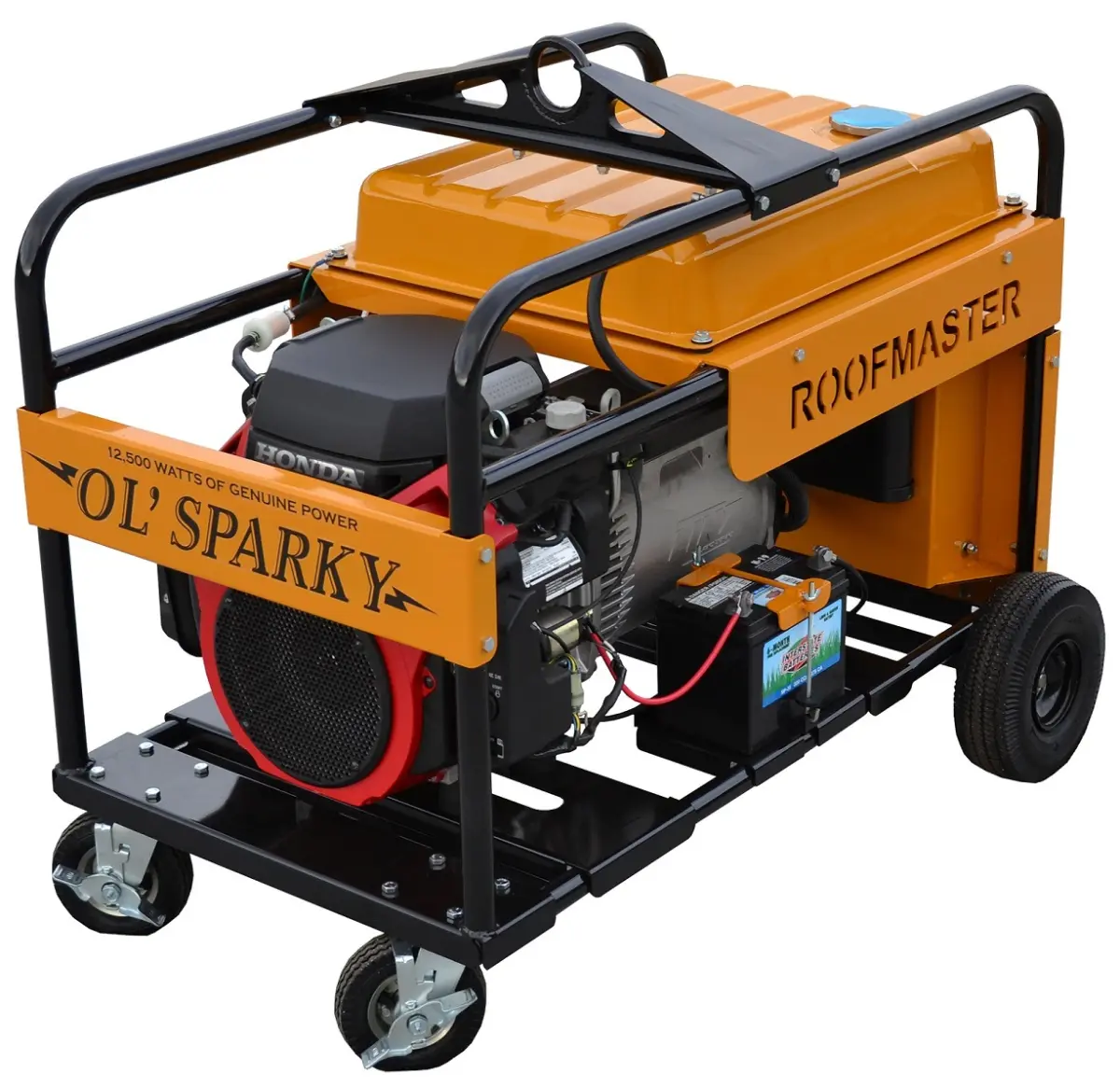
- Portable generators
- Material handling equipment and hoists
- Debris vacuum systems and tear-off machines
- High-pressure pumps and sprayers
- Concrete saws and surface preparation equipment
- Chainsaws and commercial weed trimmers
The regulation does not criminalize the use of existing gas-powered equipment already owned by contractors or homeowners. However, it completely halts the sale of new, gas-powered units. Manufacturers and distributors are permitted to sell through their remaining inventories of equipment featuring pre-2024 certified engines. Once these existing stockpiles are exhausted, buyers in California must transition to zero-emission (primarily battery-electric or corded) alternatives, or find compliant, specialized low-emission engine models, which are exceptionally rare in small-horsepower configurations.
Chronology
The pathway to the 2024 ban was paved over several years of legislative action, regulatory drafting, and intense industry lobbying. Understanding this timeline highlights how a policy aimed at residential landscaping ultimately transformed the operational landscape for heavy industries like commercial roofing.
+-------------------------------------------------------------------------+
|                               TIMELINE                                  |
+-------------------------------------------------------------------------+
|  Oct 2021: Gov. Newsom signs Assembly Bill 1346 into law.               |
|                                                                         |
|  Dec 2021: CARB adopts formal regulations setting the Jan 1, 2024 cliff.|
|                                                                         |
|  2022-2023: Manufacturers rush to produce and certify pre-2024 engines. |
|                                                                         |
|  Jan 1, 2024: Ban on manufacturing and importing non-compliant SORE.    |
|                                                                         |
|  Present: Distributors sell through remaining 2023 stock; supply drops. |
+-------------------------------------------------------------------------+
October 2021: Legislative Approval
Governor Gavin Newsom signed Assembly Bill 1346 into law. Co-authored by Assemblymember Marc Berman (D-Menlo Park) and Lorena Gonzalez (D-San Diego), the bill directed CARB to write regulations prohibiting the sale of new SORE by 2024, or as soon as CARB determined was technologically and commercially feasible.
December 2021: Regulatory Adoption
Following the passage of AB 1346, CARB officially adopted amendments to its SORE regulations. This rulemaking established the hard deadline of January 1, 2024, for the transition to zero-emission equipment for most SORE categories. It also set more stringent emissions standards for any remaining engine types not immediately subject to the zero-emission mandate.
2022–2023: Industry Mobilization and Advocacy
During this two-year window, various trade associations—representing landscapers, rental equipment companies, and specialty contractors—lobbied CARB for extensions and clearer exemptions. Builders and roofing contractors argued that heavy-duty applications lacked viable electric substitutes. While some minor modifications were made regarding specialized emergency equipment, the core of the ban remained intact. Manufacturers adjusted production lines, focusing on maximizing the output of compliant 2023-model engines to build up inventory before the deadline.
January 1, 2024: The Implementation Cliff
The ban went into effect. From this date forward, manufacturers could no longer produce or import non-compliant gas-powered engines under 25 horsepower for sale in California.
2024 and Beyond: The Inventory Exhaustion Phase
Currently, the market is in a transition phase. Distributors are legally permitted to sell their remaining stock of equipment powered by pre-2024 certified engines. However, as these inventories deplete, contractors face a market increasingly devoid of gas-powered options in the sub-25 horsepower range.
Supporting Data
The regulatory push against small off-road engines is driven by stark environmental data compiled by CARB and other atmospheric research bodies. For decades, passenger vehicles were the primary target of emissions regulations. However, while light-duty cars became progressively cleaner due to catalytic converters and advanced computer management, small off-road engines remained relatively unregulated and highly polluting.
The Emissions Disparity
According to CARB data, the emissions from operating a commercial leaf blower for just one hour are equivalent to driving a 2017 Toyota Camry approximately 1,100 miles—roughly the distance from Los Angeles to Denver.
EMISSIONS EQUIVALENCY (Smog-Forming Pollutants)
+------------------------+---------------------------------------------+
| 1 Hour of Leaf Blower  | [=========================================] |
+------------------------+---------------------------------------------+
| 2017 Toyota Camry      | 1,100 Miles Driven                          |
+------------------------+---------------------------------------------+
This disparity is primarily because small gas engines lack the sophisticated emissions control systems, such as multi-way catalytic converters and closed-loop fuel injection, found in modern automobiles.
Smog-Forming Emissions in California
By 2021, CARB estimated that SORE in California emitted more reactive organic gases (ROG) and oxides of nitrogen (NOx)—the primary precursors to ground-level ozone and smog—than all of the state’s 13.7 million light-duty passenger cars combined.
- Total SORE Population: Prior to the ban, California had an estimated 16.7 million small off-road engines in operation.
- Emissions Contribution: SORE contributed approximately 15.5 tons per day of NOx and 43.1 tons per day of ROG to California’s air basins.
Economic and Health Impact Analysis
The state’s regulatory impact analysis projected that transitioning to zero-emission equipment would prevent significant health costs. CARB estimated that the reduction in particulate matter (PM2.5) and ozone pollution resulting from the SORE ban would prevent:
- Over 900 premature deaths
- Up to 200 hospital admissions for cardiovascular and respiratory illnesses
- An estimated $8.8 billion in cumulative health-related savings between 2024 and 2043
Official Responses
The implementation of AB 1346 has drawn starkly contrasting reactions from state regulators, environmental groups, and industry stakeholders.
State Regulators and Environmental Advocates
CARB has consistently defended the regulation as a critical public health measure. In official statements, the agency emphasizes that the ban protects not only the general public but also the health of operators—such as roofers and landscapers—who stand directly over these high-emission machines for hours at a time.
To ease the transition, the state pointed to its funding programs, notably the Clean Off-Road Equipment Voucher Incentive Project (CORE). CARB representatives have argued that:
"The technology for zero-emission equipment has matured rapidly. By transitioning away from fossil-fuel-powered small engines, California is taking a necessary step toward meeting federal air quality standards and protecting vulnerable communities from localized air pollution."
Construction and Roofing Industry Responses
Industry groups, such as the Western States Roofing Contractors Association (WSRCA) and the National Roofing Contractors Association (NRCA), have expressed deep concern over the practical realities of the ban. While acknowledging the need for environmental stewardship, trade representatives argue that the state has overestimated the market readiness of heavy-duty electric alternatives.
Industry spokespeople point out that while consumer-grade lawn tools have viable battery-powered equivalents, industrial construction tools do not. A spokesperson from a major construction equipment distribution firm noted:
"We were told that construction would be largely protected. But when you look at the fine print, the exclusion of generators and heavy-duty pumps under 25 horsepower severely disrupts job site operations. The battery technology to run a continuous-use commercial roofing pump or a high-draw hot-air welder for an eight-hour shift simply does not exist in a portable, cost-effective format today."
Implications
The long-term consequences of the SORE ban are beginning to ripple through the construction and roofing sectors, altering operational logistics, equipment procurement strategies, and project economics.
The Job Site Power Dilemma
On a commercial roofing job site, access to stable, high-capacity electrical power is a logistical necessity. Many critical tasks require specialized equipment:
- Hot-Air Welders: Used for thermoplastic single-ply membranes (TPO/PVC), these machines require consistent, high-amperage, clean power. Fluctuations in voltage can lead to cold welds, compromising the integrity of the roof.
- Heavy-Duty Pumps: Used for transporting liquid adhesives, coatings, or asphalt, these pumps require continuous, high-torque output that battery-powered motors struggle to maintain over extended periods.
+-----------------------------------------------------------------------+
|                       THE POWER SUPPLY CHALLENGE                      |
+-----------------------------------------------------------------------+
|  [Grid Power] ----> Often unavailable or unrated on new job sites.    |
|                                                                       |
|  [Batteries]  ----> Insufficient for high-draw, continuous-use tools.  |
|                                                                       |
|  [Generators] ----> Under 25 HP banned; over 25 HP are heavy/costly.  |
+-----------------------------------------------------------------------+
Without portable gas-powered generators under 25 horsepower, contractors are left with limited options. They must either rely on massive, heavy generators over 25 horsepower (which are expensive to rent, transport, and fuel) or depend on early-stage job site grid connections, which are notoriously unreliable or non-existent during initial construction phases.
Operational and Logistical Bottlenecks
Battery-powered hand tools (such as screw guns and reciprocating saws) have successfully integrated into construction workflows. However, scaling this up to heavy machinery presents significant bottlenecks:
- Charging Infrastructure: Charging dozens of high-capacity industrial batteries on-site requires a dedicated power source, bringing the problem full circle.
- Weight and Portability: Industrial batteries are heavy. Transporting multiple spare batteries to a high-rise commercial roof adds physical strain to workers and increases safety risks.
- Temperature Sensitivity: Lithium-ion batteries experience reduced efficiency and lifespan when exposed to the extreme heat commonly found on rooftops during summer months.
Market Dynamics and the "Buy Now" Imperative
The immediate consequence of the ban is a rapidly closing window for purchasing gas-powered equipment. Because distributors can still sell existing inventory with pre-2024 engines, a run on these products has begun.
Contractors who anticipate needing new generators, pumps, or material handlers within the next three to five years are being advised to purchase remaining stock immediately. Once these inventories are depleted, businesses operating in California will face a stark choice: adopt unproven, expensive zero-emission equipment, or seek alternative procurement channels.
Cross-Border Procurement and Enforcement Risks
The ban on sales within California is expected to drive some contractors to purchase compliant gas equipment in neighboring states like Nevada or Arizona and transport it back to California job sites. While the use of legally purchased gas equipment remains permitted for now, CARB has strict enforcement mechanisms and can fine companies found to be importing or selling non-compliant engines within state borders. Furthermore, municipal projects and large developers are increasingly writing zero-emission equipment requirements directly into their contracts, neutralizing the utility of out-of-state gas equipment purchases.
Ultimately, California’s small engine ban is a bold regulatory experiment. While it promises significant environmental and public health benefits, it places a heavy operational burden on the construction and roofing industries, forcing a rapid, high-stakes transition toward electrification.
