

Introduction
As California enters a new regulatory era, a sweeping environmental mandate is sending shockwaves far beyond the residential lawns and gardens it was publicly advertised to reform. On January 1, 2024, the state officially enacted some of the nation’s strictest emissions regulations on Small Off-Road Engines (SORE). While initial media coverage focused almost exclusively on domestic landscaping tools like leaf blowers and lawnmowers, the actual text of the legislation has cast a much wider net.
For the state’s construction, roofing, and specialty contracting sectors, the enforcement of Assembly Bill 1346 (AB 1346) represents an unprecedented operational hurdle. Equipment vital to commercial roofing—ranging from heavy-duty tear-off machines and material pumps to the portable generators required to run high-voltage membrane welders—is disappearing from California’s retail shelves. As manufacturers deplete their pre-2024 inventories, contractors are facing a stark reality: transition to unproven or non-existent battery technologies, or find alternative ways to source the gas-powered machinery their livelihoods depend on.
Main Facts: The Scope of the SORE Ban
The Broad Definition of Small Off-Road Engines
Assembly Bill 1346, signed into law in late 2021, directed the California Air Resources Board (CARB) to adopt regulations to prohibit the sale of new engines classified as SORE by 2024. By regulatory definition, a SORE is any spark-ignition engine that produces rated power at or below 19 kilowatts—equivalent to 25 gross horsepower (hp).
[Small Off-Road Engines (SORE) Definition]
└── Rated Power: ≤ 19 kW (25 Gross Horsepower)
    └── Subject to AB 1346 Sales Ban (Effective Jan 1, 2024)
While the public face of this campaign featured residential lawnmowers, weed trimmers, and leaf blowers, the 25-horsepower threshold encompasses a massive array of commercial and industrial machinery, including:
- Chainsaws and brush cutters
- Commercial pressure washers
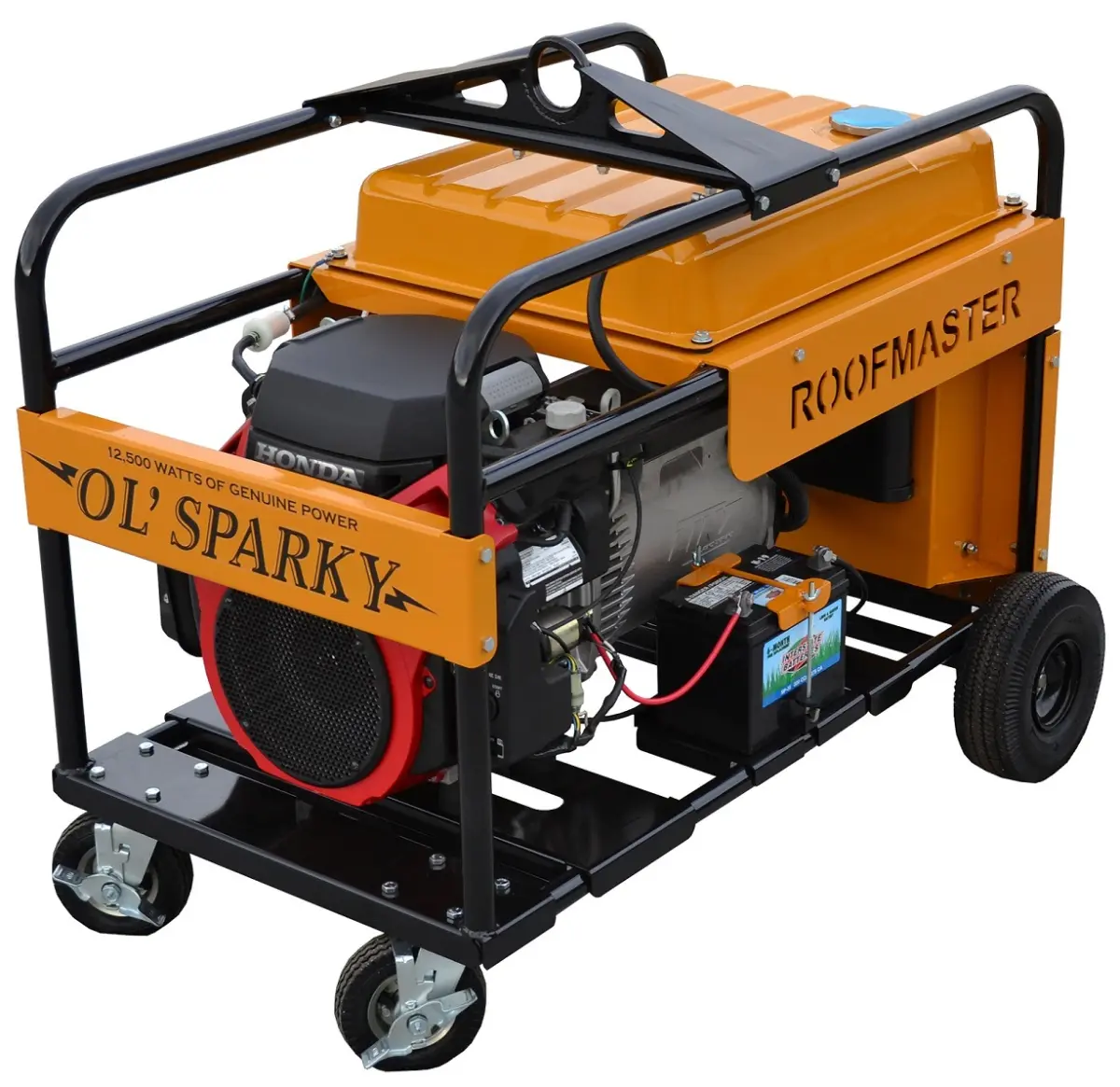
- Portable generators
- Golf carts and specialty utility vehicles
- Roofing-specific equipment (e.g., asphalt pumps, felt-layers, tear-off machines, and roof cutters)
Sale vs. Use: Understanding the Loophole
Crucially, the regulation governs the sale of new equipment within the state of California, not its use. Contractors, landscapers, and homeowners are still legally permitted to operate their existing gas-powered SORE equipment, provided it was purchased before the regulatory cutoff or complies with earlier emissions standards.
However, because mechanical equipment has a finite lifespan under rigorous jobsite conditions, this distinction offers only temporary relief. As older machinery suffers wear and tear, contractors cannot replace it with new, gas-powered equivalents inside state borders.
The Inventory Grace Period
Under CARB rules, manufacturers and distributors are permitted to sell remaining inventory of equipment built with engines certified prior to the January 1, 2024 deadline. This has created a temporary buffer zone where pre-2024 certified gas engines are still being sold. However, distributors warn that these stockpiles are dwindling rapidly. Once these legacy units are sold out, new acquisitions of gas-powered SORE equipment will be legally blocked in California.
Chronology: The Road to the 2024 Ban
The implementation of AB 1346 was the culmination of a multi-year legislative and regulatory push aimed at curbing localized air pollution and accelerating California’s transition to a zero-emissions economy.
[Timeline of SORE Ban Implementation]
2021 (Oct): Governor signs AB 1346 into law.
2021 (Dec): CARB formally adopts SORE regulations.
2022–2023: Transition period; industry raises exemptions concerns.
2024 (Jan 1): SORE sales ban officially takes effect.
Present: Depletion of 2023 legacy inventory; supply squeeze begins.- October 2021 – Legislative Passage: Governor Gavin Newsom signed AB 1346 into law. The bill, authored by Assemblymember Marc Berman (D-Menlo Park), mandated that CARB phase out the sale of new SORE by 2024, or as soon as CARB deemed technologically feasible.
- December 2021 – CARB Rulemaking: Following the legislative mandate, CARB formally adopted regulatory amendments to phase out SORE. The board established January 1, 2024, as the hard cutoff for the sale of new non-compliant engines, while allocating $30 million in state funding to subsidize battery-powered landscaping equipment for small businesses.
- 2022 to 2023 – The Quiet Transition and Industry Lobbying: During this period, construction and agricultural trade groups lobbied for clarification regarding exemptions. While heavy-duty agricultural equipment and larger diesel-powered construction machinery (above 25 hp) remained exempt under federal and state rules, smaller, specialized trade tools fell into a regulatory gray area. Industry advocates warned that battery-operated alternatives for heavy construction applications were not yet commercially viable.
- January 1, 2024 – Enactment: The sales ban officially took effect. Retailers and distributors were prohibited from importing or ordering new gas-powered SORE equipment that did not meet the zero-emission standards, beginning the countdown on remaining 2023-compliant stock.
Supporting Data: Emissions Metrics and Technological Realities
To understand why the state pursued such aggressive measures—and why the construction sector is struggling to adapt—it is necessary to examine both the environmental data used to justify the ban and the physical limitations of current battery technology.
The Environmental Justification
According to CARB data, small off-road engines are disproportionately dirty compared to modern passenger vehicles. Because SORE units historically lacked the advanced catalytic converters and emissions-control systems found in cars, their exhaust contains high concentrations of reactive organic gases (ROG) and oxides of nitrogen ($NO_x$), which contribute to smog.
CARB’s oft-cited emissions comparisons include the following metrics:
| Equipment Type | Operating Time | Equivalent Car Travel (Emissions) |
|---|---|---|
| Commercial Leaf Blower | 1 Hour | 1,100 Miles (approx. Los Angeles to Denver) |
| Residential Lawnmower | 1 Hour | 300 Miles (approx. Los Angeles to Las Vegas) |
By 2020, CARB estimated that SORE emissions in California exceeded emissions from light-duty passenger cars. With over 16.7 million small engines operating in the state—compared to roughly 13.7 million passenger vehicles—regulators identified SORE as a primary target for achieving state ozone standards.
The Technological Gap in Commercial Roofing
While a leaf blower can operate on a portable lithium-ion battery pack for 30 to 45 minutes before swap-out, industrial construction equipment operates under entirely different duty cycles.
In commercial roofing, single-ply membrane systems (such as TPO or PVC) require automatic hot-air welders to fuse seams together. These welders typically operate at temperatures between 800°F and 1,100°F and require continuous, uninterrupted electrical power.
[Power Requirements: Commercial Hot-Air Welder]
├── Required Voltage: 230V (Single-Phase or Three-Phase)
├── Wattage Draw: 4,600W – 7,000W (Continuous)
└── Battery Limitation: Standard commercial battery packs deplete in minutes under continuous thermal load.
A standard commercial hot-air welder requires:
- Voltage: 230V (often requiring stable three-phase power on large commercial sites).
- Wattage Draw: 4,600 to 7,000 watts of continuous power.
- Runtime: 8 to 10 hours per day.
To run a single welder for an eight-hour shift using battery power alone would require a battery system weighing hundreds of pounds and costing thousands of dollars. Furthermore, commercial jobsites frequently lack grid connectivity, meaning generators are the only viable source of "clean," regulated power.
Official Responses and Stakeholder Perspectives
The rollout of the SORE ban has exposed a deep divide between state regulators prioritizing environmental health and industry professionals managing jobsite logistics.
The Regulatory Position: California Air Resources Board (CARB)
CARB maintains that the transition is not only necessary for public health but is also supported by market readiness. In public statements and regulatory filings, CARB officials have emphasized that zero-emission equipment is quieter, cheaper to maintain, and eliminates direct exposure to toxic exhaust fumes for operators.
To ease the transition, CARB highlighted its Clean Off-Road Equipment Voucher Incentive Project (CORE), which provided financial incentives for professional landscapers to purchase battery-powered equipment. However, construction-specific groups note that these incentive programs were heavily tailored toward landscaping and offered little to no relief for specialized roofing or masonry tools.
The Industry Position: Contractors and Trade Associations
Industry representatives, including the Western States Roofing Contractors Association (WSRCA) and various local builder exchanges, have voiced frustration over what they characterize as a "one-size-fits-all" approach to emissions reduction.
A spokesperson for the roofing manufacturing sector, who requested anonymity, summarized the operational challenge:
"We support clean air initiatives, but the technology must exist before you ban the alternative. Asking a commercial roofing crew to run high-amp hot-air welders, material hoists, and tear-off machines on lithium-ion batteries is physically impossible with current technology. We are being forced into a corner where we cannot buy the tools we need to build housing and commercial infrastructure."
Contractors also point out safety concerns. Relying on long cords run from distant, larger generators (which are exempt because they exceed 25 hp) introduces trip hazards and voltage drops that can damage expensive welding equipment.
Implications for the Construction and Roofing Sectors
The long-term consequences of AB 1346 are beginning to surface across the supply chain, affecting purchasing behavior, jobsite safety, and even interstate commerce.
1. The Pre-2024 "Gold Rush" and Out-of-State Sourcing
With the sales ban now in effect, the market value of compliant, gas-powered SORE equipment has skyrocketed. Contractors are aggressively purchasing remaining 2023 inventory from distributors.
Furthermore, industry insiders report a growing trend of "cross-border sourcing." California-based contractors are increasingly purchasing gas-powered generators, pumps, and saws in neighboring states like Nevada, Arizona, and Oregon, and transporting them back to California jobsites. While the sale is illegal within California, operating these out-of-state units remains a regulatory gray area that is difficult for state agencies to monitor or enforce on private jobsites.
[Cross-Border Sourcing Loophole]
Contractor purchases gas SORE in NV/AZ/OR (Legal)
  └── Transports to CA jobsite
      └── Operates unit under "existing use" exemption (Difficult to police)
2. Unintended Environmental Consequences: The Diesel Generator Paradox
One of the most striking ironies of the SORE ban is its potential to increase emissions through regulatory bypass. Because generators and engines above 25 horsepower are exempt from the SORE ban, some contractors are shifting to larger, diesel-powered tow-behind generators to power their jobsites.
Instead of using a compact, efficient 5-kW gas generator (under 25 hp) to run a single piece of equipment, contractors may deploy a much larger 30-kW diesel generator (over 25 hp) to run the same tool. This practice can result in higher fuel consumption and greater overall emissions per jobsite—the exact opposite of the legislation’s intent.
3. Increased Project Costs and Safety Risks
The transition to battery power, where possible, carries significant capital costs. Lithium-ion batteries degrade over time, lose capacity in extreme heat (common on black commercial roofs), and require dedicated charging infrastructure on-site.
For projects that cannot utilize battery power, the added logistical steps of sourcing legacy equipment, maintaining aging gas fleets, or setting up complex cord networks from large tow-behind generators will inevitably drive up bid prices for public and private construction projects across California.
Strategic Recommendations for Contractors
For construction and roofing professionals operating in California, adapting to the post-AB 1346 landscape requires proactive asset management:
- Audit Existing Fleets: Document and maintain all current gas-powered SORE assets. Because these units are grandfathered in for use, preventative maintenance is critical to extending their operational life.
- Secure Legacy Inventory Immediately: Contractors planning equipment upgrades over the next 12 to 24 months should immediately contact distributors to secure any remaining pre-2024 certified gas-powered stock before inventories are exhausted.
- Invest in High-Capacity Power Stations: For jobsites where gas is no longer viable, explore heavy-duty, industrial-grade portable battery power stations (such as those utilizing Lithium Iron Phosphate, or LiFePO4, chemistry) which offer longer cycle lives and safer thermal profiles than standard lithium-ion packs.
