

The regulatory landscape in California underwent a seismic shift at the start of 2024. Under the mandate of Assembly Bill 1346, the state has officially enacted a ban on the sale of new gas-powered Small Off-Road Engines (SORE) rated under 25 gross horsepower (19 kilowatts). While public attention has primarily focused on residential lawn care tools such as leaf blowers and lawnmowers, the scope of the legislation extends far deeper into the industrial sector.
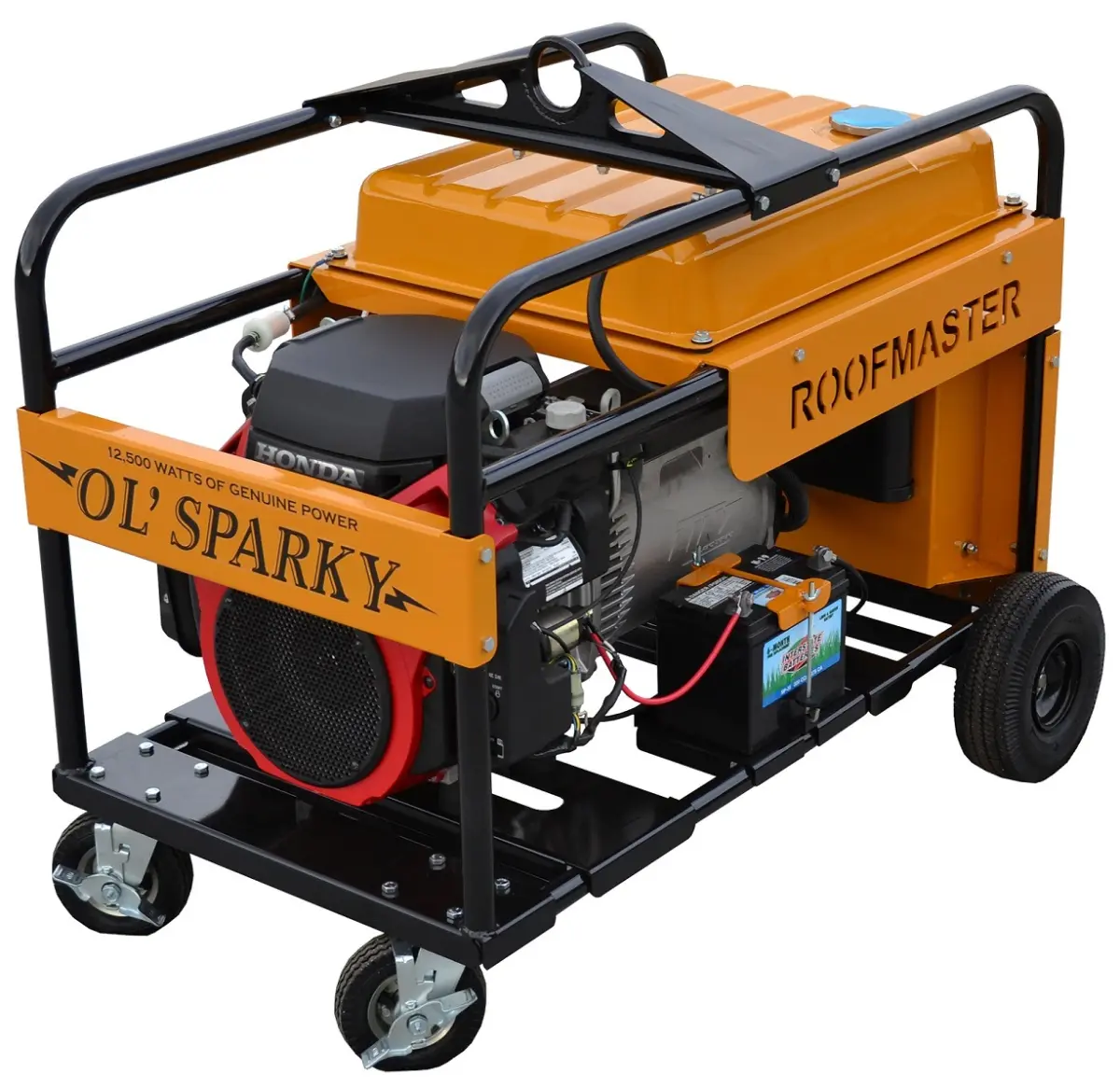
For the construction, roofing, and specialty contracting industries, the enforcement of this ban presents immediate operational hurdles. Equipment critical to daily jobsite operations—including portable generators, concrete saws, commercial pumps, material handlers, and tear-off machines—falls directly within the restricted horsepower threshold. As manufacturers exhaust their pre-2024 inventory, contractors face a rapidly closing window to acquire gas-powered machinery, sparking a industry-wide scramble to adapt to an electric and battery-powered future that many argue is technologically premature.
Main Facts: The Scope and Reality of AB 1346
Assembly Bill 1346, signed into law in October 2021, directed the California Air Resources Board (CARB) to adopt regulations to phase out the sale of SORE by 2024. The definition of a Small Off-Road Engine covers spark-ignition engines rated at or below 19 kilowatts (25 horsepower). This classification encompasses a vast array of mobile equipment used in landscaping, construction, agriculture, and recreation.
What is Banned and What is Allowed?
The regulation is strictly a sale ban on new equipment, not a use ban.
- The Sale Ban: As of January 1, 2024, manufacturers and distributors are prohibited from selling new SORE-compliant gas-powered equipment in California unless the engine was manufactured before the 2024 deadline and certified under pre-existing standards.
- The Right to Use: Contractors, landscapers, and homeowners are legally permitted to continue using their existing gas-powered SORE equipment indefinitely. There is no state-mandated confiscation or immediate ban on the operation of currently owned gas tools.
- The Inventory Loophole: Distributors and retailers are permitted to sell through their remaining stock of pre-2024 manufactured equipment. Once these existing inventories are depleted, however, no new gas-powered options under 25 horsepower will be legally available for purchase within state borders.
The Construction and Specialty Trade Blindspot
During the legislative process, industry groups were repeatedly assured that heavy-duty sectors like construction and agriculture would remain largely unaffected due to the nature of their work. However, the regulatory language targeted the engine size rather than the industry sector. Because many essential construction tools rely on engines under 25 horsepower, they were swept into the ban.
In the roofing industry specifically, the impact is pronounced. Key pieces of affected equipment include:
- Portable Generators: Used to provide clean, stable power on jobsites lacking utility hookups.
- Material Hoists and Lifts: Critical for moving heavy shingles, single-ply membranes, and hot asphalt to rooftops.
- Tear-Off Machines: Gas-powered scrapers used to remove old roofing materials.
- Centrifugal and Trash Pumps: Essential for removing standing water from flat roofs during restoration projects.
Chronology of the SORE Ban
The road to the 2024 ban was paved over several years of legislative action, regulatory hearings, and intense lobbying from environmental groups and industry coalitions.
[Oct 2021] AB 1346 Signed into Law
   │
[Dec 2021] CARB Adopts SORE Regulatory Amendments
   │
[2022-2023] Transition Period & Incentive Funding Rollout (e.g., CORE Program)
   │
[Jan 1, 2024] Official Sale Ban on New Gas-Powered SORE (<25 HP) Takes Effect
   │
[Present] Depletion of Legacy 2023 Inventory in California Retailers- October 12, 2021: Governor Gavin Newsom signs Assembly Bill 1346 into law. Co-authored by Assemblymembers Marc Berman (D-Menlo Park) and Lorena Gonzalez (D-San Diego), the bill mandates CARB to write regulations to eliminate SORE emissions by 2024, or as soon as CARB determines is technologically feasible.
- December 9, 2021: CARB officially adopts regulatory amendments to transition SORE to zero-emission equipment (ZEE). The board establishes a hard deadline of January 1, 2024, for the sale ban of new SORE engines, while delaying emission standards for portable generators to 2028 to allow more time for technological development. However, many small-scale generators still fall under the immediate restrictions if they do not meet highly stringent new emission criteria.
- 2022–2023 (The Transition Phase): CARB launches the Clean Off-Road Equipment Voucher Incentive Project (CORE) and other funding mechanisms, allocating tens of millions of dollars to help small landscaping businesses purchase zero-emission equipment. Despite these efforts, specialty construction trades, such as roofing, receive virtually no targeted funding or transition assistance.
- January 1, 2024: The sale ban officially takes effect. Manufacturers stop shipping new, non-compliant gas-powered engines under 25 horsepower to California distributors.
- Present Day: The market enters the "exhaustion phase." Contractors are actively purchasing the remaining stock of 2023-certified gas-powered equipment. Once these inventories are gone, the market will transition entirely to zero-emission alternatives for new purchases.
Supporting Data: The Environmental Push vs. Technical Realities
To understand the urgency behind California’s legislative action, it is necessary to examine the environmental data compiled by CARB.
The Environmental Rationale
According to CARB, SORE are significant contributors to air pollution in California. Because these small engines historically faced much looser emissions standards than passenger vehicles, their cumulative impact on air quality is disproportionately high.
- The Vehicle Comparison: CARB data asserts that operating a commercial gas-powered leaf blower for just one hour emits the same amount of smog-forming pollution (reactive organic gases and nitrogen oxides) as driving a modern light-duty passenger car—such as a Toyota Camry—for approximately 1,100 miles (roughly the distance from Los Angeles, California, to Denver, Colorado).
- The Population Problem: In 2021, CARB estimated there were more than 16.7 million small off-road engines operating in California. This figure exceeded the total number of light-duty passenger cars registered in the state (approximately 14 million) at the time.
- Smog Contribution: CARB projected that without intervention, SORE emissions would exceed emissions from moderate-to-light-duty passenger cars in the state, severely hindering California’s ability to meet federal ambient air quality standards.
Statewide Engine Population (2021 Estimates)
┌──────────────────────────────────────────────────────────┐
│ Small Off-Road Engines (SORE): ~16.7 Million             │ ██████████████████████████████ 119%
├──────────────────────────────────────────────────────────┤
│ Passenger Vehicles:            ~14.0 Million             │ ████████████████████████─ 100%
└──────────────────────────────────────────────────────────┘
The Technological and Infrastructure Gap
While the environmental benefits of transitioning to zero-emission equipment are clear, the technical challenges for heavy-duty industrial applications remain steep. The energy density of gasoline far outpaces that of current lithium-ion battery technology, creating significant logistical issues on commercial jobsites.
| Power Metric / Feature | Gasoline Engine (typical 5kW Generator) | Equivalent Lithium-Ion Battery Bank |
|---|---|---|
| Energy Density | High (~12,000 Wh/kg) | Low (~250-300 Wh/kg) |
| Weight | ~100–150 lbs (dry) | ~300–500 lbs (to match equivalent runtime) |
| Refuel / Recharge Time | 2–5 minutes (refilling gas tank) | 4–8 hours (standard outlet charge) |
| Upfront Cost | $800 – $2,500 | $4,000 – $12,000 (with extra batteries) |
| Lifespan / Degradation | High durability; easily repaired | 500–1,500 charge cycles; expensive replacement |
Commercial roofing projects frequently require consistent, high-amperage power. For example, single-ply membrane roofing systems (such as TPO or EPDM) are seamed together using automatic hot-air welders (e.g., Leister welders). These machines require clean, uninterrupted power, often drawing 230 volts and up to 30 amps continuously.
If a generator experiences a voltage drop—a common issue with early-generation battery power stations under heavy load—the welder’s temperature drops, resulting in cold welds that can fail and cause catastrophic building leaks. Furthermore, commercial jobsites rarely have active three-phase utility power readily available on the roof, meaning contractors must rely on portable power generation.
Official Responses: Industry Pushback and Policy Defense
The implementation of AB 1346 has elicited sharply contrasting responses from state regulators, environmental groups, and trade associations representing the construction and landscaping sectors.
State Regulators and Environmental Advocates
Proponents of the ban argue that the strict timelines are necessary to force technological innovation.
CARB officials have consistently maintained that the transition to zero-emission equipment is both achievable and essential for public health, particularly for operators who are directly exposed to toxic exhaust fumes on a daily basis. In public statements, CARB emphasized that the SORE regulation "will reduce smog-forming emissions by 72 tons per day," significantly improving air quality in heavily polluted regions like the Central Valley and the South Coast Air Basin.
Assemblymember Marc Berman, the bill’s author, defended the legislation by pointing to the success of battery-powered consumer goods:
"It’s time to phase out these super-polluting gas-powered engines… Quiet, clean, and efficient zero-emission alternatives are readily available on the market today, and this law will help accelerate their adoption."
Industry Trade Associations
Conversely, trade organizations representing the contracting and roofing sectors argue that the legislation suffers from a fundamental lack of understanding regarding industrial operations.
The Western States Roofing Contractors Association (WSRCA) and the National Roofing Contractors Association (NRCA) have voiced concerns over the speed of the rollout. While acknowledging the need for environmental stewardship, they contend that the commercial market is not yet equipped with viable electric alternatives for heavy-duty applications.
An industry representative from a major roofing equipment manufacturing firm, speaking on the practical limitations of the ban, noted:
"We can easily run screw guns and reciprocating saws on battery packs. But when you are on a high-rise commercial roof, trying to run a material hoist or a high-volume trash pump to clear water after a storm, batteries simply do not have the power-to-weight ratio needed. Forcing contractors onto battery power before the technology is mature will inevitably increase project timelines and labor costs, which will be passed on to the property owners."
Implications: The Road Ahead for Contractors
The enforcement of the SORE ban is poised to trigger a series of long-term economic and operational adjustments across California’s construction and service sectors.
1. The Pre-2024 Inventory "Gold Rush"
In the immediate term, the most prominent market reaction is a surge in demand for remaining pre-2024 gas-powered equipment. Because distributors are legally allowed to sell through existing stock of engines manufactured prior to January 1, 2024, contractors are aggressively purchasing these units.
Equipment distributors report that inventory of gas-powered generators, small pumps, and specialty roofing engines is depleting rapidly. For contractors, the financial incentive to buy now is clear: acquiring a proven, durable gas-powered unit today avoids the immediate need to invest in unproven, expensive battery-powered alternatives.
2. The Out-of-State Purchasing Risk (The Gray Market)
As California’s inventory of legacy gas engines dries up, industry experts predict a rise in out-of-state purchasing. Contractors may seek to purchase gas-powered SORE equipment in neighboring states—such as Nevada, Arizona, or Oregon—and transport it back across the state line.
While this practice presents a short-term workaround for individual businesses, it carries significant legal and operational risks:
- Enforcement and Fines: CARB maintains strict enforcement mechanisms and can levy substantial fines against businesses found operating non-compliant, newly purchased out-of-state equipment for commercial purposes.
- Warranty Issues: Manufacturers may decline to honor warranties on gas-powered equipment purchased out-of-state but registered or operated primarily within California.
3. Increased Capital and Operational Costs
The transition to zero-emission equipment carries a high price tag. Battery-powered commercial tools typically require a significantly higher initial capital investment than their gas counterparts. A commercial-grade battery power station capable of running heavy-duty tools can cost three to four times as much as an equivalent gas generator.
Furthermore, contractors must factor in the logistical costs of charging infrastructure. On large-scale commercial jobsites, contractors will need to establish dedicated "charging stations" and maintain multiple backup battery packs to ensure continuous operation throughout an eight-to-ten-hour workday. The added weight of heavy battery banks also complicates transport and rigging on rooftops.
4. Acceleration of Battery Innovation
On a positive note, the regulatory pressure exerted by California is already accelerating research and development in the portable power sector. Major manufacturers are heavily investing in high-capacity lithium-iron-phosphate (LiFePO4) batteries, solid-state battery technology, and hydrogen fuel cell generators.
Over the next decade, these technologies are expected to become lighter, more efficient, and more affordable. However, until these advancements reach commercial maturity, California contractors will serve as the testing ground for an ambitious environmental experiment, balancing the demands of zero-emission mandates against the daily realities of the jobsite.
