

Main Facts
India’s ancient water architecture—spanning monumental multi-story stepwells (baolis and vavs) and hyper-local domestic underground cisterns (tankas)—is conventionally studied through the lens of archaeology, tourism, and historical preservation. However, as contemporary Indian metropolises grapple with severe water stress, extreme climate volatility, erratic monsoons, and strained municipal supply lines, urban researchers, preservationists, and municipal engineers are asking a critical operational question: Can these historic heritage assets be resurrected as functional, decentralized civic infrastructure?
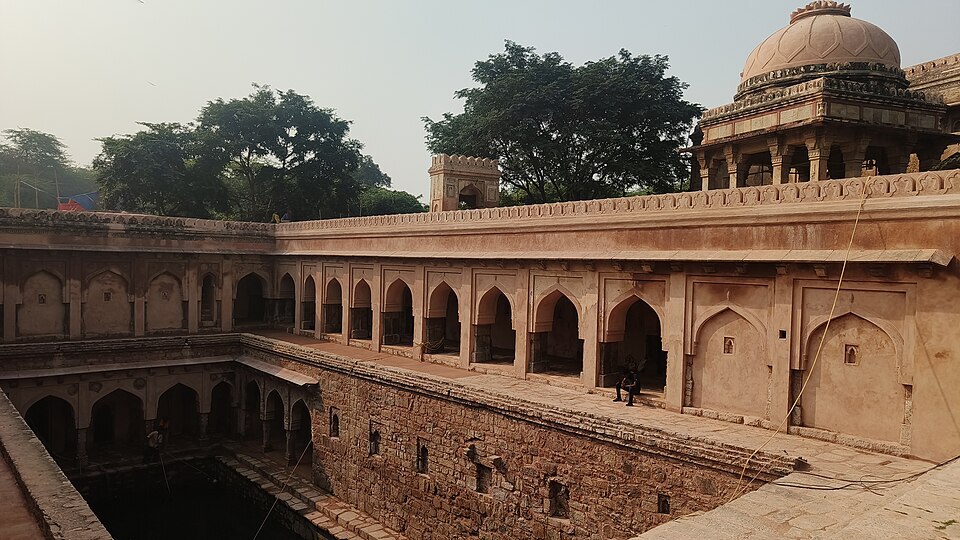
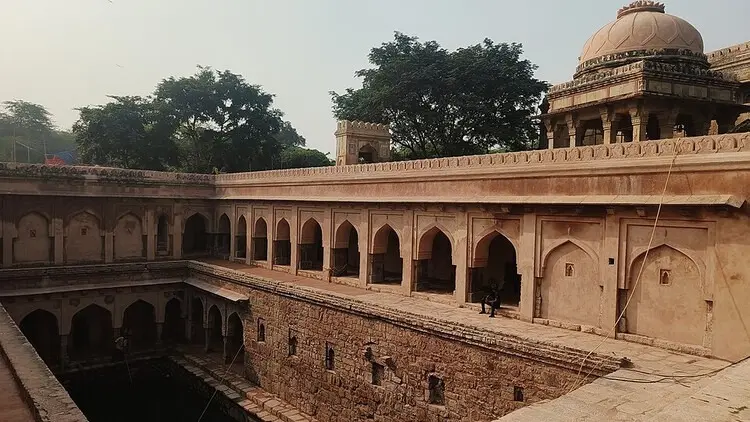
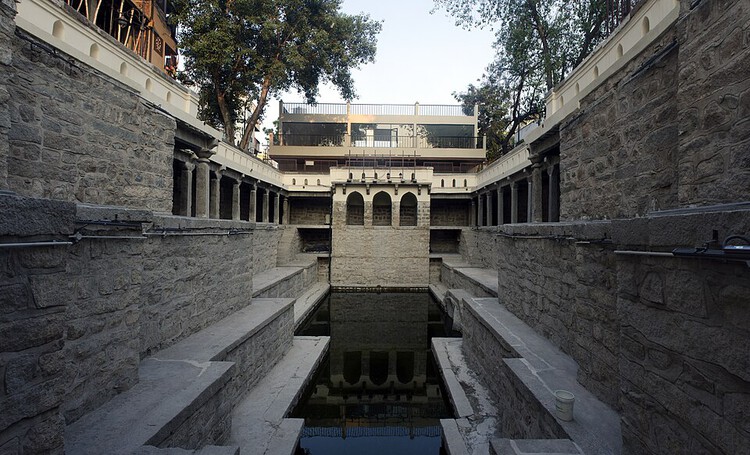
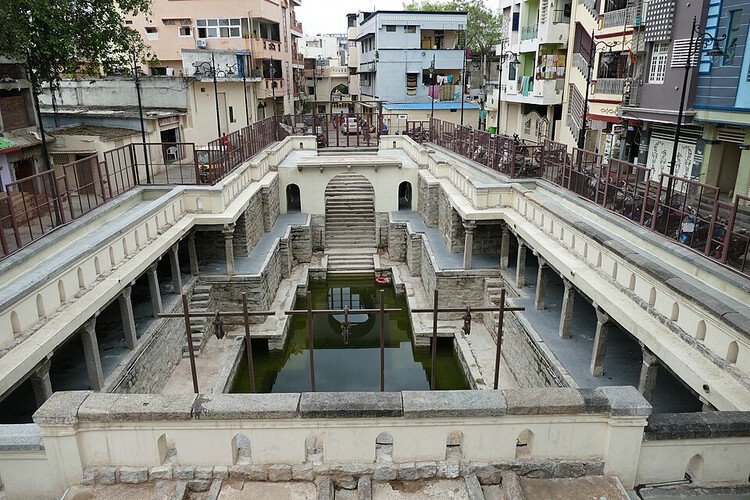
Recent academic research published in Built Heritage highlights the staggering scale of these dormant systems. In historic cities like Ahmedabad, an estimated 10,000 traditional underground tankas still exist, many quietly tucked away beneath private domestic courtyards. Similarly, major revival projects—such as the dramatic excavation and restoration of the 17th-century Bansilalpet Stepwell in Hyderabad, which yielded a holding capacity of 2.2 million liters after workers cleared 2,000 tonnes of debris—demonstrate that physical water recovery is entirely possible.
Yet, bridging the gap between a conserved heritage monument and a functioning urban utility is far from straightforward. Re-engaging these systems requires navigating a complex web of modern water-quality standards, private property rights, municipal governance gaps, and the revival of communal maintenance traditions.
Chronology of India’s Water Infrastructure Evolution
To understand how India’s water management reached its current crossroads, it is vital to trace the historical timeline of its urban hydrology:

- Pre-Modern Era (Centuries to Late 19th Century): Water management was inherently decentralized and woven into the spatial fabric of settlements. In Ahmedabad’s historic pols (dense housing clusters), over 200 community wells and thousands of courtyard-integrated tankas captured, filtered, and stored rainwater locally. Monumental stepwells served not only as vital perennial water reservoirs during dry spells but also as multi-functional public plazas, microclimate regulators, and civic temples.
- 1892: The commissioning of the Dudheshwar Water Works in Ahmedabad marked a pivotal turning point. This inaugurated India’s modern shift toward centralized, piped municipal water supplies and large-scale stormwater drainage networks.
- Mid-to-Late 20th Century: As centralized municipal systems expanded, traditional decentralized structures were rendered obsolete. Domestic tankas remained physically trapped beneath homes, transitioning from active life-support infrastructure to forgotten architectural relics. Stepwells gradually dried up, fell into disrepair, or were treated as municipal dumping grounds.
- 2004: The Ahmedabad Municipal Corporation undertook a significant milestone by formally recharging the Amritvarshini Vav, an L-shaped stepwell built in 1723, signaling early institutional interest in reactivating historical subsurface hydrology.
- 2022–2026: A wave of high-profile civic restorations—most notably the rehabilitation of the Bansilalpet Stepwell in Hyderabad—combined with landmark academic studies in journals like Built Heritage (2026), shifted the national dialogue. Researchers began empirically assessing the feasibility of integrating thousands of surviving decentralized structures back into modern urban water grids.
Supporting Data & Architectural Typologies
The functional viability of India’s historic water systems relies on distinct architectural typologies tailored to regional geologies:
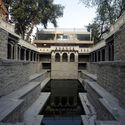
1. The Domestic Tanka Network in Ahmedabad
Ahmedabad’s historic Walled City sits atop dense clay strata, with deep groundwater tables often plunging below 40 meters. This geological reality made digging conventional wells difficult and unreliable.

- The Solution: Master builders turned the house itself into a machine for water harvesting. Roofs and courtyards acted as catchments; stone, brick, and lime-mortar channels directed the runoff underground into lime-lined tankas situated several meters below the surface. Sloping structural bases allowed silt and sediment to settle and flush out easily during annual cleanings.
- Current Data: A 2026 survey published in Built Heritage estimates that nearly 10,000 tankas remain preserved beneath domestic courtyards in Ahmedabad. Remarkably, 90 percent of surveyed local residents expressed a willingness to reintegrate tanka water into the contemporary urban loop, provided structural and governance hurdles are cleared.
2. Monumental Stepwells (Baolis and Vavs)
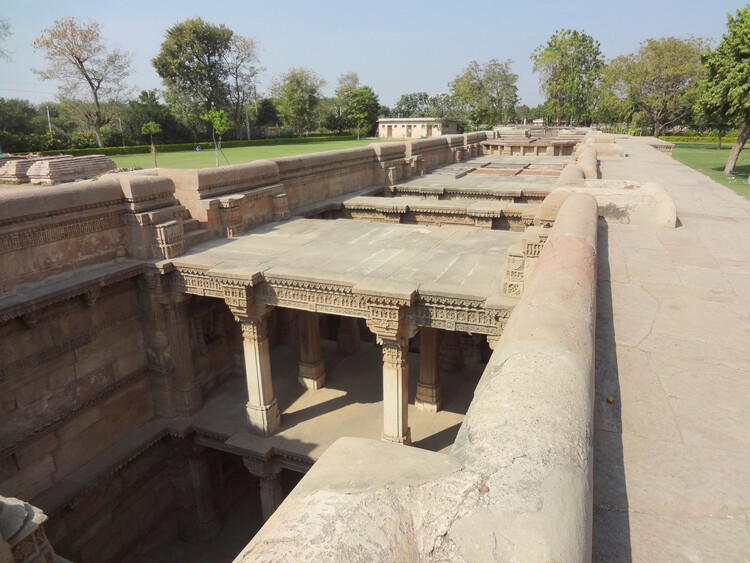
Unlike domestic cisterns, stepwells like the Rani ki Vav in Patan, Adalaj Stepwell, and Delhi’s Agrasen ki Baoli are monumental public works designed to reach deep water tables through descending colonnades of carved stone.
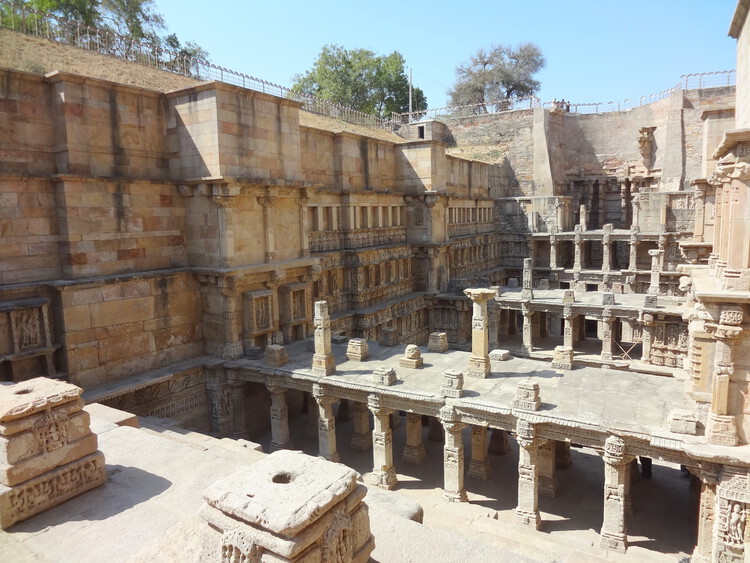
- Capacity and Yield: The Bansilalpet Stepwell in Hyderabad illustrates the massive potential of these structures. Buried under 2,000 tonnes of trash for decades, its restoration uncovered a natural freshwater source seven meters down, restoring a storage capacity of roughly 2.2 million liters. The site was successfully linked to local environmental management, briefly supplying nearby facilities such as Gandhi Hospital.
Official Responses and Governance Challenges
Despite the technical success of isolated restorations, government bodies and municipal authorities face severe systemic roadblocks when trying to scale these efforts.
According to urban researchers and municipal planning policy analysts, the primary obstacles are not purely engineering-related, but institutional:
- Governance and Ownership: Many surviving tankas and minor wells are located on private residential properties or fall into ambiguous gray zones between municipal jurisdiction and private heritage ownership. City authorities currently lack legal frameworks to regulate, inspect, or maintain infrastructure located beneath private homes.
- Water Quality and Safety: Contemporary public health standards demand rigorous purification. Historic systems like tankas and stepwells are vulnerable to biological contamination and urban runoff pollution. Without mandatory filtration systems, water from these restored assets cannot be safely consumed without industrial treatment.
- The Maintenance Deficit: Traditional water architecture succeeded because it was sustained by strict communal routines—pre-monsoon roof scrubbing, systematic desilteting, and collective neighborhood management. Modern urbanites, accustomed to turning on a municipal tap, lack the cultural frameworks and institutional incentives required to maintain decentralized systems.
To combat this, urban planners are advocating for collaborative governance models that blend municipal technical backing with neighborhood-level community stewardship.
Implications for the Future of Urban Water Resilience
The movement to transform India’s historic water systems from passive heritage relics into active infrastructure carries profound implications for the future of sustainable urbanism:
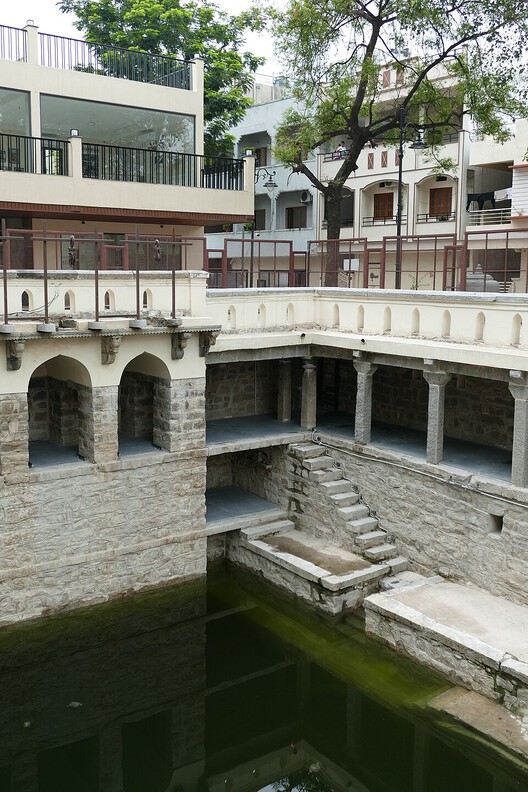
- Decentralized Urban Resilience: As climate change exacerbates urban flooding during monsoons and deepens droughts during summer, relying solely on centralized mega-infrastructure (such as distant dams and long-distance piped networks) is increasingly fragile. Integrating thousands of small-scale historic reservoirs creates a decentralized sponge city model that absorbs shock locally.
- Redefining Heritage Conservation: The discourse around historic preservation is shifting. Rather than treating monuments like static museum pieces encased in glass or ropes, architects and preservationists argue that the best way to preserve a functional piece of water architecture is to let it work. When a stepwell or tanka supplies water, it justifies its continued economic and social utility.
- Revitalizing Civic Public Space: Restored stepwells transcend mere utilitarian functions; they re-emerge as vital microclimatic oases and civic gathering spaces in overcrowded, heat-stressed urban cores. By fusing ecological infrastructure with cultural memory, India’s historic water systems offer a blueprint for how past architectural wisdom can solve the environmental crises of tomorrow.
This article is part of the ArchDaily Topic: The Architecture of Water: Territories, Tensions & Transformations.
