

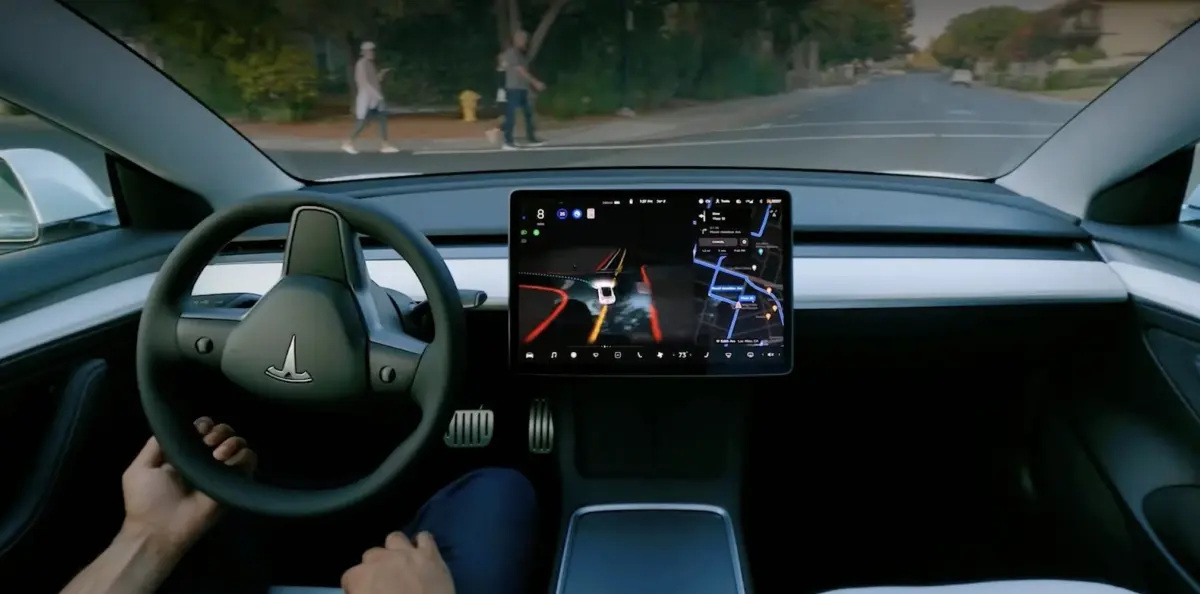
As Tesla aggressively pushes to bring its controversial "Full Self-Driving (Supervised)" software to European roadways, newly leaked internal communications reveal a high-stakes campaign marked by corporate pressure, financial disputes, and targeted grassroots mobilization. While regulatory approvals inch forward across the continent, an investigation into the behind-the-scenes machinations shows a stark disconnect between Tesla’s ambitious marketing claims and the actual rigor of its safety evaluations.
With an upcoming European Union bloc-wide vote looming as early as December, the debate over FSD transcends mere software capabilities. It has become a stress test for how European regulators handle powerful, multinational tech giants eager to bypass bureaucratic hurdles in pursuit of lucrative new markets.
Main Facts: The Battle for European Skies and Streets
At the center of the controversy is a foundational approval granted by the Netherlands Vehicle Authority, known by its Dutch acronym RDW. That single authorization has served as the launchpad for Tesla’s wider European expansion. Currently, eight EU member states permit the system, with regulators in several other countries weighing whether to follow suit.
However, the journey to approval has been anything but conventional. Hundreds of pages of internal correspondence—obtained via public-records requests by investigative journalists—paint a picture of an automaker leveraging every tool at its disposal to expedite reviews, push back against administrative fees, and counter skeptical transport ministers.
The commercial stakes for Tesla could hardly be higher. Amid a 28% decline in European sales last year, the automaker is facing intense competition from native European manufacturers and Chinese automotive giants like BYD. Because autonomous or semi-autonomous driving features represent a distinct technological frontier that competitors have been slow to match on European pavement, securing FSD approval is critical to revitalizing the company’s regional market share.
Yet, the methods used to secure these approvals have raised red flags among independent researchers, traffic-safety experts, and even some regulators who argue that speed is being prioritized over transparency.
Chronology: A Timeline of Pressure and Concessions
The mechanics of Tesla’s European push reveal a carefully calculated strategy deployed over several critical months in late 2024 and 2025:

- November 2024: Signaling extreme urgency, a Tesla representative informed the RDW that initiating vehicle tests by the end of the month was "mission critical for our leadership." The staffer explicitly noted that Tesla leadership would "measure the goodwill" of the Dutch regulator based on whether this aggressive deadline was met.
- April 2025: Tensions flared over finances. Unlike in the United States, European regulations require automakers to fully cover the administrative costs incurred by regulators during product assessments. Tesla balked at a €365,000 invoice issued by the RDW for five months of evaluation work, labeling the sum an "extremely high cost." Tesla threatened to withhold payment until it received an exhaustive, hour-by-hour accounting of every RDW employee assigned to the project. The company also pushed back against footing the bill for five RDW staffers to visit Giga Berlin.
- Late April 2025: Just a week after Tesla contested the invoice, an RDW staffer invited the automaker to suggest ways the regulatory body "might adjust or reduce the required effort moving forward." Subsequent concessions followed, smoothing Tesla’s path toward preliminary validation.
- Summer 2025: Public friction emerged when Tesla claimed the RDW had "committed" to a February 2026 approval date. The regulator pushed back publicly, issuing a correction to emphasize that "for the RDW, (road) safety is paramount." Behind closed doors, however, the administrative scaling-back continued.
- July 2025: French Transport Minister Philippe Tabarot publicly stated that France could not support FSD in its current state. CEO Elon Musk fired back on social media, warning that "delaying the approval of FSD in France will cost lives."
- September–October 2025: Following a direct video call between Musk and Tabarot, the French stance softened remarkably. Tabarot posted about a "constructive exchange" and noted that France was working closely with Tesla on changes that would enable future support. Meanwhile, the EU’s Technical Committee on Motor Vehicles (TCMV) delayed a scheduled October bloc-wide vote, pushing decisions further down the line.
Supporting Data: Examining the "Lives Saved" Narrative
A cornerstone of Tesla’s public relations and regulatory lobbying strategy is its heavy emphasis on safety statistics. Tesla shared an "evidence dashboard" with EU member states and published a European study aimed at proving the system’s life-saving potential. Musk and other company representatives have routinely framed regulatory delays as a humanitarian crisis, asserting that Europe’s daily average of 53 road deaths is largely preventable with existing technology.
However, independent traffic-safety experts who reviewed Tesla’s methodology have found significant structural flaws in the data:
- Insufficient Sample Size: The data collected for the European study relied on tens or hundreds of thousands of miles—a drop in the bucket when compared against the hundreds of millions of miles driven manually by Teslas across Europe.
- Use of "Surrogates" Over Real Crashes: Instead of measuring actual crash prevention, the study relied on proxy metrics such as hard braking, sudden cornering, blinker usage, and instances of honking.
- Professional Test Drivers: The vehicles evaluated during the study were operated by Tesla’s own professional test drivers rather than everyday consumers navigating unpredictable real-world scenarios.
- Disclaimers Within Fine Print: Tesla’s own documentation explicitly notes that the comparisons cannot be interpreted as "causal estimates."
Despite these acknowledgments, the messaging delivered to the public and to regulators has consistently blurred the line between proxy metrics and actual lives saved. Marco Benedetti, a former National Highway Traffic Safety Administration (NHTSA) statistician now affiliated with the University of Michigan Transportation Research Institute, summarized the disconnect bluntly: "When you start getting into ‘lives saved,’ that’s where it gets nonsensical."
Furthermore, the strategy mirrors tactics previously deployed in the United States, where Tesla famously compared airbag-deployment events on FSD against all federal crash data requiring a tow truck to claim a tenfold safety advantage over human drivers—a figure later revised downward.
Official Responses and Grassroots Lobbying
Tesla’s top-down corporate pressure was amplified by a bottom-up grassroots mobilization strategy. During a shareholder meeting, CEO Elon Musk openly encouraged customer advocacy, stating that "pressure from our customers in Europe to push the regulators to approve would be appreciated."
Prompted by social media accounts linked to the company, European Tesla owners flooded regulatory bodies with emails. Officials in Sweden and Norway reported receiving dozens of messages from consumers—many echoing the "lives saved" talking points—while French Minister Philippe Tabarot’s social media feeds were inundated with messages holding him personally accountable for traffic fatalities.
This digital pressure campaign did not sit well with all European officials. Stein-Helge Mundal of Norway cautioned Nordic counterparts about the administrative burden of responding to misled consumers, offering a definitive defense of regulatory independence: "We do not approve systems because they are popular, and we do not reject them because they are controversial."

For its part, the RDW maintained that its interactions with the manufacturer did not compromise its integrity. In a statement to investigators, the agency asserted that its engagement with automakers "does not compromise the independence or thoroughness of our assessment." Nevertheless, the RDW redacted substantial portions of the released email correspondence and declined to publish its own FSD test data, shielding the information behind trade secret protections. This dynamic has left critics asking a fundamental question: How can the public trust a regulatory review when the supporting data remains entirely shielded from view?
Implications: What Lies Ahead for European Autonomy
As the EU approaches a critical bloc-wide vote—projected for December at the earliest—the geopolitical landscape remains fractured. While eight smaller markets, including the Netherlands, Lithuania, Denmark, Belgium, Estonia, Slovenia, Czechia, and recently Croatia, have cleared the software for use, automotive heavyweights like Germany, Italy, and Spain have yet to sign on. Meanwhile, nations like Sweden are pushing for stringent conditions, such as mandating that Tesla disable the ability to set vehicle speeds above local legal limits.
The broader implications of this regulatory showdown extend far beyond Tesla’s balance sheet. They touch upon the integrity of automotive safety certification in an era of software-defined vehicles.
If major automakers can successfully utilize financial pushback, high-pressure executive diplomacy, and mobilized fan bases to streamline regulatory hurdles, the traditional model of independent, conservative oversight may be permanently altered. For consumers and transport authorities alike, the path forward demands uncompromising transparency: public safety data, independent academic review, and a clear separation between corporate sales targets and public safety mandates.
Until those standards are met, Europe’s regulatory gatekeepers will remain the final line of defense in balancing rapid technological innovation with public trust.
