

As California enters a new regulatory epoch, a sweeping ban on the sale of new gas-powered small off-road engines (SORE) has officially taken effect. Designed to drastically reduce smog-forming emissions, Assembly Bill 1346 (AB 1346)—originally signed into law in late 2021—prohibits retailers and distributors from selling new gas-powered lawnmowers, leaf blowers, weed trimmers, and chainsaws across the state.
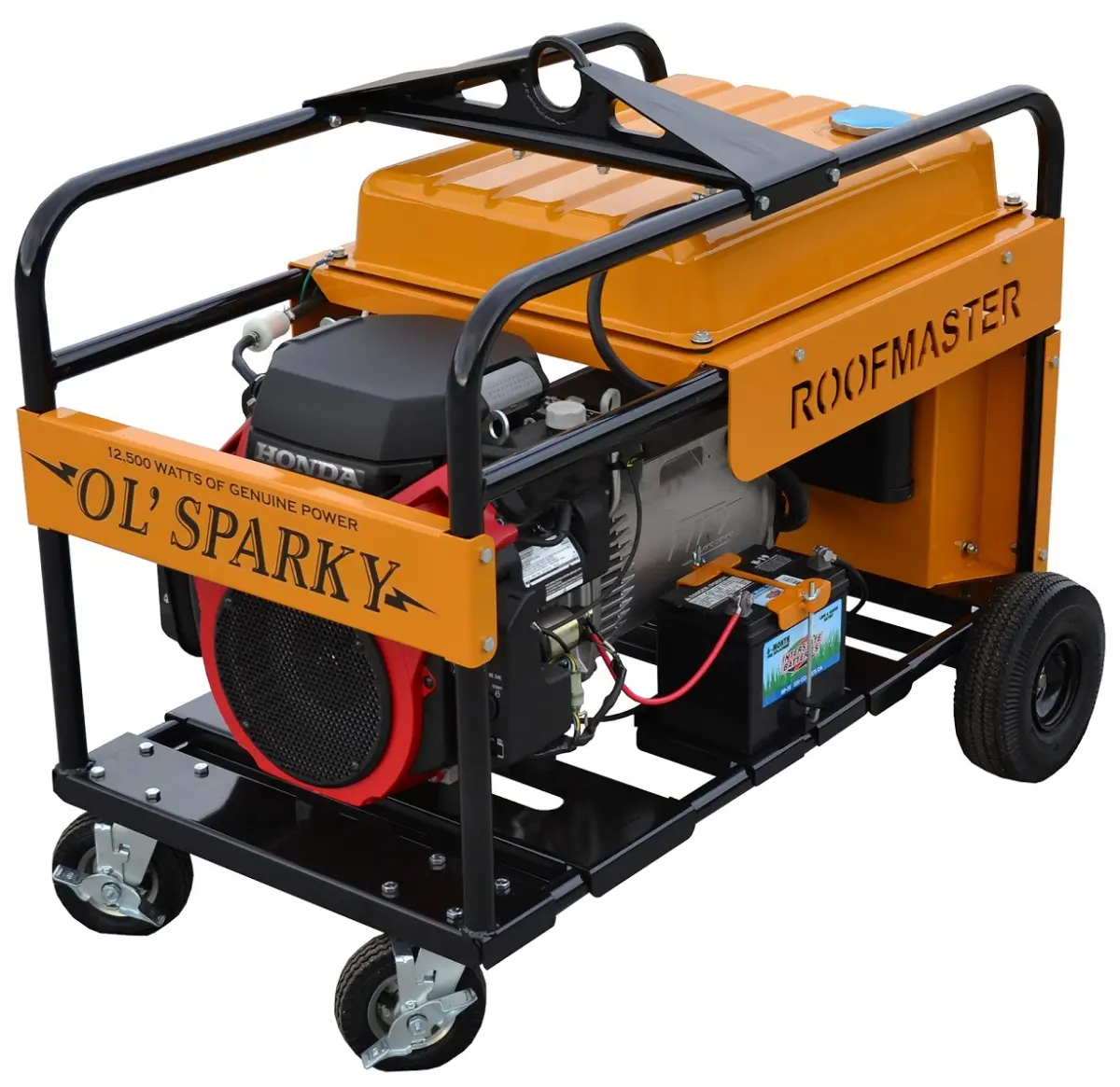
However, as the deadline passes and implementation unfolds, the reality of the mandate is proving to be far more reaching than many business owners, contractors, and residents initially anticipated. Beyond residential lawncare equipment, the regulation covers nearly all spark-ignition engines produced with rated power at or below 19 kilowatts (25 gross horsepower). This broad classification encompasses commercial landscaping machinery, golf carts, specialty vehicles, pressure washers, and a vast array of critical construction and roofing tools—including material handling pumps, tear-off equipment, and portable generators.
While existing gas-powered machinery remains legal to operate, the prohibition on new sales is pushing commercial enterprises into an operational pivot. Manufacturers and distributors are currently permitted to clear remaining inventories of legacy equipment powered by pre-2024 certified engines, but as these stocks diminish, industries across the Golden State are being forced to adapt to battery-electric power—even in sectors where zero-emission alternatives remain technologically nascent.
Main Facts: The Scope and Mechanics of AB 1346
The landmark legislation targets Small Off-Road Engines, a classification defined by the California Air Resources Board (CARB) as spark-ignition engines under 25 gross horsepower. These engines are predominantly utilized in lawn, garden, and small utility equipment, as well as light industrial tools.
What the Regulation Covers
- Landscaping and Grounds Maintenance: Lawnmowers, leaf blowers, string trimmers, brush cutters, edgers, chainsaws, and hedge trimmers.
- Commercial and Specialty Operations: Golf carts, airport tugs, pressure washers, and specialty utility vehicles.
- Construction and Specialty Trades: Portable air compressors, concrete saws, spray pumps, material handling machinery, tear-off tools, and portable power generators under 25 horsepower.
What the Regulation Does Not Do
The law does not make it illegal to own, maintain, or operate gas-powered equipment purchased prior to January 1, 2024. Contractors and homeowners may continue utilizing their existing legacy fleet for the remainder of the equipment’s natural operating lifecycle. Furthermore, specific agricultural and heavy construction equipment powered by engines exceeding 25 horsepower—or those operating on compression-ignition (diesel) frameworks—are exempted under separate regulatory standards.
The Inventory Rule
A key nuance of the rule lies in vendor inventory management. Retailers and commercial distributors are permitted to sell off their remaining stock of gas-powered tools, provided those units utilize engines certified to 2023 or earlier CARB emission standards. Once these warehouse inventories are exhausted, however, businesses will no longer be able to purchase replacement gas equipment anywhere within state boundaries.
Chronology: The Regulatory Journey of AB 1346
The path toward California’s ban on gas-powered small engines was paved through a multi-year legislative and regulatory effort aimed at achieving state carbon neutrality and meeting federal air quality standards.
       SEPTEMBER 2020                 OCTOBER 2021                DECEMBER 2021               JANUARY 1, 2024
Governor signs Executive Order    AB 1346 signed into law    CARB officially adopts SORE    Ban on new non-zero-emission
 N-79-20 targeting 100% ZEV sales    by Governor Newsom         amendments & enforcement       SORE engine sales takes
   across multiple sectors.                                              timeline.                      effect.
Timeline of Key Events
-
September 2020 — Executive Order N-79-20: Governor Gavin Newsom issued Executive Order N-79-20, establishing ambitious statewide sustainability goals. In addition to targeting 100% zero-emission passenger vehicle sales by 2035, the order directed state agencies to transition off-road equipment and operations to zero-emission technology by 2035 where feasible, with an earlier target of 2024 for small off-road engines.
-
October 2021 — Passage of Assembly Bill 1346: Authored by Assemblymembers Marc Berman (D-Menlo Park) and Lorena Gonzalez (D-San Diego), AB 1346 passed the California Legislature and was signed into law. The bill mandated that CARB adopt regulations prohibiting the sale of new SORE equipment by January 1, 2024, or as soon as technologically feasible.
-
December 2021 — Official Board Adoption: CARB formally adopted updated regulatory amendments for SORE equipment. The regulatory package set emission standards for 2024 and subsequent model years to zero, effectively mandating battery-electric or fuel-cell technology for all new SORE products sold in California.
-
2022–2023 — Transition and Incentive Allocation: State agencies rolled out financial incentive programs, such as the Clean Off-Road Equipment Voucher Incentive Project (CORE), offering millions in subsidies to help commercial landscapers and small businesses offset the higher upfront cost of battery-powered equipment.
-
January 1, 2024 — Enforcement Begins: The ban on the sale of non-zero-emission SORE models takes effect statewide. Sales of pre-2024 manufactured engine inventory remain permitted until stocks are fully depleted.
-
Future Horizons (2028 Mandates): Under CARB’s phased structure, portable generators and certain emergency equipment face stricter transitional milestones, with full zero-emission generator standards taking effect in 2028 to allow technology in high-wattage power generation time to mature.
Supporting Data: The Environmental Calculus Behind the Ban
To understand why California lawmakers prioritized small lawn and construction engines over larger industrial polluters, policymakers point to an asymmetrical relationship between engine size and total emissions output.
Unlike modern passenger vehicles, which have undergone decades of stringent emissions engineering—including advanced catalytic converters, closed-loop fuel injection, and complex computer monitoring—small spark-ignition engines are historically far less regulated. As a result, small off-road engines emit disproportionate volumes of harmful pollutants.
+-----------------------------------------------------------------------------------+
|               ESTIMATED SMOG-FORMING EMISSIONS IN CALIFORNIA                      |
|                                                                                   |
|  Small Off-Road Engines (SORE)  [====================================] ~125 tons/day|
|  Light-Duty Passenger Cars      [========================] ~96 tons/day           |
+-----------------------------------------------------------------------------------+
The "LA to Las Vegas" Metric
During legislative hearings for AB 1346, air quality experts cited data showing that operating a commercial gas-powered leaf blower for just one hour produces the same quantity of smog-forming emissions—specifically reactive organic gases (ROG) and nitrogen oxides ($textNO_x$)—as driving a standard light-duty passenger car approximately 1,100 miles, or roughly the distance from Los Angeles to Denver, Colorado.
Similarly, running a standard gas lawnmower for one hour creates smog-forming emissions equivalent to driving a passenger vehicle for roughly 300 miles—the approximate distance between Los Angeles and Las Vegas.
Statewide Pollution Contributions
According to CARB statistical modeling:
- Overtaking Passenger Cars: By late 2021, total smog-forming emissions from SORE in California exceeded those produced by all light-duty passenger cars in the state. SORE equipment contributed roughly 125 tons per day of smog-forming oxides of nitrogen ($textNO_x$) and reactive organic gases (ROG), compared to approximately 96 tons per day generated by light-duty automobiles.
- Health Impacts: These emissions contribute significantly to ground-level ozone and fine particulate matter ($textPM_2.5$), factors closely linked to asthma, cardiovascular disease, respiratory illness, and premature death. Public health assessments conducted by state environmental scientists estimate that reducing SORE emissions will prevent thousands of premature deaths and reduce emergency room visits across southern California and the Central Valley over the next two decades.
Official Responses and Stakeholder Perspectives
The implementation of AB 1346 has drawn starkly contrasting reactions from regulators, environmental groups, industry representatives, and trade contractors.
+---------------------------------------------------------------------------------+
|                            STAKEHOLDER PERSPECTIVES                             |
+------------------------------------+--------------------------------------------+
| State Regulators & Advocates       | Industry & Trade Contractors               |
+------------------------------------+--------------------------------------------+
| • Drastic reduction in urban smog  | • Severe jobsite power challenges          |
| • Protects workers from exhaust    | • High upfront conversion costs            |
| • Subsidies cushion the transition | • Battery supply/recharge limitations      |
+------------------------------------+--------------------------------------------+
Regulators and Environmental Advocates
State leaders and clean-air advocates praise the rule as a vital step toward meeting health-based federal air quality mandates and fulfilling California’s broader climate goals.
State Environmental Officials: "Small engines are a massive source of air pollution in California. This standard protects public health, particularly the health of commercial groundskeepers who spend hours a day breathing uncombusted gas exhaust and toxic fumes directly at the source."
Advocates point out that battery technology has advanced significantly in recent years, offering quieter, zero-emission alternatives for urban land management that substantially reduce noise pollution alongside chemical exhaust.
Landscaping and Small Business Trade Groups
Industry representatives from the commercial landscaping sector, such as the California Landscape Contractors Association (CLCA), have expressed serious concerns regarding the financial burden placed on small and minority-owned businesses.
- Upfront Costs: While a commercial gas-powered lawnmower may cost several thousand dollars, equivalent commercial-grade battery setup—including the array of redundant batteries and high-speed multi-port chargers necessary to sustain a crew through an eight-hour shift—can cost two to three times as much.
- Incentive Sufficiency: While programs like CARB’s CORE voucher system provided financial aid, trade groups argue the funding pool was quickly exhausted and failed to fully reach smaller independent operators facing high replacement costs.
Construction and Roofing Contractors
The trade sector facing perhaps the most acute operational friction is the commercial roofing and heavy building construction industry. Specialty trades utilize small gas engines for equipment that operates in remote or unpowered structural environments.
Construction Trade Representatives: "While battery-powered screw guns and reciprocating saws are industry standards today, heavy-duty applications—such as continuous hot-air welding equipment, gravel vacuums, tear-off equipment, and asphalt pumps—require immense continuous wattage. On a raw jobsite without grid connectivity, running high-draw equipment solely on current battery technology is simply not feasible."
Roofing contractors emphasize that jobsite power often requires three-phase electricity, which battery packs and small portable solar systems cannot reliably generate for continuous heavy industrial cycles.
Industry Implications: Challenges in Roofing, Construction, and Beyond
As the supply of new gas-powered equipment contracts, commercial contractors are dealing with major operational, financial, and logistical changes.
       JOB-SITE OPERATIONAL CONSTRAINTS

       +-----------------------------------------+
       |   High Wattage Thermal Application      |
       |     (e.g., Hot-Air Welder: 230V/30A)    |
       +-----------------------------------------+
                            |
                            v
       +-----------------------------------------+
       |  Requires Continuous Uninterrupted Power |
       +-----------------------------------------+
                            |
                            v
       +-----------------------------------------+
       |   Battery Packs Currently Insufficient  |
       |      (Weight, Thermal Loss, Runtime)    |
       +-----------------------------------------+
                            |
                            v
       +-----------------------------------------+
       | Dependency on Pre-2024 Legacy Generators|
       +-----------------------------------------+
1. The Roofing Equipment Dilemma
Roofing operations represent a prime example of unintended consequences stemming from broad-spectrum SORE classifications. Commercial roofing crews rely on small off-road engines under 25 HP to run specialized equipment:
- Material Handling and Application: Bitumen kettles, liquid pumps, and spray rigs designed to move heavy protective coatings onto rooftops.
- Surface Preparation: Tear-off machines and surface scarifiers that require constant torque.
- Power Supply for Thermal Welding: Single-ply membrane roofing systems rely on continuous hot-air welders that draw substantial amperage at elevated voltages (e.g., 230V).
If generator power drops or fluctuates due to depleted battery banks, heat output drops, compromising the structural integrity of the roof seam and creating potential water intrusion risks.
2. Infrastructure Gaps and Grid Dependence
For greenfield construction projects where utility connections have not yet been established, contractors depend entirely on portable power.
- Charging Logistics: Battery systems require charging at the end of every workday. For a fleet of 10 to 15 trucks, contractors must build out centralized charging hubs at their yards, requiring grid service upgrades that can take local utilities months or years to install.
- Thermal Limitations: Extreme weather conditions—both scorching summer temperatures common in California’s interior valleys and winter cold—can dramatically reduce battery discharge efficiency and overall lifespan.
3. Long-Term Financial Impact and Asset Strategies
The economic reality of the transition extends well beyond the point of purchase:
| Operational Metric | Legacy Gas Equipment | Modern Battery-Electric Equivalent |
|---|---|---|
| Initial Upfront Capital Investment | Lower baseline tool cost | Higher initial expenditure (tool + batteries + charging infrastructure) |
| Fuel and Maintenance Overhead | High recurring gas, oil, filter, and engine repair expenses | Minimal fluid maintenance; lower operational cost per hour |
| Equipment Lifespan and Serviceability | Long mechanical life; rebuildable engines | Dependent on lithium battery cycle degradation and thermal strain |
| Operational Duty Cycle | Continuous (refuel in 2 minutes) | Swappable batteries required; recharge down-time |
Strategic Adaptation and Outlook
As legacy stock continues to sell out, California’s commercial sectors are developing short-term and long-term coping mechanisms to manage the operational shift.
                        STRATEGIC CONTRACTOR TIMELINE

   IMMEDIATE ACTION              INTERIM ADAPTATION             LONG-TERM TRANSITION
+-----------------------+     +-----------------------+     +-----------------------+
|  Procure Pre-2024     |     | Retrofit Fleets &     |     | Integrate Battery-    |
|  Legacy Equipment &   | --> | Establish Depot-Level | --> | Electric Infrastructure|
|  Stock Engine Parts   |     | Charging Infrastructure|    | & Micro-Grid Systems  |
+-----------------------+ +-----------------------+ +-----------------------+- Purchasing Pre-2024 Inventory: Equipment distributors across California report that contractors are actively purchasing remaining stocks of pre-2024 gas-powered equipment and spare components to hedge against immediate operational disruptions.
- Fleet Re-Engineering: Larger general contractors are exploring towable, high-output diesel generator setups (which fall outside the SORE < 25 HP ban) to act as central power distribution points on unpowered worksites.
- Pacing Technology Development: Industry groups are advocating for accelerated technology partnerships with power tool and generator manufacturers. The aim is to fast-track high-capacity lithium-iron-phosphate ($textLiFePO_4$) power stations capable of meeting commercial building demands before legacy engine stocks are exhausted.
California’s small engine ban represents one of the most ambitious regulatory shifts in modern environmental policy. While the public health and environmental motivations behind Assembly Bill 1346 are clear, the transition tests the limits of technology across commercial trades. As the state moves forward with its clean energy mandate, the coming years will determine whether industrial equipment technology can innovate fast enough to match the regulatory standard.
