

SACRAMENTO, Calif. — A landmark state regulation aimed at curbing air pollution has officially taken effect, effectively halting the sale of new gas-powered leaf blowers, lawnmowers, and a broad spectrum of small off-road engines throughout California. Passed under Assembly Bill 1346 in 2021 and codified by the California Air Resources Board (CARB), the mandate represents one of the nation’s most aggressive regulatory pushes toward total electrification.
While public attention has largely focused on residential and commercial landscaping tools, the operational footprint of the law extends much further. The regulation covers all Small Off-Road Engines (SORE) rated at or below 25 gross horsepower (19 kilowatts). As a result, the sales prohibition impacts critical machinery utilized across specialty trades, including heavy-duty construction, roofing, golf course maintenance, and emergency response.
Although contractors and homeowners are legally permitted to continue operating existing, previously purchased gas equipment, the inability to replace broken machinery with new gas-driven models is forcing industries across the state to navigate an urgent transition toward battery and electric alternatives—technologies that, in several heavy commercial sectors, remain fundamentally unproven or inadequate.
Main Facts: The Scope and Mechanics of Assembly Bill 1346
At its core, Assembly Bill 1346 prohibits manufacturers and dealers from selling any new small off-road engine manufactured after December 31, 2023, unless that engine meets zero-emission standards.
Key elements of the law and its current enforcement baseline include:
- Targeted Engine Class: The regulation explicitly targets Small Off-Road Engines (SORE)—defined as spark-ignition engines produced for equipment with rated output at or below 25 gross horsepower (19 kW).
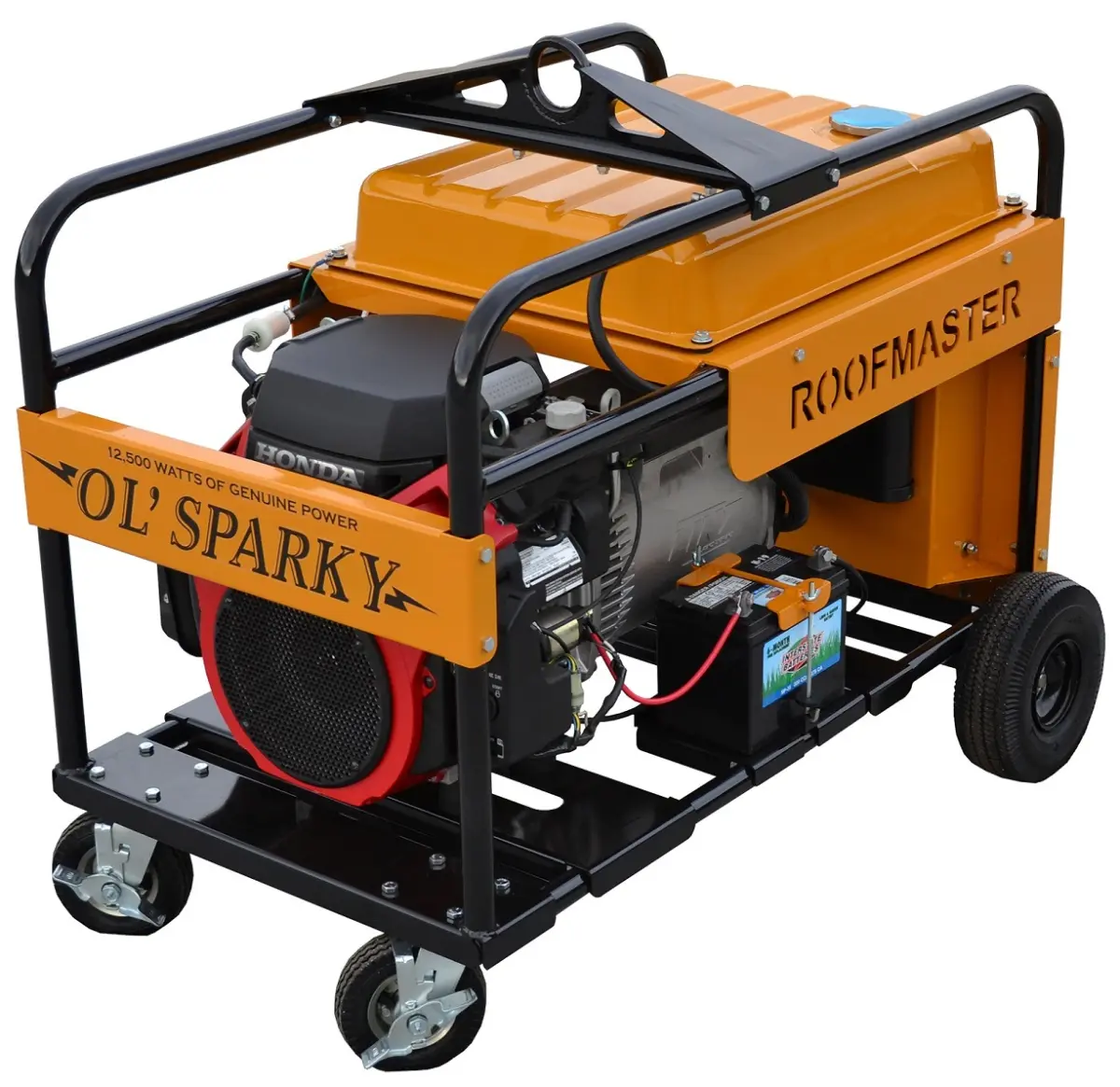
- Equipment Categories Affected: While lawnmowers and leaf blowers dominate public headlines, the ban encompasses a vast line of commercial tools, including chainsaws, string trimmers, pressure washers, commercial generators, material handling buggies, tear-off equipment, asphalt cutters, and specialized pumps.
- Operational Exemption vs. Sales Ban: The law does not confiscate or ban the operational use of pre-existing gas-powered tools. Property owners and commercial contractors may continue running legacy equipment indefinitely, provided the machinery was manufactured and acquired prior to the 2024 cutoff.
- The "Pre-2024 Engine Stock" Provision: Equipment manufacturers and distributors are legally permitted to exhaust remaining inventory of machinery equipped with pre-2024 certified engines. Once these existing state inventories are depleted, no non-compliant SORE equipment can be legally sold or distributed within California.
- Targeted Industry Exemptions: While broader agricultural and heavy construction sectors received specific carve-outs for high-horsepower diesel machinery, smaller trades and specialty applications—specifically light construction and roofing contractors—remain fully subject to the SORE rules for equipment under 25 horsepower.
Chronology: The Regulatory Journey of California’s SORE Mandate
The transition away from small gas engines was not an overnight shift, but rather the culmination of years of state executive orders, legislative action, and public rulemaking.
+-----------------------------------------------------------------------------------+
| CHRONOLOGY OF CALIFORNIA'S SORE REGULATION                                        |
+-----------------------------------------------------------------------------------+
| Sep 2020 | Exec. Order N-79-20 sets 2035 target for 100% zero-emissions equipment.  |
| Oct 2021 | Gov. Gavin Newsom signs Assembly Bill 1346 into law.                   |
| Dec 2021 | CARB officially adopts updated SORE zero-emission regulations.         |
| 2022–23  | State allocates $30M+ in rebates (CORE); manufacturers modify inventory.  |
| Jan 2024 | Sales ban on non-zero-emission SORE engines legally takes effect.         |
+-----------------------------------------------------------------------------------+
2020: Executive Mandates Lay the Groundwork
In September 2020, Governor Gavin Newsom signed Executive Order N-79-20, establishing aggressive decarbonization targets for California. Beyond requiring all new passenger cars sold in the state to be zero-emission by 2035, the executive order mandated that off-road equipment and operations transition to 100 percent zero-emissions by 2035 where feasible, with an accelerated timeline for small off-road engines by 2024.
October 2021: Passage of Assembly Bill 1346
Authored by Assemblymembers Marc Berman (D-Menlo Park) and Lorena Gonzalez (D-San Diego), AB 1346 was introduced to codify the executive order’s SORE mandates into state law. The legislature passed the bill, and Governor Newsom signed it into law in October 2021, directing CARB to adopt regulations prohibiting the sale of new SORE tools by January 1, 2024, or as soon as CARB deemed feasible.
December 2021: CARB Formally Adopts SORE Rules
Following the passage of AB 1346, the California Air Resources Board unanimously approved new regulations in December 2021. The regulatory package set emission standards for model year 2024 SORE equipment to zero, effectively outlawing new gas- and propane-powered engines in this power class. To ease the transition for small businesses, state budgets allocated over $30 million in voucher incentives via the Clean Off-Road Equipment Voucher Incentive Project (CORE).
2022–2023: Industry Preparation and Inventory Stockpiling
Throughout 2022 and 2023, equipment distributors and commercial operations prepared for the transition. Manufacturers maximized production of model year 2023 engines, allowing distributors to build up emergency stock ahead of the deadline. Meanwhile, trade associations representing landscape contractors, roofers, and rental yards cautioned state regulators about equipment shortfalls and power grid limitations.
January 1, 2024: The Ban Takes Effect
On January 1, 2024, the law officially went into effect. The sale of newly manufactured non-compliant small off-road engines became illegal across California, triggering a drawdown of remaining 2023 inventory and accelerating adoption mandates for commercial operators.
Supporting Data: The Environmental Math Behind the Ban
To understand why California regulators targeted small gasoline engines with such stringency, one must look at atmospheric emissions data compiled by CARB over the past two decades. Unlike modern passenger cars, which are equipped with catalytic converters, oxygen sensors, and sophisticated electronic fuel-injection systems, small spark-ignition engines historically lacked catalytic controls, resulting in disproportionately high emissions of reactive organic gases (ROG) and oxides of nitrogen ($NO_x$).
+-----------------------------------------------------------------------------------+
| COMPARATIVE EMISSIONS: SMALL ENGINES VS. PASSENGER CARS                          |
+-----------------------------------------------------------------------------------+
| Commercial Leaf Blower (1 Hour) = 1,100 Miles Driven in Light-Duty Sedan (ROG+NOx)|
| Auto-Choke Lawnmower (1 Hour)    = 300 Miles Driven in Light-Duty Sedan (ROG+NOx) |
| Total SORE Engines in CA         = ~16.7 Million Units                            |
| Total Passenger Cars in CA       = ~13.7 Million Vehicles                         |
+-----------------------------------------------------------------------------------+
The "LA to Vegas" Emissions Benchmark
One of the key data points utilized by CARB and legislative sponsors during the passage of AB 1346 was a stark comparison between small lawn equipment and light-duty passenger vehicles:
- Commercial Leaf Blowers: According to CARB testing data, operating a commercial two-stroke leaf blower for just one hour emits the same amount of smog-forming pollution (combined ROG and $NO_x$) as driving a standard passenger car roughly 1,100 miles—a distance greater than driving from Los Angeles to Las Vegas and back twice.
- Standard Gas Lawnmowers: Operating a small gas-powered lawnmower for one hour produces pollution equivalent to driving a light-duty vehicle for approximately 300 miles.
Engine Population Dynamics
By 2021, CARB estimated that there were more than 16.7 million small off-road engines in California—outnumbering the state’s roughly 13.7 million light-duty passenger cars.
Regulators projected that without intervention, daily smog-forming emissions from SORE equipment would surpass total emissions from light-duty passenger cars within the state. CARB models indicated that the new SORE regulations would yield immediate public health benefits, reducing $NO_x$ emissions by 10.08 tons per day and ROG emissions by 46.19 tons per day statewide by 2031.
Daily Smog-Forming Emissions Forecast (Tons/Day - California)

50 |-------------------------------------------------- [46.19 Tons/Day Reduced]
40 |
30 |
20 |
10 | ------------ [10.08 Tons/Day Reduced]
 0 +--------------------------------------------------
      Oxides of Nitrogen (NOx)    Reactive Organic Gases (ROG)
Regulatory Perspective vs. Industry Pushback
The implementation of AB 1346 has opened a clear divide between state policymakers prioritizing public health and commercial trade groups warning of practical, real-world operational challenges.
The Official State Position
State regulators and environmental advocacy groups argue that the ban is necessary to achieve federal ambient air quality standards and protect frontline workers exposed to direct engine exhaust.
"Small off-road engines emit significant amounts of toxic air pollutants and greenhouse gases that harm our communities and worker health," said Assemblymember Marc Berman, author of AB 1346. "Zero-emission alternatives are widely available, cost-effective, and mature enough to replace gas-powered equipment without compromising productivity."
CARB officials point to rapid advancements in lithium-ion technology and expanded incentive programs like CORE as evidence that the market is ready for wide-spread adoption. They emphasize that reducing ground-level ozone and fine particulate matter ($PM_2.5$) disproportionately benefits low-income commercial operators who spend hours behind two-stroke engines every day.
Heavy Trades Counter-Argument: The Specialty Construction Reality
While residential landscaping has largely made peace with cordless battery systems, specialty trade contractors—particularly in commercial roofing—argue that policymakers have overlooked severe technical limits in continuous, high-draw industrial applications.
Trade groups, including the Western States Roofing Contractors Association (WSRCA) and regional builder coalitions, emphasize that many specialized jobsites lack access to permanent utility power, making high-draw battery charging virtually impossible.
"While small hand tools like screw guns and reciprocating saws have successfully transitioned to battery power, high-draw application equipment presents an entirely different technical challenge," noted an industrial equipment distributor specializing in commercial roofing. "Key machinery like hot-air membrane welders, heavy tear-off machines, and large vacuum recovery systems demand continuous high-wattage power. Battery packs simply do not exist today that can sustain an eight-to-ten-hour commercial roofing shift under those loads."
Furthermore, contractors point out that commercial jobsites often demand three-phase power or clean continuous current to run sophisticated electronic application systems. Portable gas and diesel generators below 25 HP historically filled this gap. Under the new rules, finding compliant, continuous clean power sources for off-grid jobsites has become a significant headache for project managers.
Economic and Operational Implications Across Heavy Trades
The rollout of AB 1346 is creating secondary ripples throughout California’s commercial landscape, driving equipment shortages, shifts in procurement strategies, and financial burdens for contracting firms.
+-----------------------------------------------------------------------------------+
| IMPACT ANALYSIS: COMMERCIAL CONTRACTORS VS. RESIDENTIAL CONSUMERS                 |
+-----------------------------------------------------------------------------------+
| Feature               | Residential / Light Landscaping | Commercial / Roofing    |
+-----------------------+---------------------------------+-------------------------+
| Battery Viability     | High (Adequate run-time)        | Low (High wattage demand)|
| Infrastructure Need   | Standard 120V Outlet            | Multi-kw / 3-Phase Power|
| Out-of-State Sourcing | Unlikely                        | Highly Likely           |
| Capital Expenditure   | Low ($200–$1,000)               | High ($10,000–$100,000+) |
+-----------------------+---------------------------------+-------------------------+
The Roofing Sector’s Technological Gap
In the roofing industry, single-ply membrane roofing systems (such as TPO and PVC) rely heavily on continuous hot-air welding equipment. These tools must maintain precise temperatures exceeding 1,000°F ($538^circtextC$) to guarantee watertight seams.
- Generator Dependency: Because roof decks rarely have live line-power installed during primary construction, roofers depend on portable, high-output gas generators under 25 HP to run continuous seam welders.
- Thermal Draw Dilemma: Current battery-powered station technology cannot maintain the intense, unbroken thermal draw required for commercial seam welding without requiring constant battery swaps that disrupt installation consistency and structural integrity.
- Pumps and Material Handling: Asphalt kettles, tear-off equipment, material hoist pumps, and gravel vacuums are similarly designed around small internal combustion engines that currently have no direct zero-emission counterparts on the commercial market.
The "Pre-2024" Engine Loophole and Inventory Depletion
Because the regulation targets the manufacture and sale of engines rather than ownership, equipment distributors and equipment manufacturers stocked up heavily on 2023-certified engines prior to the December 31 deadline.
As a result, California contractors are currently relying on remaining dealer inventory of pre-2024 equipment. However, supply chain analysts warn that this buffer is temporary:
- Expediting Capital Investments: Contractors are purchasing whatever legacy 2023 equipment remains on dealer lots to ensure operational continuity over the next three to five years.
- Cost Inflation: As 2023 stock dwindles, prices for remaining gas-powered, California-compliant tools have surged, placing a premium on legacy equipment.
- Depletion Timeline: Equipment suppliers estimate that inventories of popular 2023 commercial engines will be fully exhausted within the calendar year, leaving buyers with no choice but to adopt zero-emission tools or look out of state.
Cross-Border Procurement and Enforcement Challenges
The ban on local sales has created regulatory and legal gray zones regarding cross-border commerce:
- Out-of-State Purchasing: Contract firms operating near state lines (such as Nevada, Arizona, or Oregon) may be tempted to purchase gas-powered SORE equipment out of state and transport it into California.
- Regulatory Compliance: While purchasing non-compliant engines out-of-state for use within California circumvents point-of-sale restrictions, CARB rules technically prohibit operating non-compliant SORE equipment manufactured after model year 2024 within state borders. However, enforcement mechanisms on active jobsites remain logistically complex.
- Liability Concerns: Major contracting firms worry about workplace compliance audits, potential fines, and insurance issues if unapproved machinery is logged on commercial project sites.
          OUT-OF-STATE PROCUREMENT & COMPLIANCE PATHWAY

  [ Nevada / Arizona Dealer ]  ---> Purchases New Gas SORE (>2024 Model)
                                              |
                                              v
  [ Transport into California ] ---> Cross-Border Transit
                                              |
                                              v
  [ California Jobsite ]       ---> Subject to CARB Enforcement & Fines
The Road Ahead for California Contractors
As California pushes forward with its broad environmental mandates, commercial sectors are serving as real-time testing grounds for rapid technology adoption. The transition dictated by AB 1346 underscores a growing divide between consumer-level readiness and heavy commercial feasibility.
While residential users and light maintenance teams have largely adapted to battery-powered alternatives, industrial sectors like commercial roofing face real technical challenges. Battery systems must evolve rapidly—offering longer runtimes, faster charging cycles, lighter weights, and lower price points—if they are to fully replace gas engines in high-demand, off-grid environments.
For California contractors and commercial businesses, the operational directive is clear: relying on legacy gas engines is a short-term hedge. Businesses planning machinery investments over the coming decade must adapt quickly to an electrified jobsite, audit their power distribution capabilities, and acquire remaining pre-2024 gas equipment before existing state supplies are permanently exhausted.
