

Executive Summary and Main Facts
California has officially entered a new regulatory era regarding small engine technology. Effective January 1, 2024, state regulations enacted under Assembly Bill 1346 ban the sale of new gas-powered equipment utilizing Small Off-Road Engines (SORE) rated at or below 25 gross horsepower (19 kilowatts).
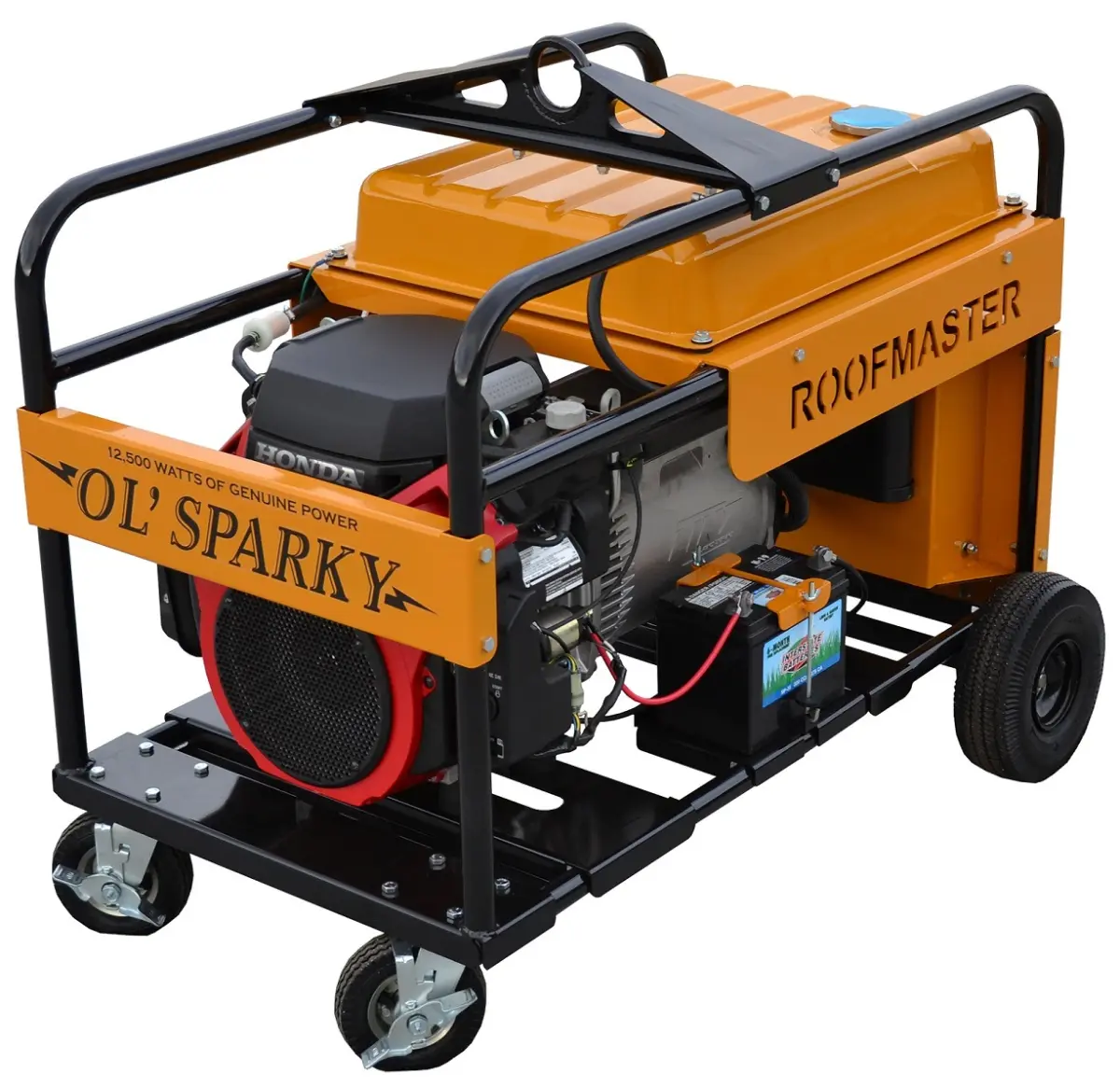
While public discourse around AB 1346 focused heavily on residential landscaping equipment—namely leaf blowers, lawnmowers, and string trimmers—the actual regulatory scope extends significantly further. The statute encompasses a wide array of gas-powered machinery utilized across commercial maintenance, forestry, agriculture, and construction industries. Affected items include chainsaws, pressure washers, golf carts, specialty utility vehicles, commercial pumps, material-handling equipment, tear-off machines, and portable jobsite generators.
       CALIFORNIA AB 1346 SORE REGULATORY FRAMEWORK
┌─────────────────────────────────────────────────────────┐
│              S.O.R.E. Engine Threshold                  │
│       Spark-ignition engines rated ≤ 25 Gross HP        │
└────────────────────────────┬────────────────────────────┘
                             │
            ┌────────────────┴────────────────┐
            ▼                                 ▼
┌───────────────────────┐         ┌───────────────────────┐
│     Banned Items      │         │   Permitted Items     │
│   (New Sales Only)    │         │ (Operational Status)  │
├───────────────────────┤         ├───────────────────────┤
│ • Lawnmowers/Blowers  │         │ • Pre-2024 Gas Tools  │
│ • Portable Generators │         │   (Existing Ownership)│
│ • Roofing & Pumps     │         │ • Engines > 25 HP     │
│ • Chainsaws/Trimmers  │         │ • Pre-2024 Stock Sale │
└───────────────────────┘         └───────────────────────┘
Crucially, the rule governs the sale of new equipment, not its use. Key structural provisions of the rule include:
- Operation vs. Sales: Commercial contractors, tradespeople, and private homeowners are legally permitted to continue operating existing, previously purchased gas-powered equipment indefinitely, provided the machinery is maintained according to air quality guidelines.
- New Equipment Restrictions: Retailers, equipment distributors, and manufacturers are prohibited from selling or offering for sale any new SORE equipment manufactured for model year 2024 or later that relies on internal combustion, unless it meets zero-emission standards.
- Pre-2024 Inventory Distribution: Distributors and dealerships holding existing stock of pre-2024 manufactured equipment with CARB-approved legacy engines may legally sell through those remaining inventories until supplies are completely exhausted.
- Unanticipated Trade Impacts: Contrary to early assumptions within the contracting sector that specialized construction trades would receive blanket exemptions, non-specified commercial machinery under 25 horsepower falls directly under the restriction. This presents immediate technological hurdles for sectors like commercial roofing and remote utility work.
Chronology: From Legislative Intent to 2024 Enactment
The transition away from small internal combustion engines in California represents a deliberate multi-year policy rollout driven by state executive mandates and regulatory agency actions.
                         CHRONOLOGY OF AB 1346

 Sep 2020    Executive Order N-79-20 signed; targets 100% zero-emission SORE by 2035.
    │
 Oct 2021    AB 1346 signed into law; mandates CARB regulations by Dec 1, 2022.
    │
 Dec 2021    CARB adopts SORE regulations targeting model year 2024 phase-out.
    │
 2022-2023   State allocates ~$30M+ in CORE rebates; manufacturers clear pre-2024 stock.
    │
 Jan 2024    Full sales ban takes effect for MY2024+ gas engines ≤ 25 HP.
September 2020: The Zero-Emission Executive Order
Governor Gavin Newsom issued Executive Order N-79-20, establishing broad state targets for transitioning to zero-emission transportation and off-road equipment. While headlines focused on the 2035 mandate to phase out new gas-powered passenger cars, the order explicitly instructed state agencies to achieve 100% zero-emission performance for off-road equipment and small spark-ignition engines where feasible by 2035.
October 2021: Enactment of Assembly Bill 1346
Authored by Assemblymembers Marc Berman (D-Menlo Park) and Lorena Gonzalez (D-San Diego), Assembly Bill 1346 was passed by the California Legislature and signed into law by Governor Newsom in October 2021. The legislation required the California Air Resources Board (CARB) to adopt regulations by December 1, 2022, to prohibit the sale of new SORE equipment. The bill instructed CARB to make the zero-emission requirements applicable to model year 2024 equipment or as soon as technologically feasible.
December 2021: CARB Regulatory Adoption
Ahead of the statutory deadline, CARB officially adopted updated SORE regulations during its December 2021 board meeting. The approved regulatory package set zero-emission standards for new small off-road engines produced for model year 2024 and beyond. It also established tighter emission standards for generator engines starting in model year 2024, with a second phase requiring zero-emission portable generators by model year 2028.
2022–2023: Implementation Planning and Incentive Allocation
Following rule adoption, the state allocated over $30 million through the Clean Off-Road Equipment Voucher Incentive Project (CORE) to assist professional landscaping businesses—particularly small-scale operators—in subsidizing the high upfront purchase costs of commercial-grade battery-electric equipment, spare batteries, and charging infrastructure. During this period, equipment manufacturers and regional distributors began evaluating inventory pipelines, ensuring pre-2024 engine stock was positioned to meet short-term demand transitions.
January 1, 2024: Enactment and Market Integration
The rule went into effect on January 1, 2024. Retail outlets and commercial supply houses across California transitioned their inventory practices. While legacy gas-powered tools remain visible on dealer floors as remaining 2023 stock is sold off, incoming inventory orders across affected tool categories have shifted exclusively to electric, corded, or battery-powered configurations.
Supporting Data: The Emissions Equation vs. Power Realities
CARB’s push to phase out small off-road engines rests on detailed environmental monitoring data, contrasting sharply with the operational energy requirements of heavy industrial applications.
The Environmental Rationale
According to data published by CARB, small off-road engines—despite their small size—contribute disproportionately to ambient air pollution. Before the 2024 regulations, CARB estimated that there were approximately 16.7 million SORE devices in California, exceeding the state’s 13.7 million light-duty passenger cars.
Because small two-stroke and un-catalyzed four-stroke engines lack the advanced catalytic converters, closed-loop fuel injection systems, and evaporative controls found in modern motor vehicles, they release significant volumes of unburned fuel, oxides of nitrogen ($textNOx$), reactive organic gases ($textROG$), and fine particulate matter ($textPM2.5$).
| Metric / Comparison Point | Small Off-Road Engine (Commercial Gas Leaf Blower) | Light-Duty Passenger Car (Gas Sedan) |
|---|---|---|
| Operational Basis | 1 Hour of Continuous Operation | ~1,100 Miles Traveled (e.g., Los Angeles to Las Vegas and back) |
| Primary Pollutants Emitted | High levels of $textROG$ + $textNO_x$ (Smog Precursors) | Managed via Catalysts, EVAP Systems, & Engine Control Units |
| Total Engine Population in CA (2023 Est.) | ~16.7 Million Units | ~13.7 Million Units |
| Regulatory Threshold | $le 25 text Gross Horsepower$ | Subject to Tier 3 / LEV III Tailpipe Standards |
CARB modeling indicated that operating a single commercial gas-powered leaf blower for one hour generates combined $textNO_x$ and $textROG$ emissions equivalent to driving a standard light-duty passenger car roughly 1,100 miles—roughly the distance from Los Angeles to Las Vegas and back. By 2021, total smog-forming emissions from SORE equipment in California eclipsed the total smog-forming emissions generated by light-duty passenger cars statewide.
Jobsite Energy Realities in Specialized Trades
While consumer lawn care and handheld power tools (such as screw guns, reciprocating saws, and light weed trimmers) have successfully transitioned to lithium-ion battery platforms, high-demand commercial construction trades face fundamental energy density limits.
                      JOBSITE ENERGY REQUIREMENTS

 ┌──────────────────────────────┐        ┌──────────────────────────────┐
 │     Continuous High-Draw     │        │      Light Duty / Handheld   │
 │   • Hot-Air Seam Welders     │        │   • Screw Guns               │
 │   • Vacuum Tear-Off Pumps    │        │   • Reciprocating Saws       │
 │   • High-Output Generators   │        │   • Light String Trimmers    │
 └──────────────┬───────────────┘        └──────────────┬───────────────┘
                │                                       │
                ▼                                       ▼
 ┌──────────────────────────────┐        ┌──────────────────────────────┐
 │   High Continuous Wattage    │        │   Intermittent, Low Draw     │
 │   Requires stable 3-phase    │        │   Easily supported by        │
 │   or high-voltage AC grid    │        │   standard battery packs     │
 └──────────────────────────────┘        └──────────────────────────────┘
In commercial roofing, for example, field operations rely on heavy machinery powered by engines under 25 horsepower to perform vital tasks:
- Hot-Air Seam Welding: Thermoplastic single-ply membranes (such as TPO and PVC) require continuous, unvarying electrical power to run self-propelled hot-air welding equipment. These machines draw high wattage constantly to melt and fuse membrane seams at consistent temperatures. Voltage drops or power interruptions can cause incomplete welds, leading to structural water intrusion and warranty failure.
- Substrate Prep and Tear-Off Equipment: Heavy-duty power cutters, gravel sweepers, and vacuum tear-off pumps demand high torque over hours of continuous duty cycles.
- Jobsite Power Generation: On unpowered greenfield construction sites or active retrofit projects where building power is disconnected for safety, crews rely on portable generators under 25 HP to supply stable 220-volt or three-phase power to specialty tools.
Current commercial battery systems face severe constraints when asked to replace small gas generators for continuous high-wattage outputs:
$$textPower (Watts) = textVoltage (V) times textCurrent (A)$$
To support a sustained load of 5,000 to 10,000 watts over an eight-hour shift without utility interconnects or primary diesel generation, a contractor would need massive, high-capacity battery banks. These systems add substantial weight to roof structures, require dedicated logistics for nightly recharging, and introduce thermal management challenges on exposed, high-temperature job sites.
Regulatory Position and Stakeholder Responses
The enforcement of AB 1346 has drawn varied responses from regulatory officials, environmental policy advocates, trade organizations, and commercial contractors.
California Air Resources Board (CARB)
CARB maintains that the SORE regulation is essential for California to meet federal national ambient air quality standards (NAAQS) and protect public health in heavily burdened air basins, such as the South Coast Air Basin and the San Joaquin Valley.
Agency officials emphasize that the regulatory framework was crafted with long lead times, open public comment windows, and financial incentives designed to accelerate commercial market readiness.
"Transitioning to zero-emission small off-road equipment is an essential step in protecting outdoor workers and communities from hazardous air pollutants," CARB representatives noted during implementation briefings. "The regulation is structured to target sales of new engines, allowing equipment owners to fully exhaust the functional lifespans of their existing machinery while the zero-emission supply chain matures."
Construction and Roofing Trade Associations
Industry groups—including regional roofing contractor associations and general contracting alliances—have voiced concern over the law’s broad application to specialized commercial machinery. While acknowledging the clean-air goals of AB 1346, industry representatives argue that the regulation did not adequately differentiate between intermittent landscape maintenance tools and continuous-duty commercial equipment.
A central point of contention involves jobsite infrastructure. Trade organizations point out that commercial contractors frequently work on job sites lacking permanent electrical service or adequate step-down transformers. Expecting field crews to power high-draw equipment via battery arrays—or to charge those batteries in remote settings without gas-powered auxiliary generators—presents practical challenges.
Industry groups also highlight that while early legislative summaries suggested construction and agricultural equipment might see broad exemptions, the final regulatory text applied the sales ban to all non-preempted engines under 25 horsepower, catching many specialized tool buyers off guard.
Equipment Manufacturers and Distributors
Equipment manufacturers have adopted dual strategies to navigate the transition:
- Accelerated Electrification: Tool manufacturers are expanding commercial-grade 60V, 80V, and higher-voltage battery platforms, developing modular power stations aimed at replacing traditional small gas generators.
- Legacy Engine Stock Management: Equipment distributors and commercial supply yards have leveraged provisions allowing the legal sale of pre-2024 engine stock. Distributors stocked up on 2023-compliant engines and equipment prior to the January 1 deadline, providing a temporary buffer for commercial contractors who require gas-powered performance for immediate field operations.
Practical Implications for Commercial Operations and Markets
The enforcement of AB 1346 carries operational, financial, and logistical consequences for businesses operating within California.
                  CONTRACTOR ADAPTATION STRATEGIES

 ┌──────────────────────────────────────────────────────────────┐
 │                  Immediate Term (2024-2025)                  │
 ├──────────────────────────────────────────────────────────────┤
 │ • Purchasing remaining pre-2024 distributor stock            │
 │ • Extending service life of existing fleets via overhauls    │
 │ • Securing out-of-state equipment for non-CA projects       │
 └──────────────────────────────┬───────────────────────────────┘
                                │
                                ▼
 ┌──────────────────────────────────────────────────────────────┐
 │                  Medium Term (2025-2028)                  │
 ├──────────────────────────────────────────────────────────────┤
 │ • Deploying heavy diesel power units (>25 HP) for site power │
 │ • Integrating mobile battery banks & solar charging trailers │
 │ • Re-estimating bid costs to absorb zero-emission capital    │
 └──────────────────────────────────────────────────────────────┘
The Near-Term Market: The "Pre-2024" Stock Buffer
Because the law allows the sale of equipment using pre-2024 engines, California’s commercial supply chains are currently relying on remaining legacy inventory. Contractors seeking gas-powered equipment are buying up remaining 2023-spec machinery from local supply houses.
However, this inventory buffer is temporary. Once distributors sell through their remaining pre-2024 stock, contractors will no longer be able to buy new internal-combustion tools under 25 horsepower within California borders.
Operational Challenges on Commercial Jobsites
As legacy gas-powered tools wear out over time, contractors will face operational adjustments across several key areas:
- Capital Expenditure Increases: Transitioning a commercial fleet to zero-emission platforms requires significant upfront investment. Contractors must buy not only the primary tools, but also multiple high-capacity battery packs per unit, along with multi-port fast-charging stations and transport infrastructure.
- Jobsite Power Management: Construction firms must rethink site logistics. Projects will require temporary grid drops much earlier in the construction timeline, or necessitate larger mobile battery bank trailers.
- The High-Horsepower Regulatory Paradox: Because the SORE regulation strictly targets engines at or under 25 gross horsepower, specialized commercial contractors may be forced to deploy larger, heavier tow-behind diesel generator units (which exceed the 25 HP threshold) simply to generate the electrical current required to charge jobsite batteries or run heavy tools. This creates an unintended paradox where smaller, lighter gas engines are replaced by larger displacement diesel power plants on site.
- Out-of-State Purchasing and Regulatory Enforcement: Contractors operating multi-state fleets face complex compliance questions regarding cross-border equipment procurement. While buying non-compliant MY2024+ gas tools out-of-state and bringing them into California for commercial use violates state sales and equipment registration rules, enforcement mechanisms at the local jobsite level remain a complex challenge for regulatory authorities.
Long-Term Market Transformation
AB 1346 has accelerated a structural shift in California’s commercial equipment market. While the transition presents real operational hurdles for continuous-duty trades, it is also driving rapid advances in industrial battery density, portable solar-generator systems, and high-efficiency electric motors.
For commercial operators, property managers, and trade professionals across California, the strategic directive is clear: relying on traditional small gas engines is no longer a viable long-term strategy. Success under the new mandate requires evaluating fleet lifespans, investing early in scalable charging infrastructure, and updating jobsite power logistics to match California’s changing regulatory landscape.
