

By George Ninikas, Senior Vice President of Sales and Accounts, Supply Chain Planning, Americas for Ortec
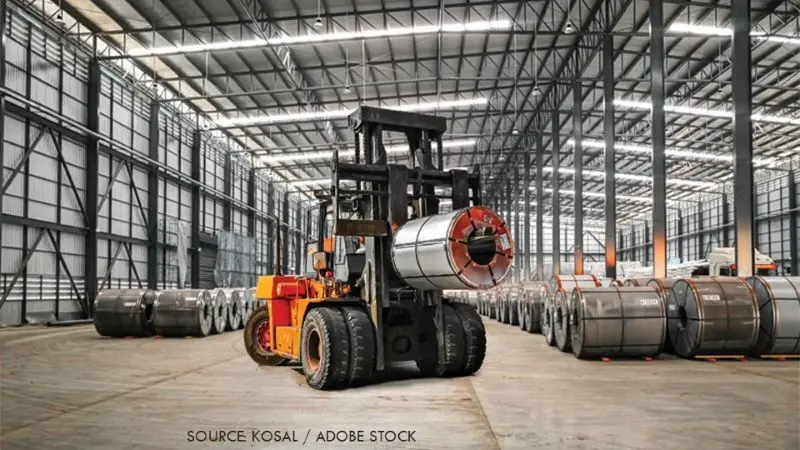
For decades, the guiding light of the metal construction supply chain was singular and unyielding: efficiency. Steel fabricators, metal building manufacturers, and coil processors poured significant capital into optimization technologies designed with one primary outcome in mind—slashing transportation costs, streamlining jobsite delivery networks, and squeezing the absolute maximum utility out of every mill and fabrication asset.
The prevailing logic of the industry was straightforward: the leaner, more hyper-optimized a steel and metal construction supply chain could become, the more competitive it would be in a crowded market.
However, the tumultuous events of recent years have aggressively challenged that foundational assumption. Today, metal construction supply chains operate within an economic environment defined by relentless volatility. Rigid project erection schedules, wild fluctuations in coil and plate prices, compounding fabrication lead times, and the catastrophic downstream consequences of a single delayed steel shipment have turned traditional logistics on its head.
For modern fabricators and metal building suppliers, an unexpected disruption in coil sourcing or a delayed structural steel delivery no longer represents a mere logistical inconvenience. Instead, it cascades into expensive project penalties, idled construction crews, and deeply strained relationships with general contractors (GCs) and project owners.
Main Facts: The Stakes of Modern Logistics
The scale of modern supply chain activity underscores just how high the stakes have become. According to the Council of Supply Chain Management Professionals’ 2025 State of Logistics Report, total U.S. business logistics costs reached an astronomical $2.6 trillion, accounting for roughly 8.7% of the nation’s Gross Domestic Product (GDP). When logistics consumes such a massive slice of the economic pie, even minor operational inefficiencies or localized bottlenecks can trigger severe financial consequences downstream.
Furthermore, industry research compiled by Zipdo in May 2026 reveals that supply chain disruptions have doubled in frequency compared to just a few years ago. Today, organizations routinely forfeit 5% to 10% of their annual revenue simply due to unexpected supply chain interruptions.
In the metal construction sector, GC and project owner expectations are tightening concurrently with rising volatility. Faster fabrication-to-delivery cycles, hyper-precise jobsite sequencing windows, and zero-tolerance erection schedules leave suppliers with virtually zero margin for error. Consequently, resilience has evolved from a secondary cost-management issue into a fundamental determinant of project completion, warranty fulfillment, and long-term customer retention.
Chronology: The Evolution from Stability to Permanent Disruption
The Era of Predictability (Pre-2020s)
Traditional metal construction supply chain optimization models were forged during a bygone era of relative economic stability. During this period, demand patterns were easily forecasted using historical trends, supplier networks functioned predictably, and international trade operated with minimal friction. Optimization delivered staggering results: companies constructed transportation networks that minimized empty haul miles, consolidated freight shipments, and balanced warehouse workloads with clockwork precision.
The Onset of Systemic Shocks (2020–2024)
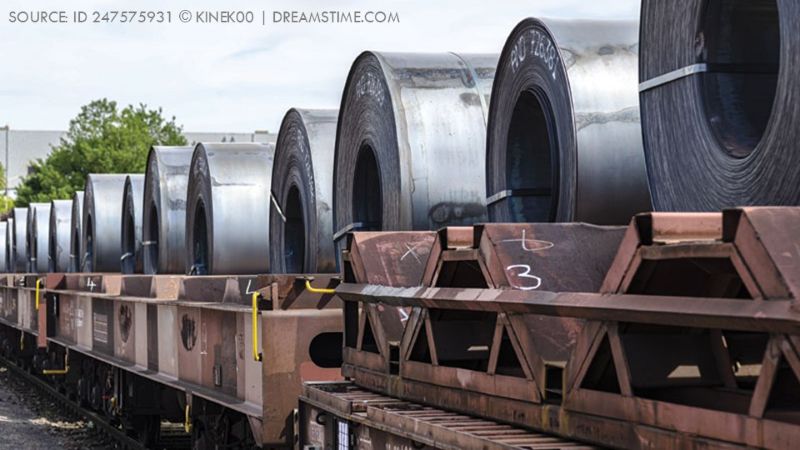
As global events unfolded over the early 2020s, the illusion of permanent stability shattered. The industry was hit by a wave of systemic shocks, including extreme weather events that crippled mill operations and regional transportation corridors, severe tightness in coil supplies, and volatile swings in commercial and industrial construction demand. On top of these domestic pressures, geopolitical tensions and shifting trade policies—most notably Section 232 tariffs and evolving import duties—introduced unprecedented layers of uncertainty for supply chain leaders.
The "Permanent State of Disruption" (2025–Present)
Today, industry analysts widely characterize global supply chains as operating in a "permanent state of disruption." What management teams once wrote off as temporary anomalies have crystallized into permanent structural features of the global economy. In response, forward-thinking metal construction organizations are fundamentally redesigning their operational DNA, pivoting away from fragile, cost-only models toward deeply adaptive, technology-driven ecosystems.
Supporting Data: The Limits of Efficiency-Driven Models
The core vulnerability of traditional supply chains lies in their fragility. When a disruption strikes an efficiency-driven network—such as a sudden bottleneck at a coil service center—companies typically rely on rapid, manual firefighting: rerouting deliveries, expediting high-cost freight, or reallocating limited inventory across distribution hubs.
While these band-aid solutions solve immediate crises, they systematically erode the financial savings originally baked into the strategic network design. Over time, the theoretical savings projected during annual planning disappear into the black hole of day-to-day operational firefighting.
The Strategic-Operational Gap
A primary symptom of this vulnerability is the chronic disconnect between strategic supply chain design and daily operational execution.
- At the strategic level: Long-term decisions regarding distribution center footprints, supplier networks, and freight frameworks are modeled using advanced software that assumes stable demand.
- At the operational level: When labor markets tighten, driver availability plummets, or delivery windows shift, local planners compensate manually by altering schedules and adding impromptu routes.
While the network continues to turn, the original cost-reduction model quietly decays. Bridging this gap requires what industry veterans call a "helicopter view"—treating the supply chain not as a series of isolated silos, but as a deeply interconnected ecosystem.
Official Responses: How Industry Leaders are Adapting
Faced with permanent market volatility, the metal construction sector—spanning steel mills, service centers, roll formers, fabricators, building system manufacturers, and specialty erectors—is taking decisive action.
Diversifying Sourcing and Strategic Inventory
Companies are no longer putting all their eggs in one basket. Qualifying multiple domestic and allied-nation coil and plate suppliers, pre-positioning strategic buffer inventory near booming regional markets, and baking flexibility into fabrication scheduling are now standard operating procedures.
Leveraging Advanced Artificial Intelligence
To navigate these complex operational matrices, organizations are increasingly turning to AI-powered supply chain software. Rather than reacting after a crisis occurs, modern AI platforms ingest real-time execution data—such as actual delivery times versus planned windows, mill lead time variances, driver utilization rates, and jobsite sequencing outcomes—to enable predictive intervention.
Case Study: Uncovering Lead Time Drift
Imagine a mid-size steel fabricator supplying structural components to a regional metal building manufacturer. For years, the planning team relied on average lead times of 8 to 10 business days from its primary coil service center. When a period of sustained mill allocation tightness silently pushed those lead times out to 14 or 16 days, traditional manual planners failed to notice the drift until jobsite delivery windows were already compromised.
An AI-enabled platform, continuously analyzing order-to-delivery cycle data, would have flagged this lead time drift weeks in advance. It would have automatically triggered a review of safety stock levels and prompted procurement teams to engage qualified backup suppliers long before a project delay materialized.
Case Study: Stress-Testing Network Expansion
Consider a metal building systems manufacturer debating whether to open a new regional staging warehouse in the Southeast. Historically, this multi-million-dollar decision relied on static spreadsheet models capturing point-in-time freight rates and labor costs.
Today, AI-powered network design tools allow planners to stress-test that exact decision against dozens of volatile scenarios simultaneously:
- What if hot-rolled coil prices spike by 20%?
- What if a severe hurricane disrupts Gulf Coast freight lanes for three weeks?
- What if the regional commercial construction pipeline contracts by 30% in year two?
The output is not a rigid, single-point recommendation, but a resilience-weighted strategy designed to withstand real-world economic weather.
Case Study: Dynamic Fleet Re-Planning
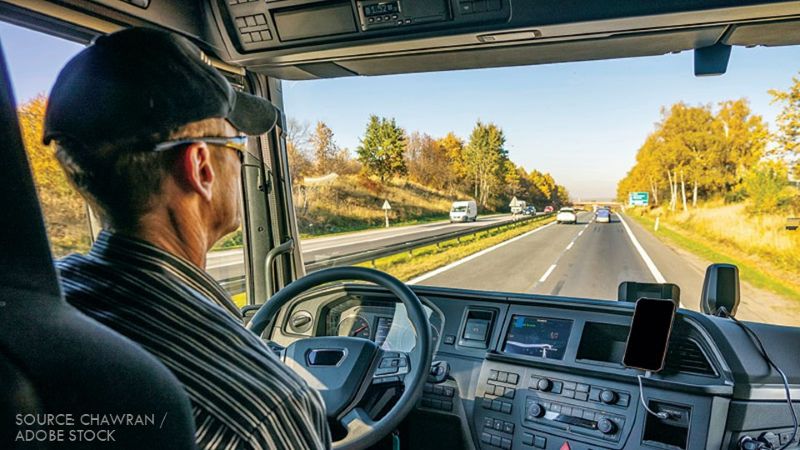
At the operational level, when an oversize structural steel load faces a sudden state permit delay, AI-driven routing software can recalculate the optimal delivery sequence across an entire fleet in minutes rather than hours. It instantly identifies which jobsite drops can be safely rescheduled without stalling erection crews, visualizing downstream schedule impacts in real time.
Implications: The New Supply Chain Imperative
The transition from a cost-obsessed efficiency model to an agility-first framework carries profound implications for the metal construction industry.
- Synchronized Ecosystems: Future success belongs to organizations that successfully link strategic network design, tactical planning, and daily execution into a self-reinforcing feedback loop.
- Proactive Over Reactive: Resilience must be built into the system architecture as a proactive advantage, rather than deployed as a frantic, reactive measure when disruptions hit.
- The Ultimate Competitive Advantage: As market uncertainty solidifies into a permanent baseline, the critical question for industry leadership is no longer simply whether their fabrication and delivery network is optimized for today’s backlog.
Instead, leadership must ask: Will our supply chain remain resilient, with backup sourcing activated and strategic inventory positioned, when mill lead times suddenly extend, tariff policies shift, or a major project accelerates its erection schedule without warning?
Organizations that answer "yes" through the intelligent application of data and AI will dominate the next decade of metal construction.
